What Makes It Special
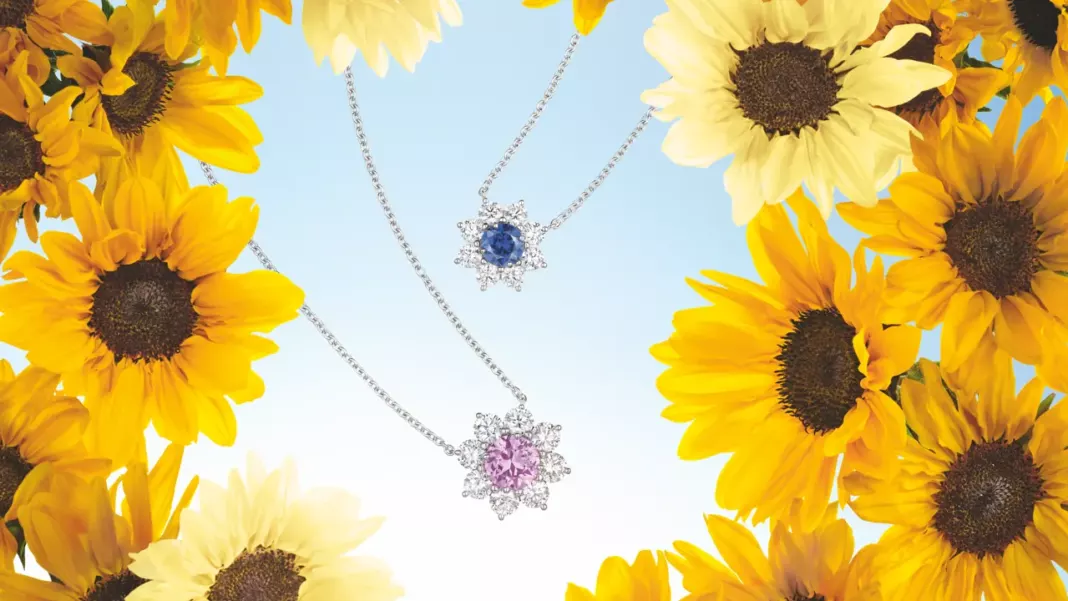
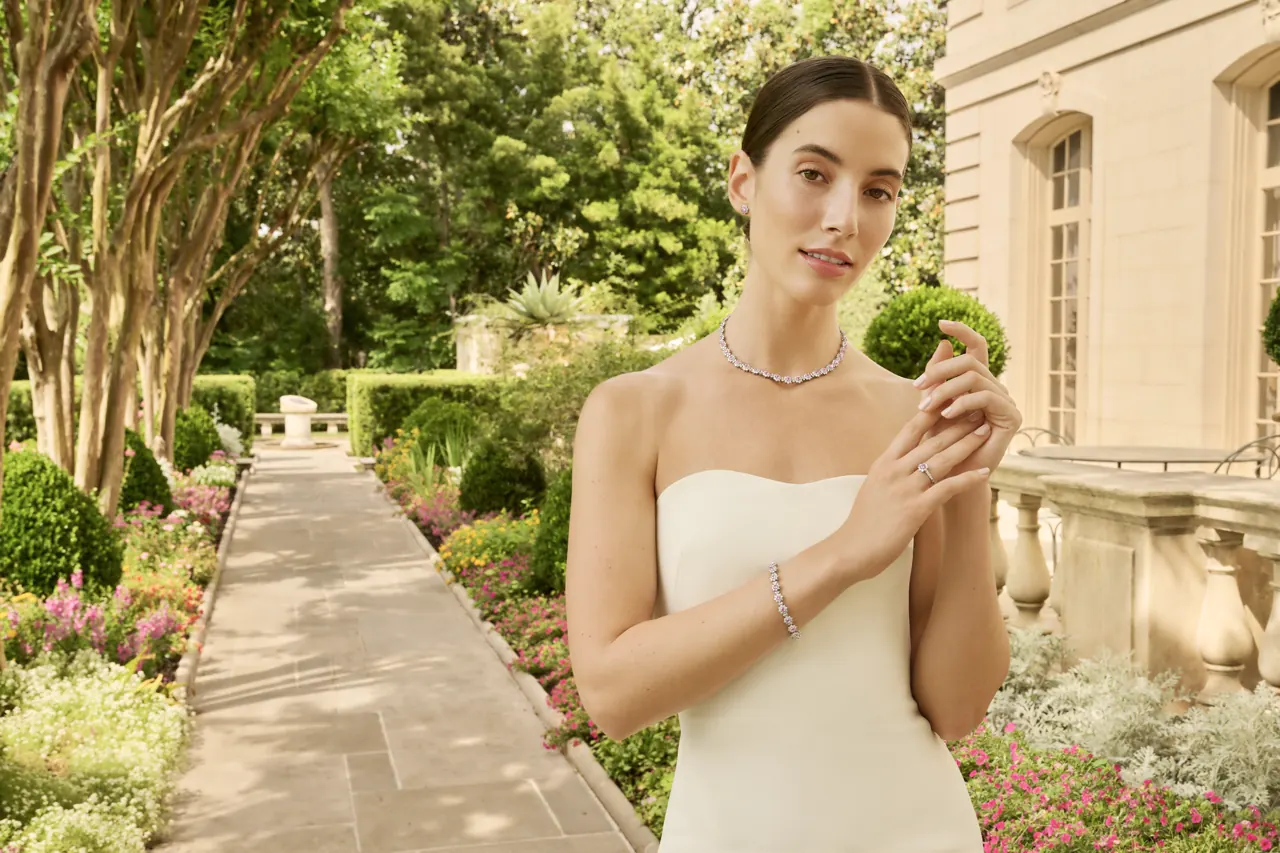
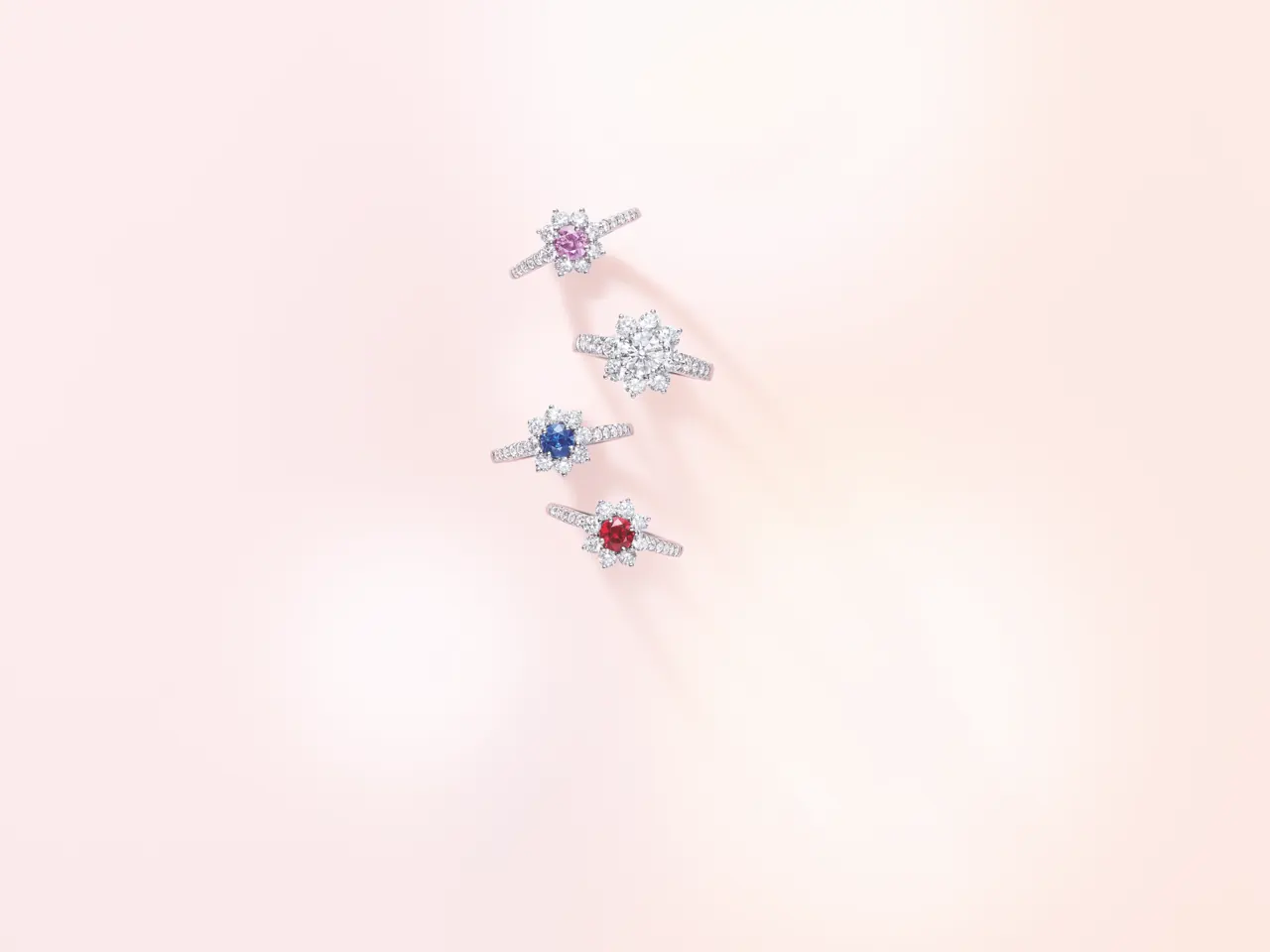
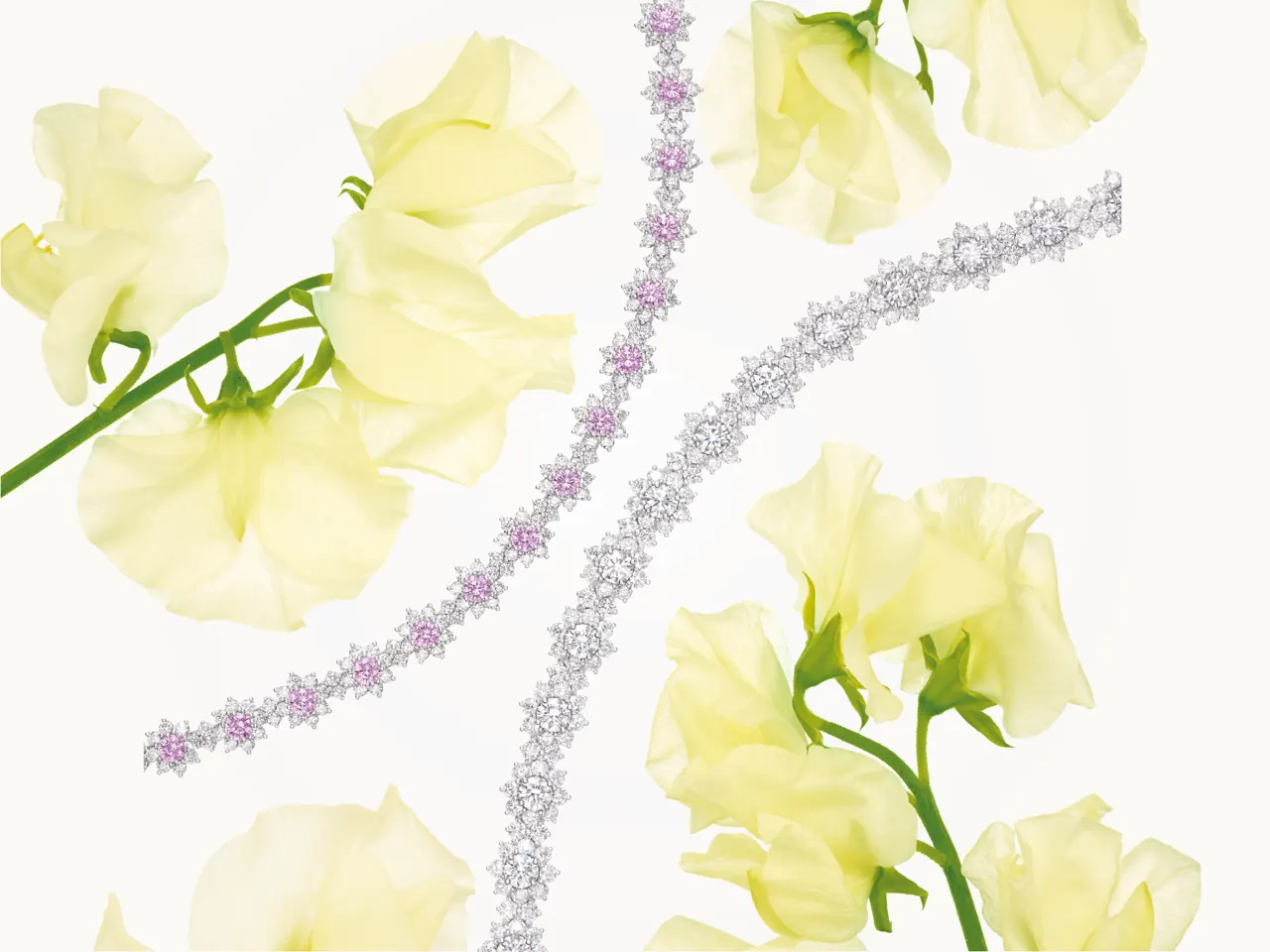
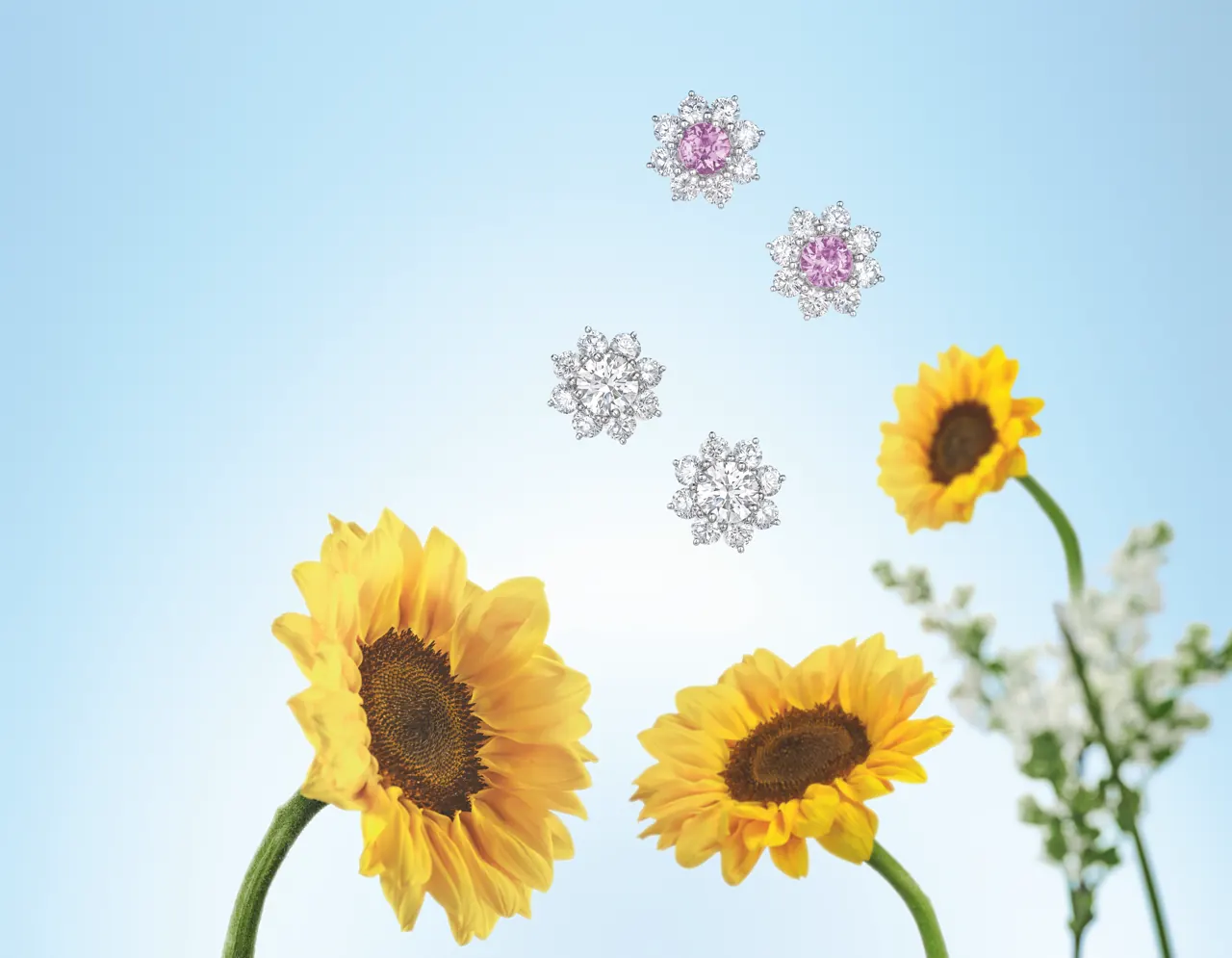
- The Harry Winston Sunflower Collection is a fine jewellery line rooted in archival sketches from the mid-1950s, translating the sunflower’s organic symmetry into diamond and gemstone blooms across necklaces, pendants, earrings, bracelets, and rings, each piece centred on a hand-selected stone encircled by eight precisely matched diamonds in a floating halo.
- The collection spans five centre-stone variations: all-diamond, yellow diamond, ruby, blue sapphire, and pink sapphire.
- Every stone is hand-selected by Winston craftspeople for individual brilliance and clarity.
- The motif has remained in continuous production for more than seventy-five years, placing it among the House’s most enduring designs.
Case, Setting and Finishing
Each bloom in the Sunflower Collection is constructed around a single defining structural choice: a vibrant centre stone ringed by eight perfectly matched diamonds arranged to form a halo that appears to float above the skin. The geometry is deliberate. Winston designers working from archival sketches first drawn in the mid-1950s chose an eight-diamond surround because it mirrors the radial symmetry of actual sunflower petals, giving the finished jewel a botanical logic rather than a purely decorative one.
The setting work required to achieve that floating effect is precise. Each of the surrounding diamonds must sit at a calibrated height so the halo reads as a continuous ring of light rather than a line of individual stones. This discipline has defined the collection since its earliest iterations and distinguishes it from the broader category of halo jewellery. For collectors across the Middle East who wear pieces in strong natural and ambient light, that architectural decision translates directly into visibility and brilliance on the wrist, at the ear, or at the neck.
Dial and Stone Artistry
Colour is the primary editorial decision within the collection. The all-diamond version keeps the composition in a single chromatic register — cool white light, uninterrupted.
Yellow diamonds shift that register entirely. Their golden warmth amplifies the botanical reference, bringing the piece closer to the actual colour temperature of the flower. Rubies introduce contrast: the deep red centre reads against white diamond petals with a directness that the other variations do not carry. Blue sapphires produce the opposite effect, a cooler, more contemplative composition where the centre stone recedes slightly, pulling the eye outward toward the diamond surround. Pink sapphires are the most recent chromatic voice in the collection, tender in hue but precise in how they interact with the surrounding diamonds. The House describes the effect as romantic and dynamic, and the stone selection supports that reading. For the region, where jewellery is worn as a considered statement at formal gatherings and private occasions alike, this breadth of centre-stone choice gives the collection a genuine range across different skin tones and dress contexts.
Heritage and Collection Context
The Sunflower motif began as an archival sketch in the mid-1950s, a period when Harry Winston’s New York atelier was actively translating natural forms into diamond compositions. The sunflower’s radial structure — a single dominant centre with symmetrical outward growth — aligned precisely with the House’s existing vocabulary around stone clusters and nature-derived forms. That alignment between botanical logic and jewellery architecture is why the design has persisted while many period motifs have not.
By contrast with the New York Graffiti collection or the Chinese New Year Automatic 36mm collaborations, the Sunflower Collection draws its authority from unbroken archival lineage rather than cultural dialogue or calendar occasion. The Ocean Tourbillon GMT Worldtimer demonstrates Harry Winston’s capacity across categories; the Sunflower Collection shows the depth of the House’s jewellery archive specifically. More than seventy-five years of production have not required a structural revision to the original setting concept, which is, by the standards of fine jewellery, an unusual record. The jewels available today — necklaces, pendants, earrings, bracelets, rings — continue to carry the same halo architecture and the same stone-selection standards that defined the first pieces, with colour choice now extended to include yellow diamond, ruby, sapphire, and pink sapphire alongside the original all-diamond composition.
For more on Harry Winston’s jewellery and timepiece output, visit the Harry Winston official website.
Stay ahead of the latest releases. Subscribe to our newsletter for editor-curated coverage of luxury timepieces across the Middle East.
Frequently Asked Questions
What is the Harry Winston Sunflower Collection and what types of jewellery does it include?
The Harry Winston Sunflower Collection is a fine jewellery line inspired by a motif first sketched in the mid-1950s. It comprises necklaces, pendants, earrings, bracelets, and rings, each centred on a hand-selected stone encircled by eight perfectly matched diamonds forming a floating halo.
What gemstones are used as centre stones in the Sunflower Collection?
The collection offers several centre-stone options: all-diamond for classical brilliance, yellow diamonds for a golden warmth, rubies for a fiery accent, blue sapphires for cooler serenity, and pink sapphires for a romantic, dynamic hue.
How old is the Sunflower motif at Harry Winston?
The Sunflower design originates from archival sketches first created in the mid-1950s, meaning the motif has been part of the House of Harry Winston for more than seventy-five years.
Where is Harry Winston based, and what is its position in fine jewellery?
Harry Winston is a New York-based haute joaillerie house widely regarded as one of the foremost names in diamond and gemstone jewellery. The Sunflower Collection reflects its founding philosophy of honouring nature's forms through precisely selected stones.