
Some watch names honour a founder; others recall a meadow, a porthole or the highest point of the sky. Behind 24 of the most admired names in watchmaking lie stories that begin in Geneva, Tokyo, Rome and Florence, and, for one celebrated emblem, in an Arabic fortress in the heart of Spain.
Key Highlights
- Rolex is an invented name, registered by Hans Wilsdorf in 1908 to read easily in any language and to fit neatly on a dial.
- Hublot is the French word for porthole, a reference to the bezel of the first Hublot watch in 1980.
- Seiko means exquisite in Japanese and sounds the same as the Japanese word for success.
- Longines takes its name from Les Longines, the long meadows of Saint-Imier where Ernest Francillon opened his factory in 1867.
- The Calatrava cross of Patek Philippe carries a name born of the Arabic Qalʻat Rabāḥ, the Fortress of Rabah.
A name on a dial is the shortest story a Maison can tell. Read closely, these words reveal how each house wished to be remembered: as a family, as an idea, or as a place. Every origin below is drawn from the Maison’s own history and confirmed by a second reference source.
Names That Carry a Founder’s Signature
Most great houses bear the names of the people who built them, and many of those names record a partnership, a marriage or a succession from one generation to the next.
Patek Philippe
The name joins two watchmakers: the Polish-born Antoni Patek and the Frenchman Adrien Philippe, inventor of a keyless winding system. Patek first founded Patek, Czapek & Cie in Geneva in 1839; once Philippe became his partner, the company took the name Patek, Philippe & Cie on 1 January 1851. Discover the Maison on our Patek Philippe page.
Audemars Piguet
Jules Louis Audemars and Edward Auguste Piguet, two watchmakers of the Vallée de Joux, joined forces in Le Brassus in 1875. Audemars led production and technique, Piguet led sales and management, and the house remains in the hands of the founding families to this day. More on our Audemars Piguet page.
Vacheron Constantin
In 1755 the Geneva master watchmaker Jean-Marc Vacheron signed the contract of his first apprentice, a document the Maison regards as its birth certificate. In 1819 his grandson Jacques-Barthélemy Vacheron entered into partnership with the businessman François Constantin, and the house became Vacheron et Constantin. See our Vacheron Constantin page.
Jaeger-LeCoultre
Antoine LeCoultre founded his workshop in Le Sentier in 1833. In 1903 Edmond Jaeger, a Paris watchmaker, invited Swiss manufacturers to produce the ultra-thin movements he had designed, and Antoine’s grandson Jacques-David LeCoultre accepted the invitation. The collaboration gave the Maison its double name, officially adopted in 1937. Explore the Jaeger-LeCoultre page.
Girard-Perregaux
Here the name records a marriage. Constant Girard founded Girard & Cie in La Chaux-de-Fonds in 1852, married Marie Perregaux in 1854, and in 1856 the union of their two names gave birth to the Girard-Perregaux manufacture. Read more on our Girard-Perregaux page.
Van Cleef & Arpels
Another union of two families of jewellers. Alfred Van Cleef married Estelle Arpels in Paris in 1895, and the Maison opened its first boutique at 22 Place Vendôme in 1906, an address it has kept ever since. Visit our Van Cleef & Arpels page.
A. Lange & Söhne
Ferdinand Adolph Lange founded his manufacture in Glashütte, in Saxony, in 1845. Söhne is German for sons: in 1868 his sons Richard and Emil Lange became partners in the business, and the name A. Lange & Söhne entered watchmaking history. See our A. Lange & Söhne page.
Cartier
Louis-François Cartier founded the house in Paris in 1847, when he took over the jewellery workshop of his master, Adolphe Picard. His grandsons Louis, Pierre and Jacques carried the family name across the world. More on our Cartier page.
Breitling
Léon Breitling opened his workshop in Saint-Imier in 1884. Three generations of the family, Léon, Gaston and Willy Breitling, then shaped the name into a reference for precise, versatile instruments. Explore the Breitling page.
Chopard
Louis-Ulysse Chopard founded his company in Sonvilier, in the Swiss Jura, in 1860. His initials live on in the L.U.C collection, and since 1963 the Maison has belonged to the Scheufele family. Discover our Chopard page.
Blancpain
The name goes back to Jehan-Jacques Blancpain, recorded as a watchmaker in the property registry of Villeret in 1735. That entry makes Blancpain the oldest registered watch brand in the world. See our Blancpain page.
Breguet
Abraham-Louis Breguet, born in Neuchâtel, opened his own workshop in Paris in 1775, on the Quai de l’Horloge of the Île de la Cité. The address itself translates as the Clock Embankment, a fitting home for the watchmaker who developed the tourbillon. Read more on our Breguet page.
Panerai
Giovanni Panerai opened his first watch shop in Florence in 1860. Two of the Maison’s collections carry the names of luminous compounds created in the family workshop: Radiomir, from the Italian radio mire, and Luminor, a compound patented in 1949. Explore the Panerai page.
Richard Mille
The youngest name in this list belongs to Richard Mille, who founded his brand in 2001 with Dominique Guenat, with its home in Les Breuleux, in the Jura. Discover our Richard Mille page.
Names Invented to Travel the World
A second family of names was composed with care: words designed to be pronounced from London to Tokyo, or chosen for the idea they carry.
Rolex
Hans Wilsdorf founded Wilsdorf & Davis in London in 1905 and registered the name Rolex in 1908. He wanted a word short enough to fit on a dial and easy to pronounce in every language. By his own account, he combined the letters of the alphabet into some hundred names before the right one came to him on the upper deck of a horse-drawn omnibus along Cheapside. More on our Rolex page.
Tudor
Wilsdorf found his second name in English history. In February 1926 the trademark The Tudor was registered on his behalf, and Montres Tudor SA followed on 6 March 1946. The rose of the Tudor dynasty appeared on the dials, a symbol the Maison associates with strength and grace. See our Tudor page.
Omega
In 1894 Louis-Paul and César Brandt, sons of the founder Louis Brandt, created a 19-ligne calibre and named it Omega, after the last letter of the Greek alphabet, a symbol of ultimate accomplishment. The calibre’s success led the company to adopt the name in 1903. Explore the Omega page.
Hublot

Carlo Crocco founded the brand in 1980 and named it after the French word for porthole. The first Hublot watch wore a bezel with twelve titanium screws inspired by a ship’s porthole, and combined a precious-metal case with a natural rubber strap. Discover our Hublot page.
TAG Heuer
Edouard Heuer founded his company in Saint-Imier in 1860. In 1985 the holding Techniques d’Avant Garde, founded by the Saudi financier Akram Ojjeh, acquired a majority stake in the Maison, and the name TAG Heuer joined those initials to the founder’s surname. See our TAG Heuer page.
IWC Schaffhausen
Three letters for the International Watch Company, founded in 1868 by the American watchmaker Florentine Ariosto Jones, formerly of E. Howard & Co. in Boston. He chose Schaffhausen for its skilled watchmakers and its water power, with the plan of building watches for the American market. More on our IWC Schaffhausen page.
Seiko
Kintarō Hattori opened his watch and jewellery shop in Tokyo in 1881, and in 1892 began producing clocks under the name Seikosha, which translates as House of Exquisite Workmanship. According to the company’s official history, Seiko means exquisite, and the word sounds the same as the Japanese word for success. Explore the Seiko page.
Bvlgari
The Greek-born silversmith Sotirios Voulgaris founded his company in Rome in 1884. The logo is written in the classical Latin alphabet, with a V in place of the U, in tribute to ancient Rome; its gilded letters first appeared in 1934 above the central doorway of the Via Condotti flagship. See our Bvlgari page.
Names Drawn From the Land and the Sky
Longines
Auguste Agassiz founded the company in Saint-Imier in 1832. In 1867 his nephew Ernest Francillon opened a factory in an area known locally as Les Longines, the long meadows, and gave the watches the name of the place. Francillon also chose the winged hourglass emblem, registered in 1889 and today the oldest unchanged active trademark registered with the World Intellectual Property Organization. Discover our Longines page.
Zenith

Georges Favre-Jacot founded his manufacture in Le Locle in 1865 and gave it the name of the highest point in the sky, a symbol of the perfection he pursued. The word itself has Arabic roots: medieval Latin scribes drew zenith from the Arabic samt al-raʾs, the direction of the head. Explore the Zenith page.
The Calatrava Cross: An Arabic Fortress on a Geneva Dial
The most travelled name in this list belongs to a cross. Its four equal arms each end in a fleur-de-lis, and Patek Philippe officially registered it as its trademark on 27 April 1887. Since then, the Calatrava cross has served as the emblem of the Maison, as recounted in the history of the cross published by Patek Philippe.
The cross takes its name from the Order of Calatrava, a Castilian order of knights confirmed by Pope Alexander III in 1164, which in turn took its name from the town of Calatrava, today Calatrava la Vieja, on the Guadiana river in central Spain. The town’s name comes from the Arabic Qalʻat Rabāḥ, the Fortress of Rabah, after the Arab nobleman who held the area in the eighth century. A word first spoken in Arabic thus travelled through Castile to Geneva, where it now identifies one of the most recognised emblems in fine watchmaking.
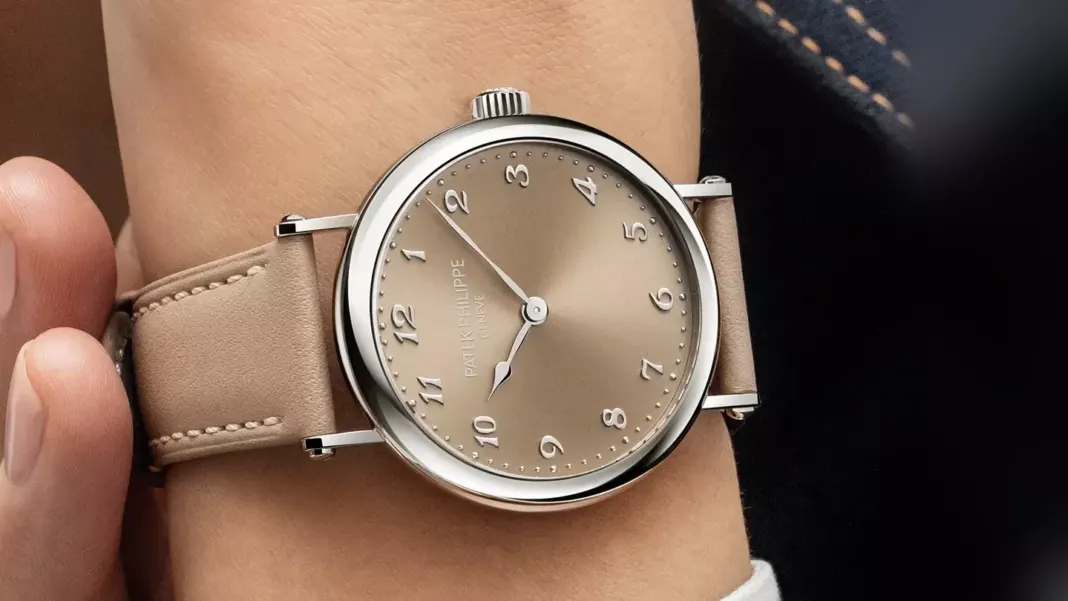
The cross later gave its name to a watch. In 1932, the year the Stern family acquired Patek Philippe, the Maison introduced the Reference 96, a refined three-hand dress watch now regarded as the first Calatrava. The Calatrava has remained a flagship of the Maison ever since, as in the Calatrava Ref. 7200/50G-001 in sand beige.
Arabic Echoes Across Fine Watchmaking
For readers in the Gulf, Calatrava is the most striking of several links between the Arab world and the names on a dial. The word zenith descends from Arabic astronomy, as the very name of Zenith recalls. The TAG of TAG Heuer comes from a holding founded by a Saudi financier. And in the late 1980s, Breguet belonged to Investcorp, the investment house founded in Bahrain in 1982, before joining the Swatch Group in 1999. These houses are present across the region today, as our guide to the best watch brands in Saudi Arabia and our Gulf luxury watch price index show.
Frequently Asked Questions
What does the name Rolex mean?
Rolex is an invented word. Hans Wilsdorf registered it in 1908, choosing five letters that read easily in any language and fit neatly on a dial. In his own account, the name came to him on the upper deck of a horse-drawn omnibus along Cheapside in London.
What does Hublot mean?
Hublot is the French word for porthole. Carlo Crocco gave the name to the first Hublot watch in 1980, whose bezel with twelve titanium screws recalls the porthole of a ship.
What does Seiko mean in Japanese?
Seiko means exquisite in Japanese, and the word sounds the same as the Japanese word for success. It descends from Seikosha, the clock factory Kintaro Hattori opened in Tokyo in 1892, a name that translates as House of Exquisite Workmanship.
Where does the name Calatrava come from?
Calatrava comes from the Arabic Qal’at Rabah, the Fortress of Rabah, in central Spain. The town gave its name to the Order of Calatrava and to its cross, which Patek Philippe registered as its trademark on 27 April 1887.
What does TAG stand for in TAG Heuer?
TAG stands for Techniques d’Avant Garde, the holding company that acquired a majority stake in Heuer in 1985. The name joins those initials to the surname of Edouard Heuer, who founded the company in Saint-Imier in 1860.