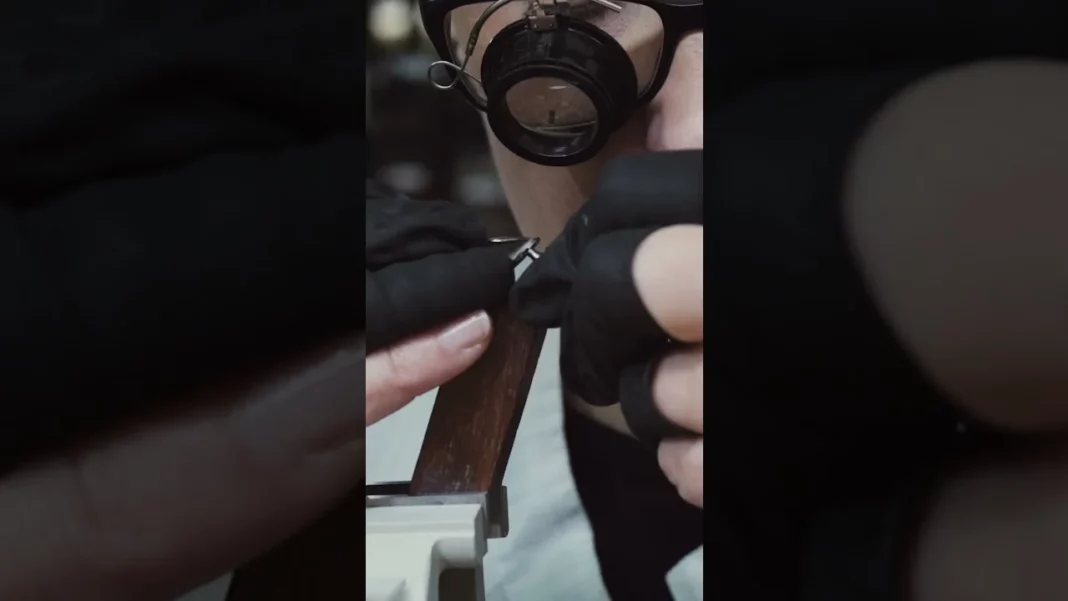
Exploring the Craftsmanship of the LAURENT FERRIER Classic Origin
Luxury watches demand technical precision paired with visual refinement. LAURENT FERRIER builds on traditional watchmaking techniques while pursuing contemporary standards. The Classic Origin exemplifies this approach through its escapement bridge, where hand-finishing reveals the depth of artisanal work required at the finishing stage.
The Art of Hand-Finishing
Hand-finishing defines how LAURENT FERRIER approaches the escapement bridge. Artisans spend hours on each component, working curves and surfaces to satisfy both mechanical tolerance and aesthetic criteria. The bridge must function as a precision pivot while displaying the controlled grain patterns and beveled edges that distinguish finished surfaces from raw machined stock.
What Makes the Escapement Bridge Unique?
The escapement bridge anchors the balance wheel to the movement frame and carries the pallet fork. In the Classic Origin, this structural role combines with deliberate visual treatment: hand-applied Côtes de Genève, polished bevels, and surface preparation that only emerges through sustained hand labor. The result separates the Classic Origin from watches where finishing remains secondary to production speed.
Why Hand-Finishing Matters
Mass production standardizes output but cannot replicate hand-finishing. Each bridge receives individual attention, ensuring surfaces meet LAURENT FERRIER’s specification without relying on automated processes. For collectors, this approach anchors the watch’s value in verifiable skill rather than volume. The human effort invested—days of work per movement—remains visible under magnification and becomes part of owning the piece.
Experience the Luxury of LAURENT FERRIER
The Classic Origin rewards close examination. Its escapement bridge demonstrates the level of finishing that LAURENT FERRIER demands across every component. click here to explore LAURENT FERRIER collections and discover how this commitment extends across their range.
The escapement bridge stands as the most visible example of this philosophy. Spend time with the watch under light, and the finishing choices become apparent—a marker of the standards that define LAURENT FERRIER.
Frequently Asked Questions
What is hand-finishing on the LAURENT FERRIER Classic Origin escapement bridge?
Hand-finishing applies deliberate surface preparation to the escapement bridge, including Côtes de Genève graining, polished bevels, and controlled surface treatments. This work occurs after machining and requires artisans to spend days on each component, achieving both functional precision and visual refinement that machines cannot produce.
Why is the escapement bridge important in the Classic Origin watch?
The escapement bridge anchors the balance wheel and pallet fork to the movement frame, making it essential for timekeeping function. LAURENT FERRIER finishes this structural component as a visual centerpiece, treating mechanical necessity as an opportunity for craft display.
How does hand-finishing add value to the LAURENT FERRIER Classic Origin?
Hand-finishing represents verifiable skill applied to each watch individually. The sustained labor required—days per movement—becomes a quality marker that collectors can assess directly. This approach anchors the watch’s value in demonstrable craftsmanship rather than production volume alone.