The Essential Details
- Calibre 7122, a self-winding movement, powers the new Neo Frame Jumping Hour, advancing on the manual-wind mechanisms of the 1920s originals.
- The conversation spans archival references from the Mini Bamboo (Model 66288) and Cobra (Model 5403) through to Art Deco jumping hours dating to 1924.
- Villa Empain in Brussels provided the setting, with AP Heritage Specialist Clara and Museum Curator Dave joined by architectural designers and collectors Ryan and Adam Goldston.
- AUDEMARS PIGUET identifies three historical time-display languages: hands, apertures, and wandering hours, each illustrated with pieces from the archive.
- The Neo Frame Jumping Hour prototype made its public debut at Watches and Wonders in Geneva before this closer examination at Villa Empain.
A Conversation Rooted in Architecture and Archives
Villa Empain, the Art Deco mansion in Brussels, is an apt location for a discussion about shape and time. Its geometric stone facades and period interiors frame the conversation between Clara, AP Heritage and Museum Specialist, and Dave, AP Museum Curator, who guide Ryan and Adam Goldston through nearly a century of AUDEMARS PIGUET design thinking. The Goldstons, architectural designers and committed watch collectors, bring a structural perspective to pieces that were already pushing formal boundaries decades before they were born.
The discussion moves from shaped case watches of the late 1950s and 1960s through to jumping-hour mechanisms of the 1920s and 1930s. Each archival piece is handled and discussed on its own terms, the aim being to understand not just what these objects look like, but why the designers made the formal choices they did, and how those choices connect to the Neo Frame Jumping Hour that AUDEMARS PIGUET is presenting today. The full conversation is available in the official AP Talks film on the AUDEMARS PIGUET channel.
Shape Watches: From Bamboo to Cobra
Ryan Goldston wears the Mini Bamboo (Model 66288) during the discussion, and it prompts an extended conversation about proportion, material, and scale. The Bamboo family encompassed quartz, manual-wind, and automatic versions, each with different case dimensions, white ceramic, and yellow gold variants that illustrated how a single design concept could accommodate entirely different technical architectures inside. The organic quality of the case, shaped to suggest jointed bamboo, is characteristic of AUDEMARS PIGUET’s 1970s and 1980s shaped-case output.
Adam Goldston wears the Cobra (Model 5403), a woven-gold bracelet-integrated watch that the group positions alongside the Royal Oak Perpetual Calendar lineage as an early example of the integrated-bracelet concept. Before the Cobra, AUDEMARS PIGUET produced pieces such as the asymmetrical Model 5182, where a round case and a square element were combined, and the Discovolante (Model 5093), described during the discussion as resembling a cockpit with wings, a reference to the aviation and automotive aesthetic that shaped high design in the late 1950s and 1960s. The Clous de Paris hobnail decoration visible on one of the archival pieces, and the near-invisible thickness of the case, are noted as defining technical achievements of that period.
Three Display Languages and the Neo Frame
Apertures, Wandering Hours, and the Jumping Hour Mechanism
Clara outlines three ways AUDEMARS PIGUET has historically shown the time: through hands, through apertures (windows cut into a covered or partially obscured dial), and through wandering hours (rotating discs). The Philosophique (Model 4346) from the 1980s uses a single hand and is described as a more poetic way to read time, reducing precision in favour of a felt sense of duration. The Starwheel (Model 25720) uses rotating discs rather than hands, which the group clarifies is a complex display rather than a traditional complication.
The Neo Frame Jumping Hour and Calibre 7122
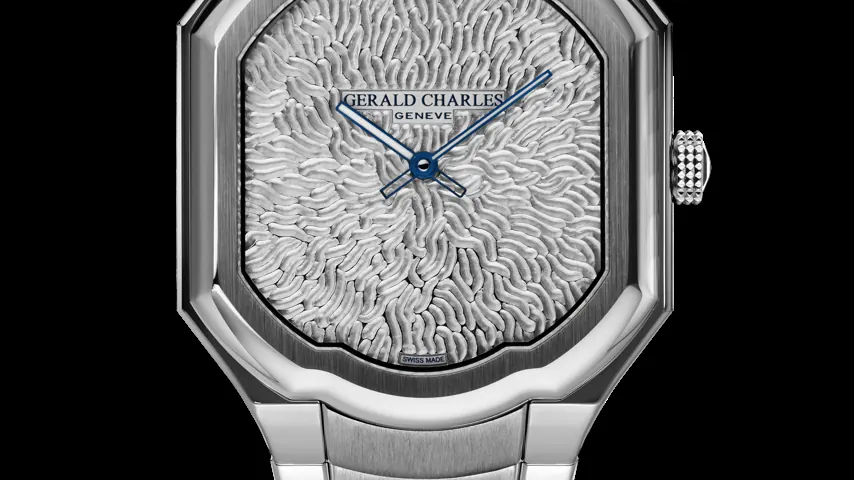
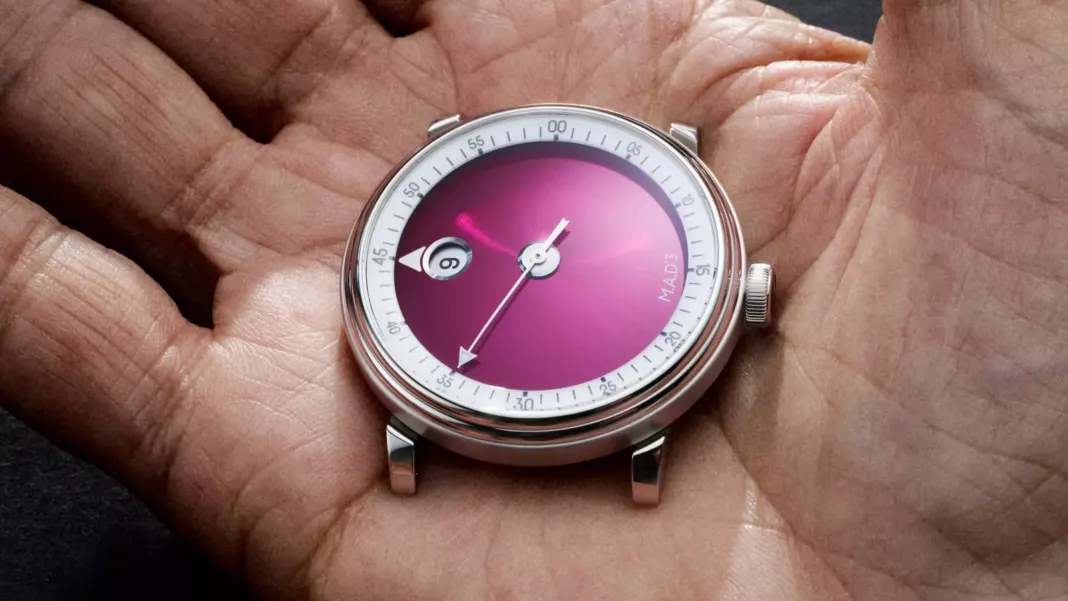
The newest piece in the conversation draws directly from the Art Deco jumping hour and the Streamline design movement. Where early-1920s jumping-hour watches used glass crystals that were prone to breaking, leading designers to cover dials with metal to protect the mechanism, the Neo Frame Jumping Hour replaces that metal surface with sapphire crystal. The case architecture is otherwise a formal echo of the archival Streamline Jumping Hour Premodel 1271. Inside, calibre 7122 provides self-winding operation, a significant technical step beyond the manual-wind movements of the originals. The guilloché finishing and depth engraving visible on the prototype were noted as details that only read fully in person, not through glass at an exhibition stand.
Why It Matters
For collectors across the Middle East, where appreciation for both architectural design and fine watchmaking often intersect, the Neo Frame Jumping Hour offers a piece with a traceable intellectual lineage rather than simply a reference to the past. The AP Talks format, which brings external creative voices directly into the AUDEMARS PIGUET archive, gives collectors the kind of contextual depth that supports considered acquisition. AUDEMARS PIGUET’s design heritage, examined here from the 1920s through to a self-winding contemporary calibre, provides the documentary evidence that serious collectors in Dubai, Riyadh, and Doha increasingly expect from a manufacture at this level.
Stay ahead of the latest releases. Subscribe to our newsletter for editor-curated coverage of luxury timepieces and jewellery across the Middle East.
Frequently Asked Questions
What is the AUDEMARS PIGUET Neo Frame Jumping Hour?
The Neo Frame Jumping Hour is a contemporary watch that draws on Art Deco and Streamline Modern design references from AUDEMARS PIGUET's archival history. It houses the self-winding calibre 7122, replacing the manual-wind movements found in its 1920s predecessors, and features a sapphire crystal over the metal case structure with an integrated strap.
Where was the Neo Frame Jumping Hour prototype first publicly shown?
The Neo Frame Jumping Hour prototype was first presented at Watches and Wonders in April in Geneva, where it was displayed behind glass. The AP Talks conversation at Villa Empain in Brussels offered a closer, hands-on examination of the piece.
What are the three time-display languages AUDEMARS PIGUET uses in its historical watches?
According to AP Heritage and Museum Specialist Clara, AUDEMARS PIGUET has worked with three distinct display languages across its history: hands (traditional rotating pointers), apertures (windows that show the hour, as seen on the jumping hour and Philosophique models), and wandering hours (rotating discs, as demonstrated by the Starwheel).