Ferdinand Berthoud's Naissance d'une Montre 3: 11 timepieces, no digital tools, COSC-certified. First piece sold for CHF 1.2M at Phillips Geneva in 2025.
A Quick Orientation
- Eleven pieces in total; five years were required to produce the first, and a further five years are needed to complete and deliver the remaining ten from the Fleurier workshops.
- Every component is hand-crafted without any digital assistance, certified individually by the independent COSC laboratory.
- The inaugural steel timepiece required over 11,000 hours of work and sold for more than CHF 1.2 million at a Phillips Geneva auction in November 2025.
- A finalist in the Mechanical Exception category at the 2026 Grand Prix d’Horlogerie de Genève.
Design & Mechanics
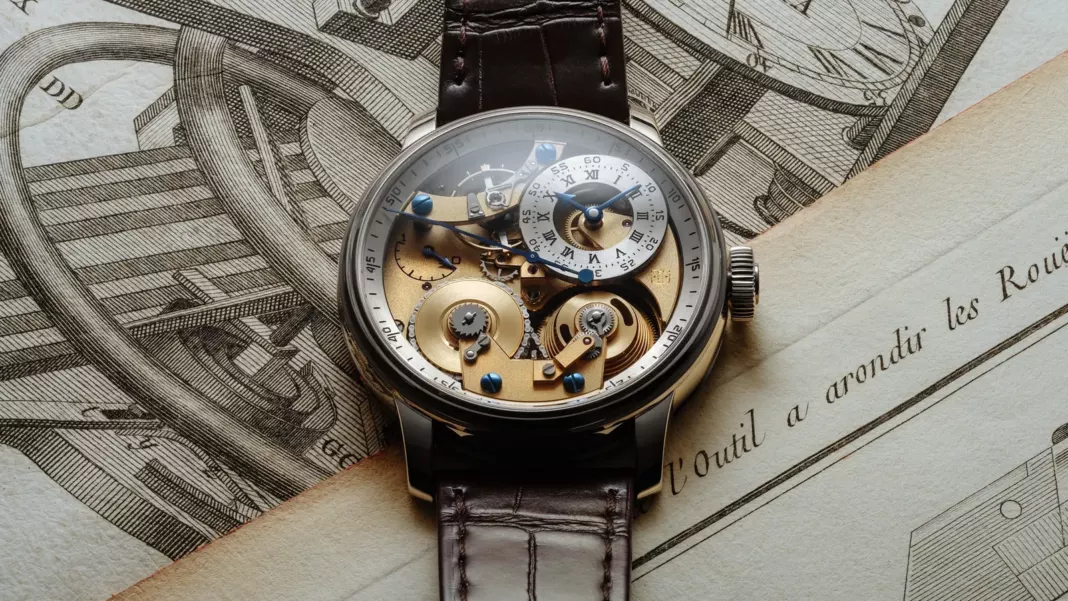
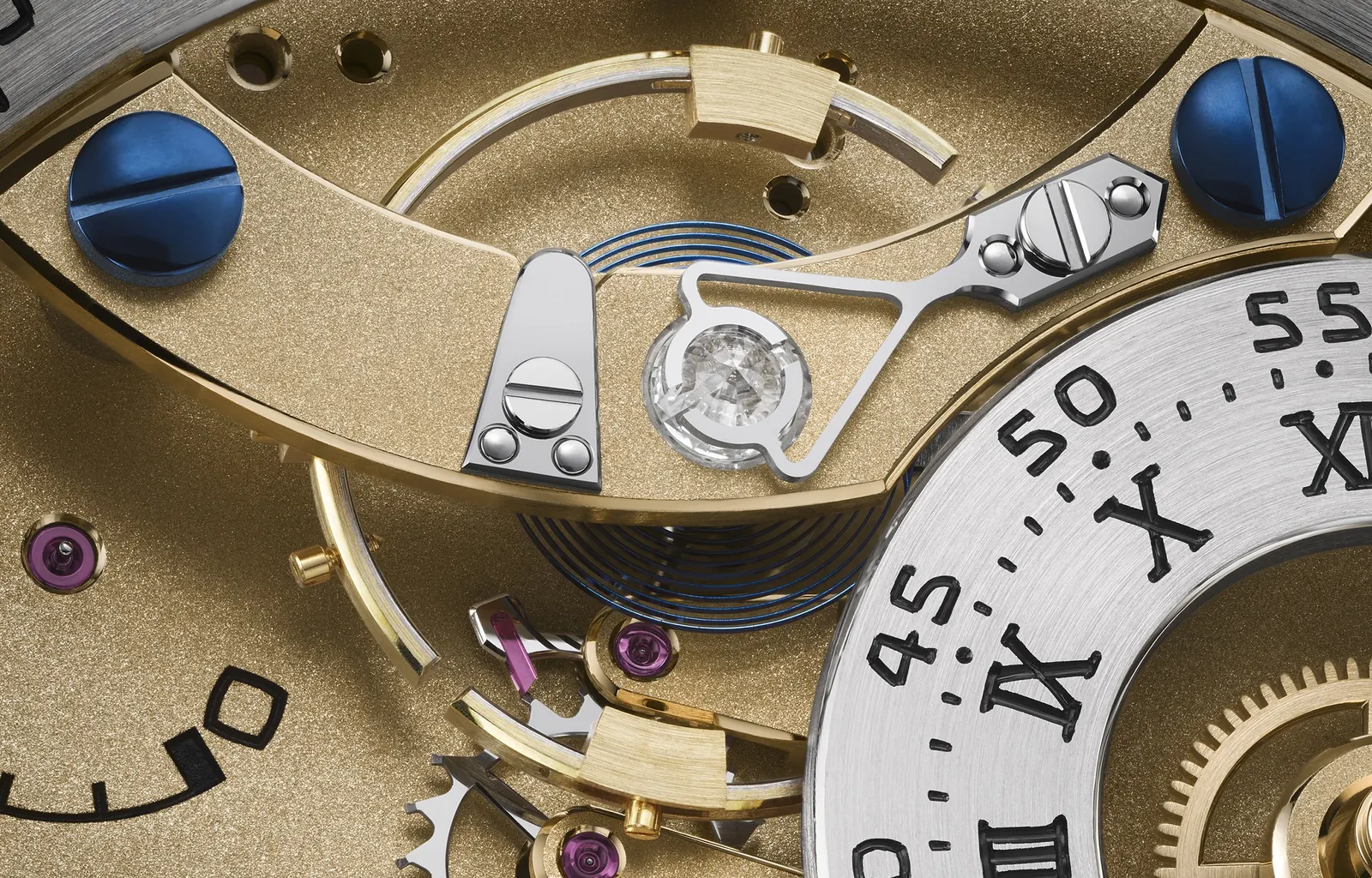
Unveiled during the tenth anniversary of Chronométrie Ferdinand Berthoud in 2025, the Naissance d’une Montre 3 draws its geometry and mechanical logic directly from Ferdinand Berthoud’s No. 3 Astronomical Pocket Watch. The bridge structure, diamond shock absorbers, and cone-shaped fusee are legible references to the historical piece, rendered entirely in steel without any computer-assisted production.
The case resolves this heritage into a wearable object. Its proportions are subordinate to the movement within — the fusee-and-chain assembly defines the spatial requirements, and the case follows accordingly.
Movement & Materials
Two chronometry-oriented systems define the movement. Upstream, the fusee-and-chain transmission compensates for the mainspring’s declining torque: as the chain migrates from the narrower to the wider diameter of the fusee, the lever arm lengthens in proportion. A Breguet-type stopwork restricts use to four of the barrel’s roughly 8.5 turns, and an auxiliary spring sustains energy delivery to the balance-spring during winding.
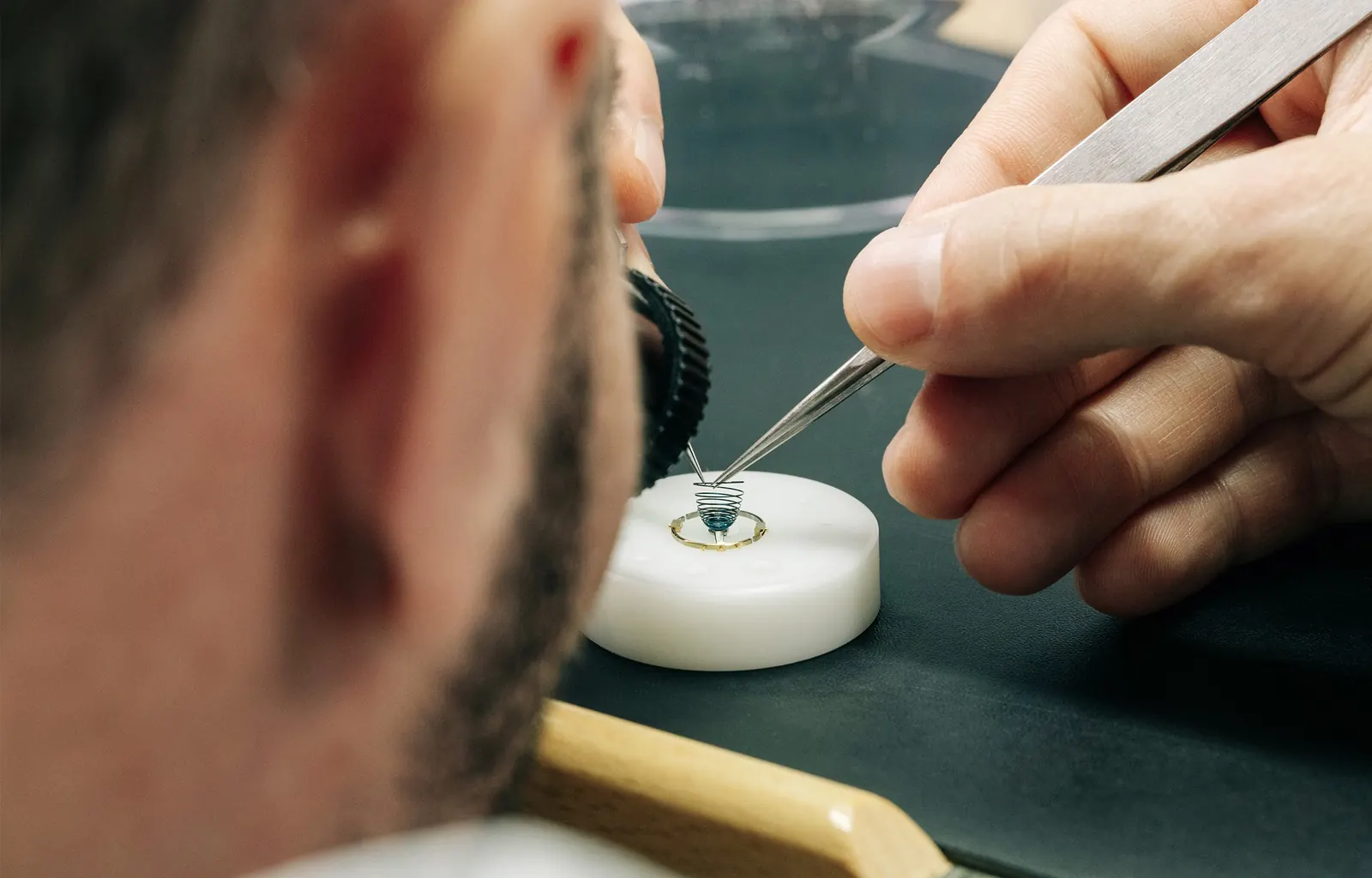
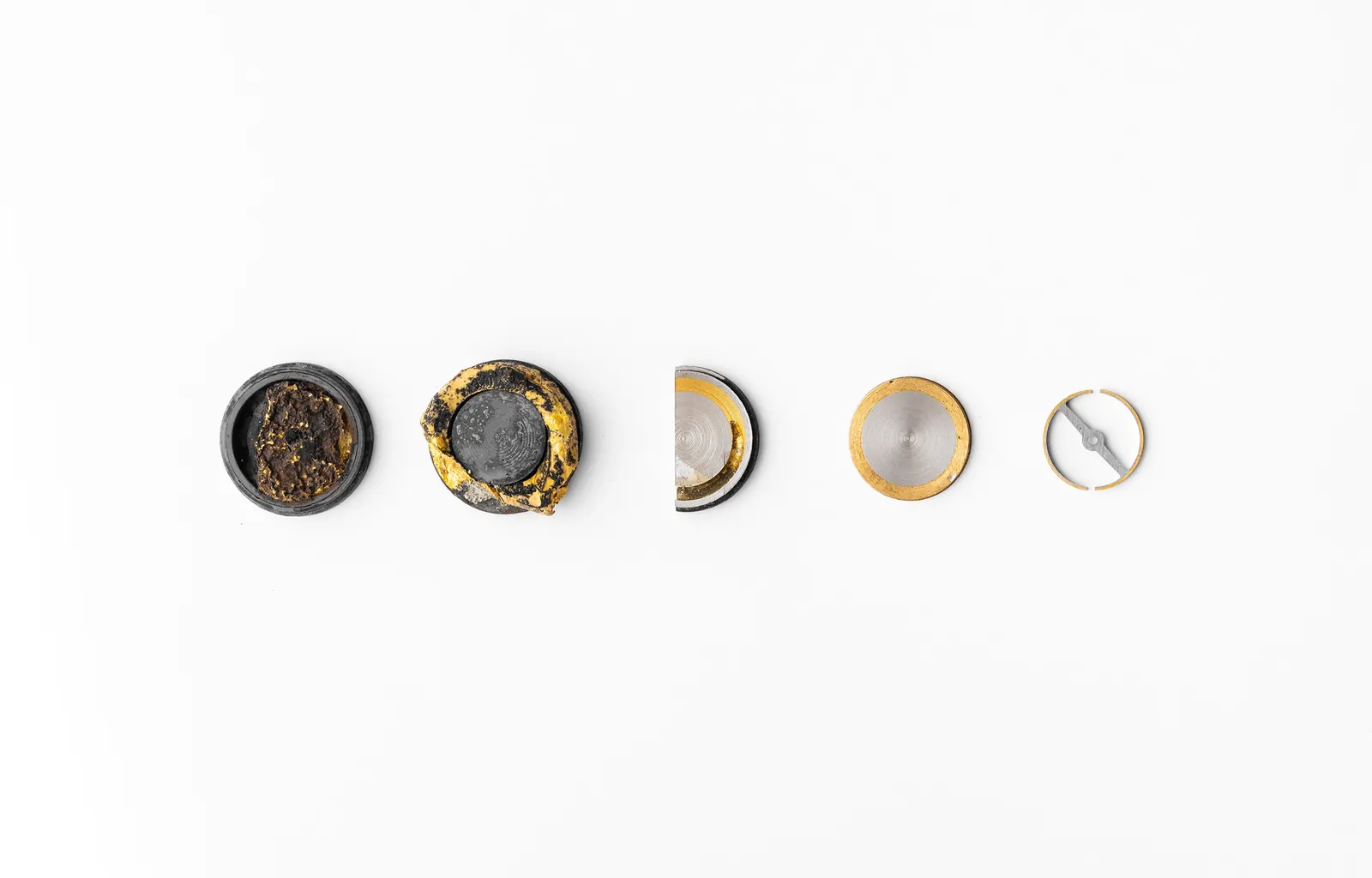
Downstream, the Guillaume-type bimetallic balance — two half-rims of Invar bonded to brass — alters its moment of inertia in response to temperature shifts, correcting both the primary and secondary thermal errors in the steel balance-spring. According to the brand, mastering the metallurgical bond between the two alloys, and rediscovering the practice of hammering brass after casting to stabilise its thermal properties, consumed years of research before the technique became reproducible. The COSC certificate for the first auctioned piece records the outcome: an average daily rate of 0.91 s/day, a thermal variation of 0.01 s/day/°C, and a rate correction of 0.69 s/day.
Heritage & Lineage
Over 80 artisans and specialists from Chronométrie Ferdinand Berthoud and the Chopard group contributed to the project over five years. The knowledge recovered — particularly around bimetallic balance adjustment, a skill that had largely disappeared with the adoption of self-compensating alloys in the twentieth century — is central to what the Naissance d’une Montre programme exists to preserve and transmit.
Charles-Édouard Guillaume, born in Fleurier and awarded the 1920 Nobel Prize in Physics for his work on low-expansion alloys including Invar, supplies the scientific foundation that the Fleurier workshops are now translating back into regulated practice.
Against Its Siblings
Where the FB 1 collection addresses a broader collector audience through serial production, the Naissance d’une Montre series operates at the opposite extreme. Eleven pieces over ten years, each individually certified, each requiring a watchmaker to personally set the thermal coefficient of a bimetallic balance — a task that, in the broader industry, no longer exists as a practised skill. Two pieces left the Fleurier workshops in 2026; the remaining nine will follow at two per year until the series closes.
For collectors across the Gulf and Europe tracking the intersection of historic precision horology and contemporary auction results, the CHF 1.2 million achieved at Phillips in November 2025 sets a clear reference point for what follows.
| Movement | Exclusive manual calibre; fusee-and-chain transmission; Guillaume-type bimetallic balance; COSC-certified chronometer |
| Case material | Steel |
| Price | Over CHF 1,200,000 (first piece, Phillips Geneva auction, November 2025) |
| Availability | On request from the maison or an authorised retailer in the Middle East |
For more on horology that matters to collectors in Europe and the Middle East, sign up for our weekly editorial briefing.
Learn more about the Naissance d’une Montre 3 on the Ferdinand Berthoud official website.
Frequently Asked Questions
How many pieces make up the Naissance d'une Montre 3 series, and how long will they take to complete?
The series comprises 11 timepieces in total. The first was completed and auctioned in November 2025; the remaining ten require a further five years to complete and deliver from the Fleurier workshops.
What made the first Naissance d'une Montre 3 so expensive — is that CHF 1.2 million price realistic?
The figure reflects more than 11,000 hours of hand-work on a single piece, the involvement of over 80 artisans from Chronométrie Ferdinand Berthoud and Chopard, and the exclusive fusee-and-chain movement certified by COSC. The first timepiece sold for over CHF 1.2 million at a Phillips Geneva auction in November 2025.
What COSC results did the Naissance d'une Montre 3 achieve?
The first certified timepiece recorded an average daily rate of 0.91 seconds per day across positions, a rate variation of 0.01 seconds per day per degree Celsius, and a rate correction of 0.69 seconds per day — results that validate both the fusee-and-chain transmission and the bimetallic balance.
How does the fusee-and-chain mechanism in the Naissance d'une Montre 3 work?
The cone-shaped fusee compensates for the gradual drop in mainspring torque by increasing the lever arm as chain tension decreases. A Breguet-type stopwork limits the barrel to four of its approximately 8.5 turns, keeping energy delivery to the escapement exceptionally consistent throughout the power reserve.
Explore more from FERDINAND BERTHOUD: Exploring the Precision of Chronométrie Ferdinand Berthoud · The Masterpiece of Precision: Ferdinand Berthoud Chronomètre FB 1.