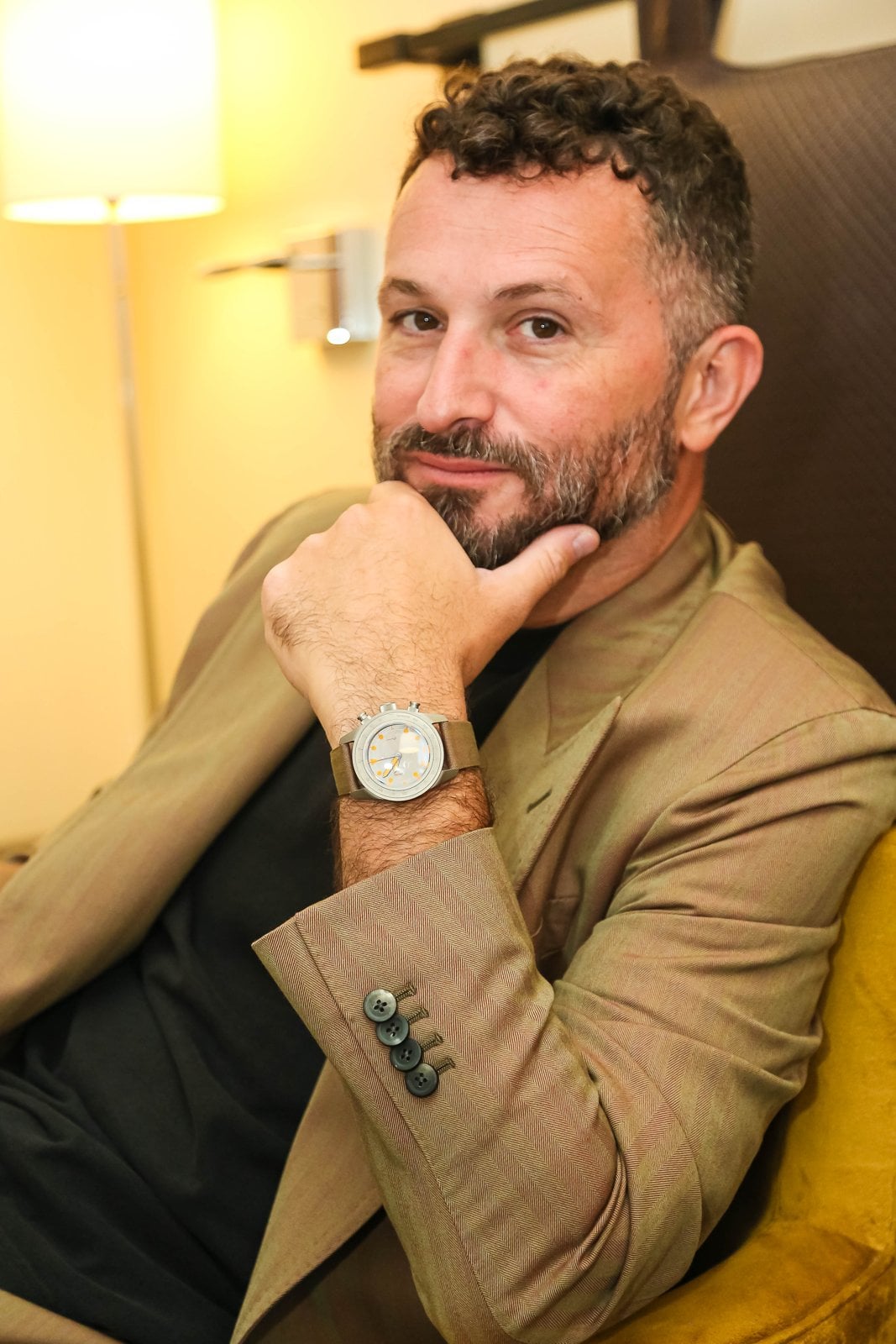
Our Editor-at-Large Isabelle Junod met co-founder Giovanni Moro on the Unimatic stand at Geneva Watch Days 2026, where the Milan brand is, to his knowledge, the only made-in-Italy exhibitor.
What the interview reveals: a company of sixteen people that has never discounted a watch in eleven years, whose capsule editions of 150 or 300 pieces never return once sold out, and whose wholesale business overtook direct sales for the first time in 2025. Moro also explains how one phone call from a collector in Saudi Arabia produced the first solid-gold Modello Quattro, and why Pitti Uomo in Florence still matters more to him than any watch fair.
Unimatic at a Glance
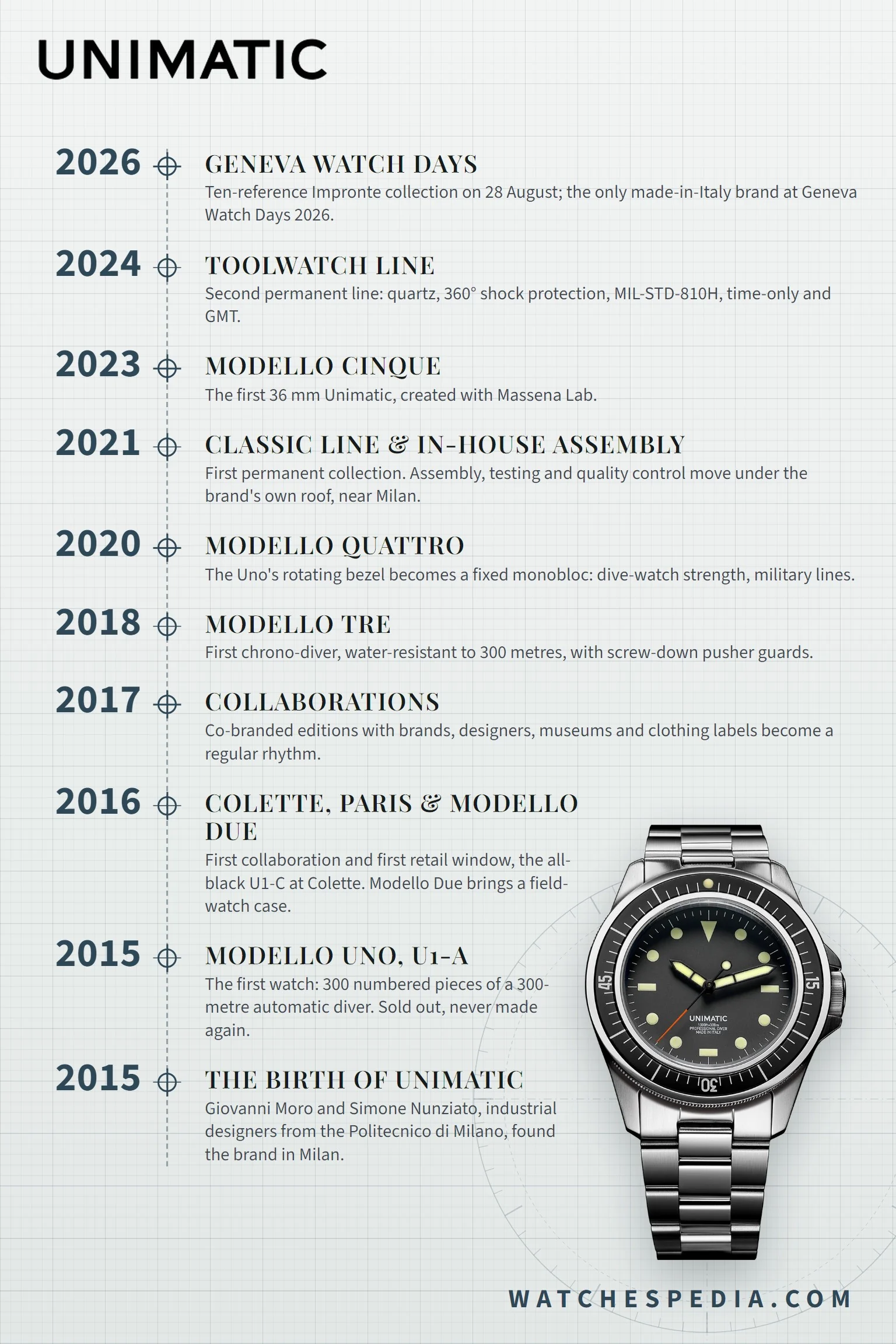
- Founded in Milan in 2015 by Giovanni Moro and Simone Nunziato, two industrial designers trained at the Politecnico di Milano; the first watch was a 300-piece, 300-metre automatic diver priced around 500 euros.
- Capsule collections that never return once sold out remain the core of the business eleven years on, alongside collaborations with brands, designers, museums, a motorsport house and clothing labels.
- Fair pricing from day one: no discounts, no Black Friday, no promotions. Entry point is the Modello Uno Classic at around 600 euros; the titanium Modello Tre chronograph tops regular production at around 4,000 euros.
- Sixteen people in Milan, including an in-house assembly line; sales split roughly fifty-fifty between unimaticwatches.com plus the Milan flagship and some 130 retailers worldwide.
- The Middle East is a stated priority: direct-to-consumer data points to strong potential in the UAE and Saudi Arabia, where the wholesale network is still being built.
An Italian Identity, Designed Like a Chair
Since 2015, Unimatic has built its identity outside the traditional Swiss haute horlogerie system. How do you protect that identity now that you exhibit alongside historic maisons at Geneva Watch Days?
To my knowledge we are the only made-in-Italy watch brand inside the Geneva Watch Days association and exhibition, and of course we are proud to represent our country. But I don’t think we are protecting anything. For better or worse, it is simply natural for us to do things slightly differently from the Swiss, German or Japanese brands. I get asked this question in many forms, and the answer is very simple: we are Italian, born and raised, and Simone, my co-founder, and I are not watchmakers, not businessmen, not entrepreneurs, unfortunately. We are product designers.
We are not watchmakers, not businessmen, not entrepreneurs, unfortunately. We are product designers.
We met at the Politecnico di Milano, where we studied industrial design. We were trained to design products whatever the object: the chair, the television, the lamp, the spoon, the city. When we met, at about twenty, we discovered we were both passionate about wristwatches. For almost ten years we practised our professions. I was in furniture, he was more in 3D visualisation, and we talked watches from a distance: I stayed in Milan, he moved to London, and from time to time we would call and say, have you seen the new Seiko, have you seen the new Audemars? We analysed products through the lens of young but professional industrial designers: I like the way they did the lug, but I don’t like the font on the dial; I like the strap, but I would have done it differently. Layer upon layer of critical thinking about what other people were doing.
And then, in 2015, came the first watch: 300 numbered pieces of an automatic diver at around 500 euros.
In 2015 we had the chance to make our first small batch of an entirely custom design, everything but the movement. Three hundred pieces of this watch here: in our view the synthesis of a diving watch at an affordable price, about 500 euros, with a mechanical automatic Seiko movement, 300 metres water-resistant, each one individually numbered, 1/300, 2/300 and so on. With a promise: we would never make one more.
That first watch is marked sold out on your website and has never been reissued. Is scarcity a strategy or a principle?
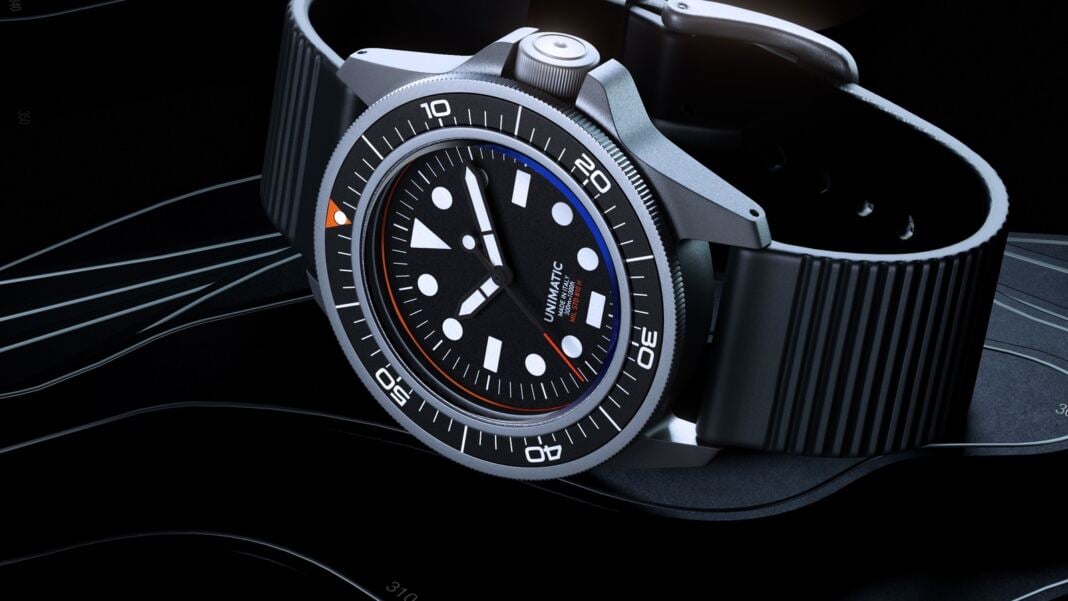
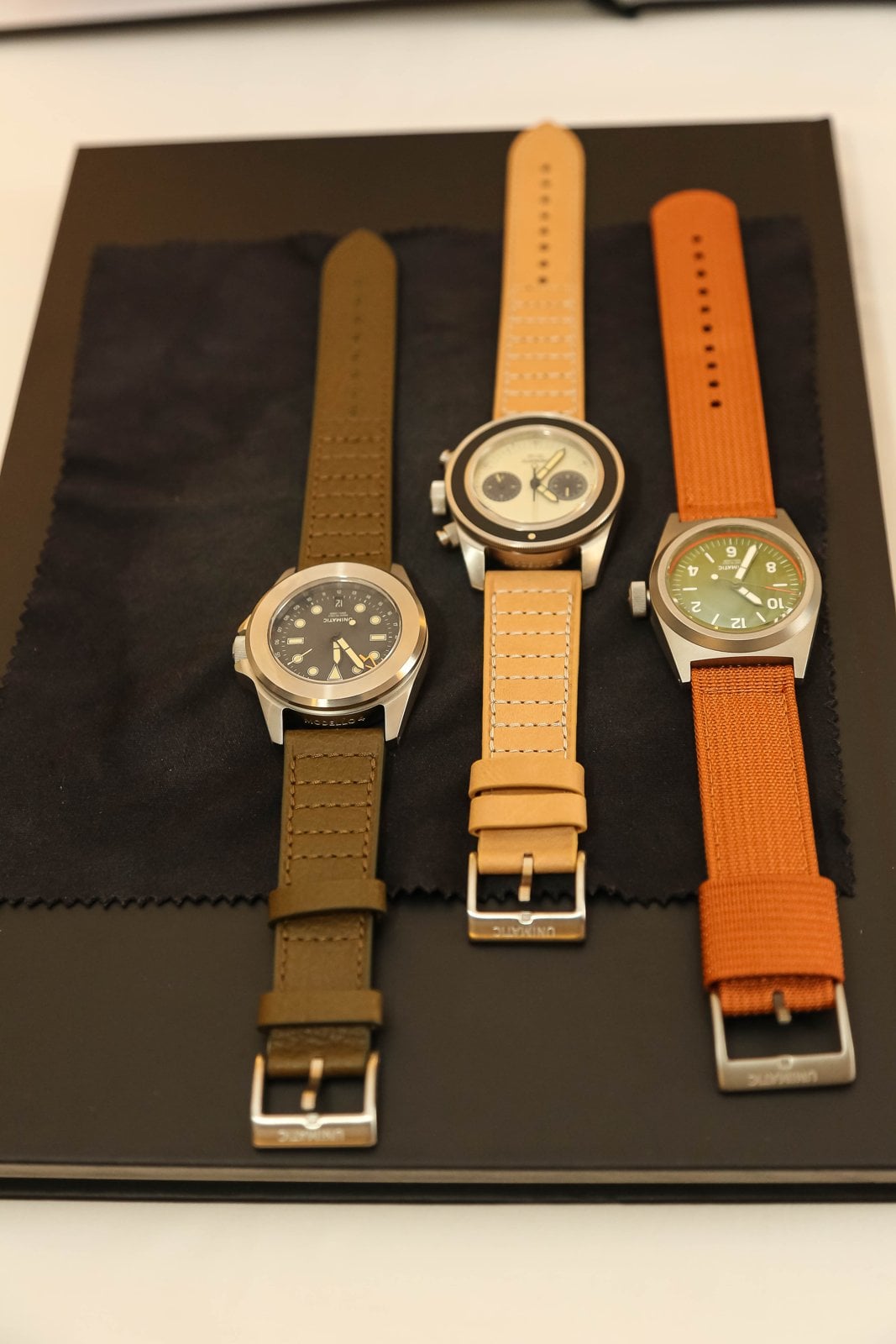
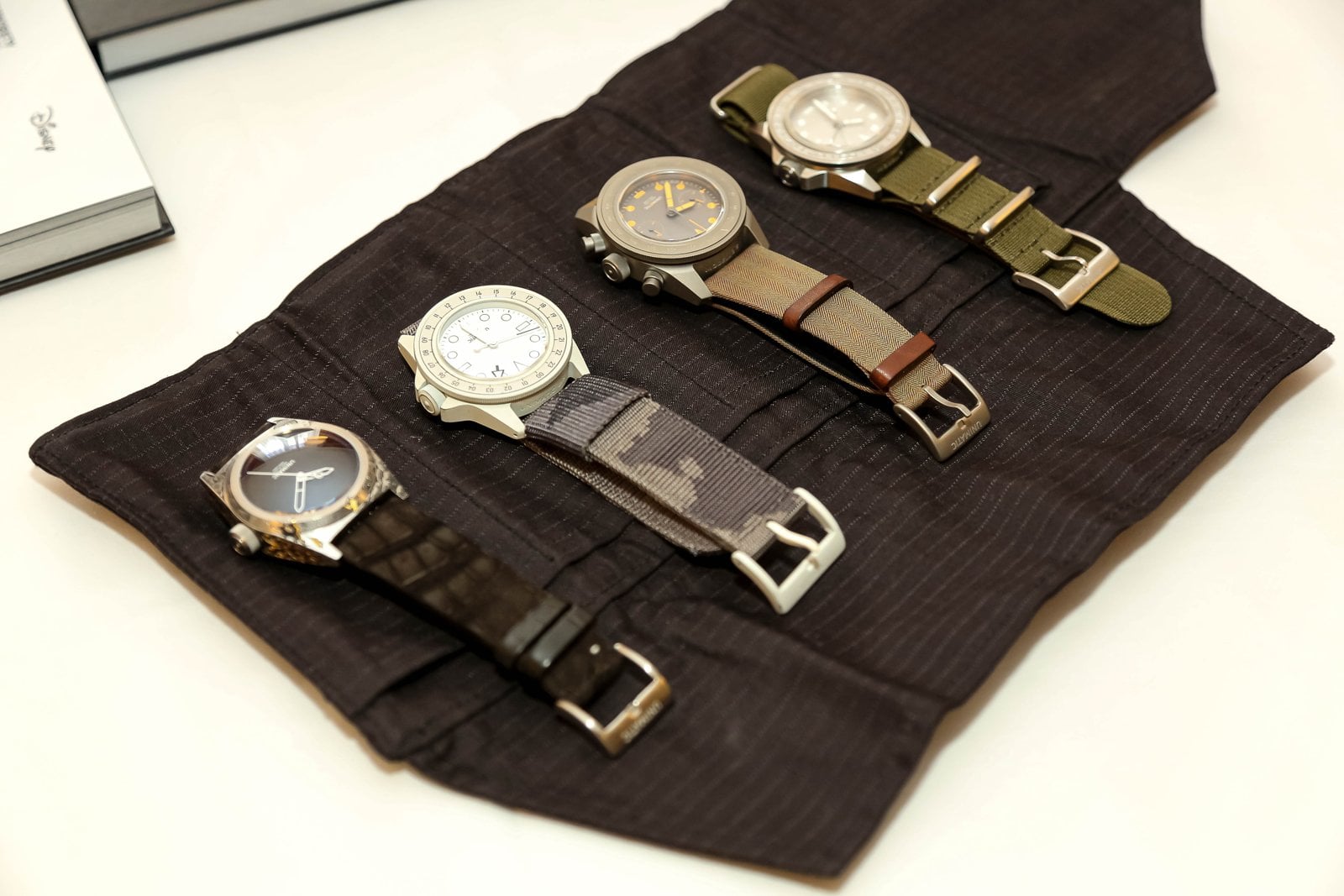
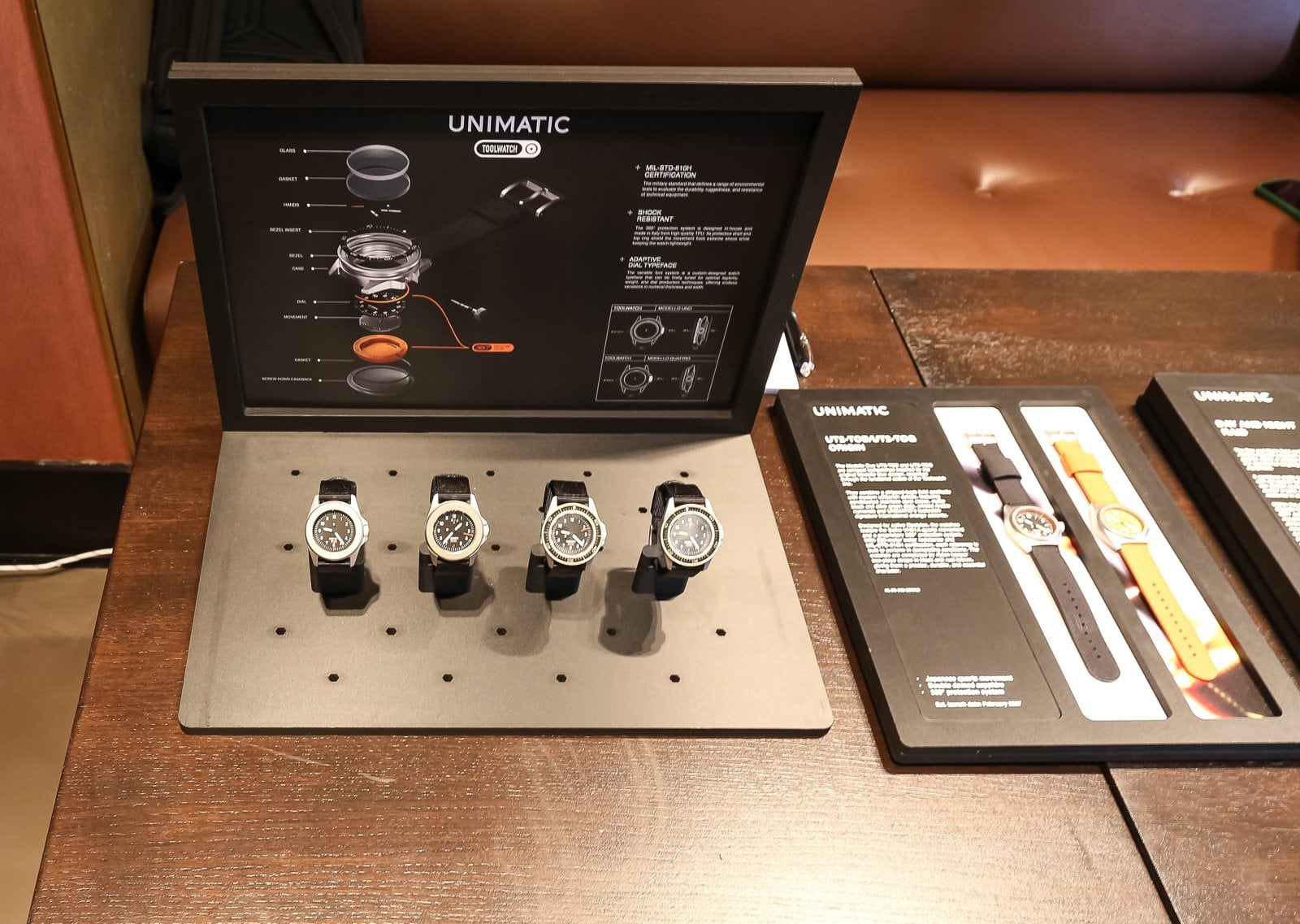
We have a lot of sold-out products, because eleven years after we started, this approach is still the core, not only of the revenue but of the identity of what we do. The watches we are showing here in Geneva belong to what we call capsule collections. This one is 150 pieces; when they are sold out, they never come back, and we move on to something else. We have done quite a few. Some are the expression of a seasonal theme or exploration; others are collaborations with a brand, a designer, a museum, a motorsport company, a clothing label.
Fair Pricing, and Never a Discount
In eleven years you have never run a discount, not even a Black Friday. As demand grows, how do you resist the pressure to raise prices and reposition, the way so many successful independents eventually do?
From day zero we have believed in a fair-pricing policy. On the bright side, it means we do not charge money for the sake of positioning by price. Maybe it is a big mistake. Maybe I could be much wealthier than I am, but that is how we are built. On the sales side it means we do not discount, we do not do Black Friday, we do not do special promotions, nothing. The price is the right one, in our opinion, for the content embedded in the watch. We do step up from time to time, but that is less a sales strategy than the chance to make a product with more technical or design content.
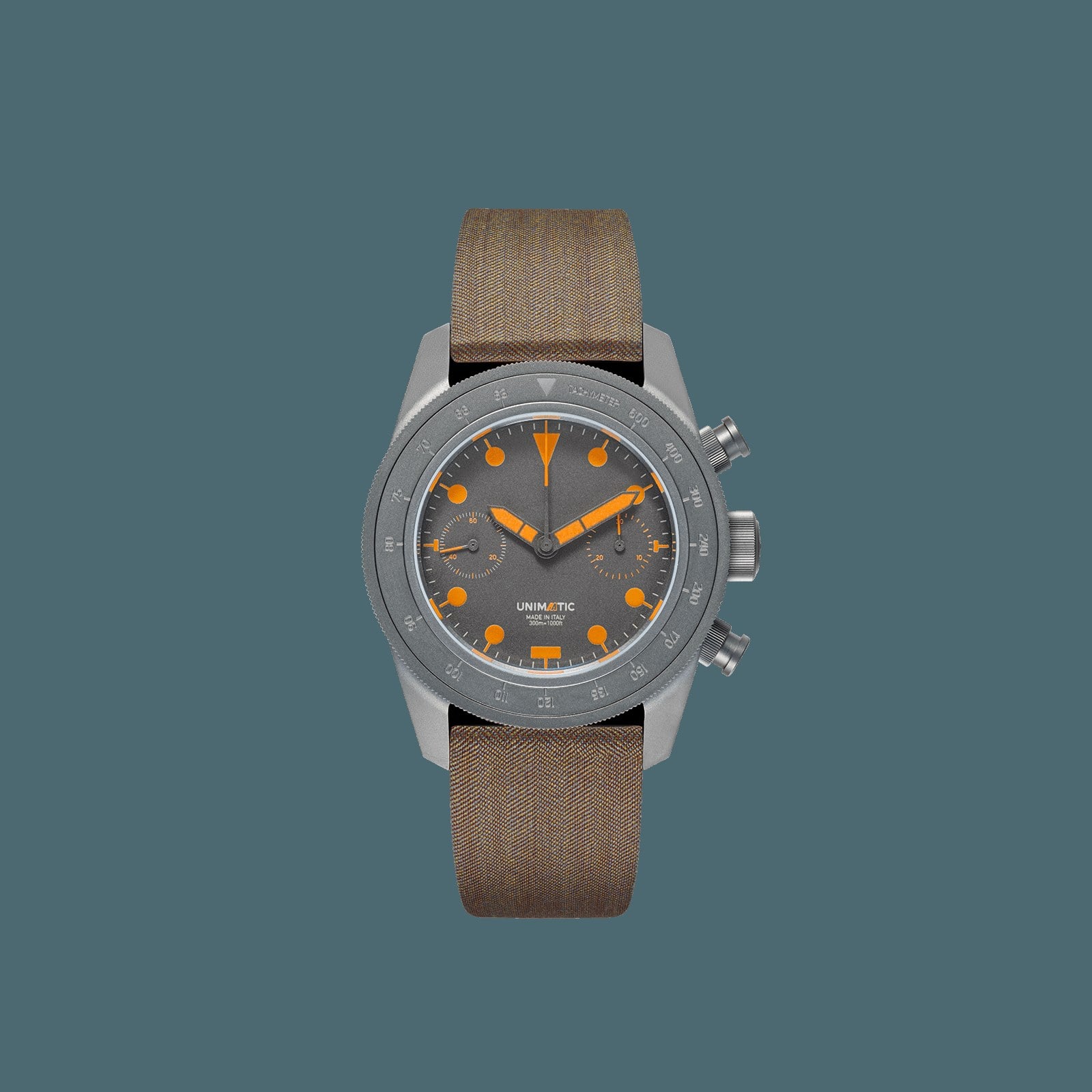
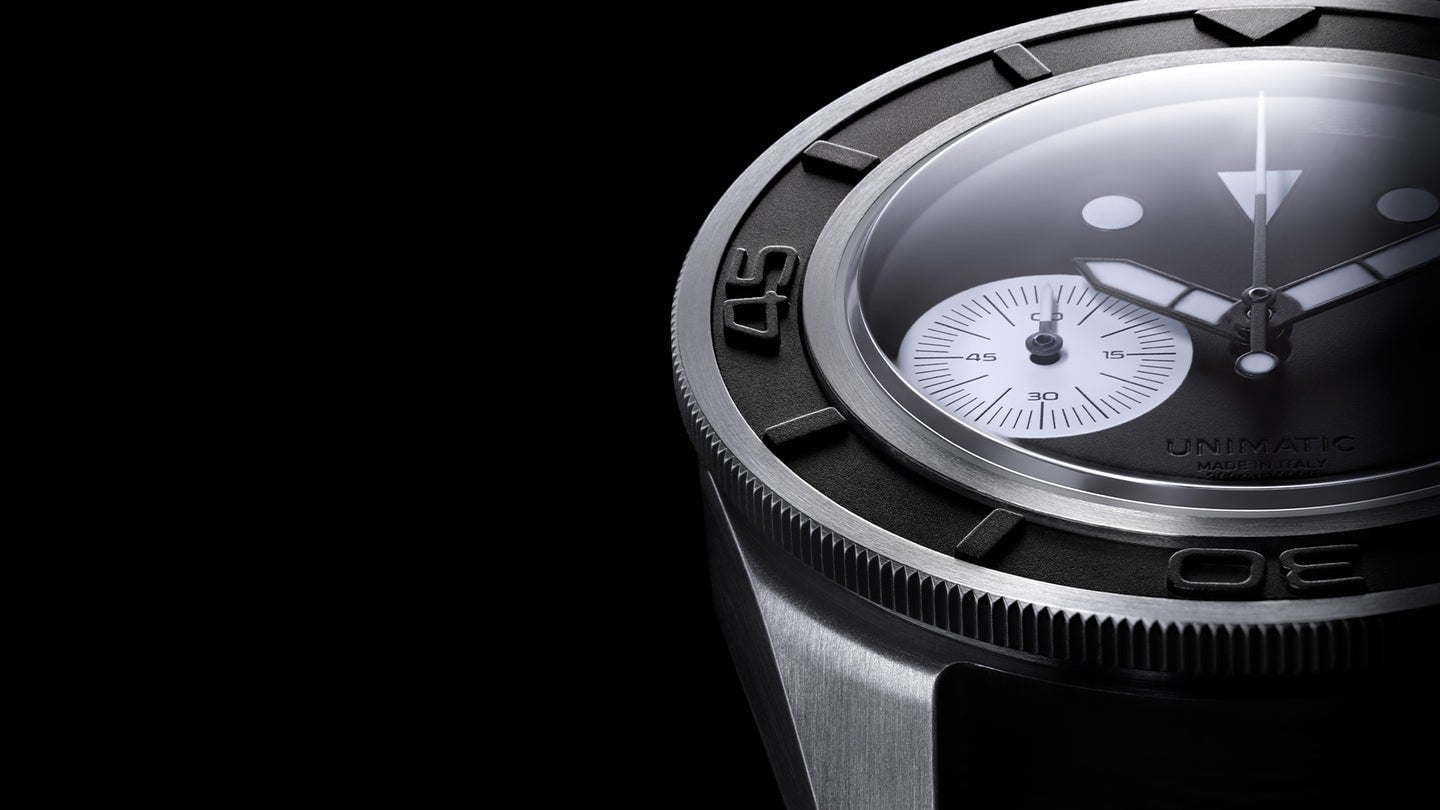
A quick example, which my colleague Aurora brought: a mechanical chronograph on the Sellita SW510 in a titanium case with a Solaro fabric strap. Far more costly than average, so it is around 4,000 euros, the top of our regular production, because of the titanium, because it is an edition of 30 pieces, and because the strap is very tricky to execute. We believe it is a fairly priced product.
Online, Wholesale and the Milan Flagship
You started in 2015 with e-commerce and no boutiques. Is online still the primary channel, or has physical retail become more important as you scale?
Last year was the first in which B2B, wholesale, was slightly higher than direct. I think 2026 will be roughly fifty-fifty. Direct means unimaticwatches.com and the little flagship store we have in Milan, but it is about ninety-five per cent the website. The other half comes from the 130 or so retailers selling the product around the world. In the B2B part we also count private commissions, for a yacht club, or a company celebrating its fiftieth anniversary.
Who Buys a Unimatic
Your entry watch costs 600 euros and your solid-gold Modello Quattro at least 20,000. Who is the Unimatic customer?
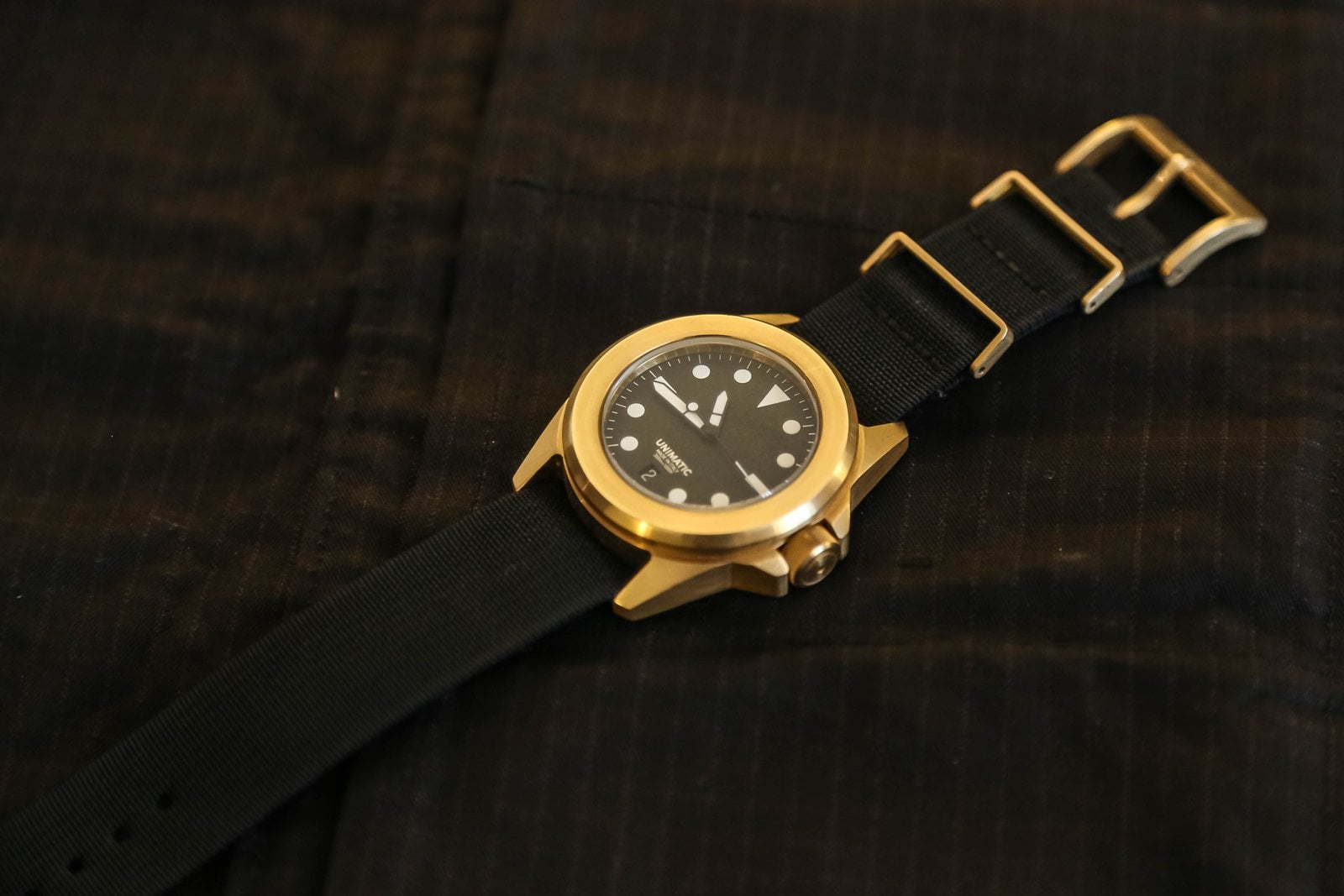
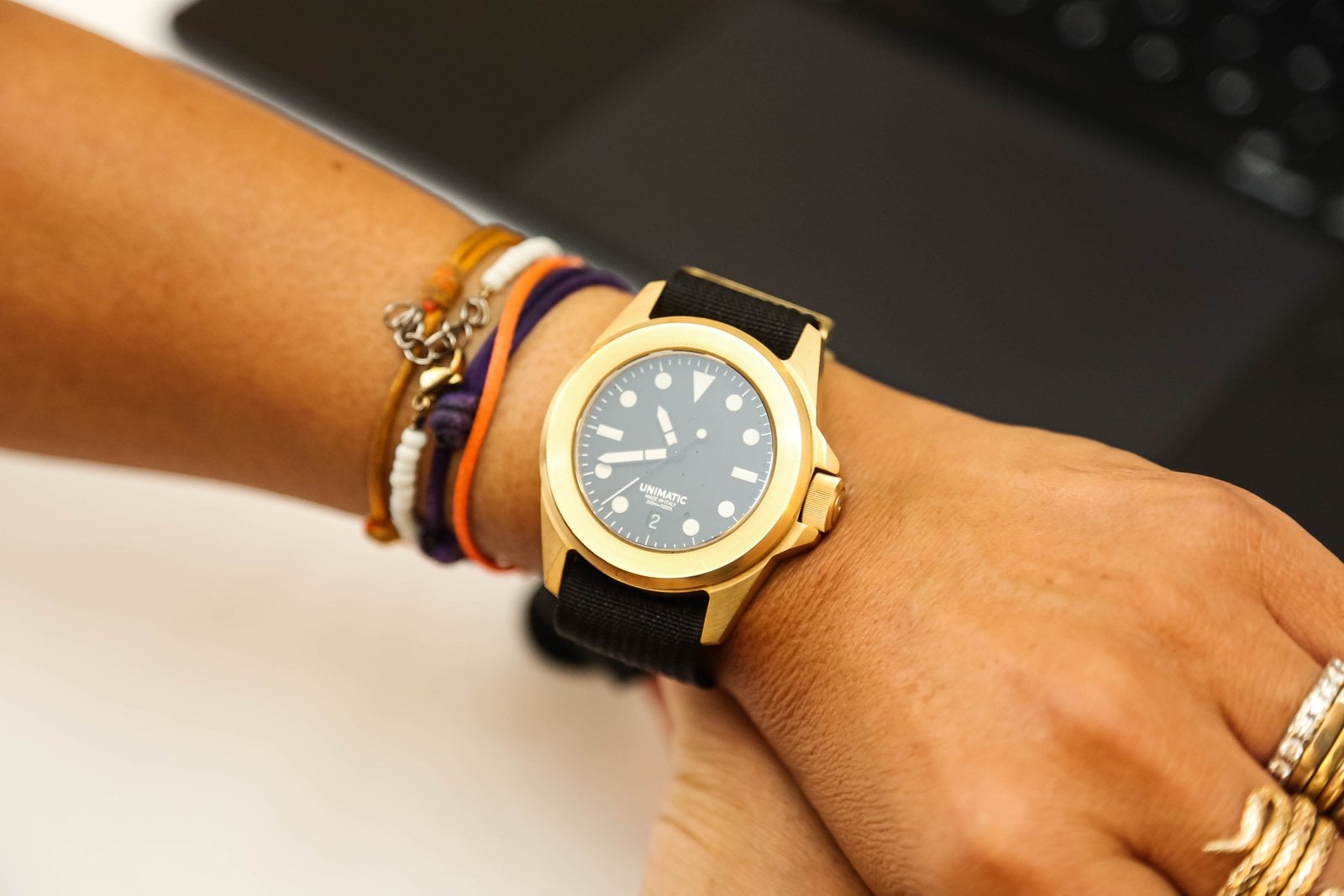
That is the trickiest question, and I always get it, because it is a very heterogeneous crowd. Take the acquaintance we have in common: I am pretty sure he can afford any kind of watch. In the US we luckily have many people like that. This one, for instance, is a solid-gold Modello Quattro that today costs at least 20,000 euros. I keep one myself to impress journalists during interviews, but it was born because a very good friend and Unimatic collector from Saudi Arabia picked up the phone one day and said: I want this in solid gold. I had never made a solid-gold watch. We had to start from scratch, study it, find the right supplier, and it would be costly, because it is heavy, 70 grams of solid gold. He said: no problem, you make it and tell me what I owe you. So we did. One unique piece for him. Mine has a very basic black dial; he had a dial with blue trim, because it was a gift for his wife. It is made to order. We have done around twenty, each one different: blue, white, tiger-stripe, a diamond-pavé dial and so on.
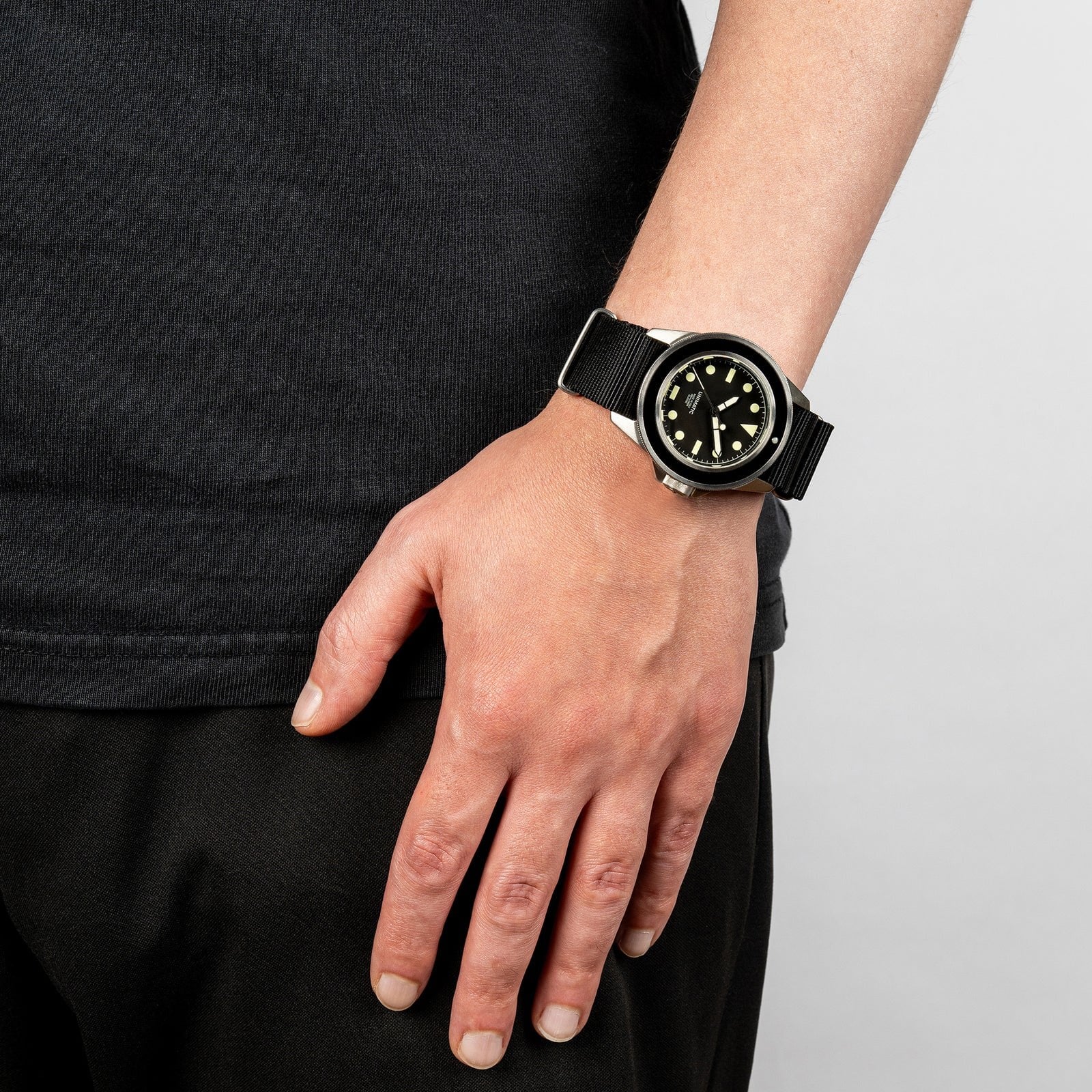
At the other end, we have a number of kids who want to enter this world, and who find that our watch is, hopefully, nice, fairly priced, with good technical and stylistic execution. So they pull the trigger on a Modello Uno Classic, a 600-euro watch you could wear perfectly happily for the rest of your life, or that becomes a first step into collecting. Maybe later they go and get the Omega, the Blancpain, you name it. And some of them, as they get older and wealthier, keep collecting ours alongside the big names and the very precious pieces.
So you cannot say whether Gen Z is your core customer?
I can tell you it is not. We have a few from that generation, and everything in between. With the customers we serve directly, we have a relationship and some insight. For the one buying in Maxfield in Los Angeles or at one of our retailers in Geneva, we can imagine the kind of person who shops there, but we do not have deep analytics. From the people we meet, in Geneva, at the Biennale in Venice, at trunk shows in New York, it is very, very mixed. It is a bit of an ego trip to say so, but the red line holding these people together is Unimatic itself. Our average customer has a capacity for understanding small details. You do not buy a Unimatic for status; you do not buy it because it is the cheapest, or the most precise. You buy it because we believe in a unique recipe, a little of this and that and that, packaged in a nice product.
You do not buy a Unimatic for status; you do not buy it because it is the cheapest, or the most precise.
Independent, Sixteen People, and the Sea
You are independent. You belong to no one?
No one. We belong to ourselves. We belong to the sea.
For 130 retailers, a flagship and a website, how many people work at Unimatic?
Eleven in Milan, and we have built our own assembly line, where we also do quality control, repair, warehousing and fulfilment: another five people. Sixteen in total.
The Middle East: Potential Ahead of the Network
Your solid-gold Modello Quattro began with a phone call from Saudi Arabia. How important is the Middle East to Unimatic today?
It can be very important. Today it is not, which is odd, because we do not have big wholesale success there. We are in conversation, and we have some very nice retailers moving small quantities. I have the feeling, and some data, because I can see where the direct-to-consumer watches go, that we have a lot of potential in the Emirates, maybe in Saudi as well. But for some reason the sales network is still underdeveloped. And the sales network matters, because in our experience since day one, being in the right window helped the website, and a successful website helped us get into yet another nice window. The two worlds interact, and we would like to improve on both sides.
From the Colette Window to Pitti Uomo
What was the first window?
At the beginning we had a very crafty, home-made website with a single product, and our first retailer was Colette in Paris, by far the best concept store in the world at the time. Being in the Colette window kick-started the website too; for several months our best market was France, because people would see it at Colette and think: if it is in Colette, it must be good. Then we went to Luisa Via Roma, to Mr Porter, to Biotop in Japan, and many more.
Geneva Watch Days is only your second edition here, and you skip the other specialist fairs. Which other fairs will you attend?
At the moment, no other specialist watch fair. Since almost the very beginning we have been at Pitti Uomo, the most important fashion fair, in Florence in January and June, with our own little booth. Most of the world’s fashion buyers come, we have always felt very welcome there, and we are one of very few watch brands that do it. Geneva Watch Days last year was our first experience; we wanted to explore it, and that is why we are here. Hopefully next year we will have a bigger programme, but it is still in the making. Dubai Watch Week is possible too, but as a small company it is also a matter of time. I do not have a fully fledged sales department; if there is a Dubai Watch Week, I have to go to Dubai myself. Being in Milan with a shop and a showroom that is rather nice, we do not feel it is vital to move five hundred metres to have a tiny booth at Milan Watch Week.

Interview by Isabelle Junod, Editor-at-Large, for WATCHESPEDIA, Geneva Watch Days, September 2026. Photographs © WATCHESPEDIA; product images courtesy of Unimatic.
Unimatic, 2015-2026: The Brand in Ten Milestones