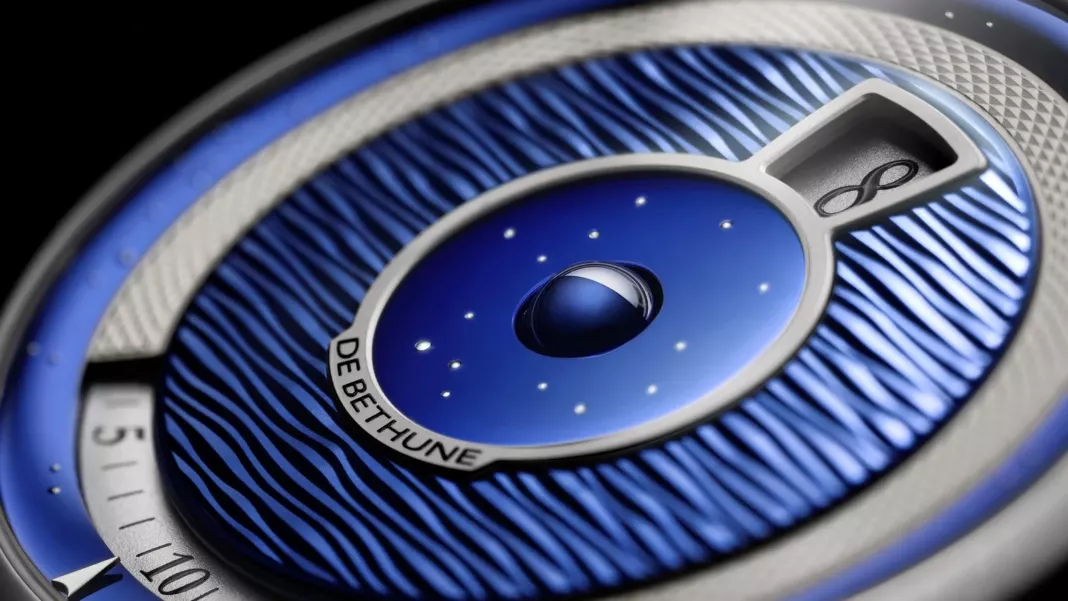
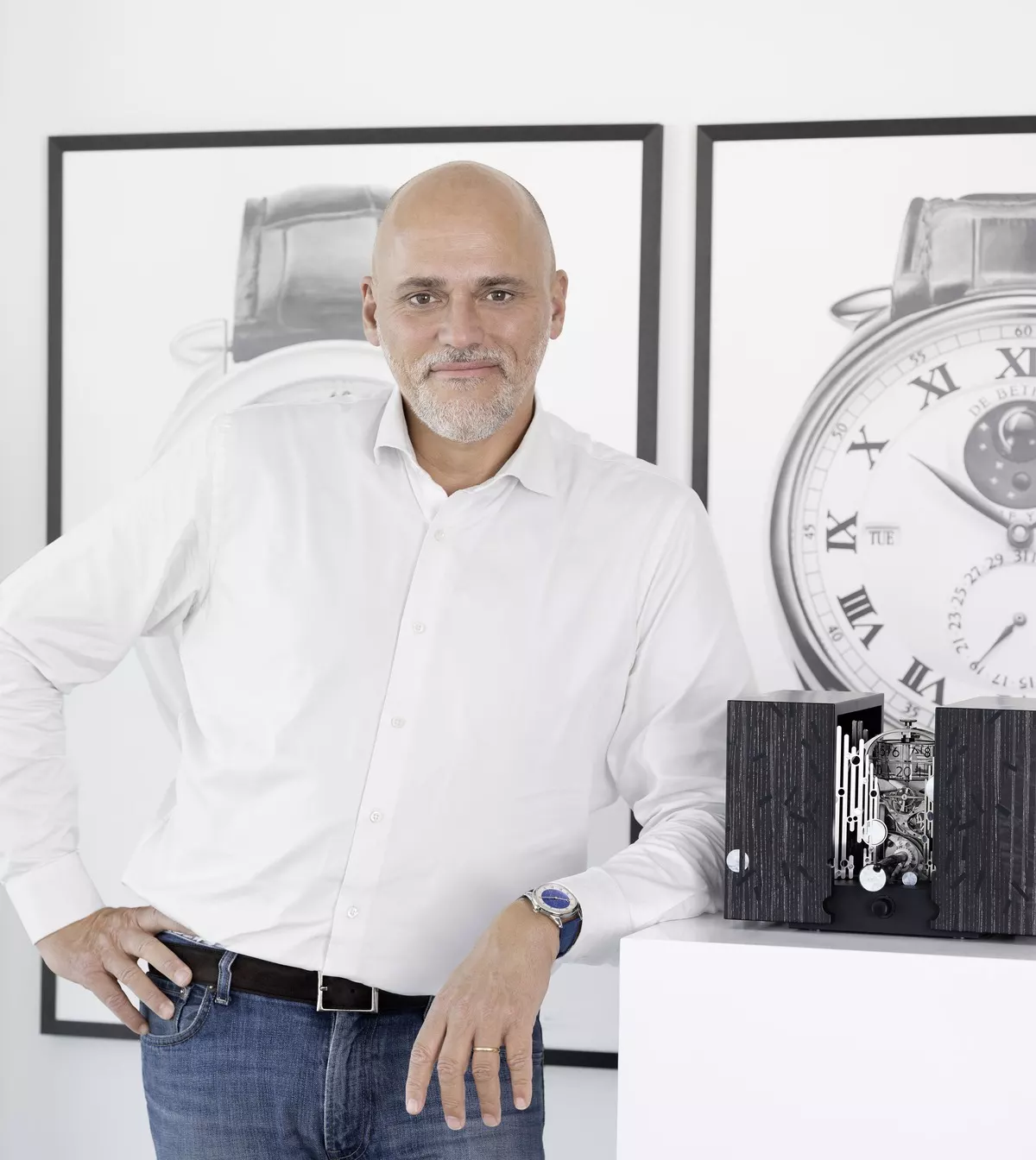
Our Editor-at-Large Isabelle Junod met Antoine Pin, CEO of De Bethune, at Milano Watch Week on Friday 2 October 2026, in his first months at the head of the Maison founded in 2002 at L’Auberson.
What the interview reveals: an executive who spent twenty-five years in large luxury houses and now
describes independent watchmaking as a new language he is learning; a founder, Denis Flageollet,
whose integrity sets the standard; collectors for whom the purchase is itself the achievement, sometimes after years of patience; a twenty-fifth anniversary in 2027 conceived as a
statement about the future rather than a retrospective; and one sentence that sums up the intention,
“we do not want to produce more, we want to produce better”.
De Bethune at a Glance
- Founded in 2002 by Denis Flageollet and David Zanetta; the Maison celebrates twenty-five years in 2027.
- Antoine Pin was appointed Chief Executive Officer in July 2026, after some thirty years in luxury and more than seventeen in watchmaking, at Bulgari Watches, TAG Heuer and Zenith.
- He also served as president of the Geneva Watch Days association from 2022 to 2025, the event founded in 2020 by eight Maisons, De Bethune among them.
- Denis Flageollet remains the creative force of the Maison and continues to lead its technical and artistic direction.
- The Maison does not publish production figures.
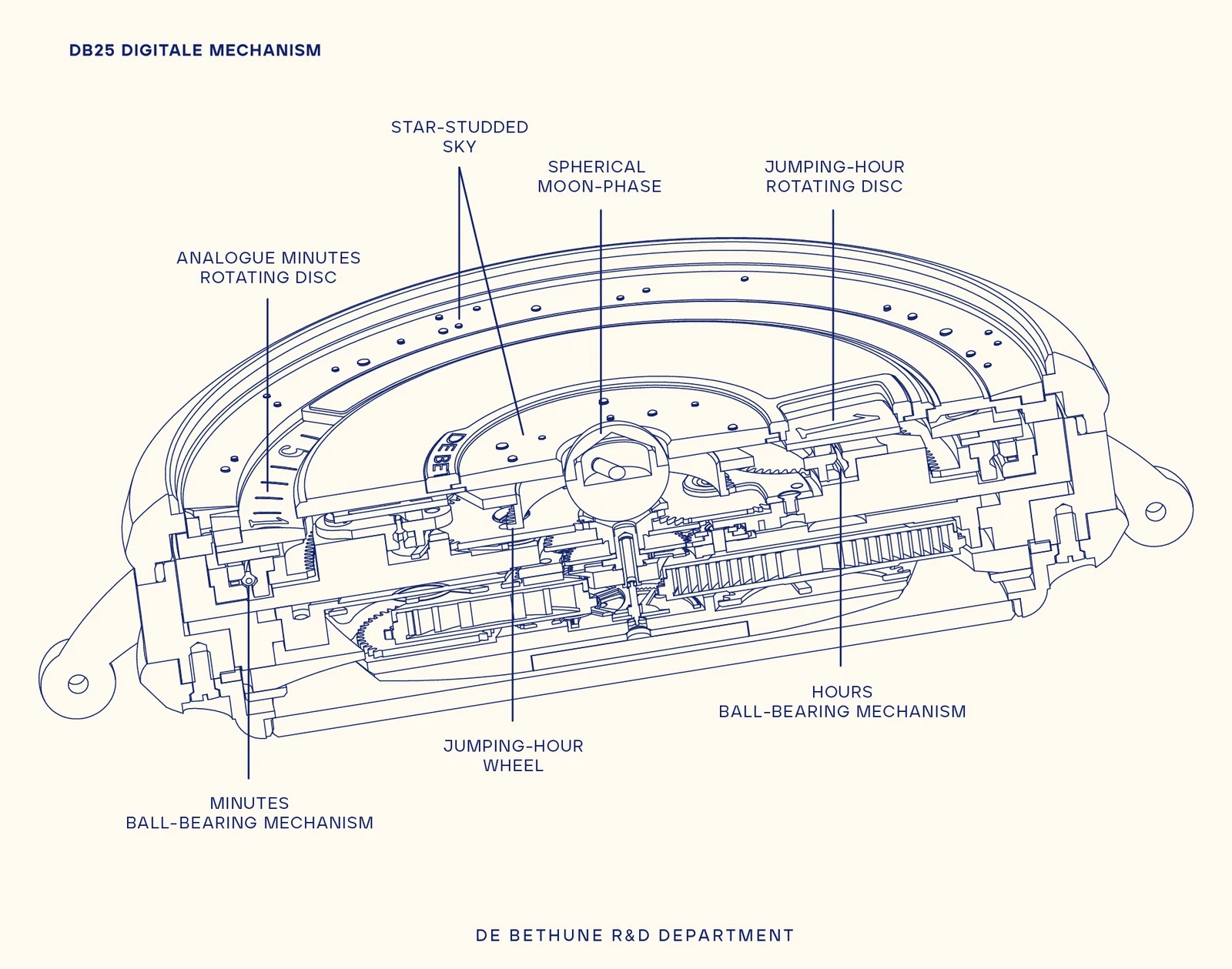
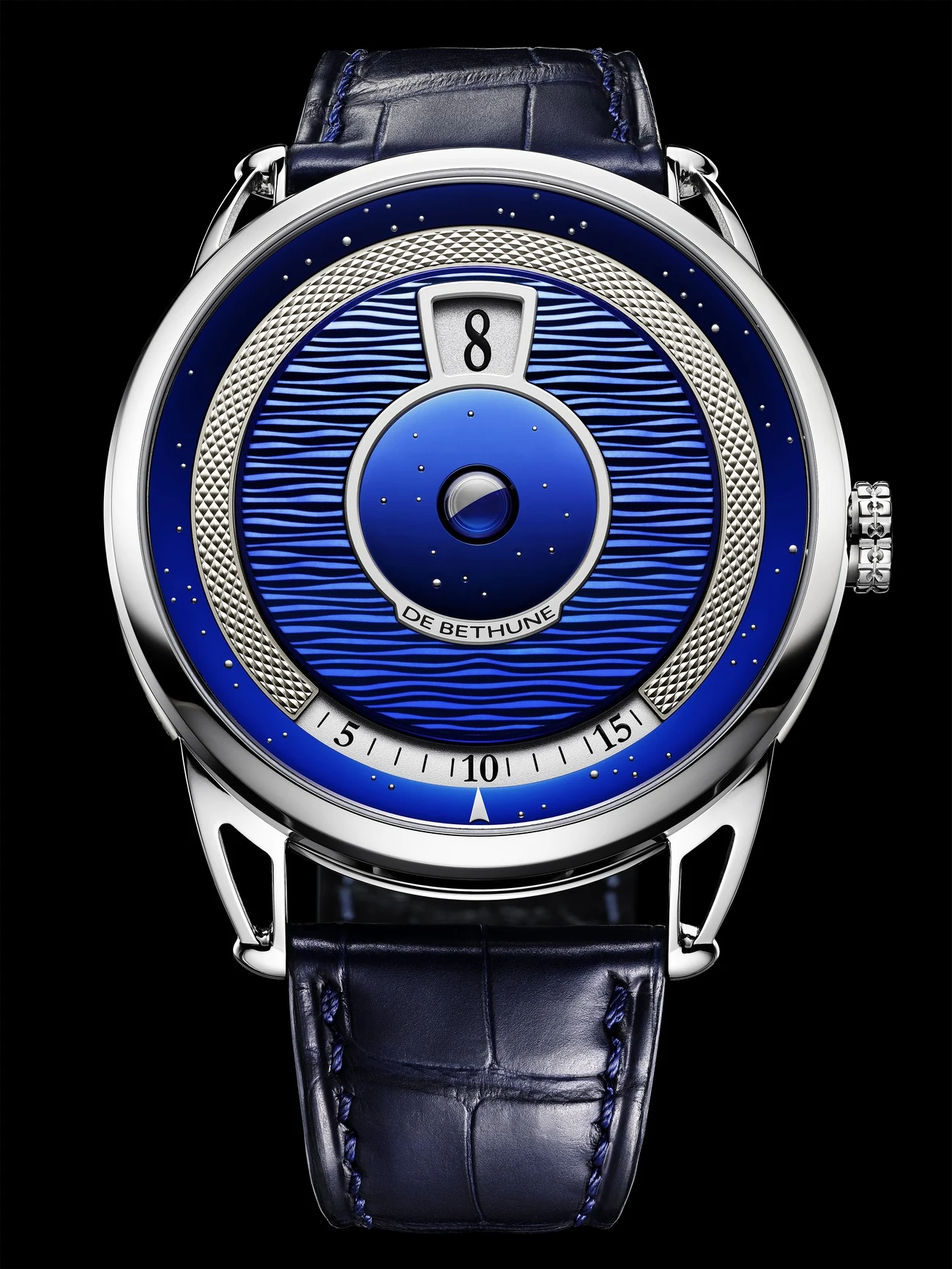
- Collections built on proprietary research: the floating lug, the titanium balance wheel with white-gold inserts, the spherical moon phase and the blued titanium that gives the Maison its signature.
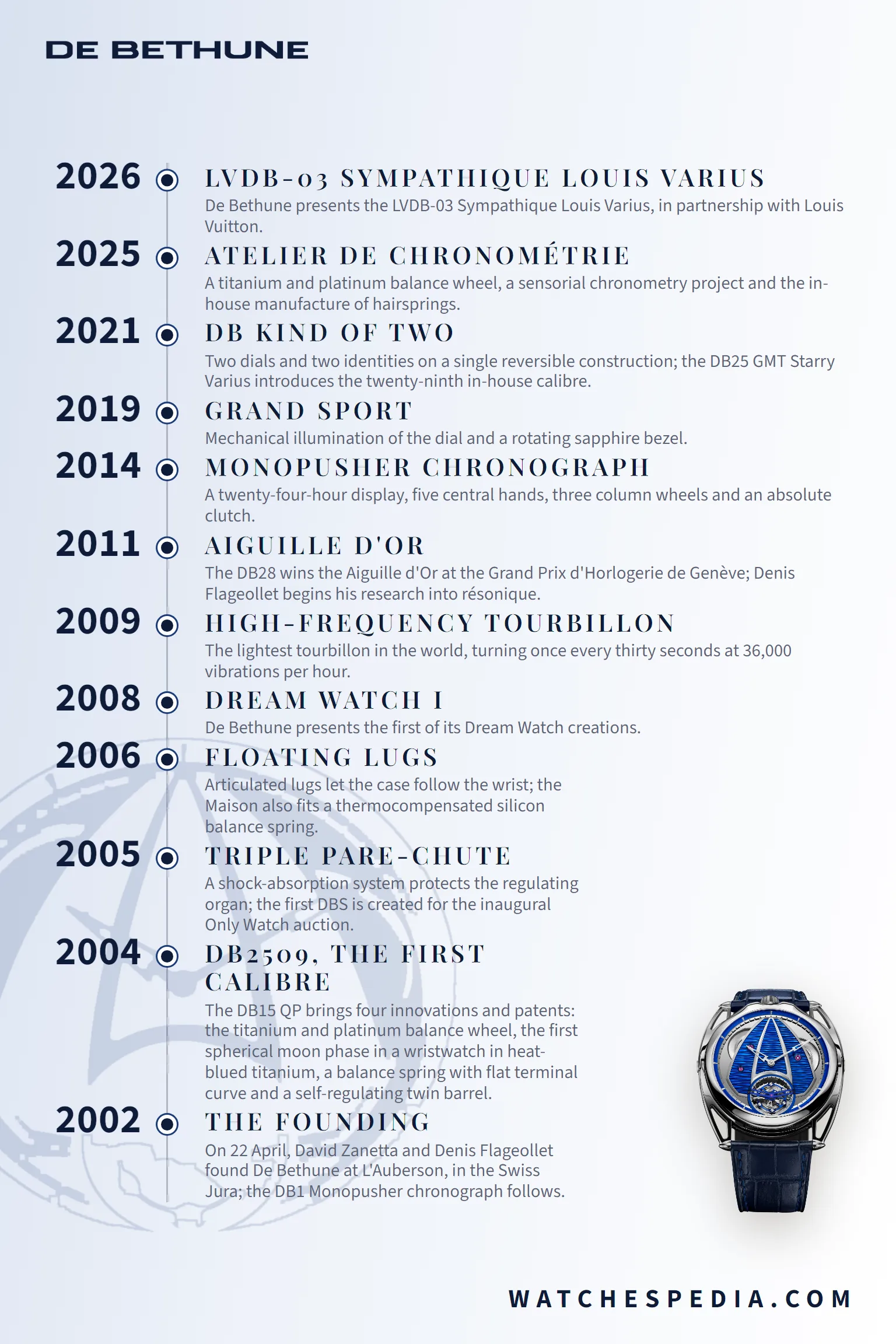
De Bethune, 2002-2026: Twelve Defining Moments
Learning a New Language
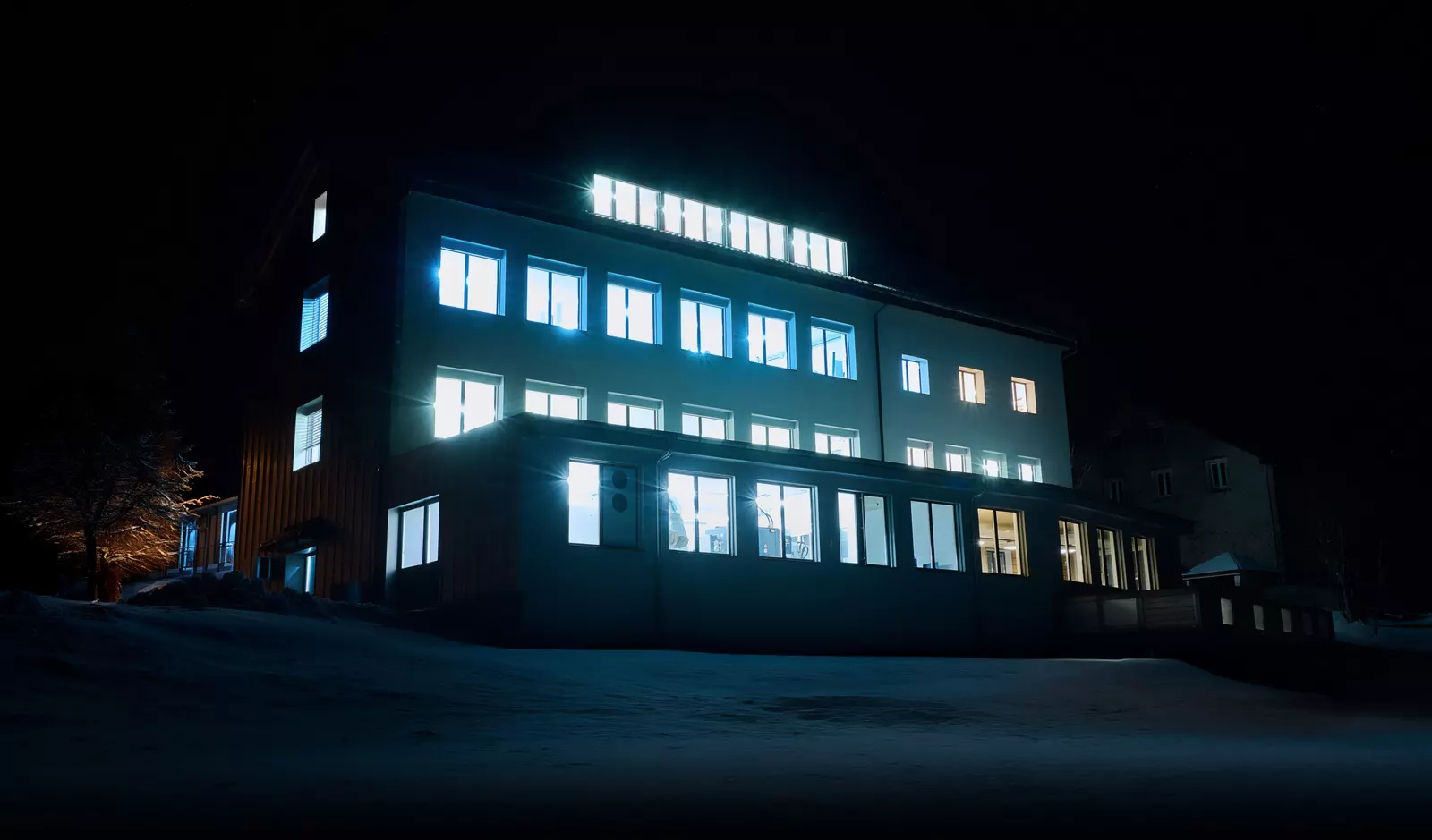
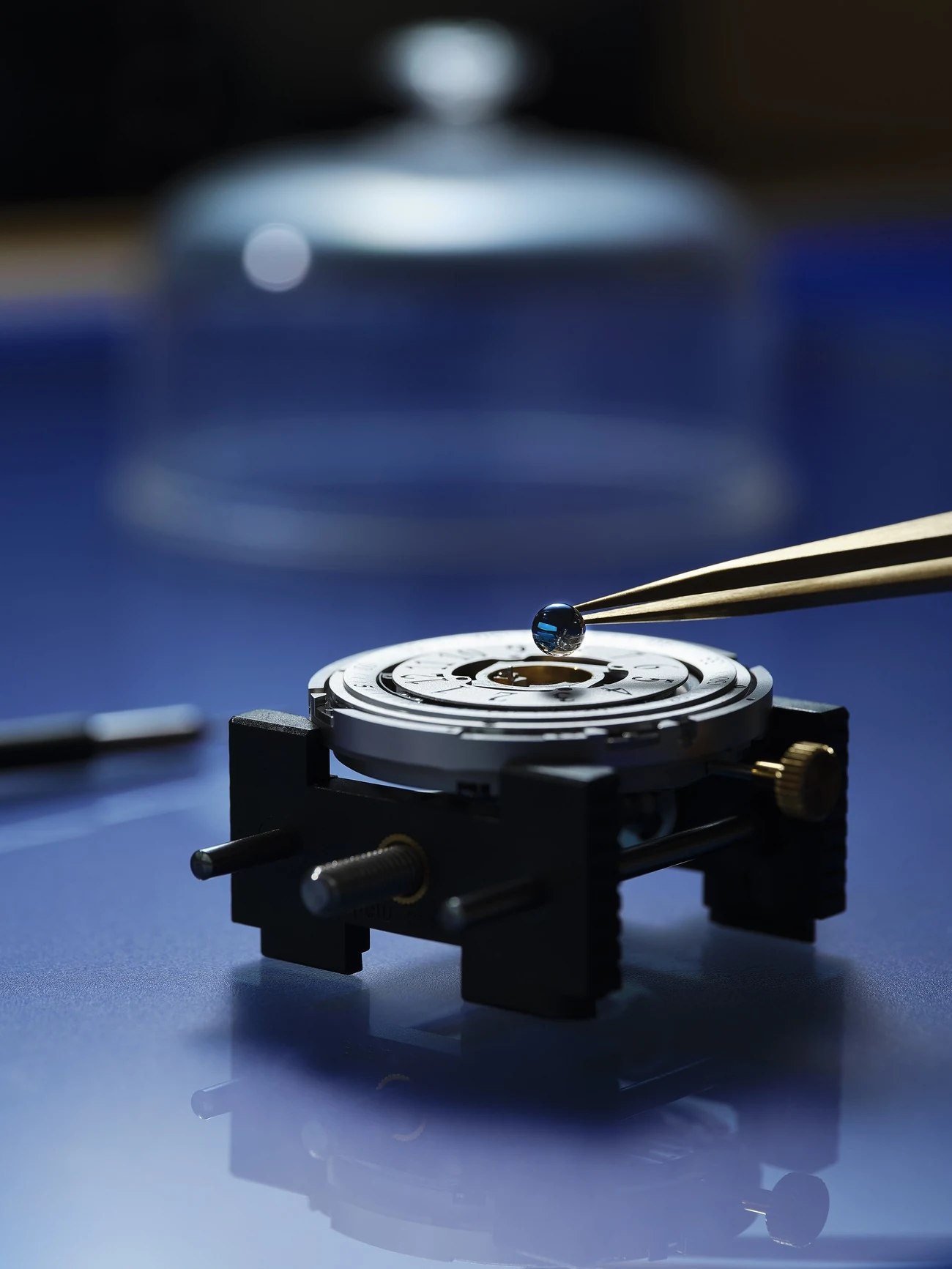
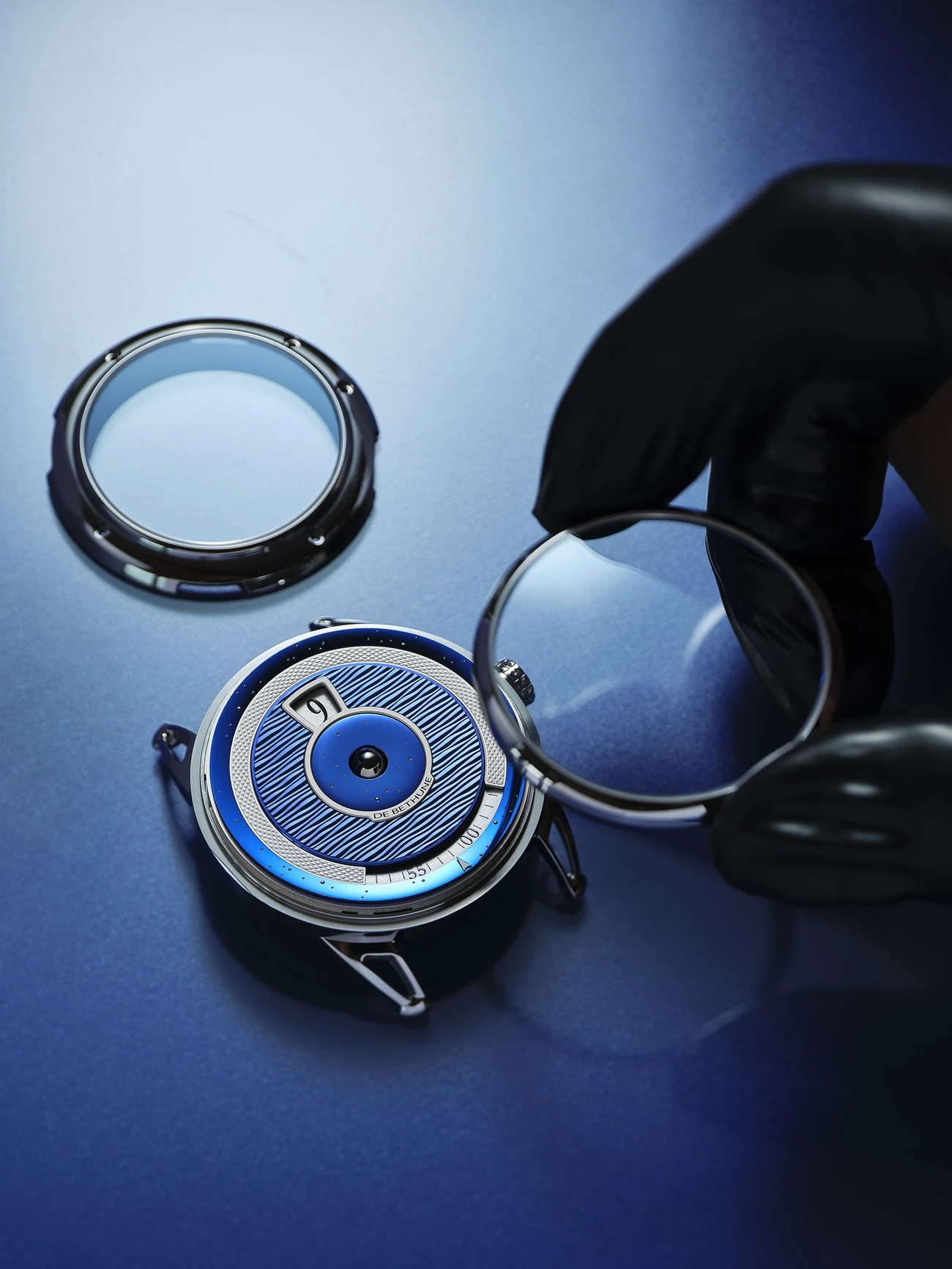
Images courtesy of De Bethune
You arrive from large houses. What have your first months among the independents taught you?
This world of watch creators we call independent is led by free minds, people who are genuinely passionate about watches. I had been close to it for the better part of a decade, and especially so through Geneva Watch Days, where I served as president of the association. I worked with many of them and you feel the vibration of that world: the entrepreneurship, the very strong will of people who built something with their own means, their own way of living, sometimes their own health. That is stronger than pure reason, and it has always attracted me because it is authentic.
Is it a demanding world?
By nature it is. It asks for more than the hours of a working day; it asks for passion and a real level of engagement. You have to deserve your place, and you learn how as you go. Coming from a world that is very structured, very organised, very large in infrastructure, to a world made of small companies, is like learning a new language. I had heard it for years, the way I heard Italian during my years at Bulgari, but hearing a language and speaking it are two different exercises. It is demanding because the founders are demanding. Denis Flageollet is demanding with himself first, and you have to raise yourself to that level.
And rewarding?
As rewarding as it is demanding. You see the reaction immediately, from clients, from collectors, from your colleagues, from the other independents. Everyone watches everyone, and helps everyone, with real goodwill, because there is a genuine passion for the product and a real interest in what each Maison stands for, both technically and artistically. My first impression is of something unsettling in the best sense: it challenges the ideas you arrived with. At a certain point in a career, that is a healthy thing.
“We do not want to produce more. We want to produce better.”
What a Newcomer Brings
What do you bring to a Maison of this calibre?
The same measure of discomfort, seen from my side. I have twenty-five years of experience in large groups, where organisation and structure are second nature to me, so my questions are disruptive of habits built over years. That is what I bring: a way of questioning things. I am demanding, we both adapt, and we each take the best of the other. My knowledge is less that of a watchmaker and more that of someone who comes from the client’s side, from commerce and communication.
Is a house of this reputation willing to be questioned?
My good fortune is the open-mindedness I find here. When you are recognised as a reference, it is very easy to close your eyes and ears to what others tell you, to say you have succeeded for twenty-five years, so why change anything. Keeping that openness is the privilege of a very elevated spirit, and keeping it as the years pass demands a form of intellectual gymnastics.
The Collector Who Earns the Watch
Is there a story that stayed with you?
An American collector told me it had taken him twelve years to buy his first De Bethune. People often buy a watch to celebrate an achievement; for him the purchase was the achievement. He had reached the moment in his life when he could acquire it, and that made it larger than an act of purchase. It was a personal fulfilment. That is what we have to offer. When you acquire a De Bethune timepiece you elevate yourself, because the purchase comes with the education, the appreciation, the deep dive into the history of watchmaking and into what creation demands. You receive your degree with the watch.
Twenty-Five Years, and the Door to the Next Ones
The Maison turns twenty-five in 2027. What may we expect?
A great deal, and I will keep it for the day itself. What I can tell you is this: we believe an important birthday is above all an opportunity to reflect on the future. My arrival is itself a moment when we sit down and consider what comes next. So we will not only speak about the past. Denis and I agree that the twenty-fifth anniversary is the moment to say what we believe the future of De Bethune to be, and how that conviction expresses itself. Reflecting on the past as a platform is useful; celebrating only the fact of having aged twenty-five years would be of little interest.
Where would you like the Maison to stand in five or ten years?
We do not want to produce more, we want to produce better. I would like to think that five years from now that philosophy has not changed and is perceived even more clearly. There is an extreme intention here: to push yourself hard, to deliver the modern expression of exceptional watchmaking, matching our times, and to carry the artistic vibration that was in the founding intention. Everything evolves, and the philosophy holds. What characterises this Maison is the integrity of its founder, and my work is to make sure I introduce no compromise where there has never been one. In five years, I would like people to see thirty years faithful to the same approach: to create the exceptional watchmaking of the twenty-first century.
Do you publish production figures?
I never answer that question. The only thing I will say is that there is one watch that matters, and it is the one you are going to wear.
“You receive your degree with the watch.”
Denis Flageollet, in a Few Words
How would you describe Denis Flageollet to someone outside the industry?
He is an artist, and he may not like being called one. He is humble enough to say that he is nobody without the rest of the team, and he will remind you that there were two founders. He is an exceptional personality: a humanist, with real values, considerable integrity and a character of his own. He is extremely intelligent, universal in his approach, and he takes in everything, so no conversation with him leaves you where it found you. I hope he never reads this, because he would hold it against me.
How often do you work together?
It varies. He is a free man. Sometimes it is every day for a week, then two weeks apart.
On Generations
How do you approach the younger generation?
I do not believe in reading people by generation. Every generation has been young at some point, and we have always looked at them. We consider it too readily as a line of separation, and the privilege of an independent Maison is to be small enough not to think that way. De Bethune has its own community, and that community is defined by something spiritual and intellectual rather than by age. The diversity of profiles within it is remarkable. That does not mean I underestimate what the younger generations bring; it means I do not see age as the factor that decides who we speak to.
Interview by Isabelle Junod, Editor-at-Large, WATCHESPEDIA.