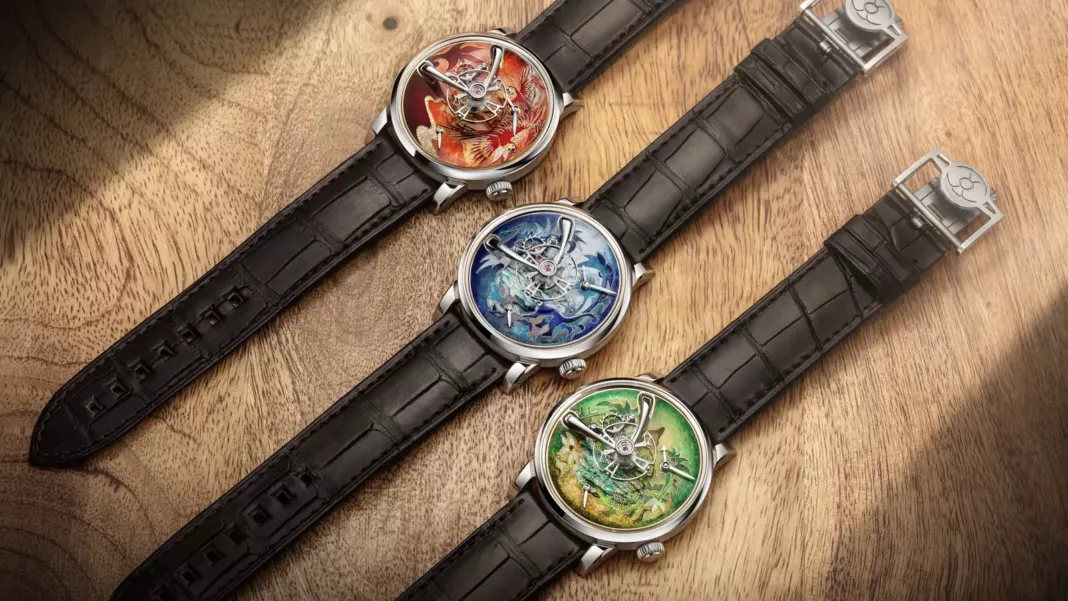
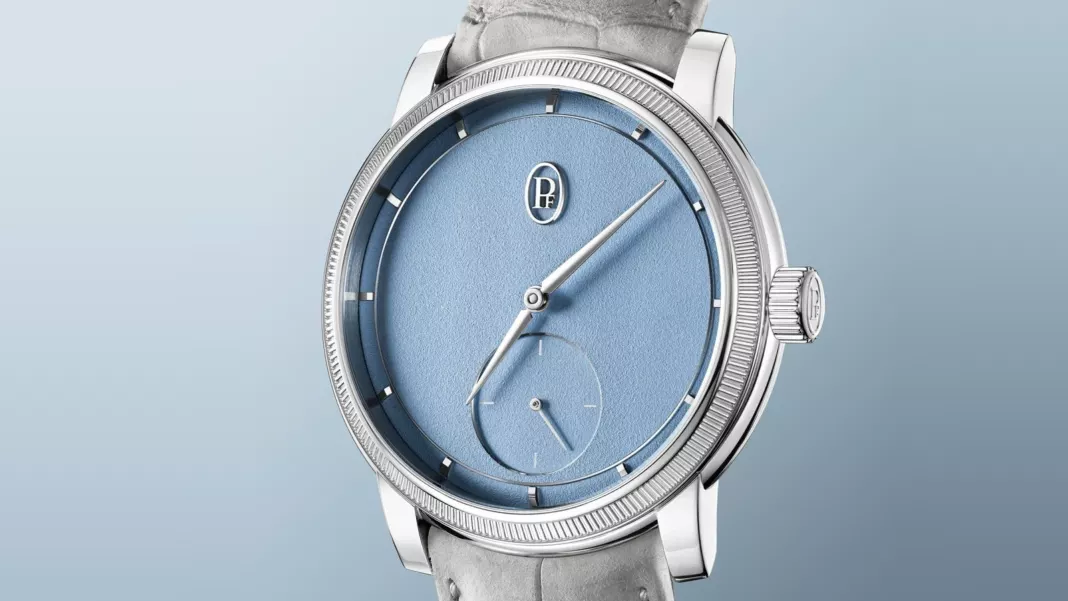
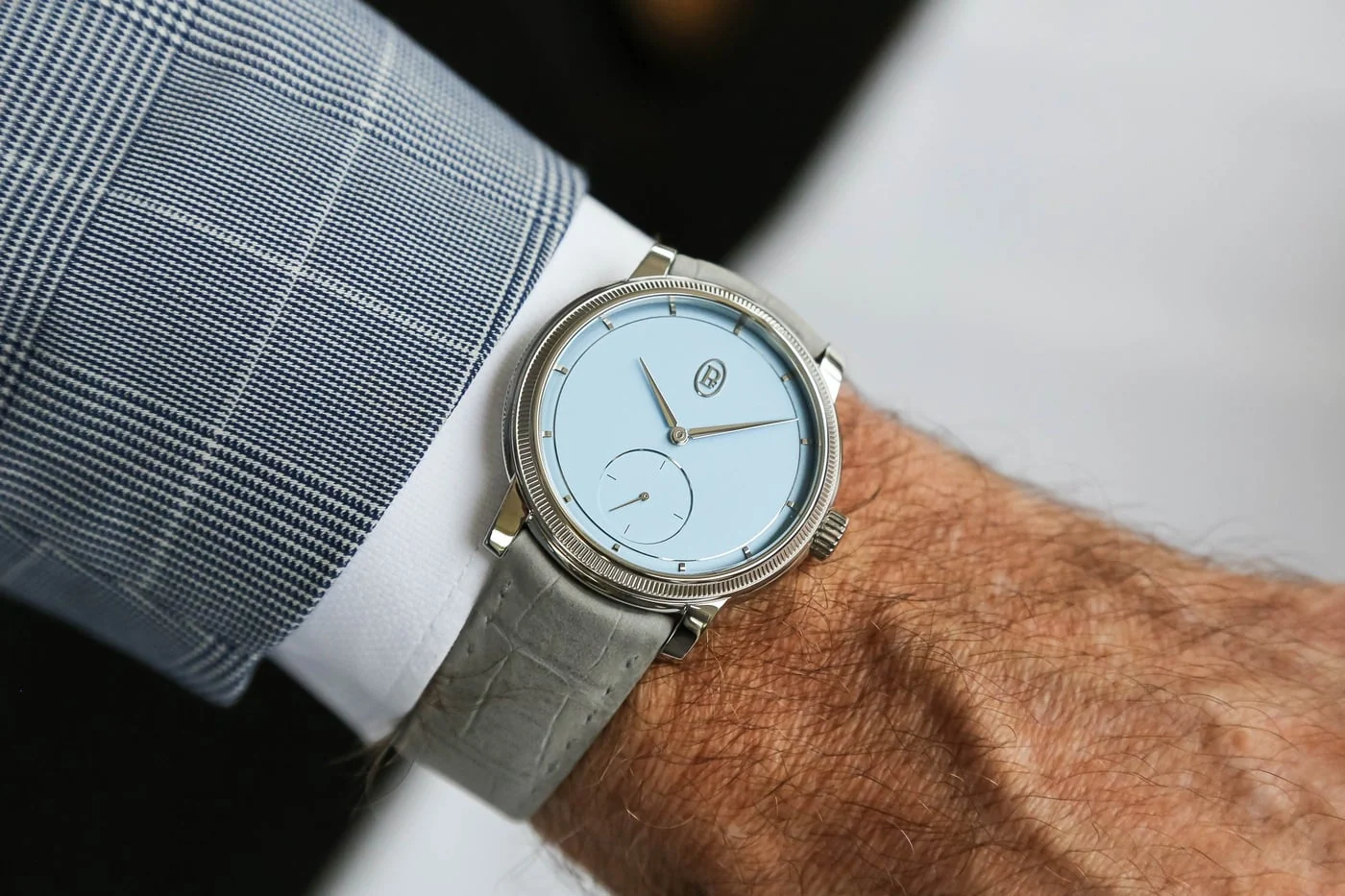
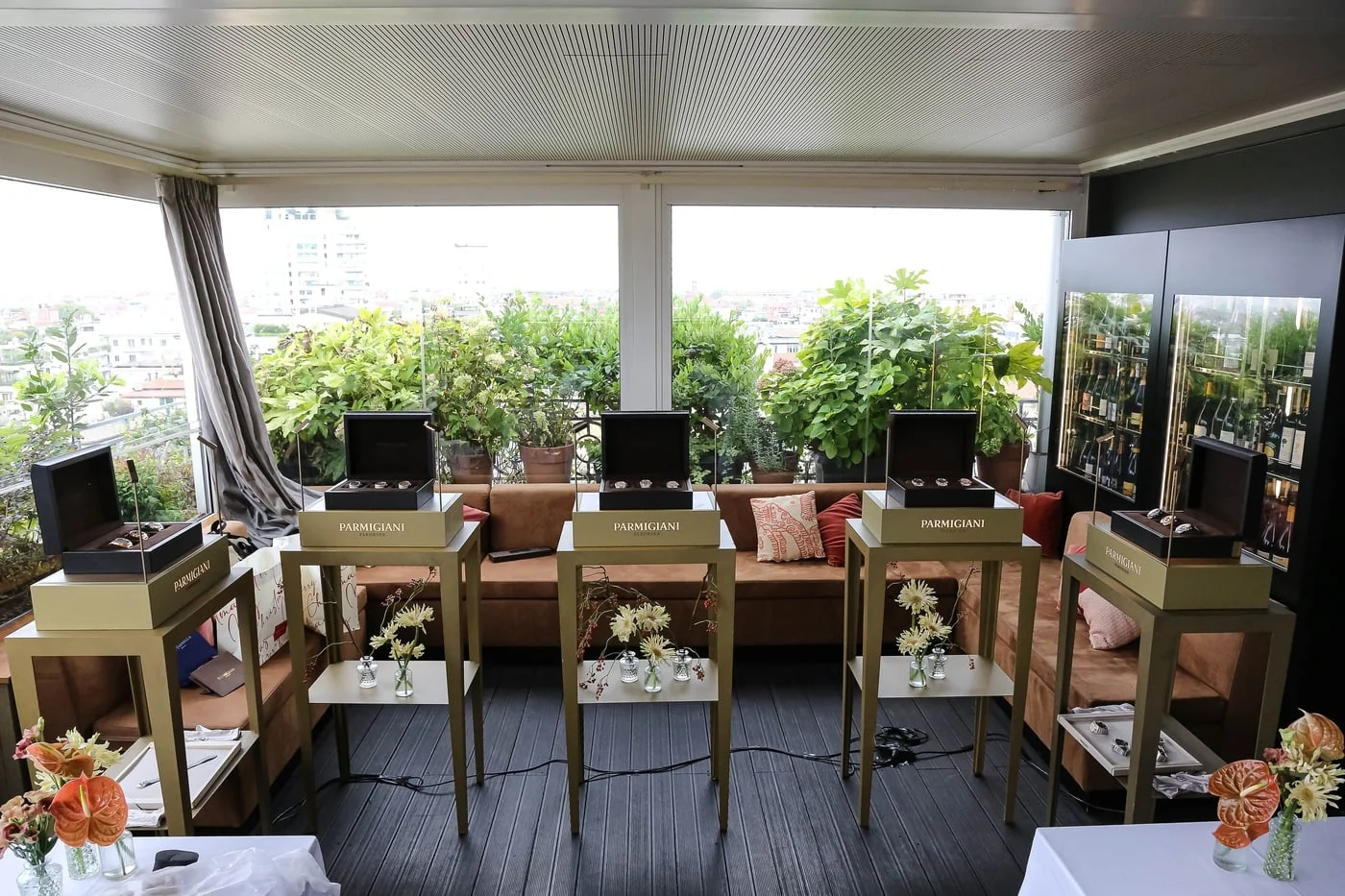
Our Editor-at-Large Isabelle Junod met Guido Terreni, CEO of Parmigiani Fleurier, at Milan Watch Week, a few hours before the opening and on the day the Maison unveiled the TORIC Petite Seconde Platinum in Morning Blue.
Parmigiani Fleurier at a Glance
- Founded in 1996 in Fleurier by Michel Parmigiani, and owned by the Sandoz Family Foundation
- Michel Parmigiani opened his restoration atelier in 1976, at twenty-five, and is still involved in major complication projects.
- Guido Terreni, from Milan, has spent twenty-six years in watchmaking and has led the Maison since 2021.
- The 30th anniversary is marked by the Carillon Tourbillon, a limited-edition chiming timepiece
- Mechanical Wonders, Tokyo, September 2026: six restored pieces of the Sandoz Foundation collection shown publicly for the first time, at 21_21 Design Sight.
- The Middle East: New openings last year with Ahmed Seddiqi in Dubai and 10Ten Labs in Riyadh present in Abu Dhabi, Bahrain, Qatar, Kuwait and Oman.
From Milan to Fleurier
You are back in your own city. Where did your path in watchmaking begin?
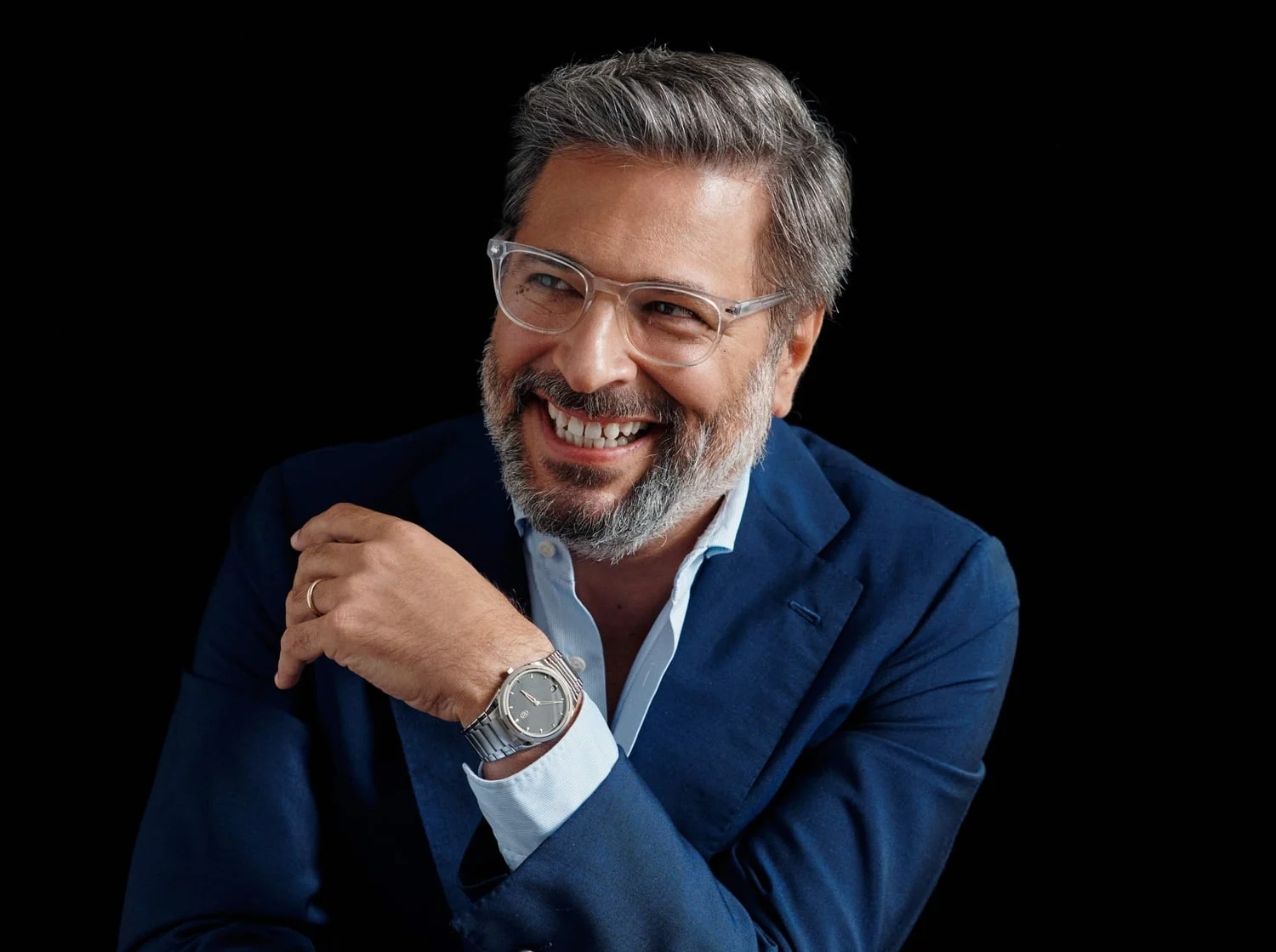
I am from Milan, and although I have not lived here for many years, it is always a pleasure to return. My career began twenty-six years ago with an Italian Maison, and after twenty years there I joined Parmigiani Fleurier. I have had the pleasure of leading the relaunch since it begun in 2021.
“Restoration is Michel Parmigiani’s source of knowledge, and it is there to continue innovating rather than to repeat the past.”
Michel Parmigiani, or Understanding Before Creating
Few Maisons still have their founder at hand. What does Michel Parmigiani bring?
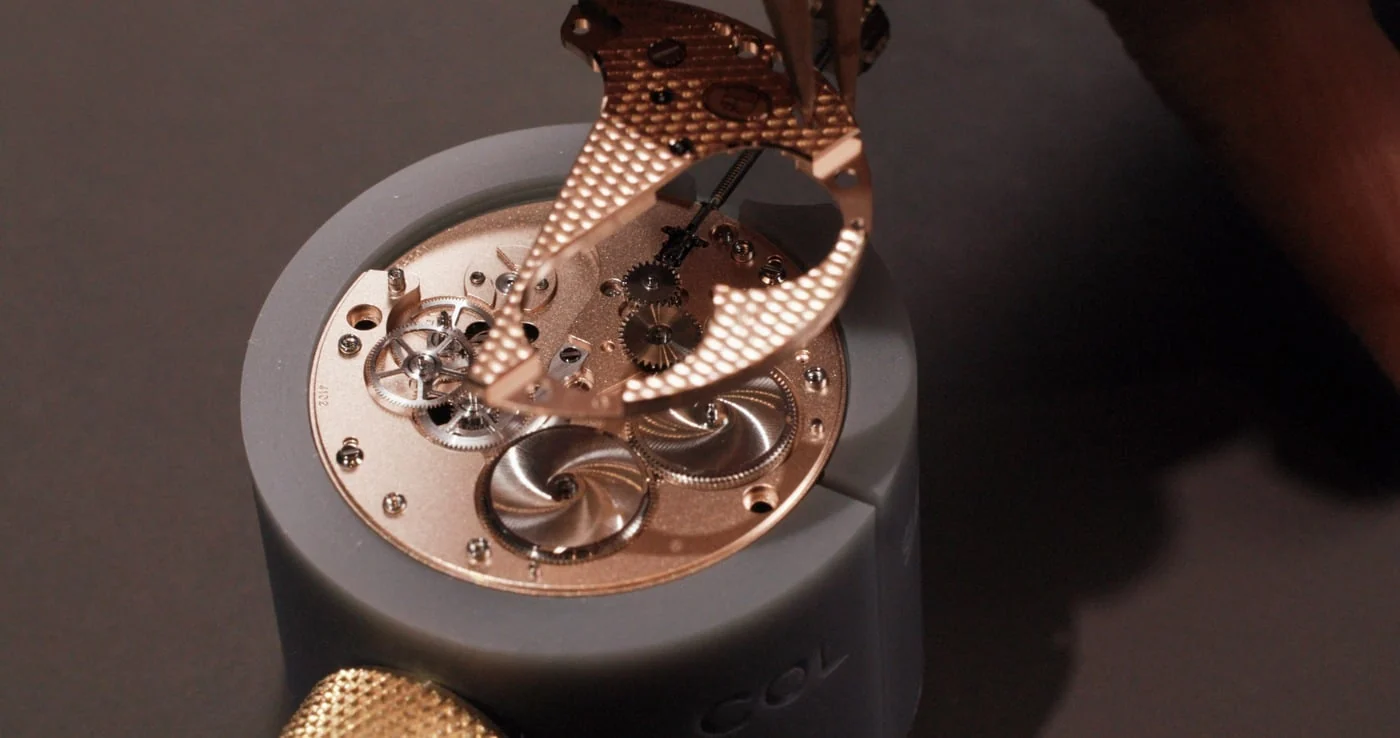
Michel is a singular figure in this industry. He is a master restorer, and through restoration he developed a way of perpetuating the mechanical arts. He was born in 1950, so he is seventy-six today, and he opened an atelier of restoration at twenty-five, in the middle of the quartz crisis. Imagine the independence of mind: everyone believed the mechanical watch belonged to the past, and he understood that a cultural patrimony had to be preserved. He devoted his life to carrying it forward.
What does mastering restoration give a watchmaker?
Mechanical art means understanding before creating. It means mastering every era of watchmaking and every component, being able to restore any watch he is given: five hundred years of history pass through his fingers. He converses with the makers of the past through the work they left, in order to give a second life to someone else’s creation. That is the origin of the Maison’s understatement, because when you hold skills of that order, the ego has to disappear: you are working in the interest of the client who wishes to enjoy his piece restored.
If you had to sum him up?
In three sentences. Restoration is his source of knowledge, and it is there to continue innovating rather than to repeat the past. Technique is beautiful: you design through the mechanics, and that is how an invisible complication comes about. And there is his discretion, which comes from the man himself and from serving a client who is there to please himself rather than to impress others.
Private Luxury
Who comes to Parmigiani Fleurier?
When Michel decided to create his own Maison, he had already understood before creating, and that gave us a Maison of great depth, made for connoisseurs. You are not addressing a mainstream client, nor a client who follows the moment. You are addressing someone who has passed the point in life where social recognition is required, and who now pleases himself. This is what we call private luxury: you buy for yourself. You arrive at Parmigiani at a certain stage in your life, and it is not a question of age, but of how much experience of luxury you have.
How do you explain the Maison to someone who is discovering it?
We divide watch lovers into two categories: those who are carried by their watches, and those who wear them. If you are carried by your watch, you believe you are defined by what you buy. We are the opposite. If the watch is an accessory to yourself, then you are the more important of the two: you are completing your person with something that speaks of taste, refinement, education and cultivation, which are things money cannot buy. You come to us if you are sensitive to what is not obvious, and subtle in your choices.
You distinguish private luxury from quiet luxury. Has that shift reached the market?
It is not discreet, it is private, and the two are not the same. Discreet is a style; private is a philosophy, because it is what drives your choices. Quiet luxury is an aesthetic. Our luxury carries an elegance that is not loud, so discretion belongs to our style; but the philosophy is that you are there to enjoy yourself, accompanied by an object you have chosen, rather than one society has chosen for you. Our client is someone who understands intimately the depth of what he is buying, and who takes pleasure in the discernment of his own choices.
It is a transformation across luxury as a whole. You have seen logos disappear, in fashion and elsewhere. People are less impressed by what you spend and more interested in what you do with what you have. These are qualitative drivers of buying, and they run deeper: you are expressing something deeper. A great deal of business still comes from aspirational clients, and it sustains the results of large companies; but the counter-current is that many people now distinguish themselves through the sophistication of their understanding of luxury rather than through wealth.
Mechanical Wonders, Tokyo
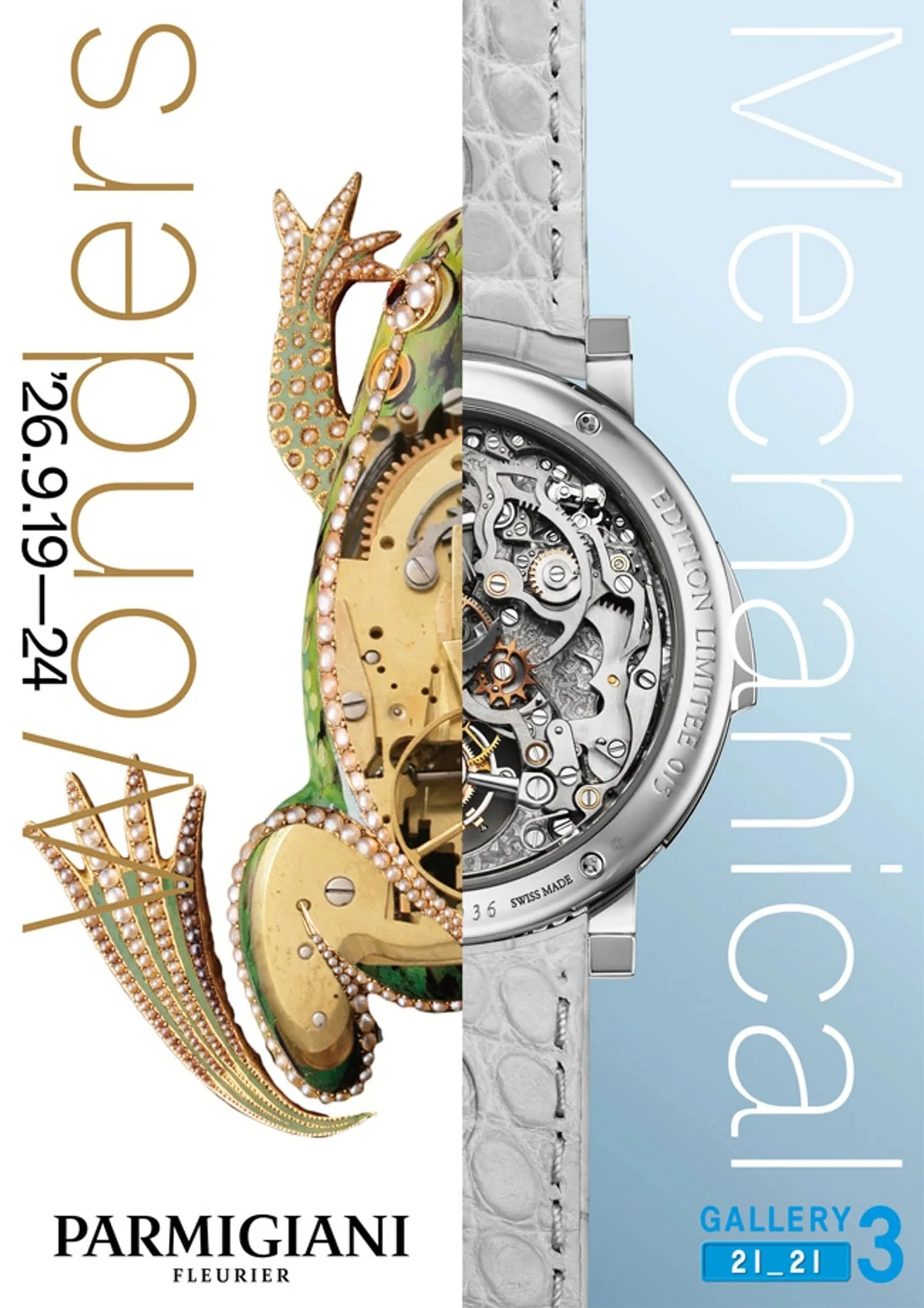
You have just closed an exhibition in Tokyo. What did you show?
It is called Mechanical Wonders, and it was the first time we brought six pieces from the Sandoz Foundation collection together to form an exhibition. The Foundation owns the Maison, and the family holds a remarkable private collection of ancient timepieces, clocks and automata, which Michel restored in full. The six pieces date from the early 1800s, and their state of preservation and their beauty held the room. You could see the light in the eyes of the visitors standing before these expressions of mechanical art.
How did the exhibition unfold?
From there the display moved into more recent times. We showed the pocket watch made for the 25th anniversary, which houses a restored movement from the turn of the twentieth century, dressed in an entirely new aesthetic. Then came the Carillon Tourbillon, the pinnacle of the 30th anniversary, a chiming watch Michel developed over the last ten years. And we closed with the invisible complications, which are the future of the Maison: the art of mechanics used to innovate.
It was open to the public, and visitors came from overseas. The venue was 21_21 Design Sight, a beautiful minimalist Museum designed by Tadao Ando, which brought light to these pieces. The Museum was pleased, because such spaces are usually given to brands and are difficult to turn into a cultural experience. Here it was exactly that: we showed the depth of the Maison while giving the public historical pieces that explain what mechanical art was two centuries ago, and how it delighted. There was a frog that moved and sang, and a walking stick whose handle concealed a miniature bird that chimed. These objects accompanied the lives of their owners, and how much invention went into giving pleasure.
Will Europe see them?
We shall think about it. I would like to do more, though moving pieces of this kind is a considerable undertaking. No date is set yet, and the idea stays with us.
“Discreet is a style. Private is a philosophy.”
The Foundation, and the Middle East
How present is the family?
The family is the beneficiary of the foundation, so we work with the foundation rather than with the family directly. Their interest and their support are evident.
What does the Middle East represent?
It is an important region, and the community there remains deeply passionate about watches. We have only just begun: we opened with Ahmed Seddiqi in Dubai and with 10Ten Labs in Riyadh last year, and we are also present in Abu Dhabi, Bahrain, Qatar, Kuwait and Oman. What I admire in the region is the level of sophistication among the most informed clients. Many have studied abroad; they are knowledgeable, they seek out information, they go deeper. Each market has its own angle, sometimes aesthetic, sometimes technical. Next week we are in Doha, then in Riyadh, where our team will spend three or four days: there is genuine interest, and our partners are investing in education.
Morning Blue, and the Question of Partnerships
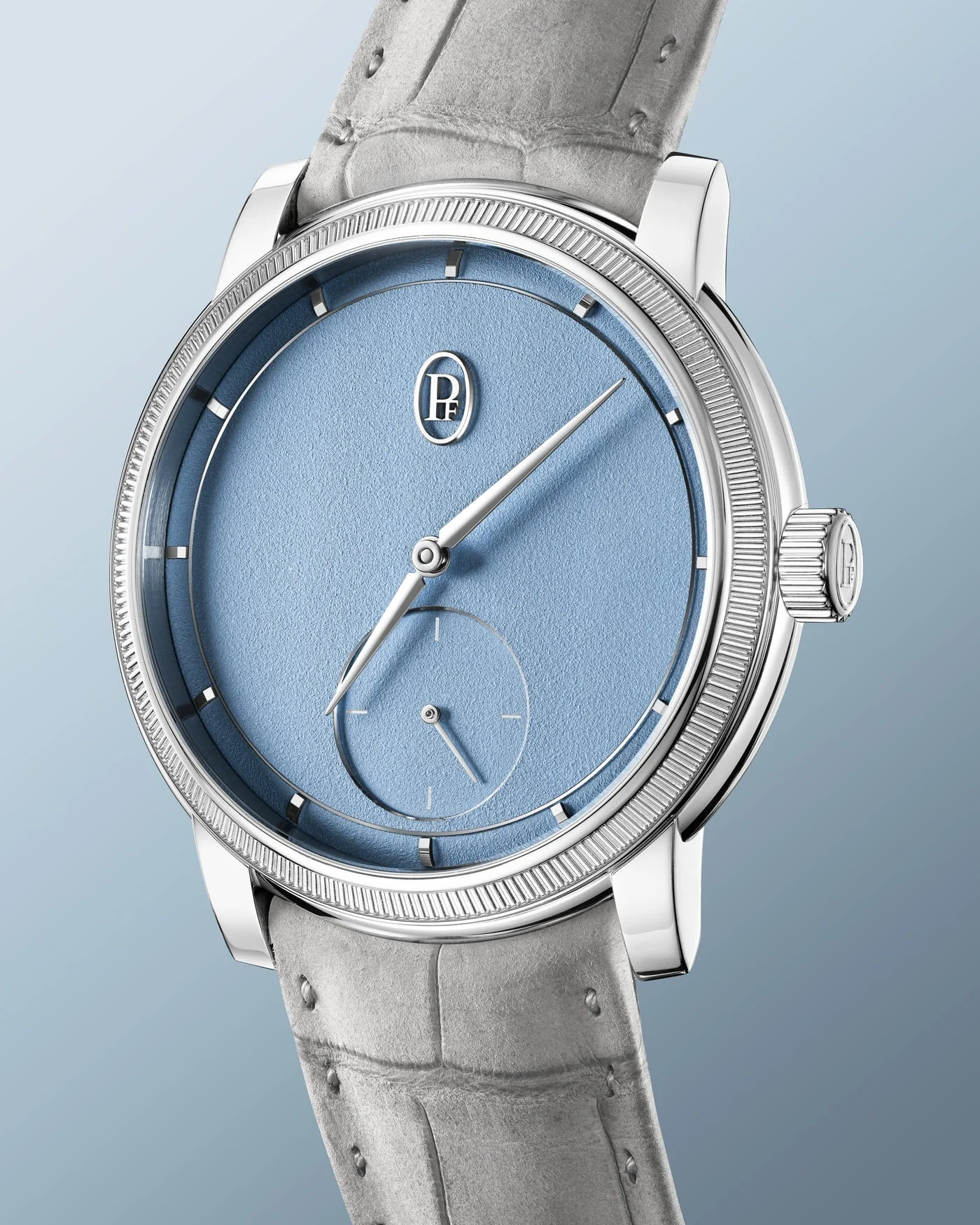
Tell us about the Morning Blue dial.
We first saw this colour on last year’s perpetual calendar, and it sold out immediately. It came from a first prototype that was meant to be slightly darker and greyer; there was no time to redo the colouring, so the dial maker finished it as it stood and brought it to our product meeting. When I saw it, I loved it. What we liked is that it holds the crisp light of the sky in the morning: neither heavy nor showy, a new beginning, with that energy. It was Parmigiani through and through. It also gave rise to another edition, the Golden Hour, which is the opposite moment of the day. Morning Blue was so appreciated that we have carried it through to the Toric Petite Seconde in platinum, and we unveil it today.
If you had carte blanche for a collaboration, what would it be?
I am not sure I would do one. A collaboration has to rest on a strong bond between the Maisons involved: it has to be part of the history, and it has to speak to the same clientele. At this stage we are focused on making Parmigiani understood, by being clearer about our creativity and about what we stand for. At this moment, I wouldn’t look at partnerships.
Interview by Isabelle Junod, Editor-at-Large, WATCHESPEDIA.