
Key Highlights
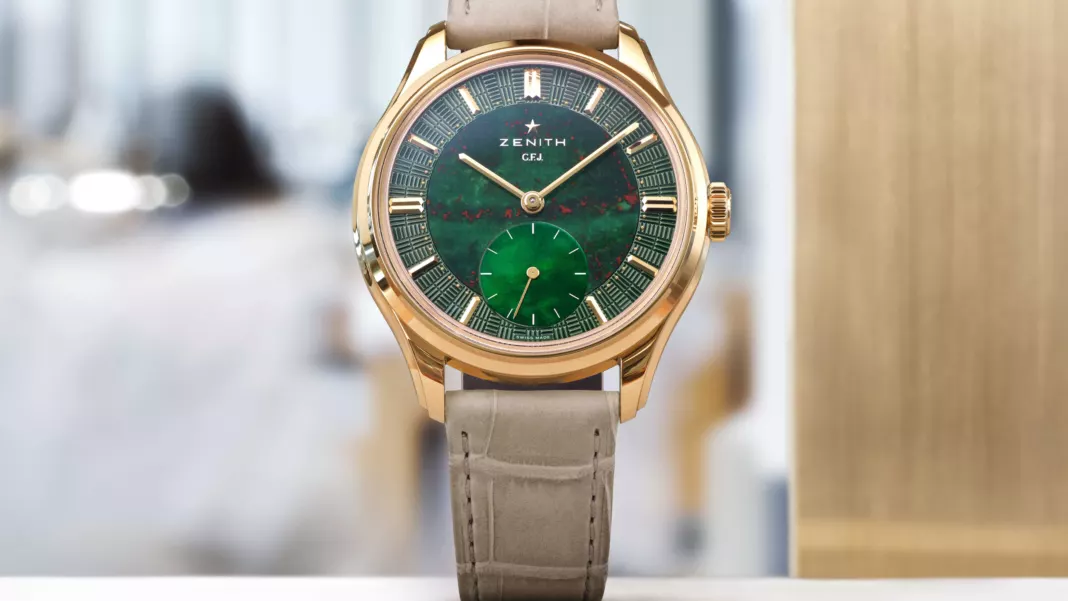
- New limited edition of 161 pieces in 18-ct yellow gold, reference 30.1865.0135/56.C216
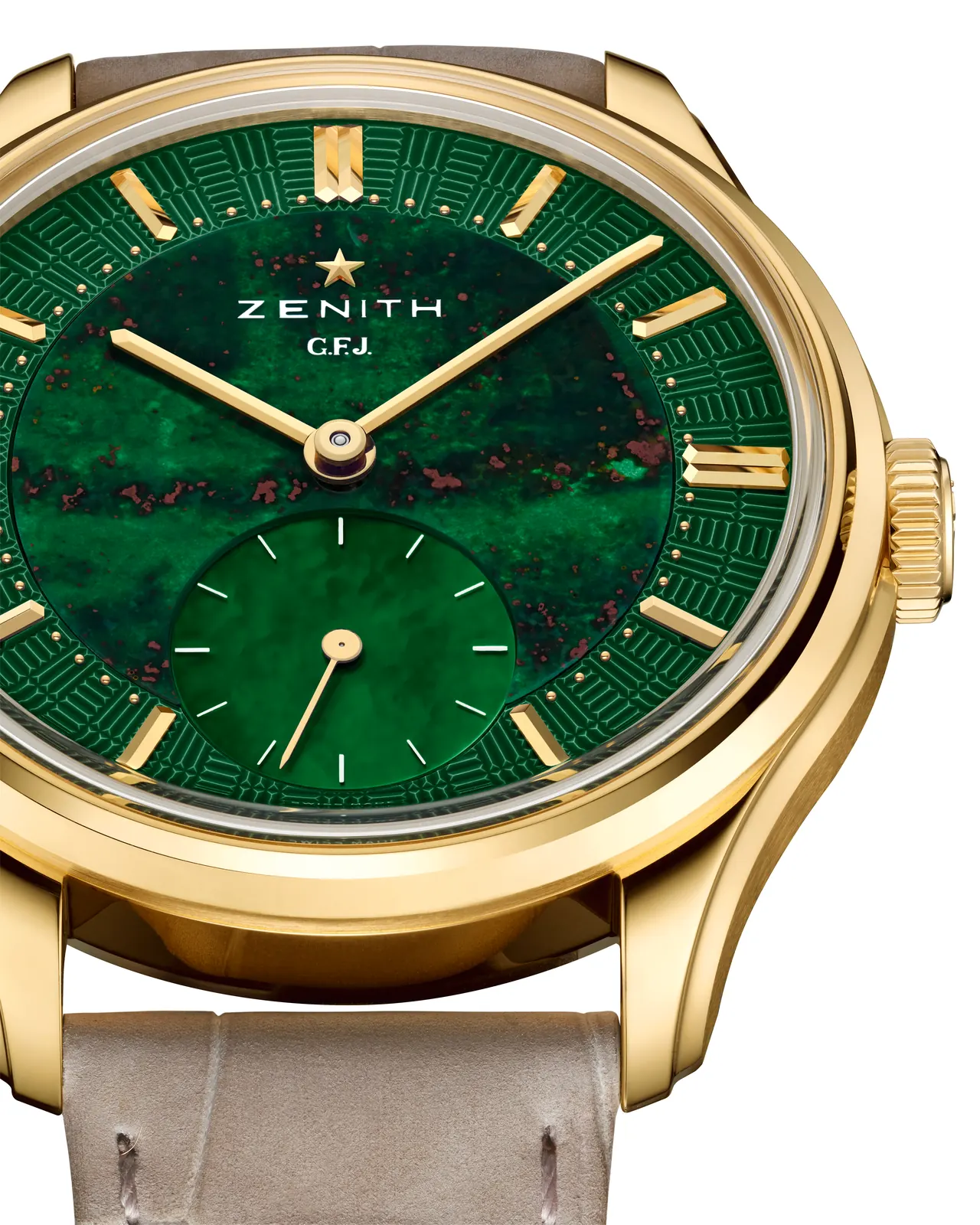
- Dial constructed from natural bloodstone (jasper), ensuring each example is singular
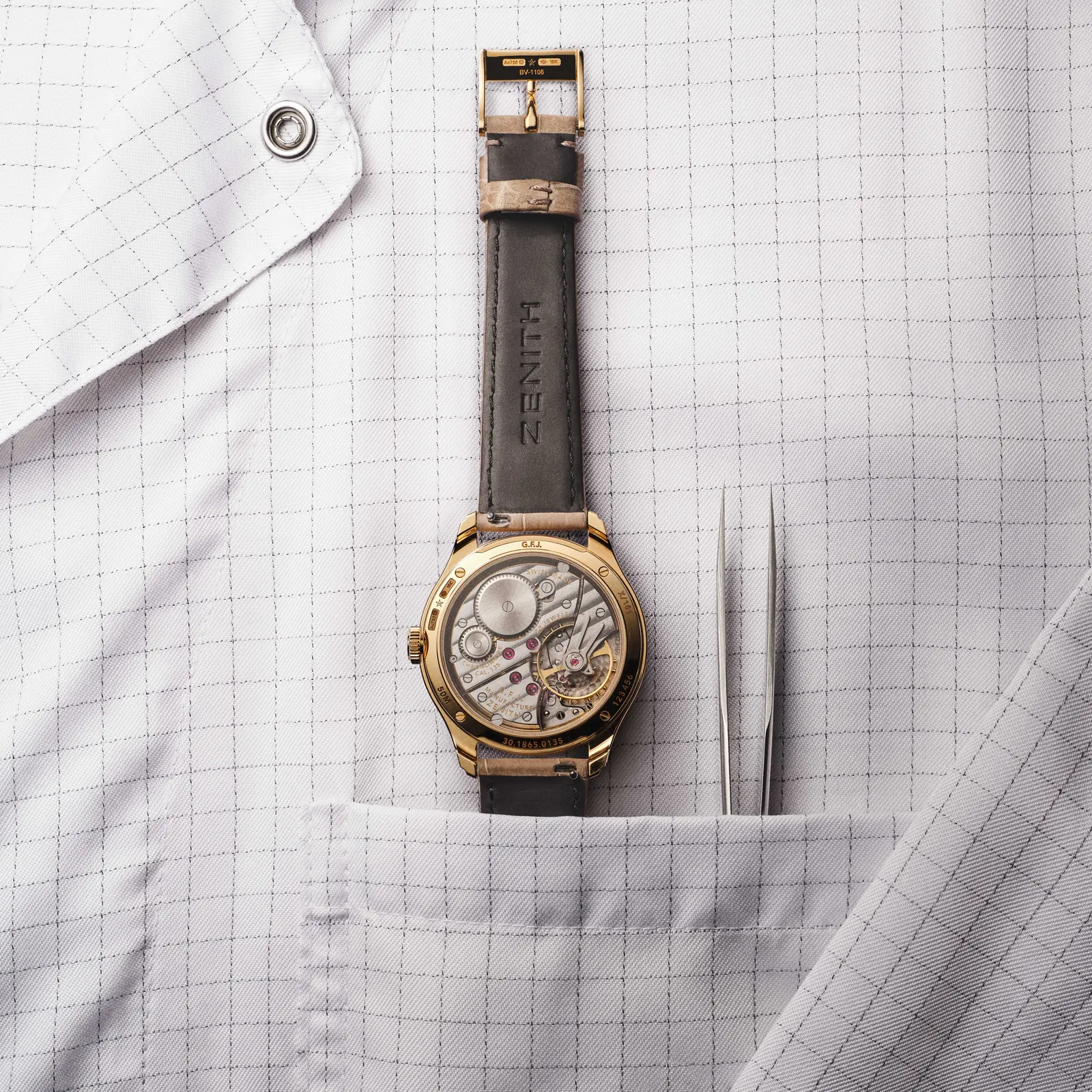
- Hand-wound Calibre 135 re-engineered for the 21st century; COSC-certified to ±2 seconds per day
- 72-hour power reserve, Breguet overcoil, stop-second mechanism, and double arrow-shaped regulator
- Movement decorated with broad Côte de Genève, hand-chamfering, and dark ruthenium finish with yellow gold engravings
- Priced from 48,900 CHF; available for pre-order through Zenith boutiques and authorised retailers
The Movement That Wrote History
The Calibre 135 is not a marketing artefact. Produced between 1949 and 1962, it was built specifically for observatory chronometry trials, a discipline where fractions of a second separated prestige from irrelevance. Its competition variant, the 135-O, accumulated 235 chronometry prizes, including five consecutive first prizes at the Neuchâtel Observatory from 1950 to 1954. That record has never been equalled. Against Zenith’s broader total of 2,333 chronometry prizes, more than any other manufacture, the Calibre 135 remains the single instrument most responsible for that count.
When Zenith re-engineered this movement for the G.F.J. collection, the brief was not reproduction but continuation. The 13-ligne diameter (30mm), 18,000 vph frequency, oversized balance wheel, and offset centre wheel are preserved as defining architecture. What changed are the materials and solutions surrounding that architecture: a barrel now offering 72 hours of power reserve, an optimised gear train, regulation screws on the large balance, a Breguet overcoil, and a stop-second mechanism for exact time setting. COSC certification confirms the output at ±2 seconds per day. The movement is a living instrument, not a museum object.
Decoration: A Deliberate Departure
Through the sapphire caseback, the Calibre 135 in this edition is finished differently from the anniversary version that earned the Grand Prix d’Horlogerie de Genève Chronometry Prize in 2025. Broad Côte de Genève stripes, refined hand-chamfering, and a dark ruthenium finish accented with yellow gold-coloured engravings reference classical finishing codes without retreating into period pastiche. The oversized balance wheel and the bilateral symmetry of the gear train give the caseback view the quality of an architectural elevation.
Dial and Case: Materiality as Argument
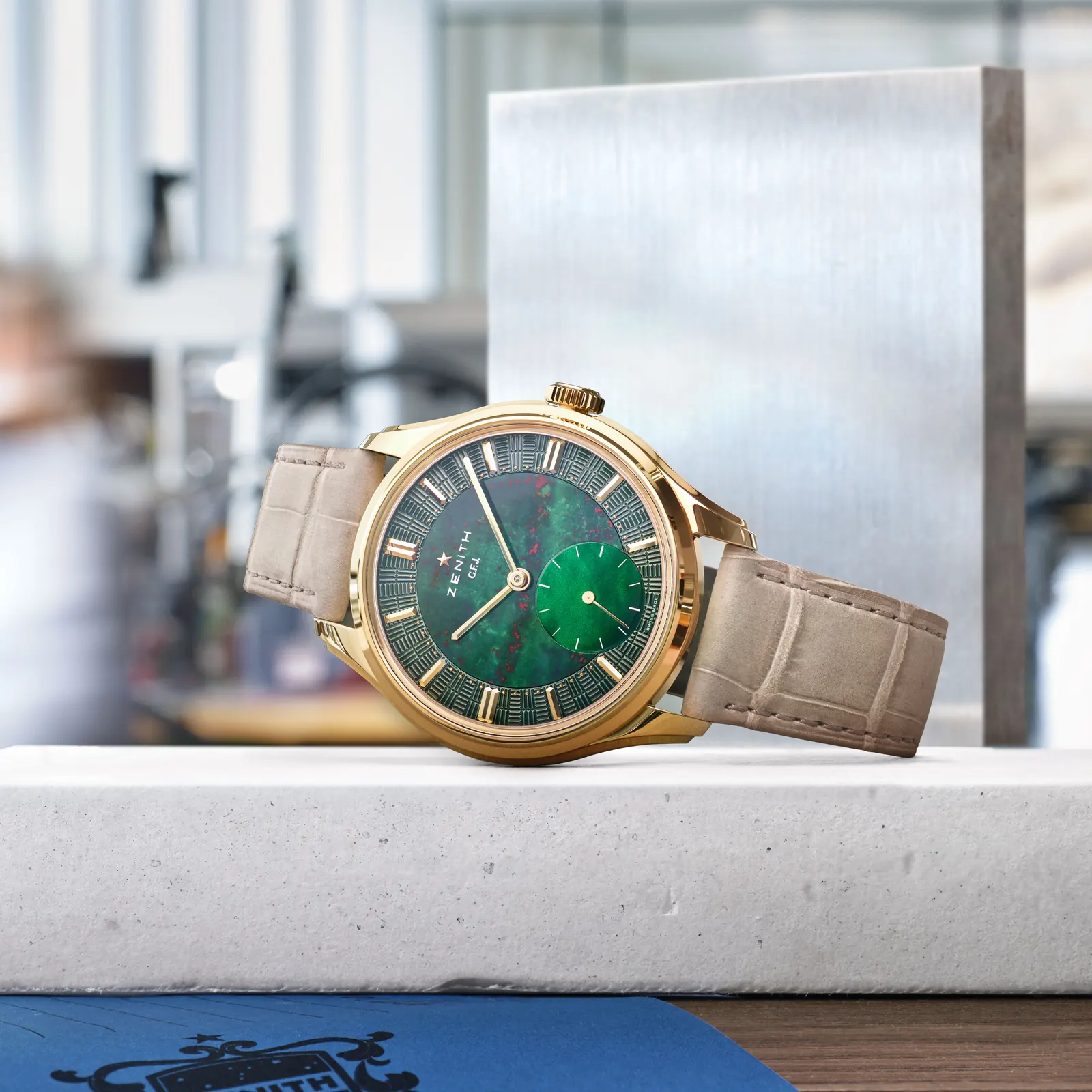
The 39.5mm case follows the proportions established at the G.F.J.’s revival: slender at 10.5mm, with a stepped bezel and curved lugs drawn from 1950s chronometer aesthetics. In yellow gold, these proportions read differently — warmer, more present, less austere than the earlier iteration. The sapphire box crystal sits above a dial that operates as three distinct material zones, each with a specific visual logic.
Three Zones, One Composition
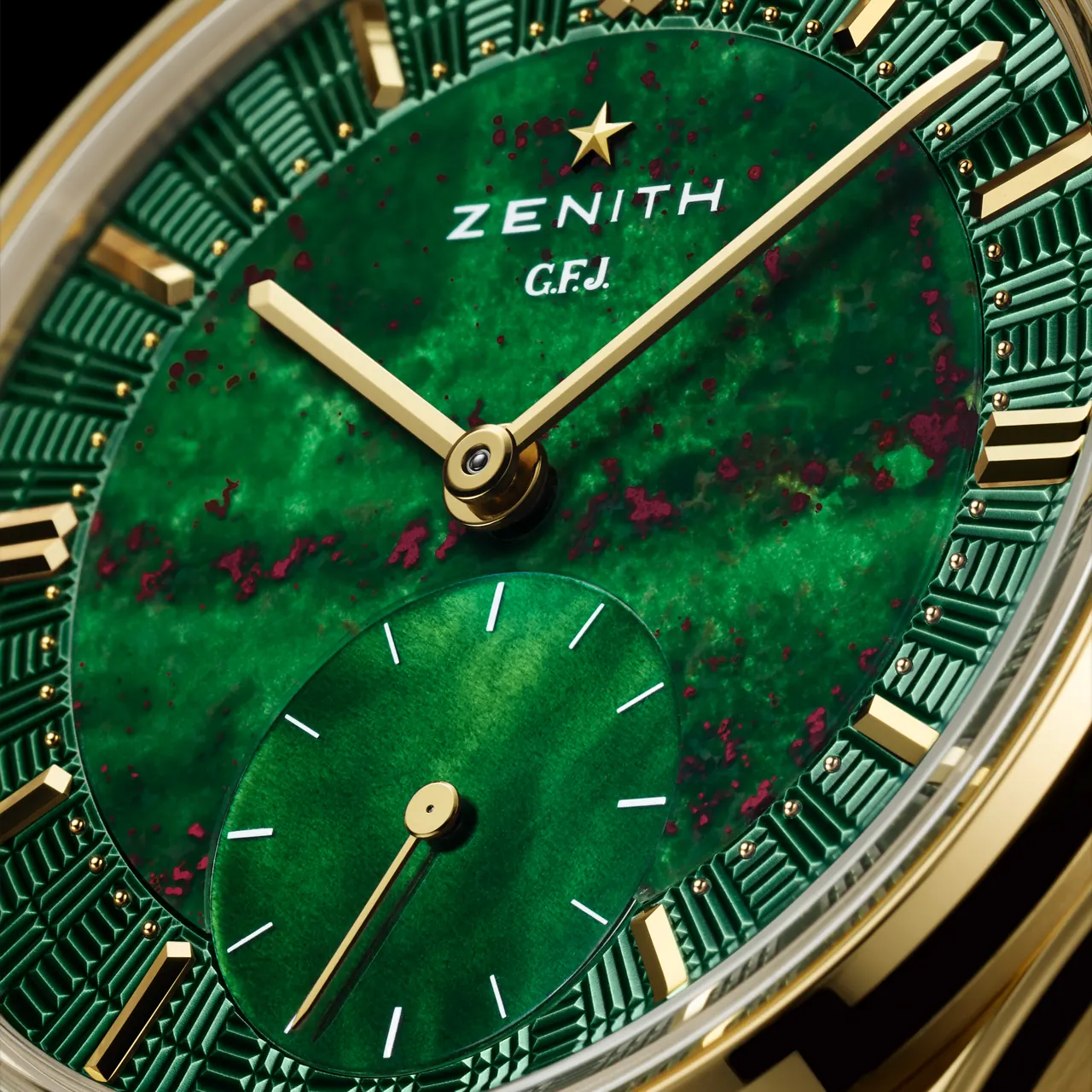
The central disc is cut from bloodstone, a form of jasper whose characteristic deep green ground is mapped with red and ochre veining. Because these inclusions occur naturally and randomly within the stone, every dial is unique, a fact that transforms limited edition status from a commercial device into a genuine material condition. The small seconds counter at 6 o’clock is executed in mother-of-pearl, providing luminous contrast against the mineral centre. The peripheral ring carries a guilloché motif inspired by the brick façade of the Zenith Manufacture in Le Locle, a reference to Georges Favre-Jacot’s founding principle of vertical integration, where every component of the watch was conceived and produced under one roof.
Applied 18-ct yellow gold indices and faceted hands in the same metal complete the architecture. The combination of mineral depth, iridescent pearl, textured gold, and engraved metal is precise without being cold, a balance that the Middle East collector, familiar with the material vocabulary of high jewellery, will read immediately.
The G.F.J. as Zenith’s Chronometric Statement
The G.F.J. collection, named after Georges Favre-Jacot’s initials, was established not as a retrospective tribute but as the permanent home of the Calibre 135 within the current manufacture catalogue. First shown alongside the rebirth of that calibre and recognised at Watches and Wonders, the collection now builds its second chapter. The yellow gold bloodstone edition positions the G.F.J. squarely within the space occupied by the great pocket chronometers of the mid-20th century, instruments where precious metal, natural materials, and mechanical rigour formed an inseparable whole.
The edition is limited to 161 pieces, each delivered with three straps — beige nubuck alligator, green alligator, and black calfskin — plus a yellow gold pin buckle. An 18-ct yellow gold bracelet with double folding clasp is available separately. Pre-order is open through Zenith’s physical and online boutiques and authorised retailers worldwide.
For collectors in the Middle East seeking a technically grounded piece in precious metal, one where the movement’s pedigree is documentable and the dial material is genuinely unrepeatable, the G.F.J. bloodstone edition presents a compelling proposition at 51,900 USD. Discover more at zenith-watches.com.
Stay ahead of the latest releases. Subscribe to our newsletter for editor-curated coverage of luxury timepieces across the Middle East.
Frequently Asked Questions
What is the Calibre 135 and why is it significant in Zenith’s history?
The Calibre 135 was produced between 1949 and 1962 specifically for observatory chronometry trials, where its competition variant accumulated 235 chronometry prizes, including five consecutive first prizes at the Neuchâtel Observatory from 1950 to 1954. This record has never been equalled and remains the single instrument most responsible for Zenith’s total of 2,333 chronometry prizes — more than any other manufacture.
What makes the bloodstone dial unique on this limited edition Zenith?
The dial is cut from natural bloodstone jasper, whose characteristic deep green ground is randomly mapped with red and ochre veining. Because these mineral inclusions occur naturally and randomly within each stone, every dial is genuinely unique, transforming the limited edition status from a commercial designation into an authentic material condition.
How has the Calibre 135 been modernized for this new G.F.J. collection?
While the 13-ligne diameter, 18,000 vph frequency, oversized balance wheel, and offset centre wheel remain preserved, Zenith re-engineered the movement with a barrel offering 72 hours of power reserve, an optimised gear train, a Breguet overcoil, and a stop-second mechanism. The movement is COSC-certified to ±2 seconds per day, confirming it functions as a living instrument for contemporary use rather than as a museum reproduction.