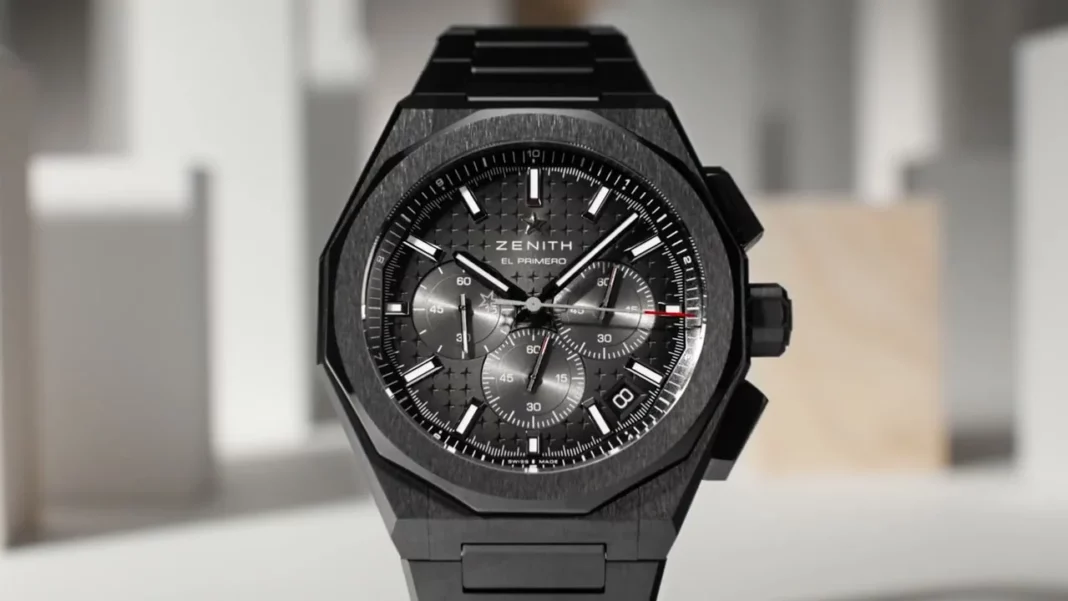
Introducing the ZENITH DEFY Skyline Tourbillon Skeleton
The ZENITH DEFY Skyline Tourbillon Skeleton represents the brand’s evolution in watchmaking, combining a transparent movement architecture with the El Primero chronograph platform. This 41mm rose gold piece delivers both visual clarity—through its blue-tinted open dial—and functional precision through one of horology’s most reliable movements.
Design and Aesthetics
The DEFY Skyline Tourbillon Skeleton builds its case around a 41mm octagonal profile in rose gold. The octagonal geometry differentiates it from conventional round sports chronographs while maintaining the proportions associated with Zenith’s contemporary tool-watch lineage. The skeletonized movement reveals the bridges and baseplates in their raw form, finished with a deep blue coating. This exposure allows direct observation of the escapement, balance wheel, and column wheel—the mechanical core of the watch.
Movement
The El Primero caliber at the heart of this watch operates at 36,000 vibrations per hour (10 Hz), delivering chronograph function with 1/10th-second resolution. The tourbillon cage rotates once per minute, providing compensation for positional variations in timekeeping. This movement combination has remained the benchmark for integrated chronograph design since its 1969 introduction.
Materials and Craftsmanship
Rose gold construction defines the case, bezel, and lugs, while the dial architecture exposes the movement’s finishing: polished bevels on bridges, perlage on the baseplates, and hand-applied blue PVD coating on the visible components. The dial itself contains no printed indices—time-reading relies on the geometric patterns created by the movement architecture itself. This approach demands precision in assembly and alignment, as any deviation becomes immediately visible through the crystal.
Why Choose the DEFY Skyline Tourbillon Skeleton?
The DEFY Skyline Tourbillon Skeleton appeals to collectors who prioritize mechanical visibility over traditional dial aesthetics. Ownership means living with a watch that demands engagement—reading time requires understanding the movement’s geometry rather than consulting printed markers. The rose gold case ages gracefully, developing patina that marks daily wear. For those valuing functional transparency and the specific heritage of the El Primero, this model delivers direct access to the mechanism without sacrificing chronograph capability.
Discover More
To explore Zenith’s broader catalog and technical specifications, visit ZENITH on WATCHESPEDIA. The brand’s current collection includes variations in case material, dial configuration, and movement complications across the DEFY family.
The ZENITH DEFY Skyline Tourbillon Skeleton combines the chronograph utility of the El Primero with the visual openness of skeleton dial design, creating a watch that functions as both precision instrument and mechanical display.
| Movement | El Primero caliber, 36,000 vibrations per hour (10 Hz), tourbillon cage rotating once per minute, chronograph with 1/10th-second resolution |
| Case size | 41mm |
| Case material | Rose gold |
Frequently Asked Questions
What is the case size and material of the Zenith Defy Skyline Tourbillon Skeleton?
The Zenith Defy Skyline Tourbillon Skeleton features a 41mm octagonal case crafted from rose gold. The octagonal geometry distinguishes it within Zenith’s contemporary tool-watch portfolio while maintaining proportional balance typical of the DEFY line.
What movement powers the Defy Skyline Tourbillon Skeleton?
The watch is powered by the El Primero caliber operating at 36,000 vibrations per hour (10 Hz). This movement includes a tourbillon cage rotating once per minute and delivers chronograph function with 1/10th-second resolution, a standard established since the movement’s 1969 introduction.
What makes the skeletonized dial of this Zenith watch special?
The skeletonized movement reveals the bridges, baseplates, escapement, balance wheel, and column wheel beneath a blue-tinted protective coating. This configuration eliminates traditional printed indices; time-reading depends on understanding the movement’s geometric layout. The approach creates a visual complexity that changes with light angle and hand position.