The Bottom Line
- Houses Calibre 1290P, a 430-component minute repeater movement developed entirely at Piaget’s La Côte-aux-Fées Manufacture, in a 48mm, 9.30mm-thin 18-karat white gold case that brings a grand complication to the Piaget Polo collection for the first time in this form.
- Only five numbered pieces will be crafted this year — each requiring many weeks of hand-finishing, with 50 hours dedicated to the hand finishing of each dial alone.
- The chiming mechanism delivers 64 decibels across three harmonic partials: hours struck at G sharp, minutes at A sharp, both in the fifth octave.
- A High Jewellery variant with baguette-cut blue sapphire bezel and diamond-set case is released alongside the principal reference.
- Water resistance reaches 3 ATM, unusual for a chiming watch of this complexity.
The Bottom Line
Forty-three years after Piaget set the record for the world’s thinnest minute repeater in a Polo Emperador case, the Maison has pressed that achievement into its contemporary sports line.
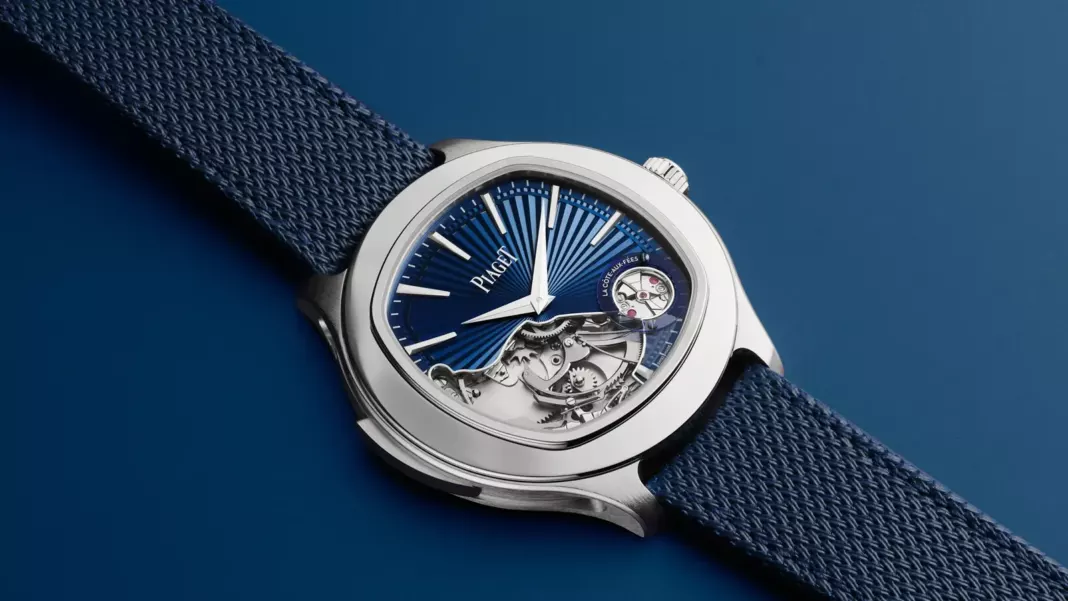
The Piaget Polo Minute Repeater places the caliber 1290P inside the Piaget Polo collection — Piaget’s sport-chic line — without softening the complication or enlarging the case to accommodate it. At 48mm and 9.30mm thick, the watch wears with the proportion and confidence the Polo is built for. Following the perpetual calendar and the flying tourbillon, the minute repeater is the third grand complication to enter the Polo family, and by any measure the most sonically demanding.
The Calibre 1290P and Its Construction
Every element of the movement addresses one objective: the clearest possible acoustic performance within the thinnest possible architecture.
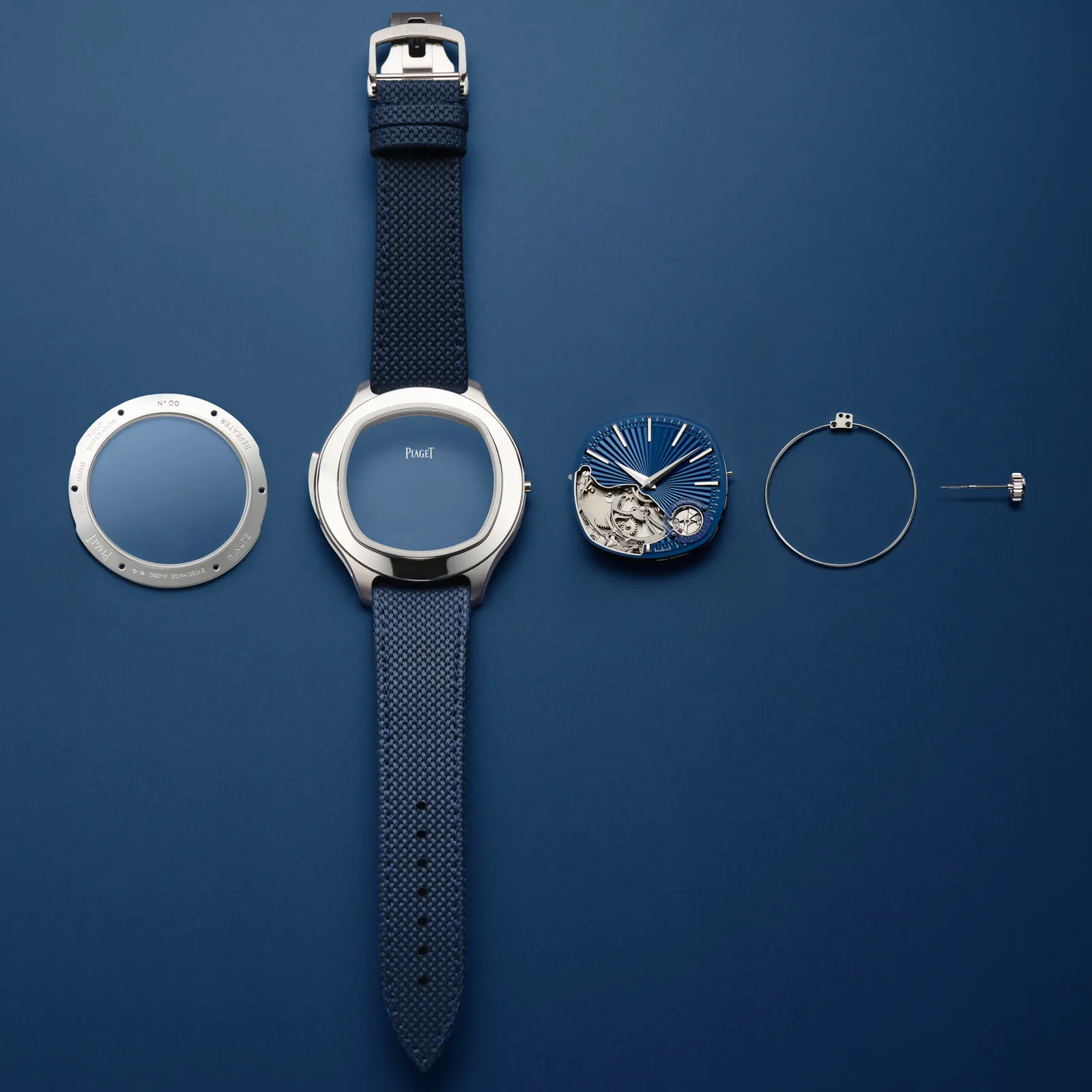
The 430 components of the caliber 1290P are hand-finished over many weeks at La Côte-aux-Fées. Bridges are hand-bevelled; the mainplate carries a subtle guilloché; the minute-repeater hammers are polished to a mirror finish. Powering the winding is a platinum micro-rotor, a choice dictated by physics — platinum’s density delivers superior winding efficiency in a compact footprint — finished in blue PVD to align visually with the dial.
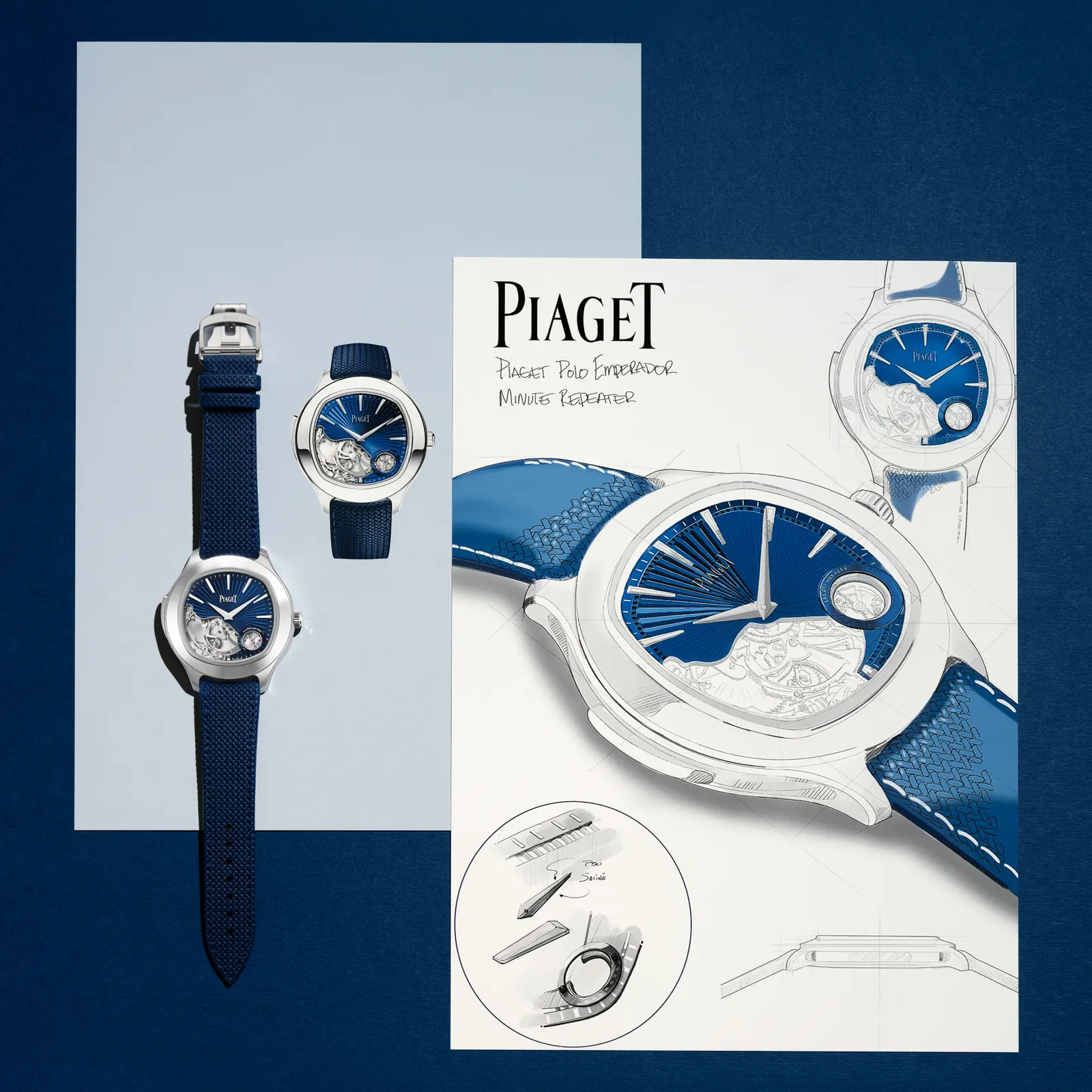
The dial required over 150 hours of development. Its gold surface carries a hand guilloché soleillé finish, while a delicate opaline outer track creates depth against the sunray centre. A gold fillet winds across the dial, its profile moving from straight to domed, opening a partial view onto the repeater mechanism below. At four o’clock, a smoked blue sapphire ring — engraved with “La Côte-aux-Fées” — frames the inertia wheel, the dedicated regulator of the chiming function, fully visible. Each individual dial then receives 50 additional hours of hand finishing. For context on the broader Piaget Polo collection and how this complication sits within it, see our coverage of the Piaget Polo collection.
Sound, Case and Wearability
A minute repeater is ultimately judged by its voice.
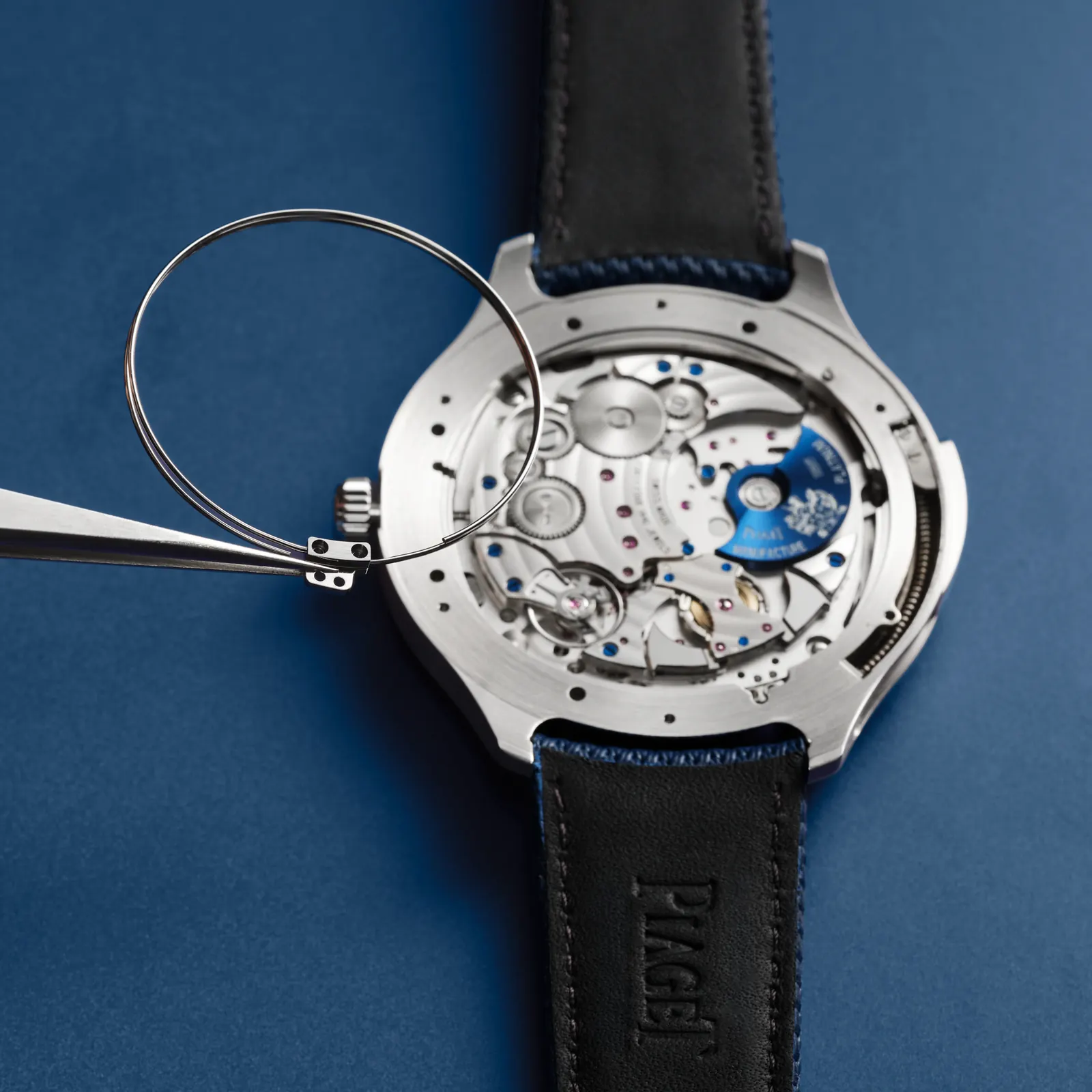
Calibre 1290P produces 64 decibels of intensity, three harmonic partials, and a damping factor of 2,600. Those figures are the product of parallel research into both movement mechanics and case resonance — the two must be tuned in concert for a minute repeater to project clearly. Hours sound at G sharp; minutes at A sharp; both in the fifth octave. The chiming slide is positioned at nine o’clock and activates downward, a solution that emerged from a complete rethinking of the movement’s architecture.
The 18-karat white gold case at 48mm and 9.30mm holds everything within the Polo’s characteristic shape-in-shape silhouette. Water resistance to 3 ATM is a meaningful specification for a chiming watch of this complexity. Delivery includes a blue textured embossed calfskin strap with folding clasp, plus an additional leather bracelet. The combination of acoustic performance and daily wearability in this case thickness is precisely why the Polo platform was chosen.
The Polo Collection’s Grand Complication Statement
Five numbered pieces per year is not an edition ceiling but an output ceiling.
Each watch demands weeks of manufacture time, and Piaget declines to accelerate that. The minute repeater joins the perpetual calendar and flying tourbillon as the third complication to define what the Polo line can carry technically. For collectors tracking Piaget’s trajectory through high complication, the Watches and Wonders event provides the broader context for where this release sits within the season’s haute horlogerie output.
Alongside the principal reference, Piaget is releasing a High Jewellery version with baguette-cut blue sapphires on the bezel, baguette-cut and brilliant-cut diamonds across the case, and a fully openworked dial. It places all seventy-plus hours of handcraft in unobstructed view — and may also be read alongside our recent coverage of Possession Vibrant Palace for Piaget’s parallel direction in High Jewellery.
| Movement | Calibre 1290P, 430 components, platinum micro-rotor (blue PVD), assembled at La Côte-aux-Fées |
| Case diameter | 48mm |
| Case thickness | 9.30mm |
| Case material | 18-karat white gold |
| Water resistance | 3 ATM |
| Annual production | 5 numbered pieces |
Stay ahead of the latest releases. Subscribe to our newsletter for editor-curated coverage of luxury timepieces across the Middle East.
Frequently Asked Questions
What movement does the Piaget Polo Minute Repeater use?
The watch houses Calibre 1290P, entirely conceived, developed, finished, and assembled at Piaget's La Côte-aux-Fées Manufacture. The movement comprises 430 components and features a platinum micro-rotor with a blue PVD coating.
How many Piaget Polo Minute Repeater pieces are made each year?
Only five numbered pieces are crafted per year, not as a formal limited edition but as a direct consequence of the weeks of hand-finishing and assembly each watch requires.
Is the Piaget Polo Minute Repeater water resistant for a chiming watch?
The watch is water resistant to 3 ATM, which Piaget describes as unusually resilient for a minute repeater, reflecting the engineering required to balance case resonance with acoustic performance.
What case size and material does the Piaget Polo Minute Repeater use?
The case is 18-karat white gold, measuring 48mm in diameter with a thickness of just 9.30mm, maintaining the Piaget Polo's characteristic fluid shape-in-shape design.
Is there a jewellery version of the Piaget Polo Minute Repeater available?
Alongside the main reference, Piaget is introducing a High Jewellery version with baguette-cut blue sapphires on the bezel, a combination of baguette-cut and brilliant-cut diamonds on the case, and a fully openworked dial.