Key Highlights
- Possession Vibrant Palace introduces ornamental stones; turquoise, sodalite and dumortierite; to Piaget’s iconic rotating jewellery collection for the first time.
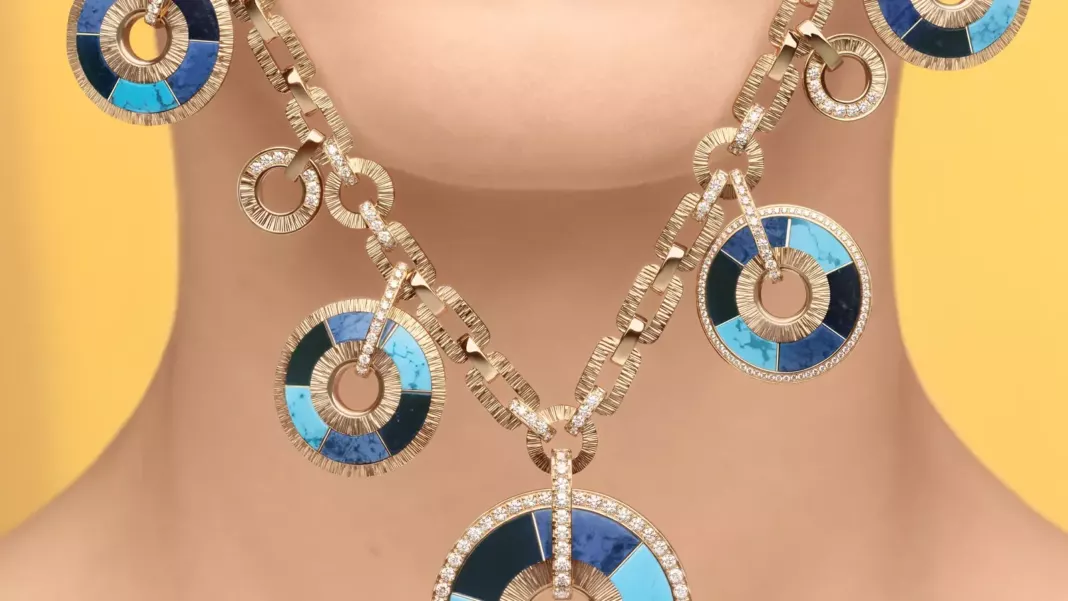
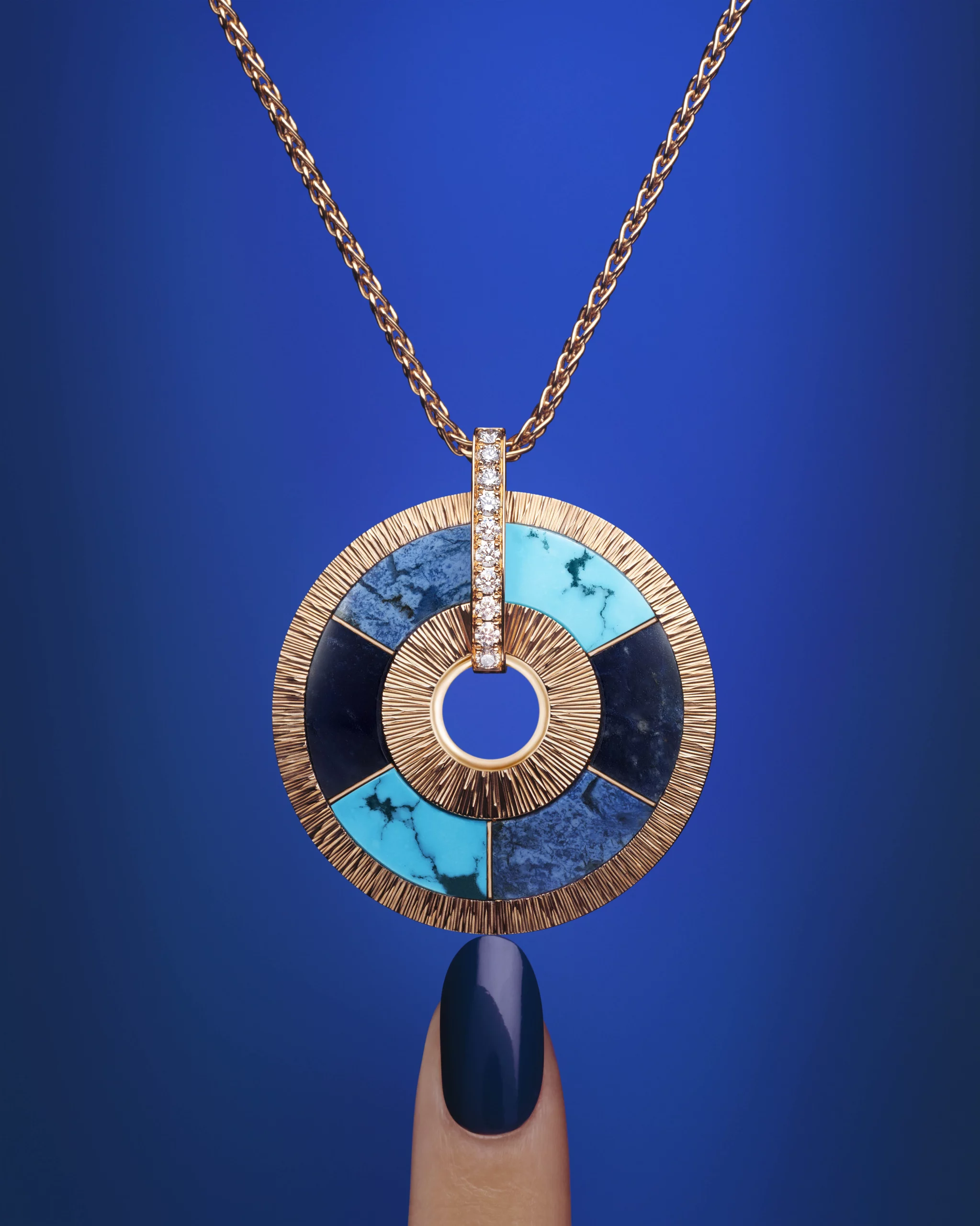
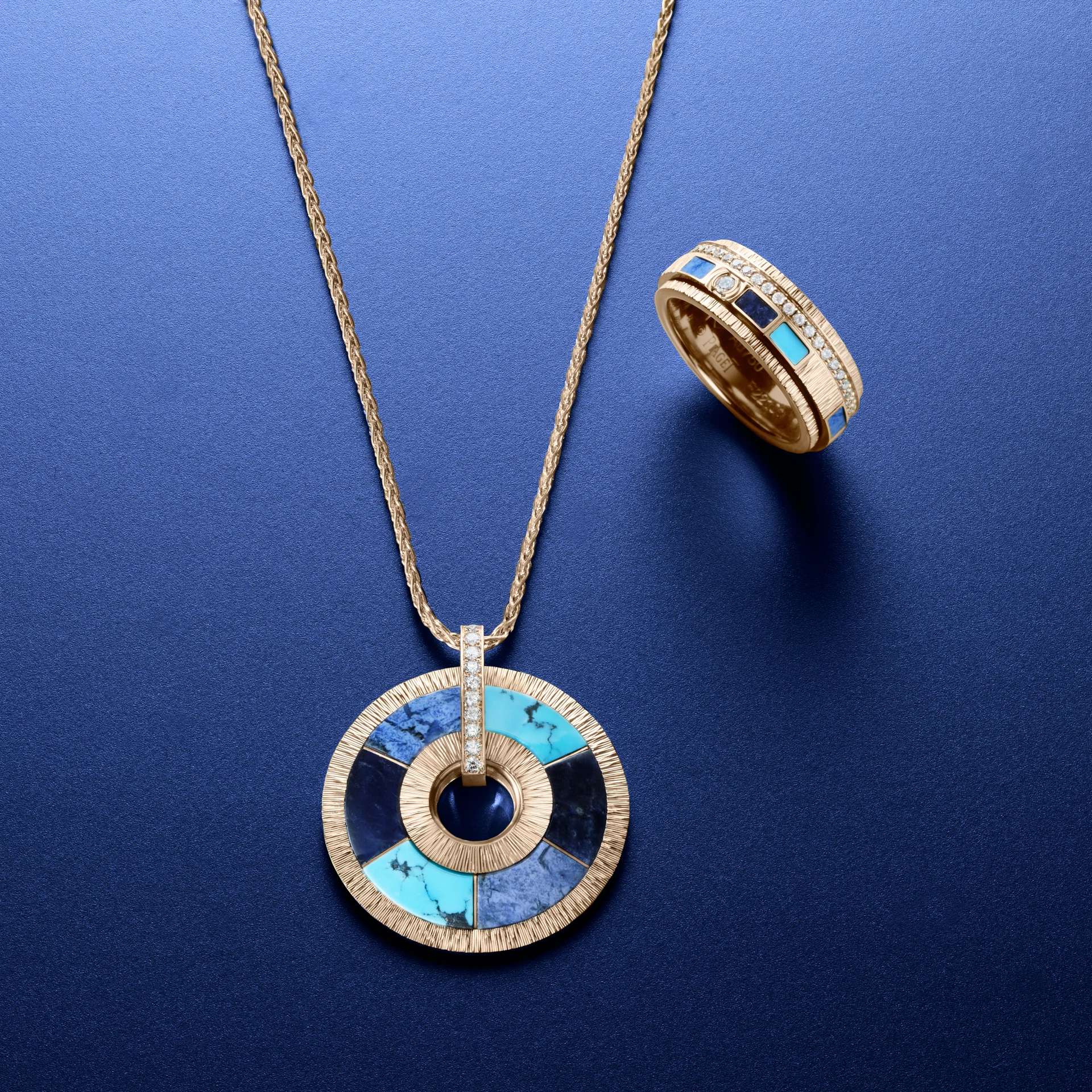
- A hard stone mosaic combines the signature gold engraving of Decor Palace with half-moon-set diamonds and colourful stones accented by polished rose gold gadroons.
- Circular motion remains the collection’s defining feature, embodied by a turning medallion that celebrates the preciousness of the present moment.
- Each piece carries a talisman-like symbolism rooted in the protective power of amulets and the universal circular form shared across cultures.
- Piaget‘s legacy of blue, from La Côte-aux-Fées to the Riviera, runs as an unbroken thread through the Maison’s history since 1874.
A Legacy of Colour in Motion
Piaget began making jewellery in the early 1960s, and the Maison has never treated colour as decoration alone. Blue, in particular, became a defining pillar of its identity; evoked by the skies of La Côte-aux-Fées, the azure Riviera, and the Op Art–influenced campaigns of the 1970s photographed by Italian photographer Alberto Rizzo. It is a shade that has shaped Piaget’s aesthetic sensibility across decades, appearing in unique hues and a wide range of styles, from the historic Salon Piaget windows of 1959 to the launch of the Watches and Wonders era of modern fine jewellery reveals.
Possession itself arrived in 1990, when Piaget introduced the first rotating rings that reinvented the relationship between gold, design and circular motion. From that founding gesture, the collection has evolved steadily through Possession Pop and Decor Palace; each iteration enriching the Maison’s vocabulary of craftsmanship and imagination. Possession Vibrant Palace is the latest and most chromatically intense chapter, adding a new material dimension to the hallmark rotation that defines the range. Explore the brand’s contemporary design ethos further in the Polo 79 Two-Tone, another recent expression of Piaget’s dual commitment to colour and refinement.
The Stones: Three Blues, One Vision
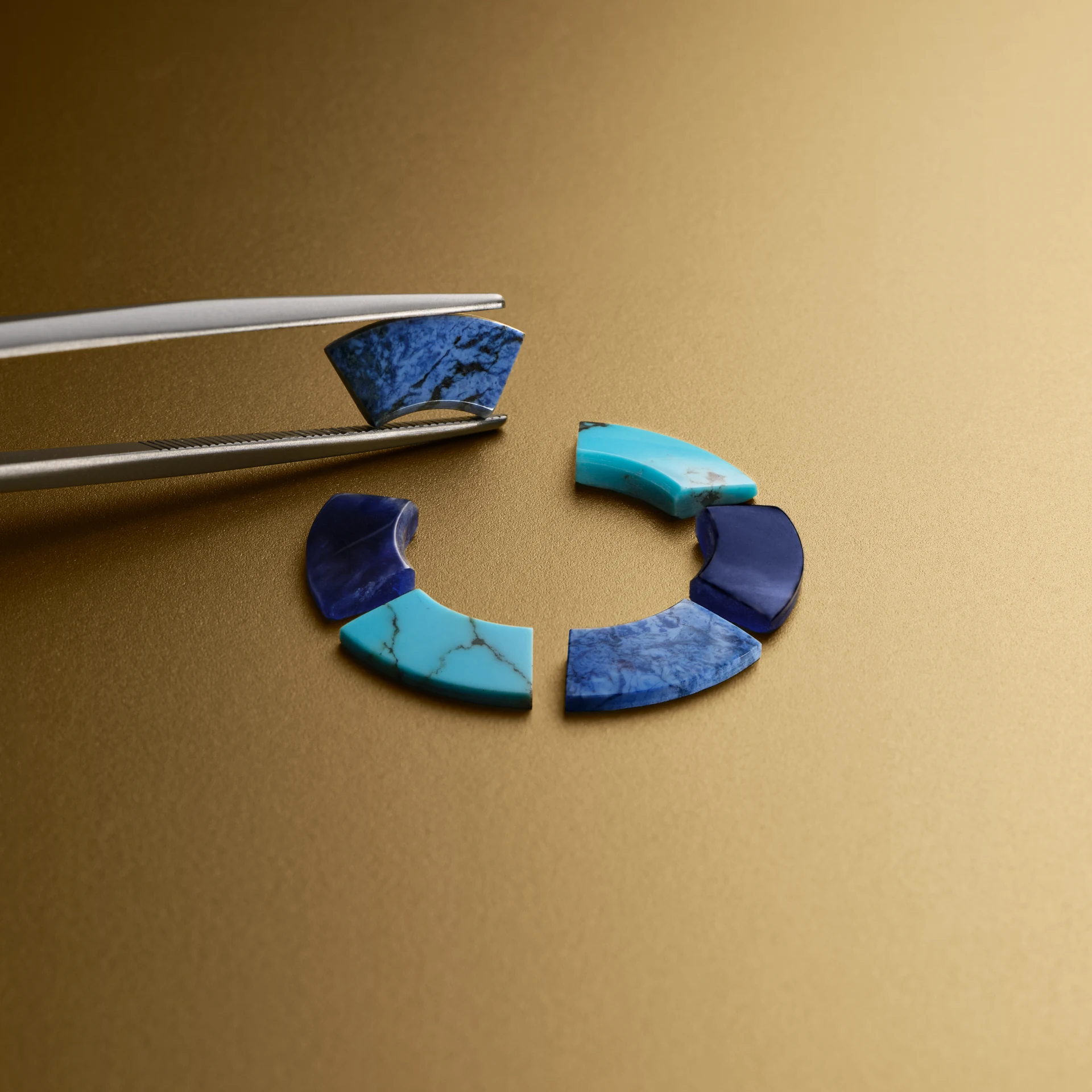
At the heart of Possession Vibrant Palace are three ornamental stones chosen for their distinct yet harmonious characters: turquoise, sodalite and dumortierite. The bright radiance of turquoise pairs with the depth of sodalite and the captivating hue of dumortierite to create what Piaget describes as an infinite range of possibilities for the wearer. Together they form a hard stone mosaic, meticulously cut and set, that gives each piece its singular, almost painterly quality. The official collection is presented in full on the Piaget website, where the full scope of stones and configurations can be explored.
The mosaic combines the signature gold engraving inherited from Decor Palace with half-moon-set diamonds and colourful stones, accented by polished rose gold gadroons. The resulting interplay of asymmetry and graphic form is rooted in what the Maison calls “airy yet graphic shapes”; a tension between lightness and structure that is wholly Piaget. Because each stone is naturally unique, no two pieces in the collection are identical, making every ring, bracelet or medallion an exceptional object in its own right.
Symbolism and Savoir-Faire
The Talisman Dimension
Piaget draws a deliberate parallel between the pieces of Possession Vibrant Palace and the amulets that have shaped human imagination across cultures and centuries. The circular form, universal shorthand for prosperity, luck and protection, lends each jewel an inherent symbolic resonance. Far from an abstract gesture, this symbolism is built into the collection’s design logic. The stones themselves, long associated with protective properties in various traditions, reinforce a narrative of the jewel as precious talisman. Each sparkling piece is conceived as something that carries meaning beyond its beauty.
The Rotation Gesture
The turning medallion remains the emotional core of Possession. This rotating element is more than a mechanical curiosity; it is a deliberate invitation to pause, to acknowledge the present moment, and to engage with the jewel as a living object. For Piaget, the gesture encapsulates a spirit of joyful hedonism, a celebration of intuition, sophistication and the pleasure of now. With Vibrant Palace, that rotation is enriched by swirling blue, adding a new visual rhythm to a movement that has defined the collection since 1990. Whether worn as an everyday ring or a more formal bracelet, each piece opens what the Maison describes as a world of one’s own, where emotions flow freely. The same design discipline underpins the Polo Signature, another collection that balances tactile pleasure with precise Genevan craft.
Why It Matters
Possession Vibrant Palace arrives as a confident statement about the enduring relevance of couture jewellery in a world of fast-changing aesthetics. By fusing centuries-old stone-setting savoir-faire with a collection built on movement and symbolism, Piaget reaffirms that true luxury is not static; it rotates, catches light and changes meaning with every gesture. For collectors and connoisseurs in the Middle East, where jewellery carries deep cultural resonance and chromatic boldness is prized, this collection speaks directly and fluently.
Discover the watches shaping the Middle East market. Join our mailing list for ongoing reviews, releases, and collector insights.
Frequently Asked Questions
What stones are used in the Piaget Possession Vibrant Palace collection?
The collection features turquoise, sodalite and dumortierite; three ornamental stones in shades of blue that range from bright radiance to deep azure. Each stone is individually cut and set as part of a hard stone mosaic.
What is the signature design feature of the Possession collection?
The defining feature of Possession is circular motion; specifically a rotating element such as a turning medallion that encourages a unique gesture and celebrates the preciousness of the present moment.
How does Possession Vibrant Palace relate to earlier Possession collections?
Possession Vibrant Palace builds on the Possession Pop and Decor Palace collections, combining the signature gold engraving of Decor Palace with captivating ornamental stones and half-moon-set diamonds for a new dimension of colour and texture.
When was the Possession collection first launched by Piaget?
The very first Possession rings were launched in 1990, marking a turning point in Piaget's story by reinventing the relationship between gold, design and circular motion.
What is the heritage behind Piaget's use of blue in its collections?
Blue became a pillar of Piaget’s identity from the early days of the Maison, shaped by the skies of La Côte-aux-Fées and the azure vibrancy of the Riviera. The colour featured prominently from the historic Salon Piaget in 1959 through to campaigns designed in the 1970s.