

Key Highlights
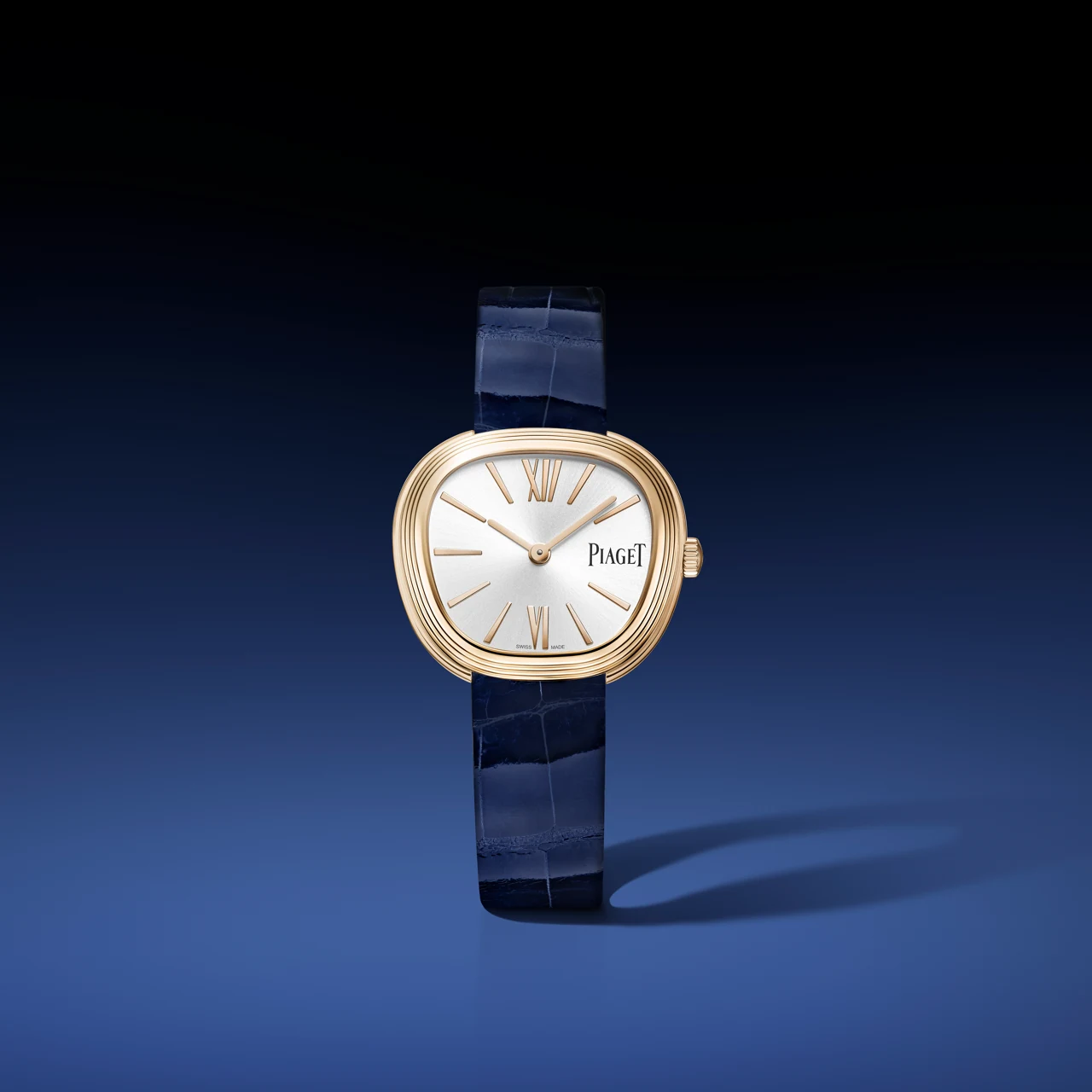
- Two new Sixtie versions debut on deep blue alligator straps with a trapeze-shaped pink gold ardillon buckle
- Dial choice: a silvered solar satin-brushed dial with golden Roman numerals, or a marbled blue quartz stone dial
- Individually etched pink gold gadroons encircle the trapezoid bezel, directly referencing the Maison’s 1960s jewellery watch heritage
- The Sixtie collection was first launched at Watches and Wonders 2025, rooted in Piaget’s late-Sixties archives
- Blue quartz is selected for its exceptional hardness, ensuring longevity as well as visual distinction
 Piaget Sixtie on deep blue alligator strap with silvered solar satin dial and pink gold gadroon bezel” />
A Shape Born from the Archives
When Piaget presented the Sixtie at Watches and Wonders 2025, the Maison reached deep into its own history to deliver something entirely contemporary. The watch takes its name from its decade of origin and the simplicity of its purpose: to mark sixty seconds, sixty times an hour. Its case is a generously proportioned trapezoid, a silhouette that carries the unmistakeable spirit of the late 1960s, an era when Piaget transformed watchmaking into an art form without borders. Now, with two new iterations on deep blue alligator straps, the Sixtie steps confidently into new chromatic territory.
The story behind the case shape is inseparable from the Maison’s own creative evolution. Under the direction of designer Jean-Claude Gueit, Piaget timepieces of the 1960s and 1970s ceased to be purely functional objects. Dials were set in ornamental stones of vivid colour, cases were sculpted as ovals, cushions, and trapezoids, and watches were housed in sautoirs, cuffs, and engraved bracelets. The trapezoid — now the defining form of the Sixtie — was among the most expressive of these shapes, at once feminine in its proportions and architectural in its precision. The Sixtie’s design also carries a quiet nod to its masculine counterpart: the more symmetrical cushion-shaped Andy Warhol watch, also adorned with gadroons.
The Gadroon: A Defining Detail
No element of the Sixtie is more immediately recognisable than the gadroons, the series of individually etched ridges that sweep around the bezel in soft, satiny pink gold. Each gadroon is worked by hand, its form a miniature exercise in goldsmithing that catches light in a manner no polished surface could replicate. The technique has roots in the Maison’s celebrated ateliers, where artisans preserve and refine rare skills passed across generations. On the Sixtie, the gadroons serve both decorative and structural purposes, framing the dial with a sculptural authority that balances the watch’s more delicate femininity.
The new ardillon buckle continues this visual language. Trapeze-shaped to echo the case, it is decorated with the same sweeping gadroons, creating a coherent design grammar from dial to strap-end. This level of integration, where even the clasp is conceived as a jewellery element, is characteristic of the approach Piaget has maintained since Georges-Edouard Piaget founded the Maison in 1874 in La Côte-aux-Fées, Switzerland. Explore the broader Piaget Polo Signature to understand how this commitment to craft extends across the Maison’s collections.
Two Dials, One Deep Blue Horizon
The Silvered Solar Satin Dial
The first new version presents a silvered solar satin-brushed dial, its surface worked to diffuse light with a quiet radiance. Golden Roman numeral markers punctuate the face with a classicism that sits in deliberate contrast to the darker, richer depth of the blue alligator strap beneath. The effect is one of considered opposition: brightness set against depth, gold against blue. This gives the piece an elegance suited equally to a boardroom and an evening occasion. For collectors in the Middle East who dress across multiple settings in a single day, this versatility is not incidental; it is architectural.
The Blue Quartz Stone Dial
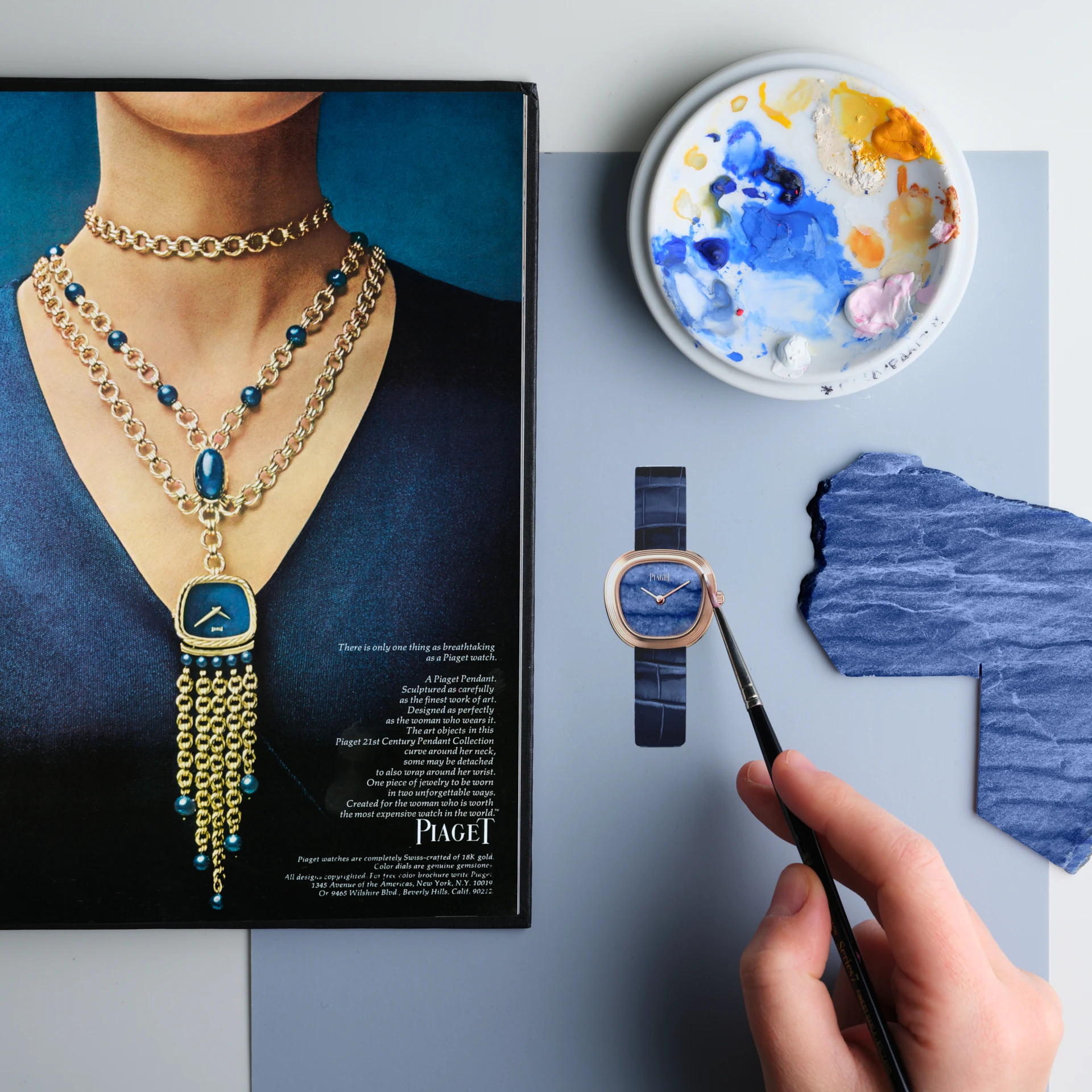
The second dial is the more singular of the two. Blue quartz, selected for its exceptional hardness and therefore its longevity as a dial material, presents a marbled surface of rich blue veined with deeper, darker streaks. No two dials are identical. The stone’s natural formation ensures every Sixtie is, in the truest sense, one of a kind. This dial draws a direct line to Piaget’s long-standing mastery of ornamental stone dials, a tradition the Maison has practised since the 1960s. It also echoes the vibrant turquoise dial unveiled with the original Sixtie, deepening the collection’s chromatic conversation. For more on the Maison’s range, the Polo 79 Two-Tone offers a compelling parallel in Piaget’s approach to material contrast.
Why It Matters
The Piaget Sixtie on strap is a precise statement about the continued relevance of the jewellery watch in contemporary luxury. By transitioning from a precious metal bracelet to a deep blue alligator strap while preserving the gadroon bezel, the trapezoid buckle, and the ornamental stone dial option, Piaget has made the Sixtie more wearable without diminishing its jewellery credentials. For the Middle East collector, where the distinction between a watch and a jewellery piece is often embraced rather than resisted, the Sixtie’s dual identity is an asset. Visit the official Piaget website for full collection details and boutique information.
Discover the watches shaping the Middle East market. Join our mailing list for ongoing reviews, releases, and collector insights.
Frequently Asked Questions
What is the Piaget Sixtie and where does its design originate?
The Sixtie is a watch collection launched at Watches and Wonders 2025, named after the decade of its origin and inspired by Piaget’s late-1960s archives. Its defining trapezoid case shape references an era when Piaget transformed watchmaking into an art form under designer Jean-Claude Gueit, when cases were sculpted as ovals, cushions, and trapezoids adorned with ornamental stones and precious metal elements.
What are the dial options for the new Piaget Sixtie on alligator strap?
The two new Sixtie versions offer a choice between a silvered solar satin-brushed dial with golden Roman numerals, or a marbled blue quartz stone dial. Both versions are paired with deep blue alligator straps and feature a trapeze-shaped pink gold ardillon buckle.
What makes the gadroons on the Sixtie special?
The gadroons are individually etched ridges of pink gold that sweep around the bezel, each worked by hand as a miniature exercise in goldsmithing. This technique, rooted in Piaget’s celebrated ateliers, catches light in a way no polished surface could replicate and serves both decorative and structural purposes in framing the dial.