
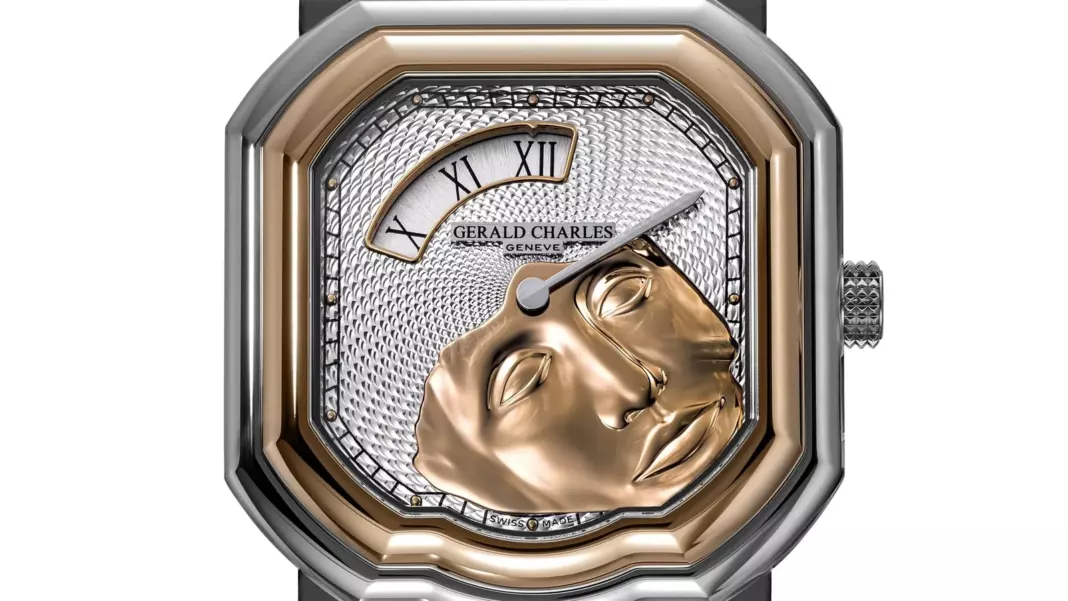
Gerald Charles creates the Maestro GC39 Mitoraj, a jumping-hour Pièce Unique for TimeForArt 2026, translating Igor Mitoraj's sculpture into a 42mm titanium watch.
The Read
- Against the rest of the Grand Maestro line-up, the GC39 Mitoraj breaks from symmetry entirely: the jumping-hour guichet sits asymmetrically at the top of the dial, deliberately freeing the lower half for a three-dimensional brass miniature of Mitoraj’s Luci di Nara — a departure no standard production reference makes.
- A Pièce Unique created for the TimeForArt benefit auction at Phillips New York, 5 December 2026; 100% of proceeds support Swiss Institute’s exhibitions and artist residencies.
- Calibre GCA3900 inside: 265 components, 38 jewels, 4 Hz, ~50 hours power reserve, housed in a 42 × 42 mm polished Grade 5 titanium case, 11 mm thick, 100 m water resistance.
- Gerald Charles’s first act of arts philanthropy, in partnership with Atelier Mitoraj and Galleria d’Arte Contini.
Announced on 7 October 2026, the Maestro GC39 Mitoraj marks Gerald Charles’s first entry into contemporary art philanthropy. The Maison chose the Grand Maestro Jumping Hour as its vehicle: a complication whose architecture — hour displayed in a guichet, single central minute hand — leaves the dial unusually open, and therefore capable of hosting a real sculpture rather than a flat image.

Design & Sculpture
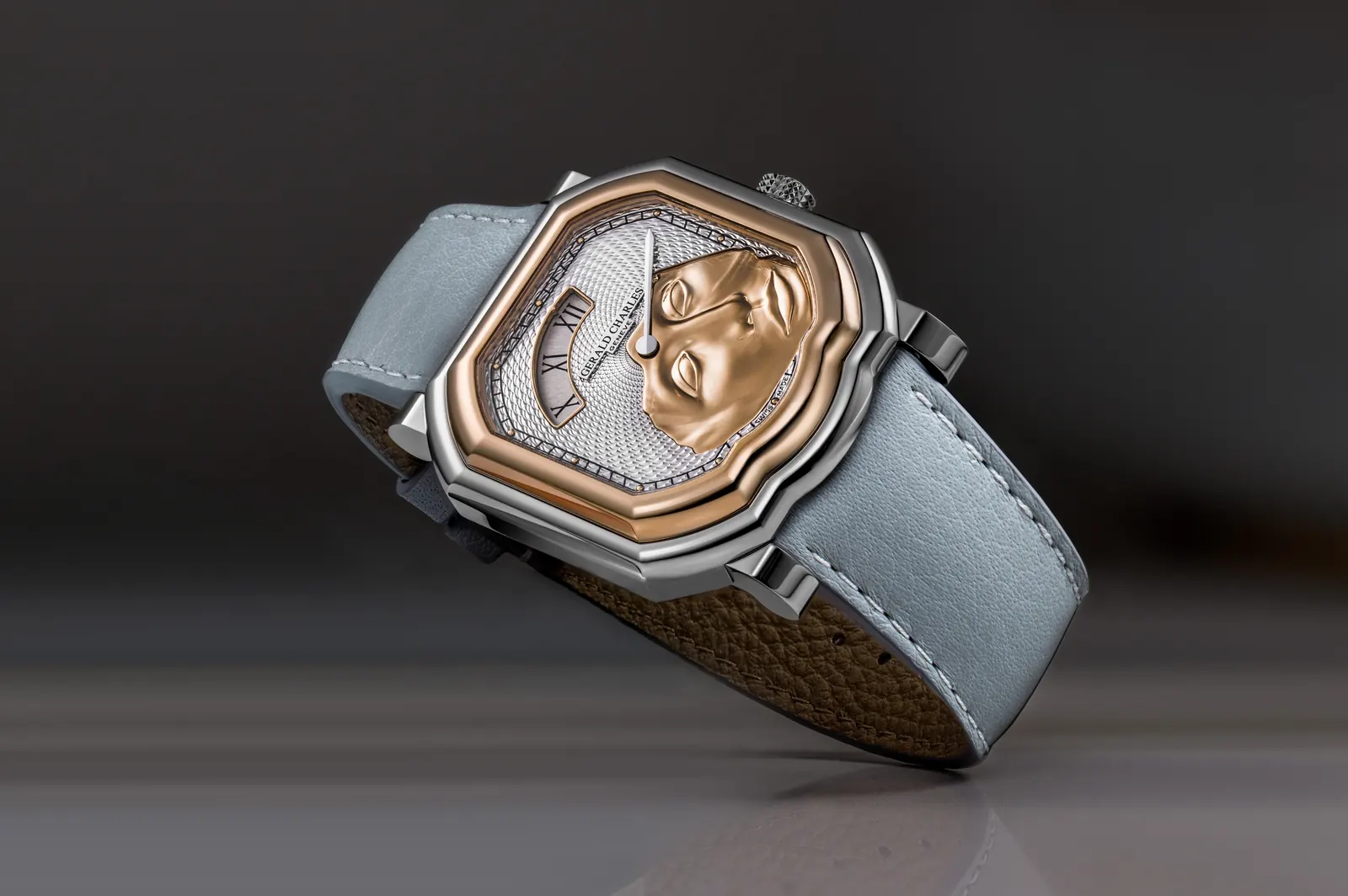
Igor Mitoraj’s Luci di Nara is among his most characteristic works: a serene classical face rendered incomplete, where fragmentation carries as much meaning as what survives. Translating it into a watch required Gerald Charles to produce a separate three-dimensional miniature in brass, finished in a warm 4N PVD treatment, placed against a precisely machined guilloché dial. Polished 4N cabochon indexes and the Maestro’s railway minute track frame the composition without competing with it. The jumping-hour guichet, positioned asymmetrically at the top, breaks from the bilateral symmetry that governs most watchmaking — and in doing so, clears the stage.

Movement & Materials
Beneath the sculptural surface, Calibre GCA3900 is a serious mechanism. Its 265 components and 38 jewels operate at 4 Hz; over sixty minutes the movement accumulates the energy required to advance the hour disc in a single, near-instantaneous jump — without disturbing the regulating organ. Power reserve runs to approximately 50 hours. The case is polished Grade 5 titanium, measuring 42 × 42 mm at just 11 mm in height, with 100 metres of water resistance and the signature screw-down crown. The closed case back carries an engraving of Luci di Nara after Igor Mitoraj, Mitoraj’s own signature, the TimeForArt identity, acknowledgements of Atelier Mitoraj and Galleria d’Arte Contini, and the designation PIÈCE UNIQUE.
Heritage & Context
Gerald Charles was founded in Geneva in 2000 by Gérald Charles Genta, who approached the case as architecture first and mechanics second — a logic visible in the Grand Maestro’s sculpted, interlocking lines, which draw on the fluid dynamism of Baroque architecture and, specifically, on Francesco Borromini. CEO Federico Ziviani framed the collaboration directly: “Translating Igor Mitoraj’s sculptural language into the Grand Maestro felt like a natural extension of that legacy: a question of translation, not reproduction.” The Museo Mitoraj opened in Pietrasanta in June 2026, the Tuscan city where the sculptor lived and worked for decades, lending the GC39 Mitoraj’s arrival a particular timeliness.
The Piece in Context
The Maestro GC39 Mitoraj is offered at the third edition of the TimeForArt auction, the largest to date, bringing together 26 watch brands at Phillips New York on 5 December 2026. Across its first two editions, the initiative raised $2.4 million for Swiss Institute. For Gerald Charles, the commission is the Maison’s first act of arts philanthropy — a single piece that will not enter any catalogue, exist in any collection variant, or be repeated.
| Movement | Automatic Calibre GCA3900, 265 components, 38 jewels, 4 Hz, ~50 h power reserve |
| Case size | 42 × 42 mm |
| Case material | Polished Grade 5 titanium, 11 mm thick |
| Dial | Machined guilloché with 3D brass Luci di Nara miniature in 4N PVD; polished 4N cabochon indexes; railway minute track |
| Water resistance | 100 metres |
| Price | Not stated (offered at auction) |
| Availability | On request from the maison or an authorised retailer in the Middle East |
For more on horology that matters to collectors in Europe and the Middle East, sign up for our weekly editorial briefing.
Frequently Asked Questions
What is the Gerald Charles Maestro GC39 Mitoraj and how many were made?
The Maestro GC39 Mitoraj is a Grand Maestro Jumping Hour watch created by Gerald Charles as a Pièce Unique — meaning exactly one example exists. It was commissioned for the TimeForArt benefit auction at Phillips New York on 5 December 2026, with all proceeds supporting Swiss Institute's art programmes.
What movement powers the Maestro GC39 Mitoraj?
The watch is powered by the automatic Calibre GCA3900, comprising 265 components and 38 jewels. It operates at 4 Hz and offers approximately 50 hours of power reserve, with a jumping-hour mechanism that accumulates energy over sixty minutes before advancing the hour disc in a near-instantaneous jump.
How does the Luci di Nara sculpture appear on the dial?
Rather than reproducing Mitoraj's Luci di Nara as a printed or engraved image, Gerald Charles rendered it as a separate three-dimensional miniature sculpture in brass, finished in a warm 4N PVD treatment, and set against a machined guilloché dial. The asymmetrically placed jumping-hour guichet at the top frees the lower dial for the sculpture to occupy with genuine physical presence.
Is the Gerald Charles Maestro GC39 Mitoraj available to buy in the Middle East?
The piece is a Pièce Unique offered at the TimeForArt auction at Phillips New York on 5 December 2026. No separate retail distribution has been announced; interested collectors may contact the maison or an authorised retailer in the Middle East.
What is TimeForArt and who organises it?
TimeForArt is the world's first benefit watch auction dedicated entirely to contemporary art, created by the New York non-profit Swiss Institute in partnership with Phillips. Its third edition, on 5 December 2026, brings together 26 watch brands and is the largest to date; across its first two editions the initiative raised $2.4 million for Swiss Institute.
Explore more from GERALD CHARLES: Gerald Charles Maestro GC Sport Tennis Turquoise: Light Turquoise Arrives · Gerald Charles Opens Its Largest Boutique in Osaka at Takashimaya.