What to Know First
- Boucheron’s Carte Blanche 2026, titled Human Being, is a five-set High Jewellery collection created under Creative Director Claire Choisne, each set comprising a cluster necklace and matching ring, totalling over 14,000 hours of craftsmanship and unveiled at Paris Haute Couture Week 2026.
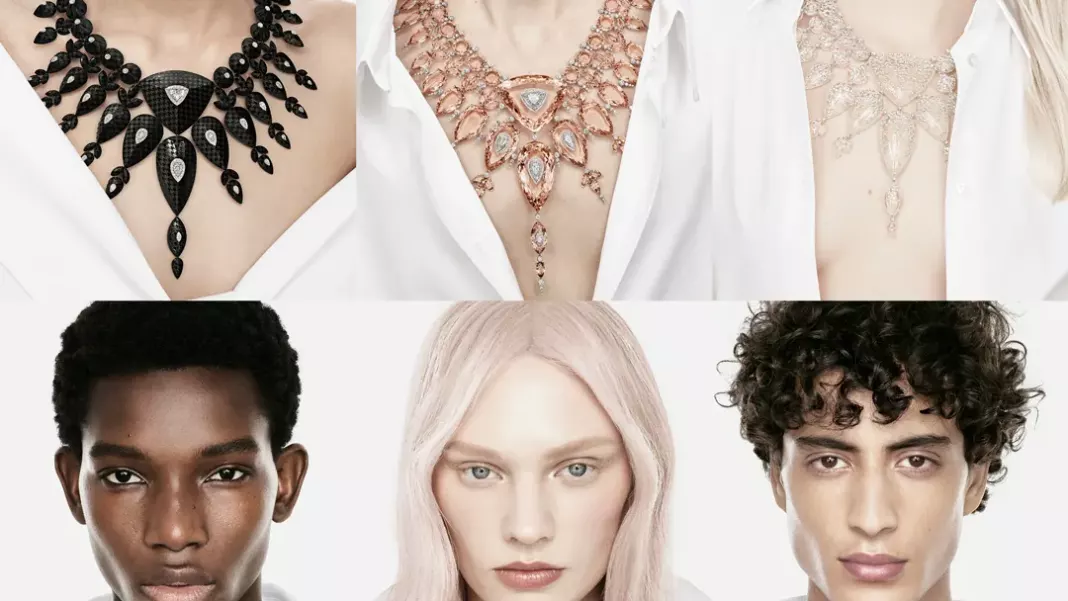
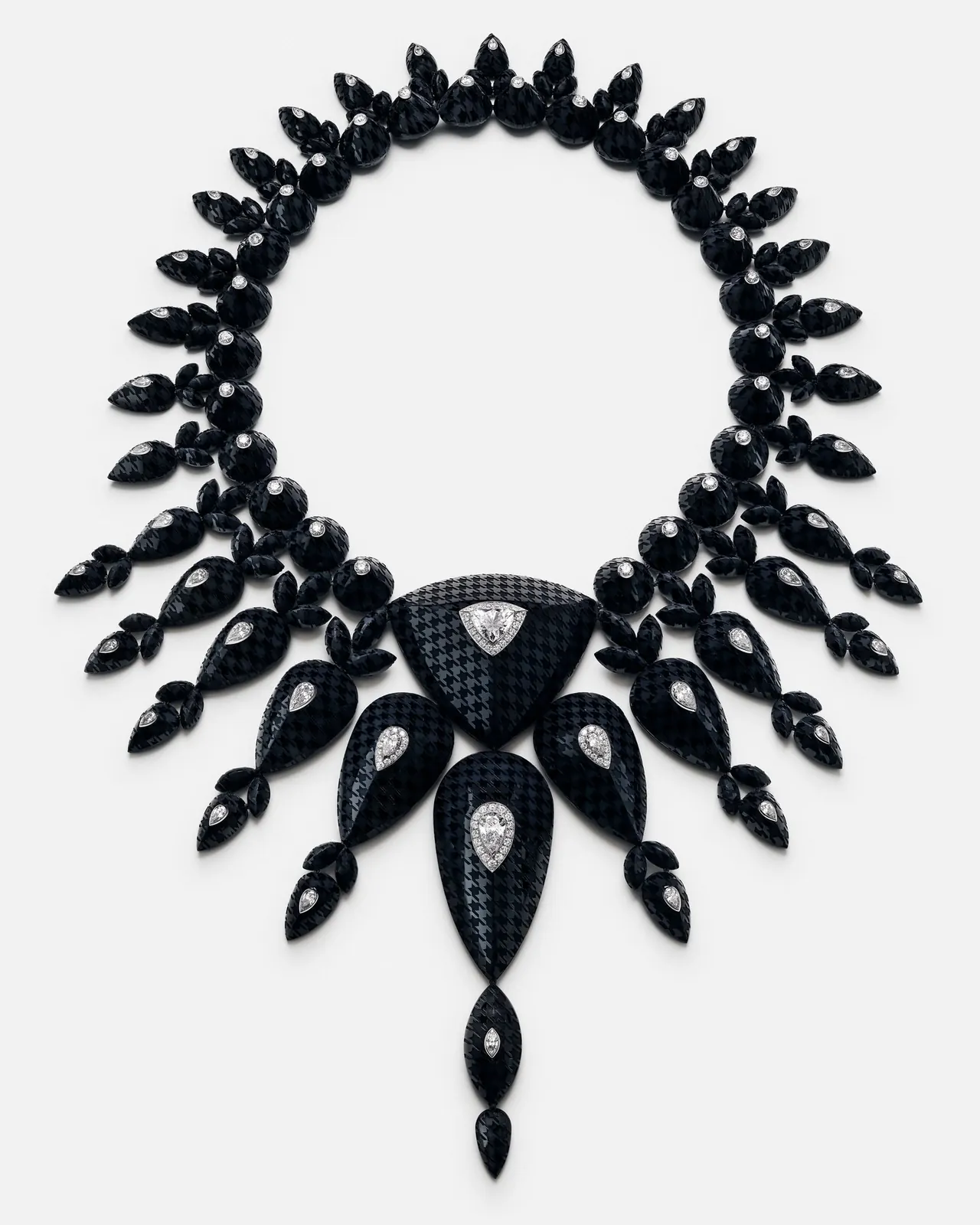
- All five sets — Rain, Flower, Light, Tattoo, and Checkers — share an identical silhouette; what separates them is their material, technique, and savoir-faire.
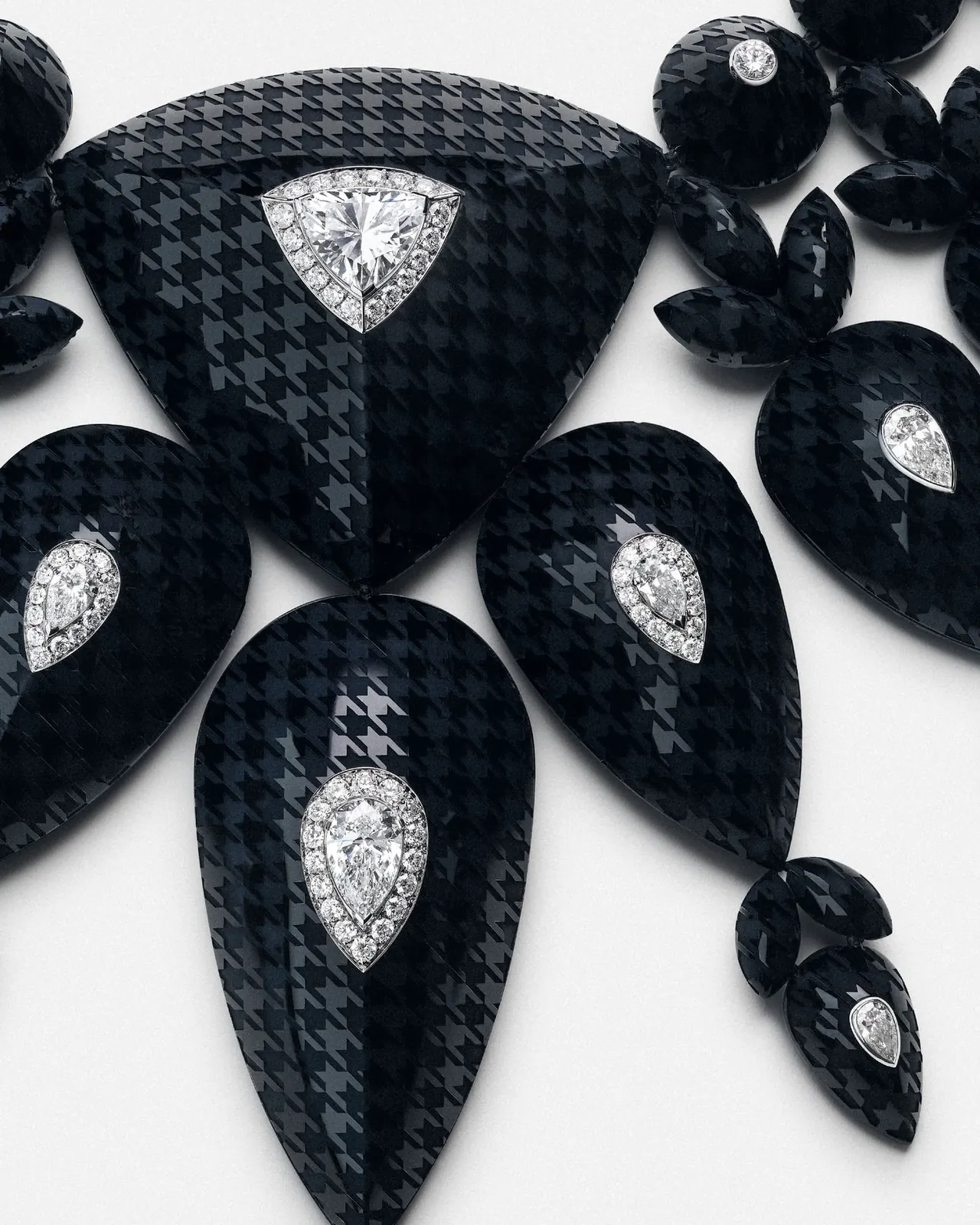
- The Checkers set deploys femtosecond laser engraving on 1,535 carats of onyx, a technology adapted from precision watchmaking.
- Flower required over 1,200 hours of micro-miniature painting by hand under high magnification; Tattoo demanded 1,100 hours of glyptic engraving.
- The philosophical argument of the collection is direct: in an era of accelerating artifice, the most precious material is the human hand.
Design and Materials: One Shape, Five Treatments
The decision to fix the silhouette across all five sets is the collection’s central structural choice, and its meaning is not difficult to read. Where previous Carte Blanche collections varied their forms freely, Human Being disciplines itself to a single architecture — the cluster necklace — and then asks what human skill alone can do within those constraints. The result is a collection that functions simultaneously as a design exercise and a philosophical argument.
Rain suspends diamonds within hollow rock crystal beads filled with plant-based resin, producing constellations of light trapped inside crystalline forms. Light works with morganite, a pink beryl so structurally fragile that Boucheron’s Studio invented an entirely new mounting method to protect it while maximising its refraction. Tattoo reaches into the Maison’s own archives for Victorian body-art motifs — poppy, rose, blue tit, cicada, serpent, butterfly — and translates them into smoky quartz through glyptic engraving, the reverse-side carving of hardstones in bas-relief, so that the imagery reveals itself through depth and texture rather than colour.
Checkers: Houndstooth Transposed into Stone
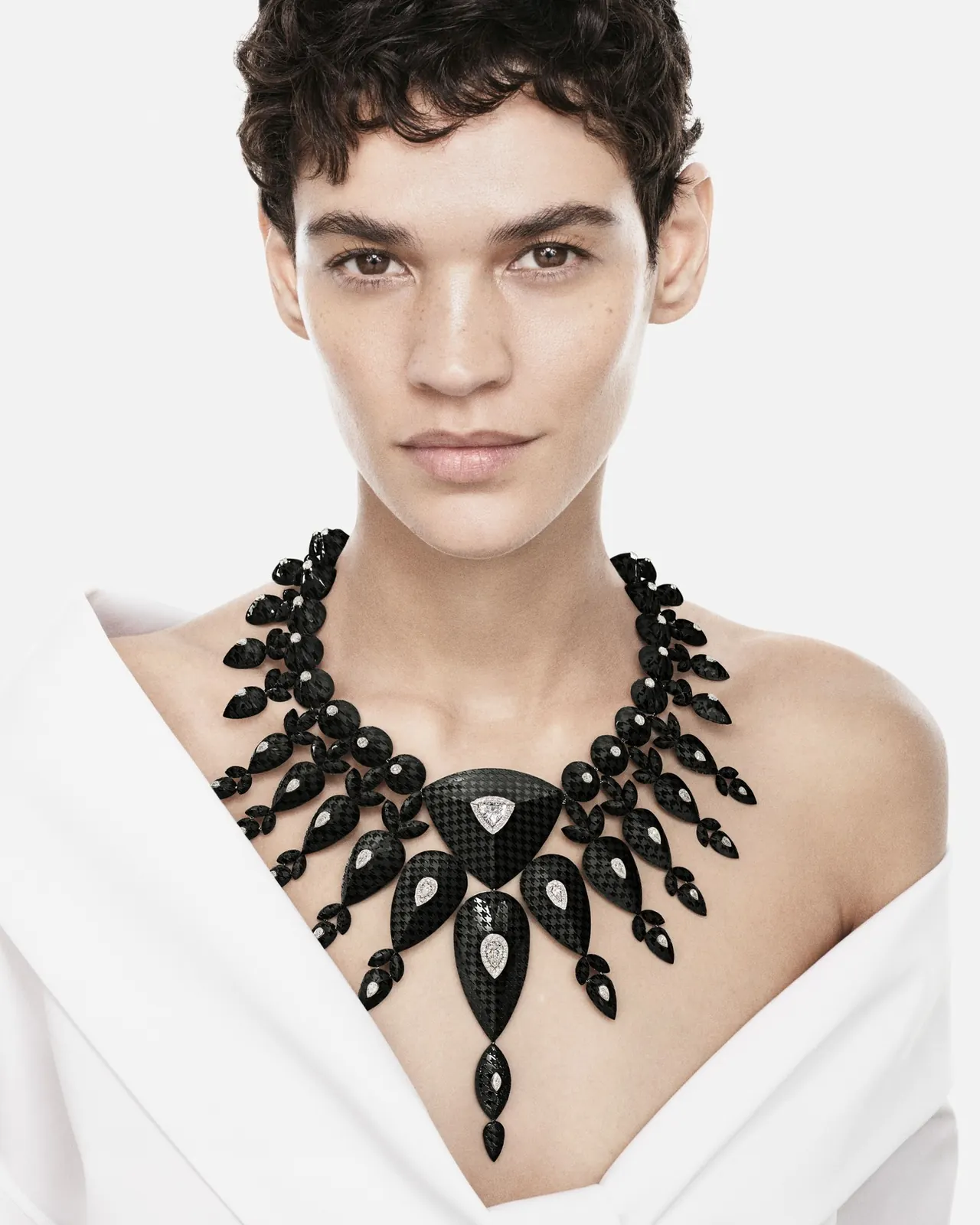
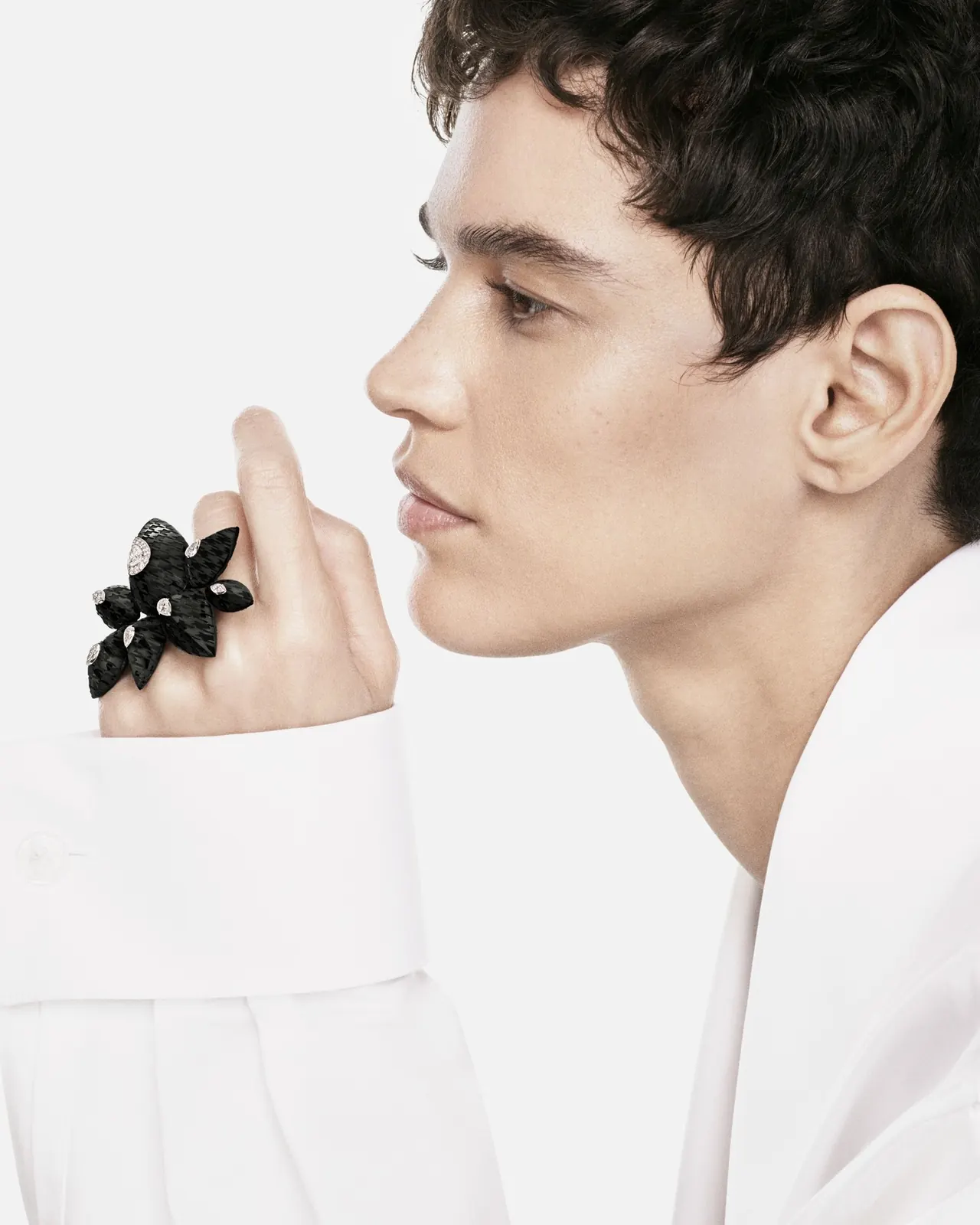
The finale of Human Being is where Boucheron concentrates its most technically demanding work. Checkers takes a textile pattern — houndstooth, a personal favourite of Claire Choisne — and inscribes it across 1,535 carats of onyx using a femtosecond laser, a precision tool more commonly associated with high watchmaking than jewellery. The femtosecond laser operates by emitting ultra-fast micro-impulses that remove material from the stone’s surface without generating heat. Traditional laser engraving heats the material as it cuts, producing microscopic fractures that are structurally fatal in High Jewellery. The femtosecond laser cuts cold, leaving the surrounding stone untouched.
Engraving alone could not produce the final effect. For the houndstooth pattern to read as continuous woven fabric across the entire necklace and ring, rather than as a series of separately engraved motifs, Boucheron’s Studio undertook extensive computer-aided design work, mapping the motif so that it flows in unbroken visual continuity from one droplet to the next, front and back alike. Each droplet is differently angled and shaped, so every individual engraving had to be individually calculated. As Boucheron frames it, the result is “the illusion of a real houndstooth fabric” — couture made hard.
Heritage and the Place Vendôme Argument
Boucheron, founded by Frédéric Boucheron in 1858, became the first jeweller to open on Place Vendôme in 1893 — a square that has since become home to houses including Van Cleef & Arpels and Bulgari. Now under Claire Choisne’s creative direction since 2011 and part of the Kering group, Boucheron has used the Carte Blanche programme to pose a new conceptual question each year: what does precious mean now? Or Bleu in 2024 mourned the scarcity of water. Impermanence in 2025 captured nature in the act of disappearing. Human Being turns that inquiry inward.
As Boucheron states: “The closer you look, the more you discover, as in each of us, those details that define who we are. With this new Carte Blanche Collection, Boucheron celebrates being rather than seeming.” The 14,000 hours embedded in Human Being are, in that reading, not a production metric but a declaration. For collectors in the Middle East who follow High Jewellery with the same rigour applied to grande complication watchmaking, the collection is a direct address — a reminder that the rarest thing any Maison can offer is irreplaceable human attention, accumulated one hour at a time at boucheron.com.
Stay ahead of the latest releases. Subscribe to our newsletter for editor-curated coverage of luxury timepieces across the Middle East.
Frequently Asked Questions
What is the Boucheron Carte Blanche 2026 Human Being collection?
Human Being is Boucheron's Carte Blanche collection for 2026, comprising five High Jewellery sets — Rain, Flower, Light, Tattoo, and Checkers — each consisting of a cluster necklace and matching ring. The collection was unveiled during Paris Haute Couture Week 2026 under Creative Director Claire Choisne.
How many hours did it take to create the Human Being collection?
The five sets in Human Being required over 14,000 hours of craftsmanship in total. The Flower parure alone involved more than 1,200 hours of micro-miniature painting, while the Tattoo parure demanded 1,100 hours of glyptic engraving within a 3,200-hour creation process.
What technique was used on the Checkers set, and why is it significant?
Boucheron used a femtosecond laser — a technology borrowed from high watchmaking — to engrave a houndstooth pattern into 1,535 carats of onyx. Unlike conventional laser engraving, the femtosecond laser emits ultra-fast micro-impulses that remove material without generating heat, preventing the microscopic fractures that would otherwise destroy the stone.
Where is Boucheron based, and how long has the Maison been at Place Vendôme?
Boucheron was founded in Paris in 1858 by Frédéric Boucheron. In 1893 it became the first jeweller to open on Place Vendôme, where its historic address at number 26 remains its creative home to this day.
What theme connects all five sets in Human Being, despite their different materials and techniques?
Every set shares the same silhouette — the classic cluster necklace with a matching ring — as a deliberate metaphor for shared human nature. The materials, gemstones, and savoir-faire differ from set to set, reflecting, in Boucheron's words, 'the similarities that bring us together and the differences that make each of us unique.'