Collector Notes
- Mellerio’s Petit Cactus Vanille is an 18-karat pink gold fine jewellery collection whose central motif reproduces the pistil of the vanilla cactus, a flower native to Mexico and the West Indies that blooms for only one night each year, first immortalised at the request of Marie-Antoinette by the botanical painter Pierre-Joseph Redouté.
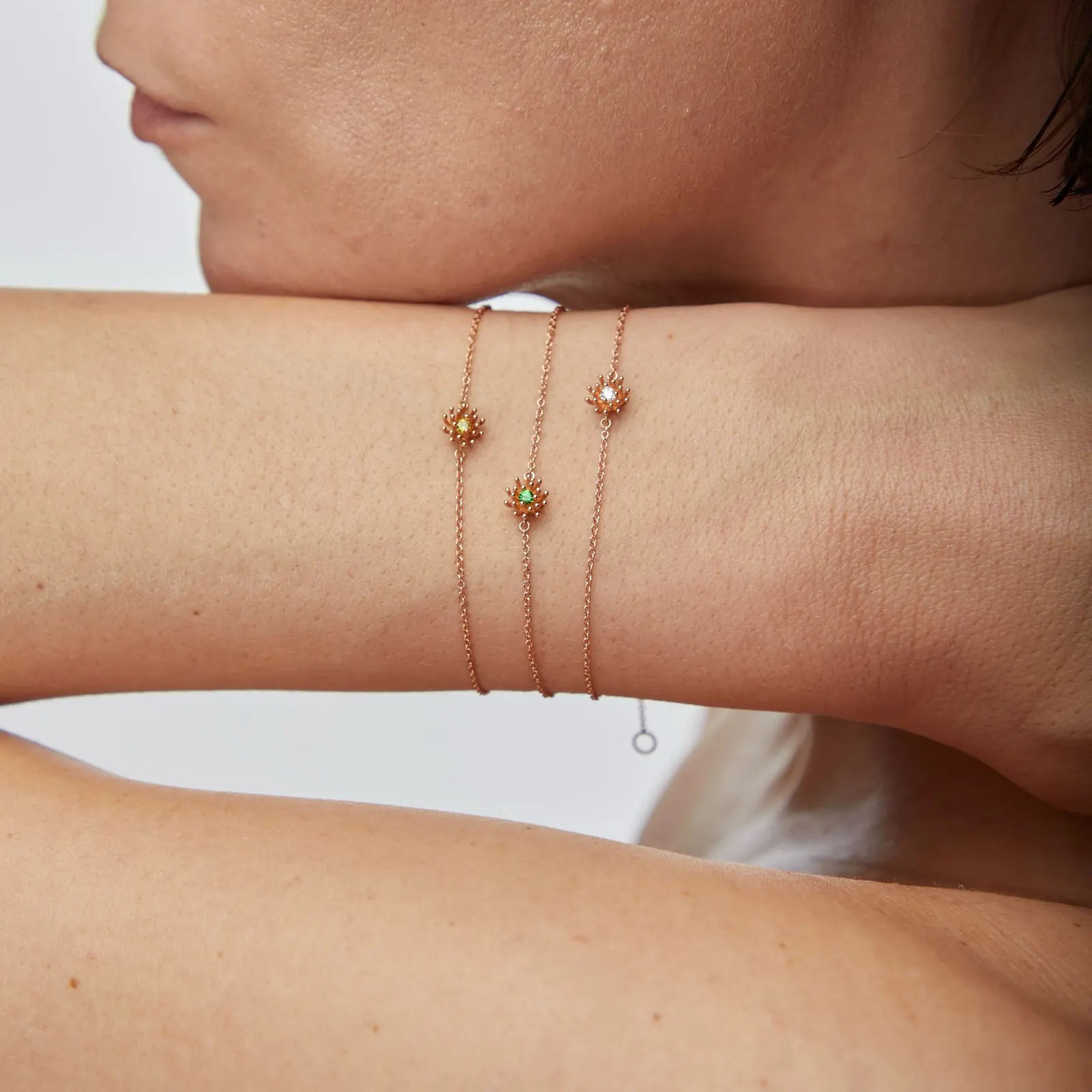
- Four gemstone variants articulate the pistil: diamond, pink sapphire, blue sapphire in Nattier blue, and green tsavorite, each chosen for a specific reference to Marie-Antoinette’s world.
- Designed by Laure-Isabelle Mellerio, the fourteenth-generation Artistic Director, the collection belongs to the Maison’s Muses line, dedicated to the eighteenth century.
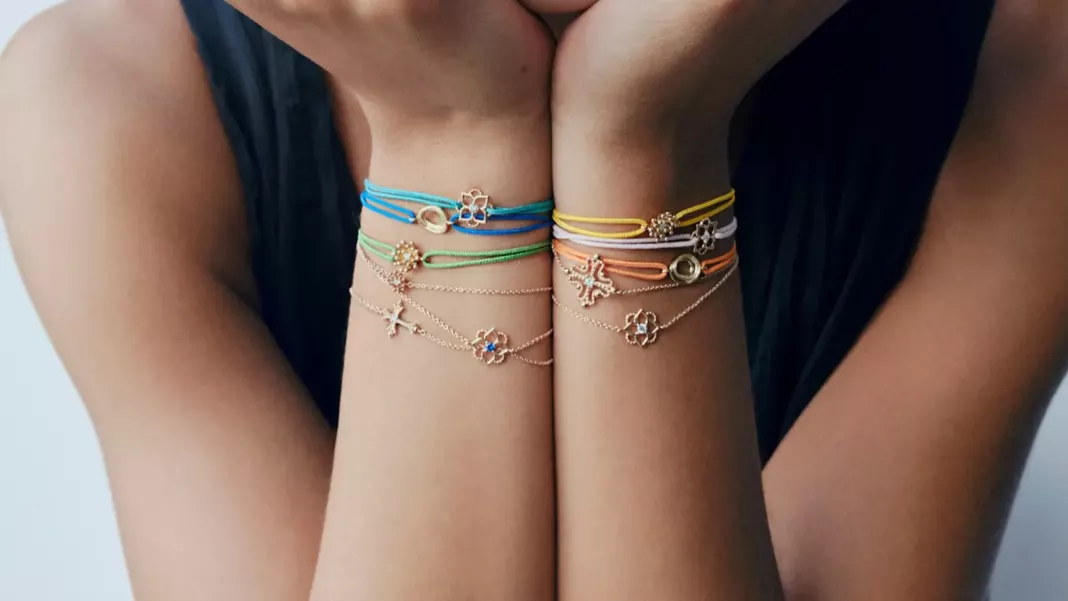
- A parallel family of cord bracelets, built around what Mellerio calls “the art of accumulation,” extends the Petit Cactus motif into stackable, everyday jewels on coloured textile cords.
A Flower Painted Before It Disappeared
The vanilla cactus arrived in the botanical collections of late-eighteenth-century France carrying a botanical peculiarity that no other plant in the royal gardens possessed: its bloom lasted one night, at the beginning of spring, and by dawn it was gone entirely. Marie-Antoinette, one of the earliest royal clients of Maison Mellerio, was struck by it. She commissioned Pierre-Joseph Redouté, known across Europe as “the Raphael of Flowers,” to paint the blossom on paper before it vanished. Redouté’s image survived. The flower did not.
Two and a half centuries later, Laure-Isabelle Mellerio drew that painting from the Maison’s own archives and set it at the centre of Le Petit Cactus Vanille. The decision to return to an archival source rather than invent a new vocabulary for the collection is characteristic of how the oldest surviving jewellery house in France operates: history is not context, it is material. The archive is where the design process begins.
The Pistil as a Design Problem
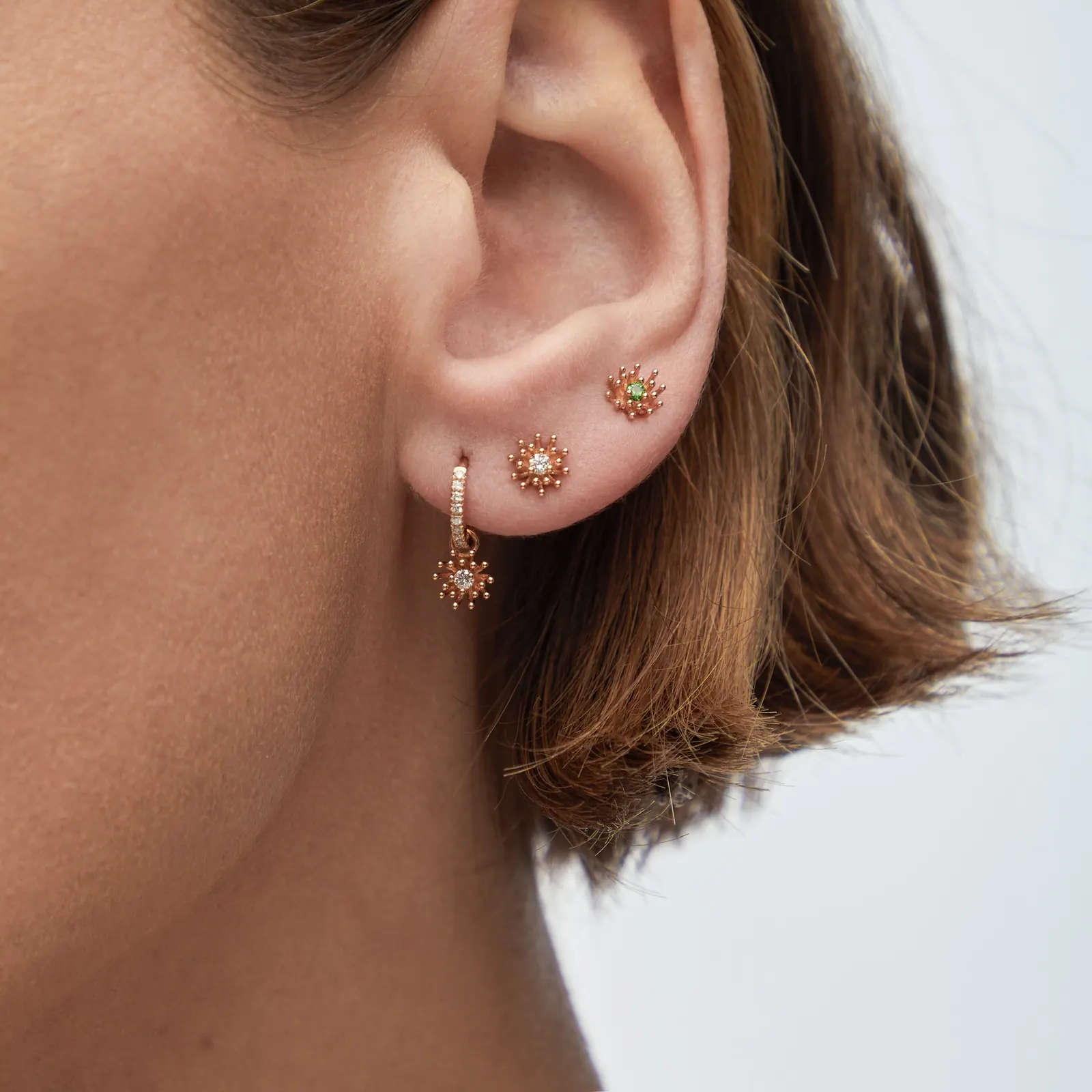
Translating a nocturnal flower into fine jewellery required a specific editorial choice about which part of the blossom to represent. Laure-Isabelle Mellerio fixed on the pistil: the radiating centre of the bloom, the structural element that gives the vanilla cactus its particular visual character. Rendered in 18-karat pink gold, the pistil motif appears across necklaces, bracelets, rings, and studs, its form consistent while its emotional register shifts through four gemstone expressions. The diamond reads as formal, catching pure white light. The pink sapphire reads as romantic, chosen in reference to what Mellerio describes as “the Sovereign’s favourite hue,” the pink that ran through Marie-Antoinette’s wardrobe, her interiors at Versailles, and the rose garden at the Petit Trianon. The blue sapphire references Nattier blue, the cool luminous shade that the portrait painter Jean-Marc Nattier used to define the chromatic vocabulary of the French court. The green tsavorite illustrates Marie-Antoinette’s attachment to the Queen’s Grove at Versailles, the private garden designed as “a succession of green rooms” behind a curtain of greenery.
Each stone choice is documented, not invented. The rationale for each comes from primary historical material, from court portraits, garden records, and accounts of the Queen’s personal preferences, rather than from a generalised aesthetic instinct. For Chaumet or Piaget, such precision in historical sourcing is a baseline expectation; for Mellerio, it reflects a house whose relationship with the French monarchy was direct and sustained. Maison Mellerio has operated on the Rue de la Paix since the seventeenth century, and the archive that Laure-Isabelle Mellerio accessed to begin this collection is a working document, not a museum display.
Pink Gold, the Art of Accumulation, and the Question of Access
Pink gold is Mellerio’s deliberate choice of metal across the Petit Cactus line, and it is worth understanding why. The vanilla cactus itself transitions between pale yellow and soft green in the brief hours of its bloom; pink gold provides the warm foundation that allows both tones to read as precious rather than botanical. The choice roots the collection in the vocabulary of jewellery rather than decorative illustration, which is exactly the distinction the Maison intends. At Watches and Wonders and across the fine jewellery calendar, the question of whether a floral motif reads as jewellery or as craft object is a live one. The pink gold setting answers it definitively in favour of the former.
Alongside the Petit Cactus pieces, Mellerio has developed a family of cord bracelets built around “the art of accumulation”: mix them, layer them, and create your own combination. The cord bracelets carry the Petit Cactus motif alongside the fleur-de-lis and other house icons on coloured textile cords, designed to be stacked across the wrist in whatever sequence the wearer chooses. The Maison describes the inspiration as “the joy of colour and the freedom of summer,” and the objects themselves are deliberately informal. For a house whose archive includes coronation tiaras and High Jewelry parures, that informality is a considered gesture. The cord bracelets carry the same savoir-faire and the same design language as Mellerio’s most elaborate creations, but at a scale that makes them genuinely everyday jewels, intended to build over time as a living collection rather than remain as a static acquisition. That accumulation philosophy, one bracelet at a time, one season at a time, mirrors the principle that has defined the Maison’s relationship with its clients across 412 years of continuous operation.
Stay ahead of the latest releases. Subscribe to our newsletter for editor-curated coverage of luxury timepieces across the Middle East.
Frequently Asked Questions
What is the inspiration behind the Mellerio Petit Cactus Vanille collection?
The collection draws from the vanilla cactus, a flower native to Mexico and the West Indies that blooms for only one night each year. Marie-Antoinette, an early royal client of the Maison, was captivated by it and commissioned the botanical painter Pierre-Joseph Redouté to capture its image before dawn erased it.
Which gemstones are used in the Petit Cactus Vanille pistil motif?
The collection offers four gemstone expressions for the pistil: diamond, pink sapphire (referencing Marie-Antoinette's favourite colour), blue sapphire in the Nattier blue shade of the French court, and green tsavorite reflecting the Queen's passion for the gardens of Versailles.
Who designed the Mellerio Petit Cactus Vanille collection?
The collection was designed by Laure-Isabelle Mellerio, the fourteenth-generation Artistic Director of the Maison, who drew the concept directly from the Mellerio archives.
What jewellery pieces are available in the Petit Cactus Vanille line?
The collection includes necklaces, bracelets, rings, and studs, all centred on the pistil motif rendered in 18-karat pink gold. It belongs to the Muses line, which is dedicated to the eighteenth century.
What are the Mellerio cord bracelets and how do they relate to the Petit Cactus Vanille?
The cord bracelets are a separate fine jewellery family built around Mellerio's philosophy of accumulation: they incorporate the Petit Cactus motif alongside the fleur-de-lis and other house icons, set on coloured textile cords designed to be layered and mixed by the wearer.