The LAURENT FERRIER Classic Tourbillon – Teal
LAURENT FERRIER occupies a distinct position in contemporary watchmaking, recognized for combining traditional craft with technical precision. The Classic Tourbillon – Teal demonstrates this approach through its platinum case, teal enamel dial, and visible tourbillon mechanism—limited to five pieces worldwide.
Design and Materials
The Classic Tourbillon – Teal pairs platinum with a striking teal enamel dial that captures light across a range of viewing angles. Enamel dials require firing at high temperatures and multiple applications of colored powder, a process that produces the glossy, depth-rich finish visible on this piece. The dial’s teal hue sits at the upper edge of what modern enamel techniques can reliably achieve without cracking or fading during the firing cycles. Limited to five examples, the watch exists in a narrow intersection of material constraint and brand philosophy.
The Tourbillon Mechanism
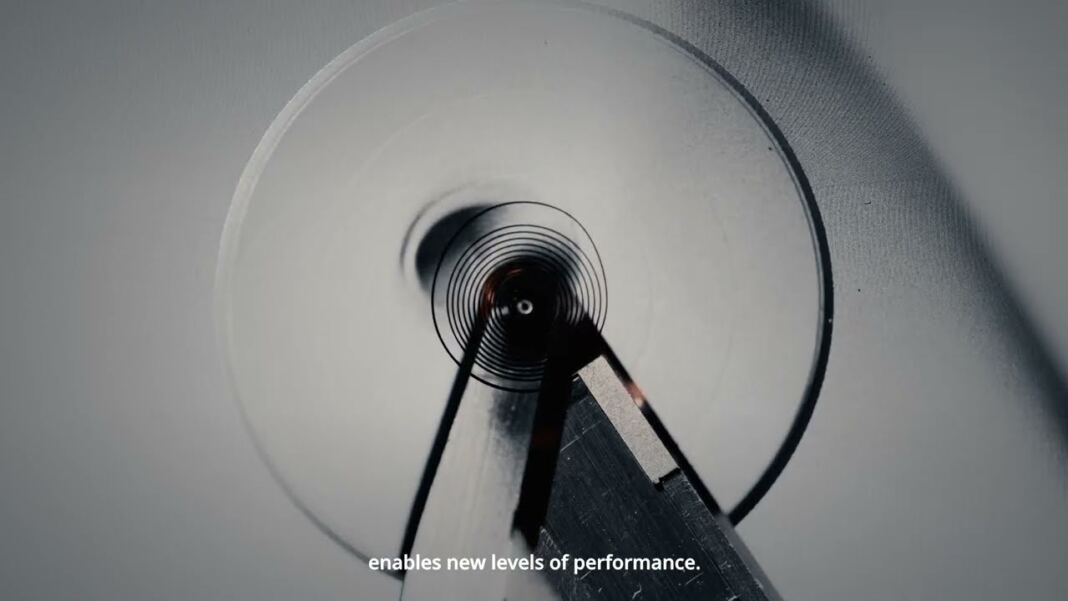
The tourbillon cage rotates once per minute, carrying the balance wheel and hairspring through a full orbit. This addresses a core problem in mechanical watchmaking: positional error, where gravity affects timekeeping differently depending on how the watch is worn. The tourbillon corrects these gravitational variations by averaging them across the rotation cycle. In the Classic Tourbillon – Teal, the cage is visible through the dial, allowing direct observation of the mechanism’s motion. The rotating cage operates independently of the rest of the movement, transmitting torque through a fixed escape wheel while the cage itself completes its orbit.
Enamel Dial Construction
Enamel application involves layering finely ground glass powder suspended in oil, then firing the dial at approximately 800 degrees Celsius. Each layer must cool before the next is applied. The teal color requires precise pigment formulation to remain stable under repeated heating. This labor-intensive sequence explains why enamel dials command premium pricing and why production runs remain small. The finish on the Classic Tourbillon – Teal reflects the cumulative effect of multiple firing cycles, producing a surface that cannot be replicated through lacquer or paint.
Limited Production and Collectibility
The five-piece production run reflects LAURENT FERRIER’s approach to exclusive timepieces. Collectors acquire watches that remain scarce across the secondary market, supporting stable valuations over time. The combination of platinum, enamel dial work, and a functional tourbillon establishes a high threshold for future market entries at comparable specifications.
For those interested in LAURENT FERRIER, explore LAURENT FERRIER collections to discover other exceptional timepieces from the manufacture.
Frequently Asked Questions
What makes the Laurent Ferrier Classic Tourbillon – Teal limited edition?
The Classic Tourbillon – Teal is produced in a run of five pieces worldwide. This production ceiling, combined with platinum construction and an enamel dial applied and fired by hand, creates scarcity and positions the watch as a restricted-access luxury item.
How does the tourbillon mechanism work in the Classic Tourbillon – Teal?
The tourbillon cage orbits once per minute, carrying the balance wheel through a full rotation to average positional errors caused by gravity. In the Classic Tourbillon – Teal, the cage rotates visibly behind the dial, allowing owners to monitor the mechanism in real time while the watch delivers the timekeeping corrections the tourbillon principle provides.
Why is the teal enamel dial significant in watchmaking?
Enamel dials are produced through repeated firing cycles at high temperature, requiring precise pigment chemistry to prevent cracking or color shift. The teal hue on this model sits at the boundary of what contemporary enamel techniques can achieve reliably, making each dial a product of hands-on craft rather than industrial reproduction.