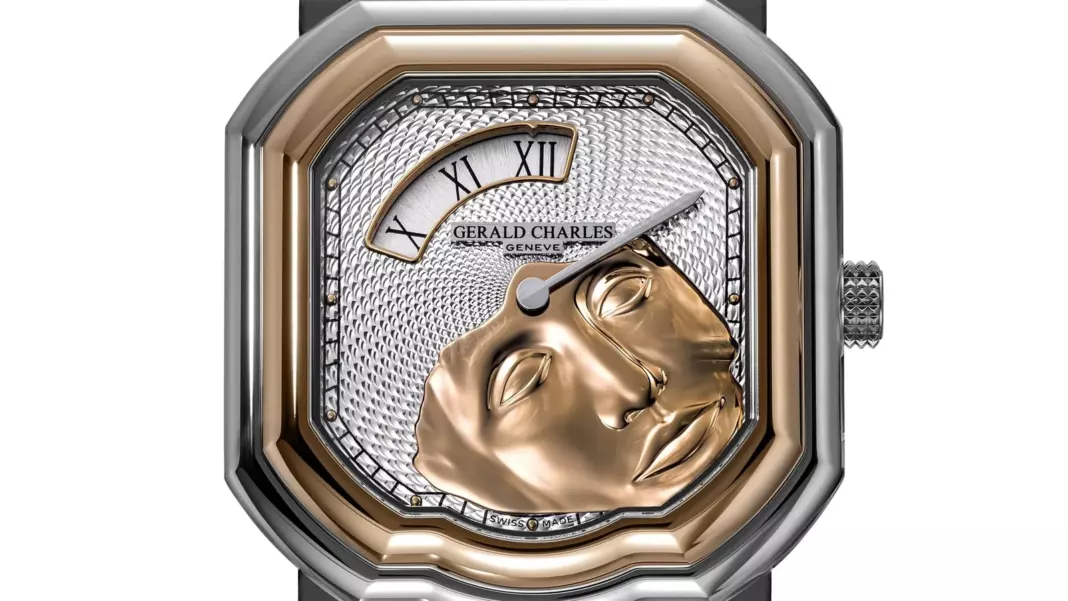

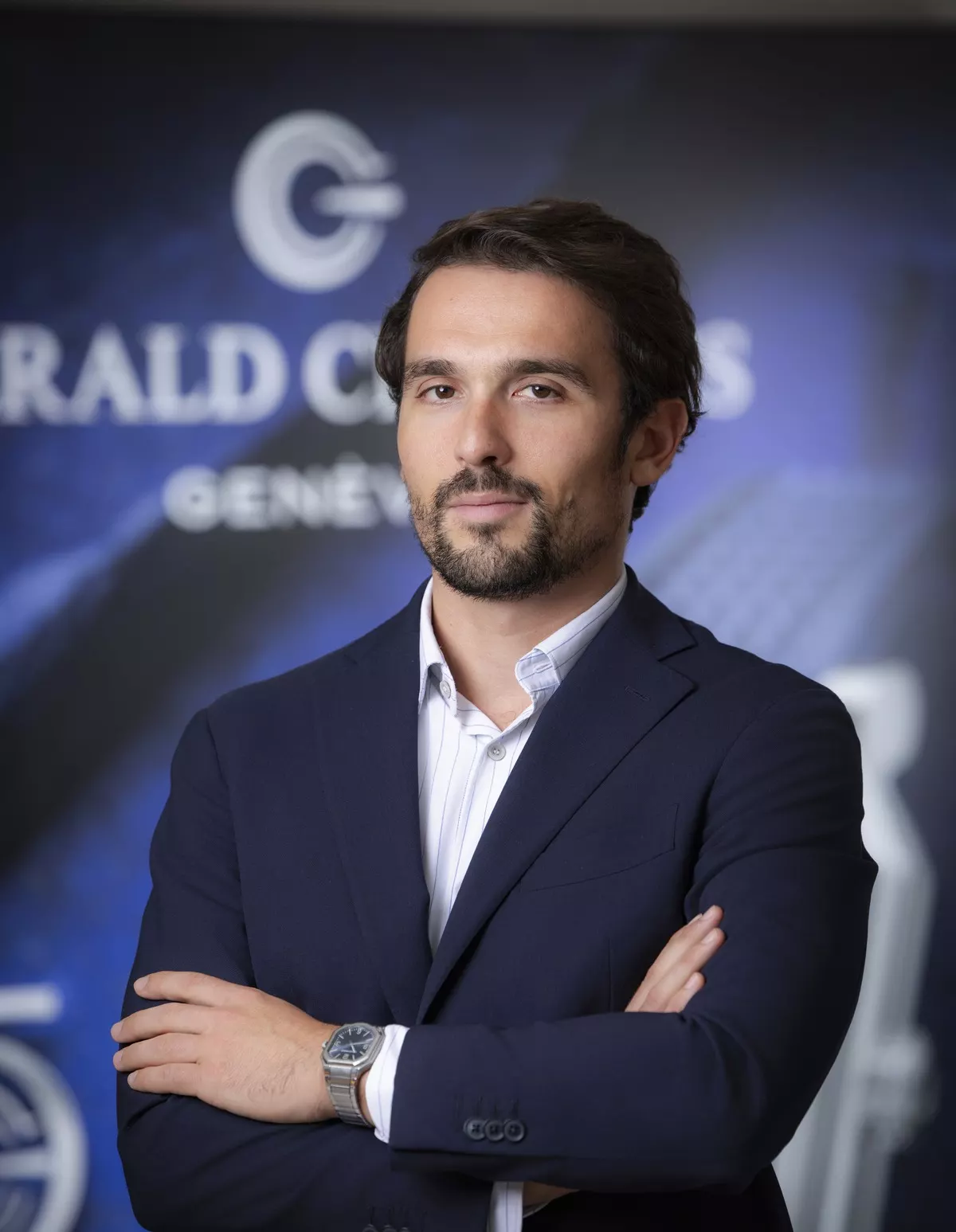
Our Editor-at-Large Isabelle Junod met Federico Ziviani, CEO of Gerald Charles, at Milano Watch Week on Friday 2 October 2026, a few days after an Asian tour that took him from Bangkok to Tokyo, Nagoya and Osaka.
What the interview reveals: a Maison founded in 2000 by Gérald Charles Genta and entrusted in 2003
to the Ziviani family; a team of three that became forty people and an annual production of around two thousand
pieces; a case drawn from Baroque architecture and a calibre now shaped to match it; a
clientele whose average age is thirty-eight and whose female share has risen from two to eight per
cent in a year; seventy points of sale, boutiques in Geneva, Nagoya and Osaka, and a boutique
opening in Riyadh in December.
Gerald Charles at a Glance
- Founded in Geneva in 2000 by Gérald Charles Genta, who gave the Maison his first two names; he remained its chief designer until 2011.
- Entrusted in 2003 to the Ziviani family, long-standing friends of the founder; Franco Ziviani, who established Audemars Piguet Italia, is Chairman.
- The Maestro case takes its geometry from the Baroque architecture of Francesco Borromini, with the signature “smile” at six o’clock.
- Federico Ziviani joined as CEO in 2019 and leads a Maison that has grown from three people to forty, with an annual production of around two thousand pieces.
- Seventy points of sale worldwide; boutiques in Geneva, Nagoya and Osaka, with Riyadh to follow in December 2026.
- Creative direction entrusted to Octavio Garcia since 2020; the Atelier in Geneva holds a Museum of the founder’s pieces.
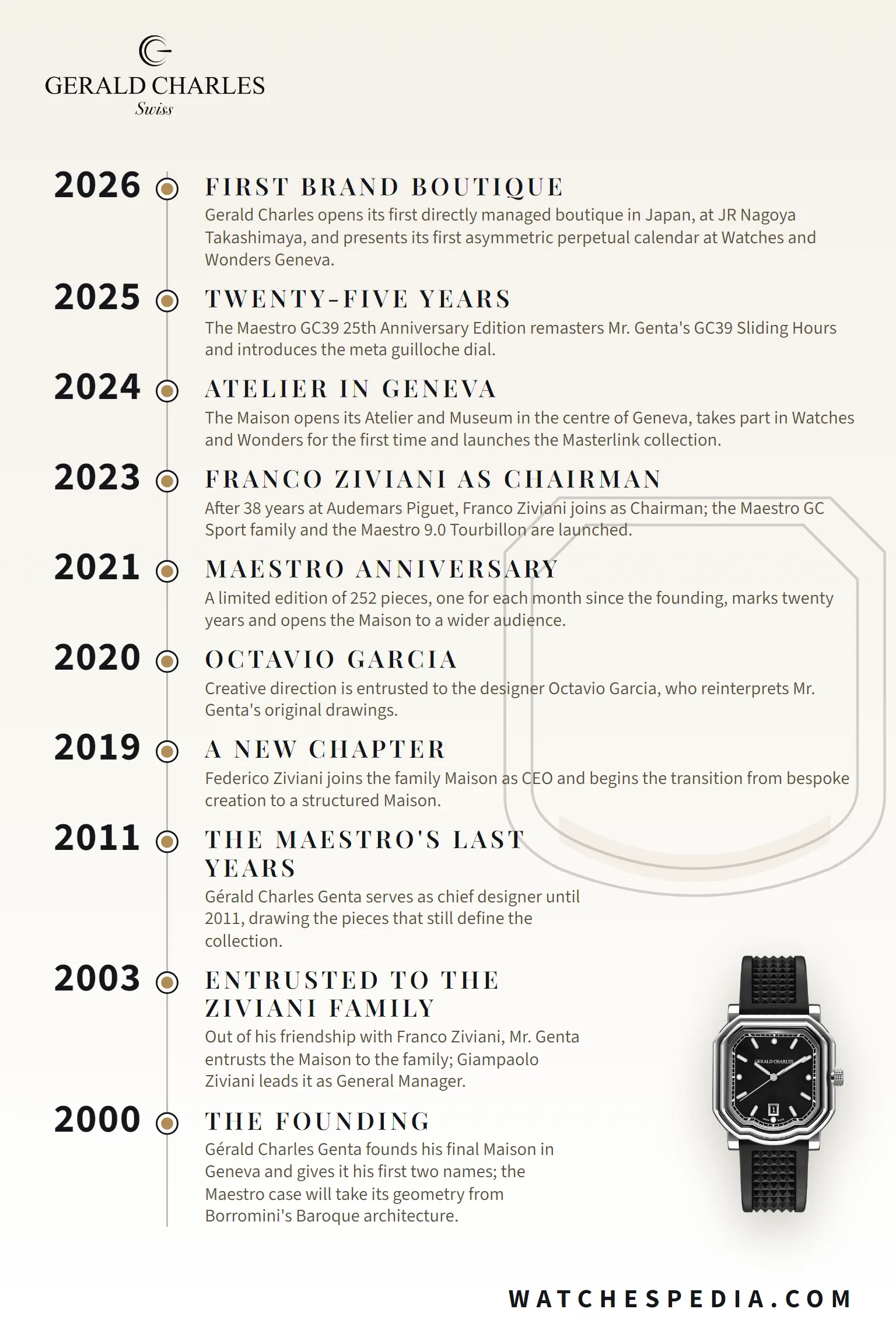
Gerald Charles, 2000-2026: The Maison in Ten Milestones
A Family Raised Inside Watchmaking
You have been close to watchmaking since childhood. What did that give you?
Since I was a child, I have been in this world. My father founded Audemars Piguet Italia and opened its first boutique, so watchmaking was the family conversation, and I was the child in the room while it happened. I was born and raised in Milan until I was eighteen, then I went to London and studied finance and computer science, which may sound far from watches. It is the opposite: a project goes further when enthusiasm is matched by management. London taught me how to build a business properly, and the technology side still shapes the way I work. Today the Maison is organised between two places: Geneva, where we have research and development, product development, production and the high complications, and Lugano, where we have sales administration, finance and logistics. I am often on a flight, which serves as a third office.
How did your family come to Gerald Charles?
Gérald Genta and my father were close friends. When Gérald created his final Maison, he came to my father and asked for his support, and in 2003 he entrusted the Maison to our family. My uncle worked side by side with him on the collection until Gérald passed away in 2011. Few people know this part of the story, and it matters: for years Gerald Charles was not run as a brand. It was a free flow of creativity, an artist travelling with a briefcase and making watches to order for a small circle. Several of those early pieces carry his signature engraved on the case back, the way a painter signs a canvas. After he passed away, my uncle continued to make watches on demand, and the Maison remained a secret among a few collectors.
Independent Maisons are drawing new attention. How do you read it?
There is real momentum for independent Maisons, and it marks a change. Audemars Piguet was an independent brand when my father started with it, and that was some forty years ago. What you see today among the smaller houses is entrepreneurship: people who take genuine risks with their own means, and who put more than working hours into what they make. The industry itself is traditional by nature. A watch is one product, and many clients buy one piece for life rather than something new each season. That makes the business conservative, and it makes the arrival of new voices all the more visible.
“Technology improves; the shapes and the design language stay.”
2019: From an Atelier to a Maison
You decided to turn that legacy into a brand. What did it take?
I had grown up in the industry and I was passionate about it, so in 2019 I told my family I wanted to do it. My father advised against it, and I insisted. We began the transition from bespoke creation to a Maison with a collection, points of sale, distribution, marketing and a team. There were three of us. Today we are forty, and it took seven years. The network my father built gave me a head start, and I say so willingly. In a world this close-knit, knowing the people and how they work is a considerable advantage.
You are one of the youngest chief executives in the industry. What does that bring, and what does it demand?
The demand is patience and time. When an independent Maison has the legacy, the history and the quality, the work that remains is to be known. Awareness is the challenge, which is exactly why a conversation like ours matters: many readers still meet the Maison for the first time. What youth brings is energy and freedom: I am not bound by a previous way of thinking, and I come from technology. We can be more inclusive, more dynamic, more daring in the way we speak and build our community. Gérald Genta was the most inventive figure of his time. Carrying his name calls for the same freedom.
Masters of Shaped Engineering
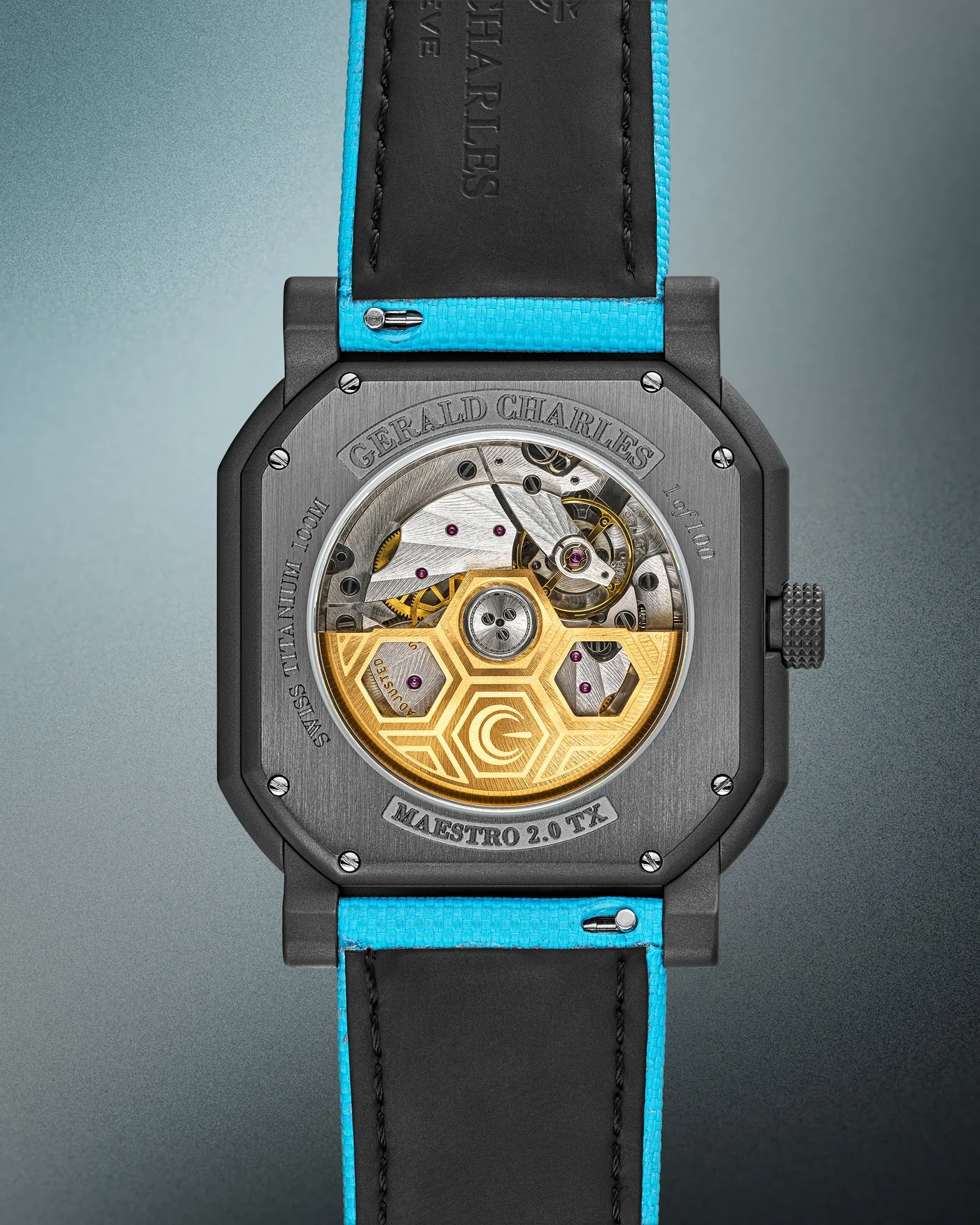
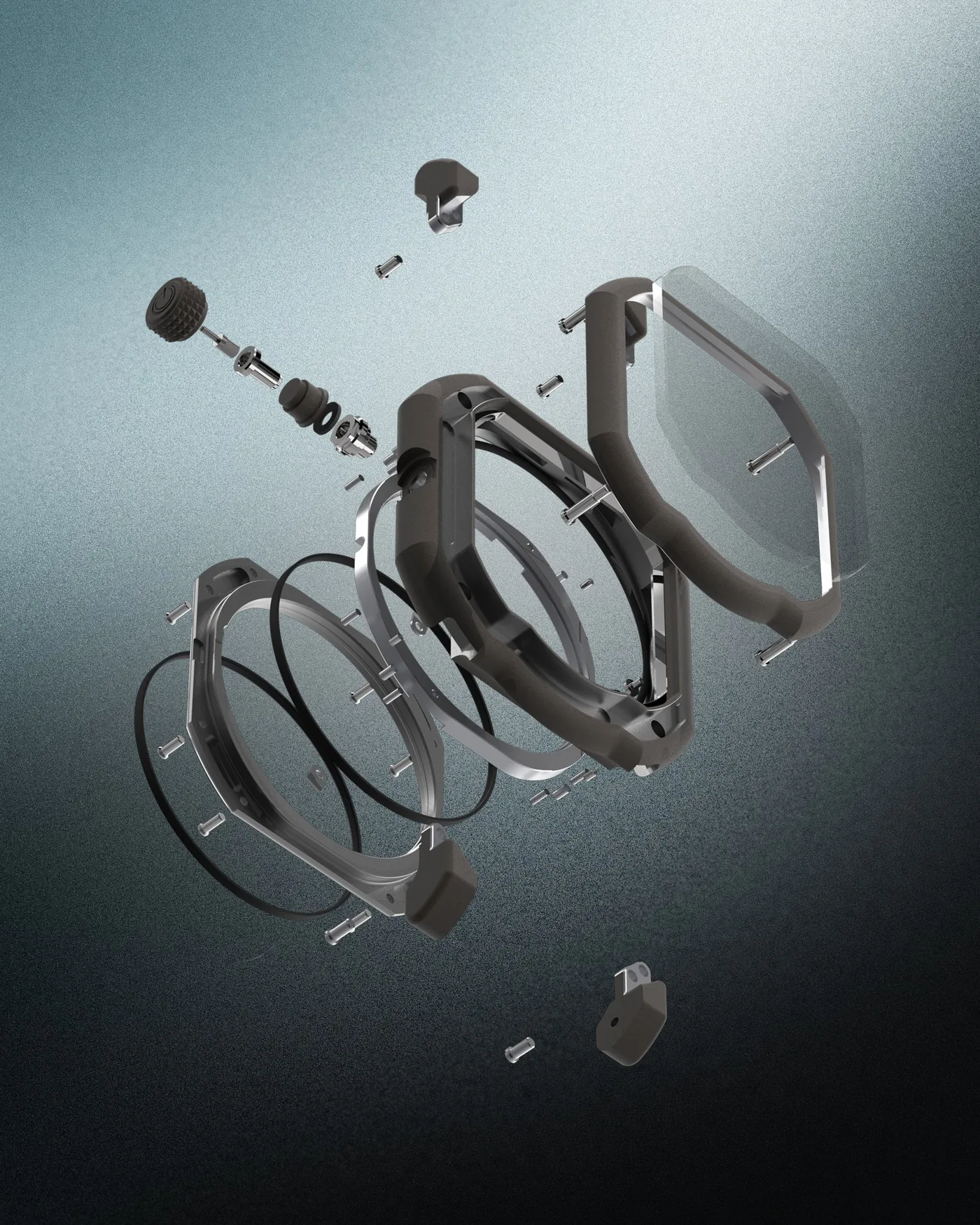
Images courtesy of Gerald Charles
What does Gerald Charles stand for?
Masters of shaped engineering. Masters, for the mastery, the experience and the legacy. Shaped, because we work with shapes rather than the round case. Engineering, because we bring engineering together with design and history. It is important to know what we stand for, and to say it simply.
What does the Genta legacy mean today, and how do you carry it without living in the past?
Technology improves; the shapes and the design language stay. We are twenty-five years later, so we can now achieve what was once out of reach. Take our perpetual calendar: it is our first fully shaped calibre. Not a round movement with a plate cut around it, but gears and components arranged to fill the shape. Cutting a movement plate to those curves demands more precision than a case, measured in microns. Machines and software make it possible today; the finishing remains entirely in the hand.
Where else does that engineering show?
The bracelet is seamless and the clasp opens with an invisible push, which asks far more of the workshop than it shows, because the screw leaves no tolerance. The case is thinner than one might expect at seven millimetres, and we wanted a screw-down crown, which normally needs a channel for which there was no room. We integrated the channel into the caseband, so the watch keeps its thinness and its water resistance. The Maestro shape is our patented design. We care about that.
The Client Who Arouses Curiosity
Who wears a Gerald Charles?
I travel a great deal, so I know many of our clients personally, in Japan, Singapore, the Arab countries, France, the United States, Mexico and Italy. Some of them I speak to directly, which tells you the size of the circle and how close we keep it. Our client is reasonably young: the average age is thirty-eight. The profile is someone with a strong personality, who does not seek the approval of others and buys the watch because he likes it. People do not come to Gerald Charles to display wealth. They are sophisticated, and they enjoy arousing the curiosity of the person who asks what they are wearing.
And the entry to the collection, and the place of women among your clients?
The entry is reasonable. The Mini in the ladies’ collection begins at ten thousand Swiss francs before tax, and the mechanical pieces start at fifteen thousand. The share of women is growing quickly: last year it was around two per cent, this year it is already eight.
“Our clients do not come to display wealth. They enjoy arousing curiosity.”
Japan, and a Boutique in Riyadh
You have just returned from Asia. What does Japan represent?
Japan is ten per cent of our market, which is considerable. The tour began with Bangkok Watch Week, then Tokyo, where we held an evening for collectors at the Tokyo American Club and visited the market. From there I went to Nagoya, where our mono-brand boutique at Takashimaya is the first after Geneva, and took the Shinkansen to Osaka, where we had just cut the ribbon on the second. Asia understands the Maison quickly: the shape, the finishing and the idea of a piece that is not seen on every wrist.
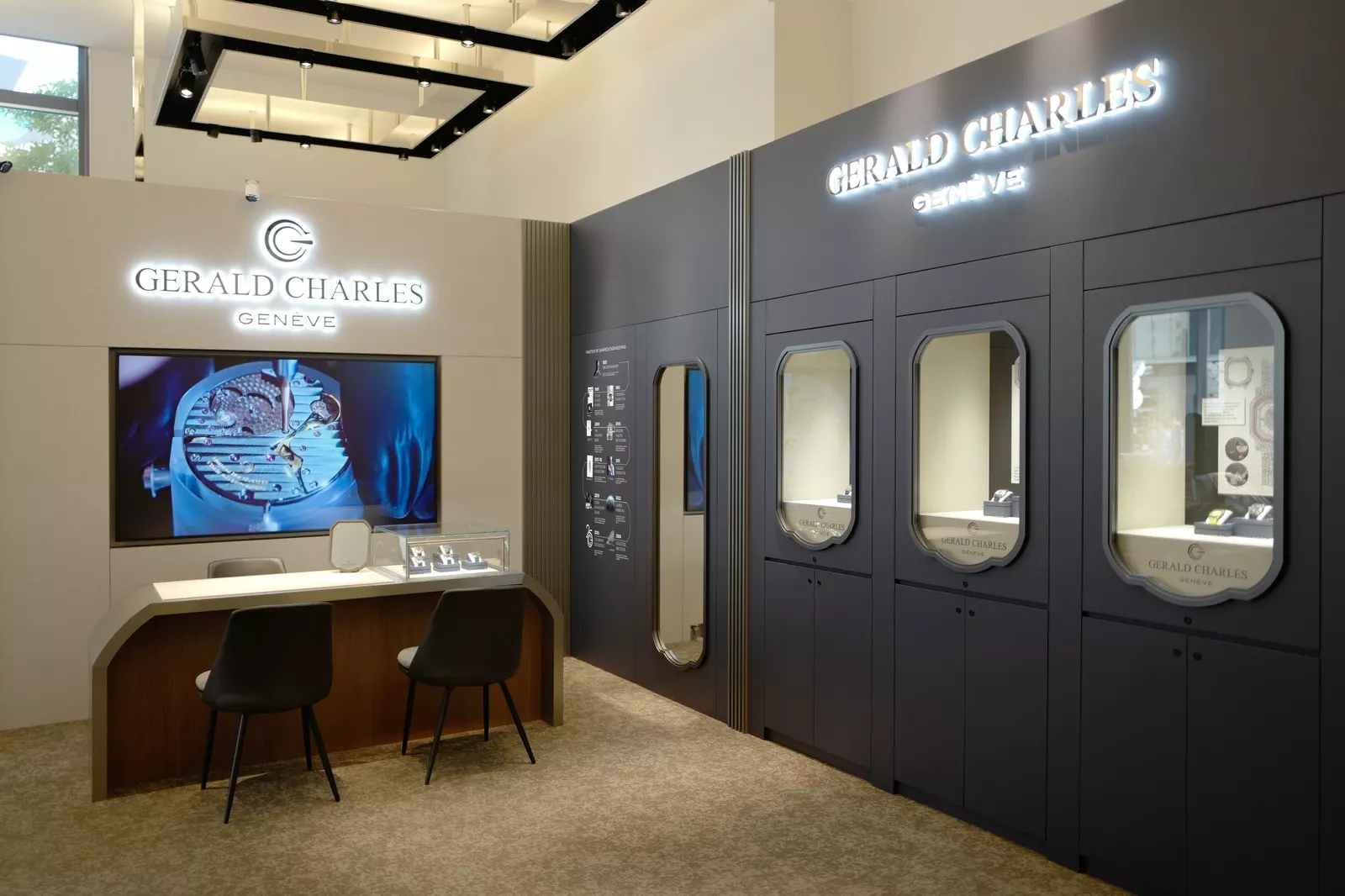
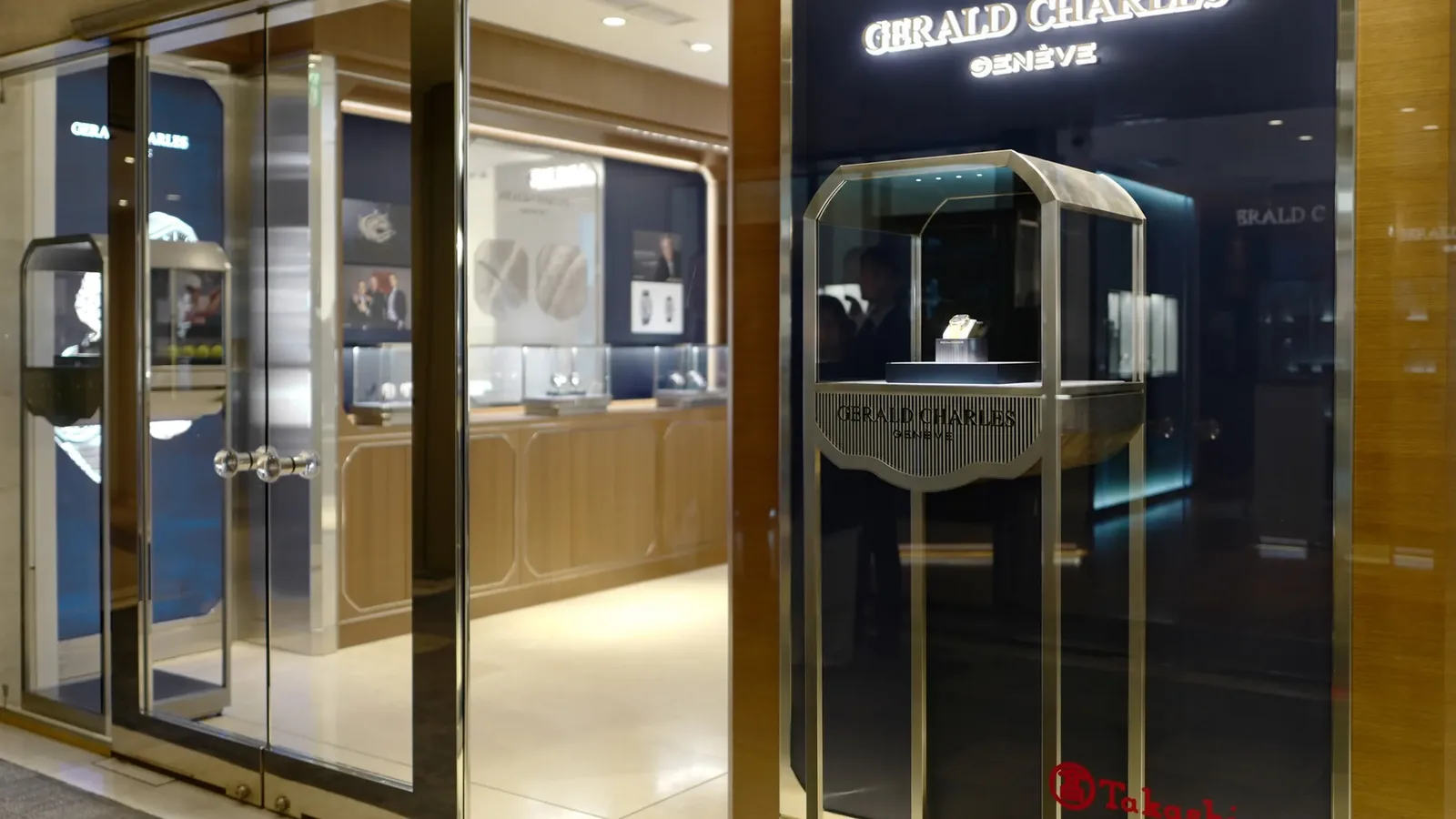
The boutiques at Takashimaya in Nagoya, the first in Japan, and in Osaka, the second. Images courtesy of Gerald Charles
Where will the next growth come from?
From boutiques opened with partners. One opens in Riyadh in December, and the renderings are already on my screen. We build where the community grows: when it becomes large enough to be served properly, a boutique follows, and we open it with a local partner who already carries the Maison in a multi-brand setting and chooses to go further. Retail is not a business we wish to run alone.
Milan, Dubai, Geneva
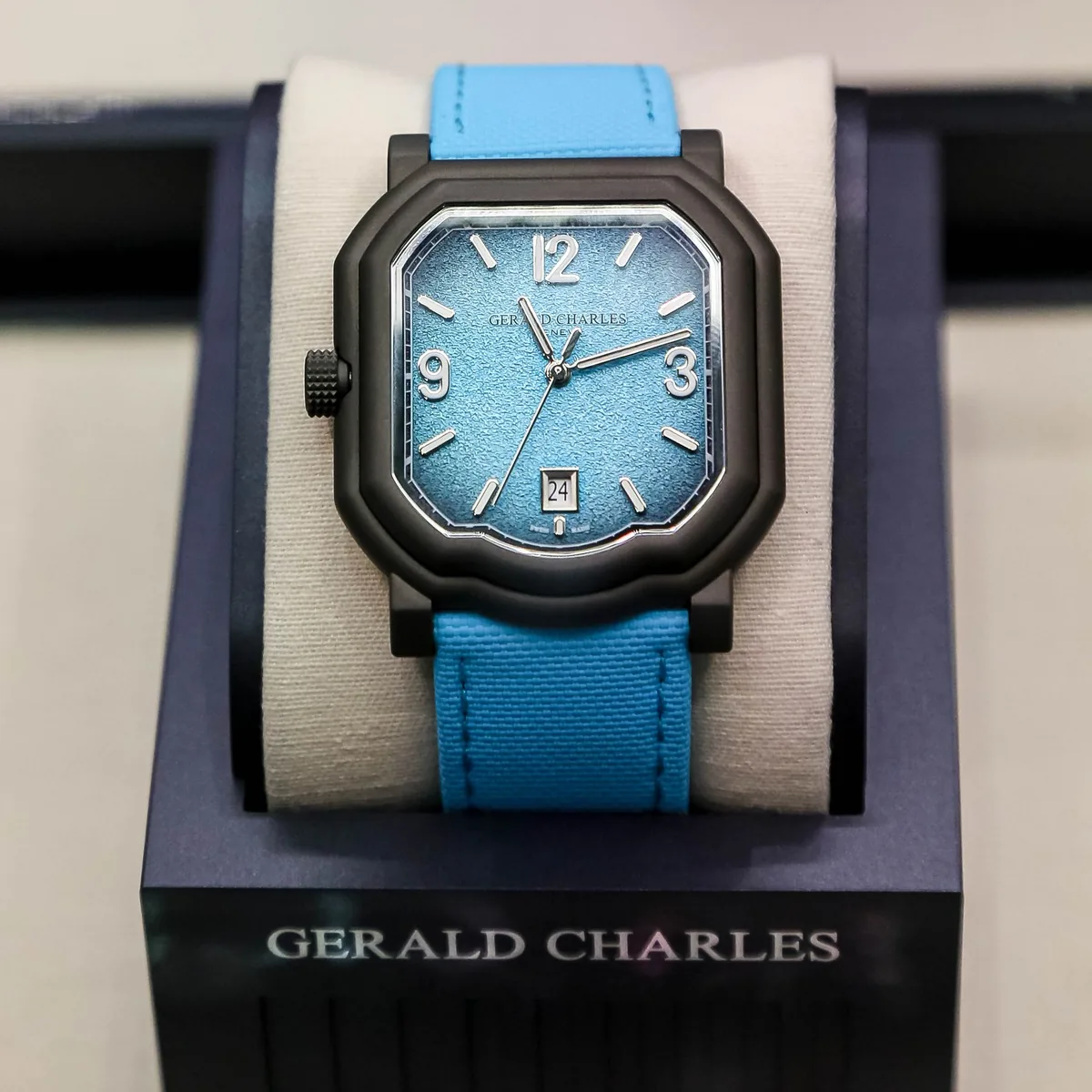
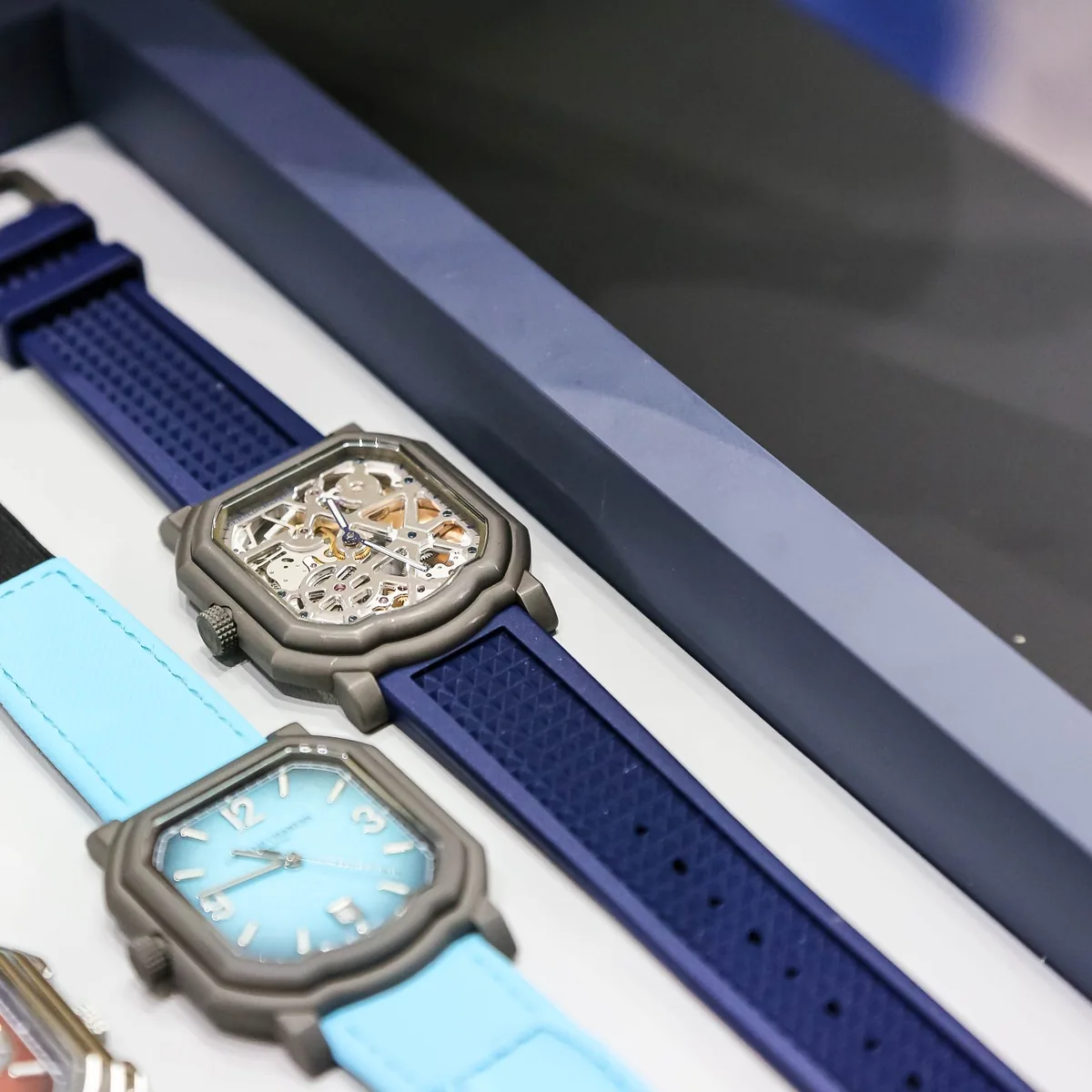
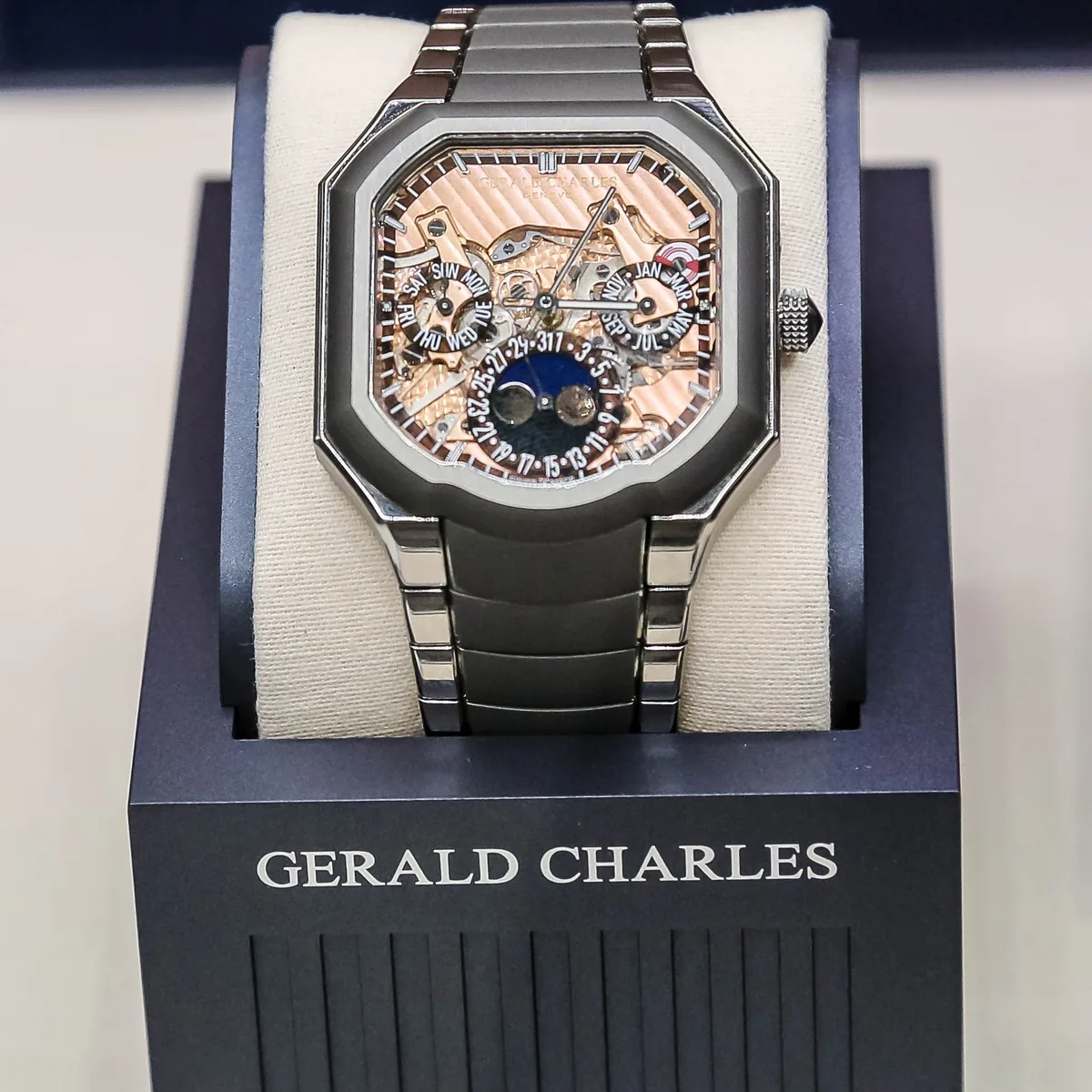
Gerald Charles at Milano Watch Week. © WATCHESPEDIA
How do you read the calendar of fairs?
Milan is a first for us and it is exceeding my expectations, which pleases me all the more because it is my city: after years of travelling, working at home once a year is a pleasure. Dubai Watch Week is a celebration, generous and genuinely about lifestyle, and I have good friends there. Watches and Wonders is a different exercise: it is professional and intense, every retailer, every journalist and many clients in the same days, and it is productive for the business. Matteo Mea is making it more engaging each year. Geneva Watch Days we attend every time, and the way it is organised is remarkable.
You have invited us to Geneva.
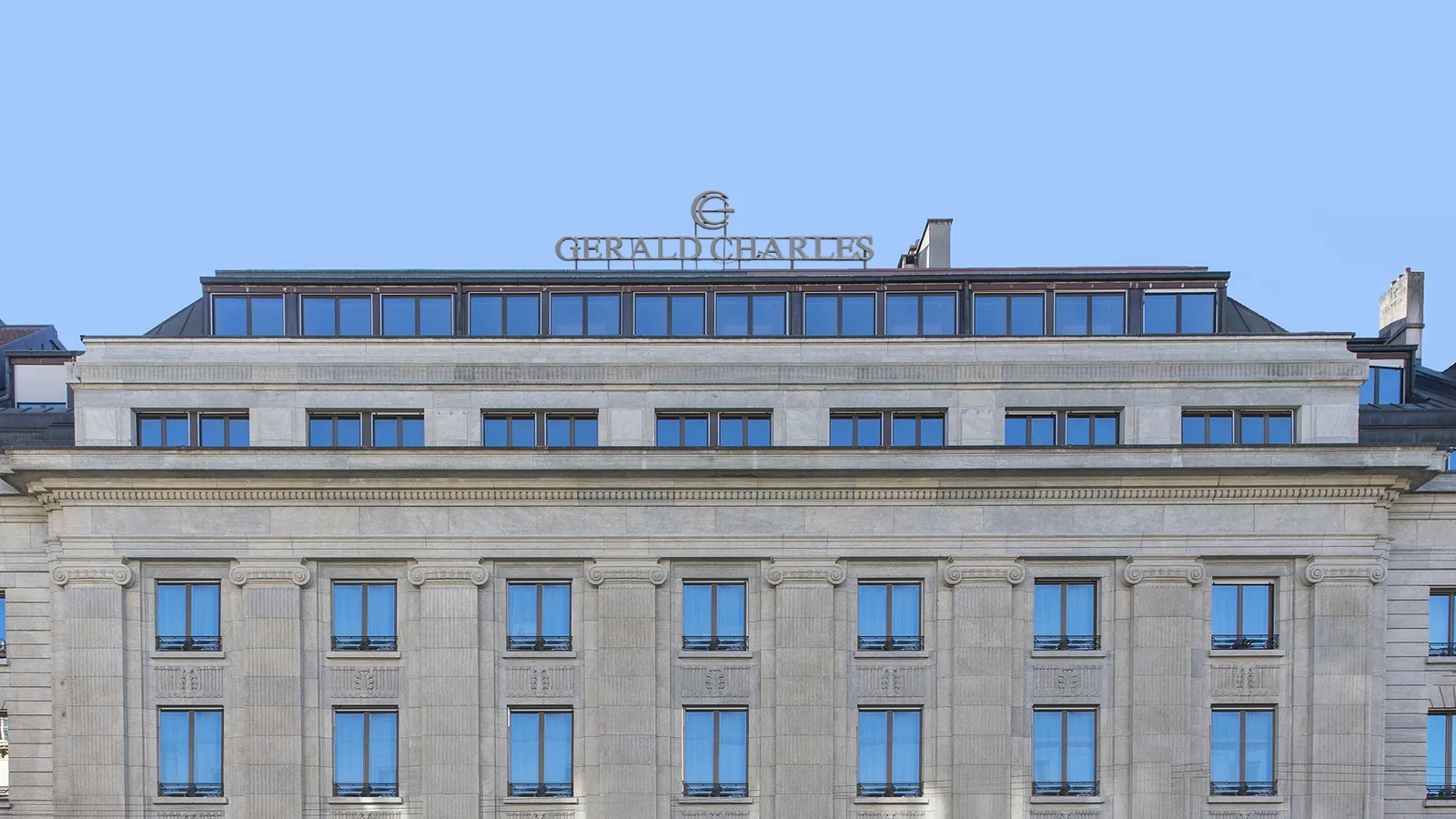
With pleasure. Our Atelier is on Rue du Mont-Blanc, in the centre of Geneva, and it is more than a showroom: the Museum there holds the vintage pieces Gérald made, several of them signed on the case back. It is the clearest way to understand where the shapes come from before you look at what we make today.
Interview by Isabelle Junod, Editor-at-Large, WATCHESPEDIA.