
The Standout Details
- DC1 Platinum Art of the Tourbillon: limited edition of 8 pieces, priced at CHF 248,000
- First DC1 execution in platinum; full case hand-polished to preserve every sharp angle
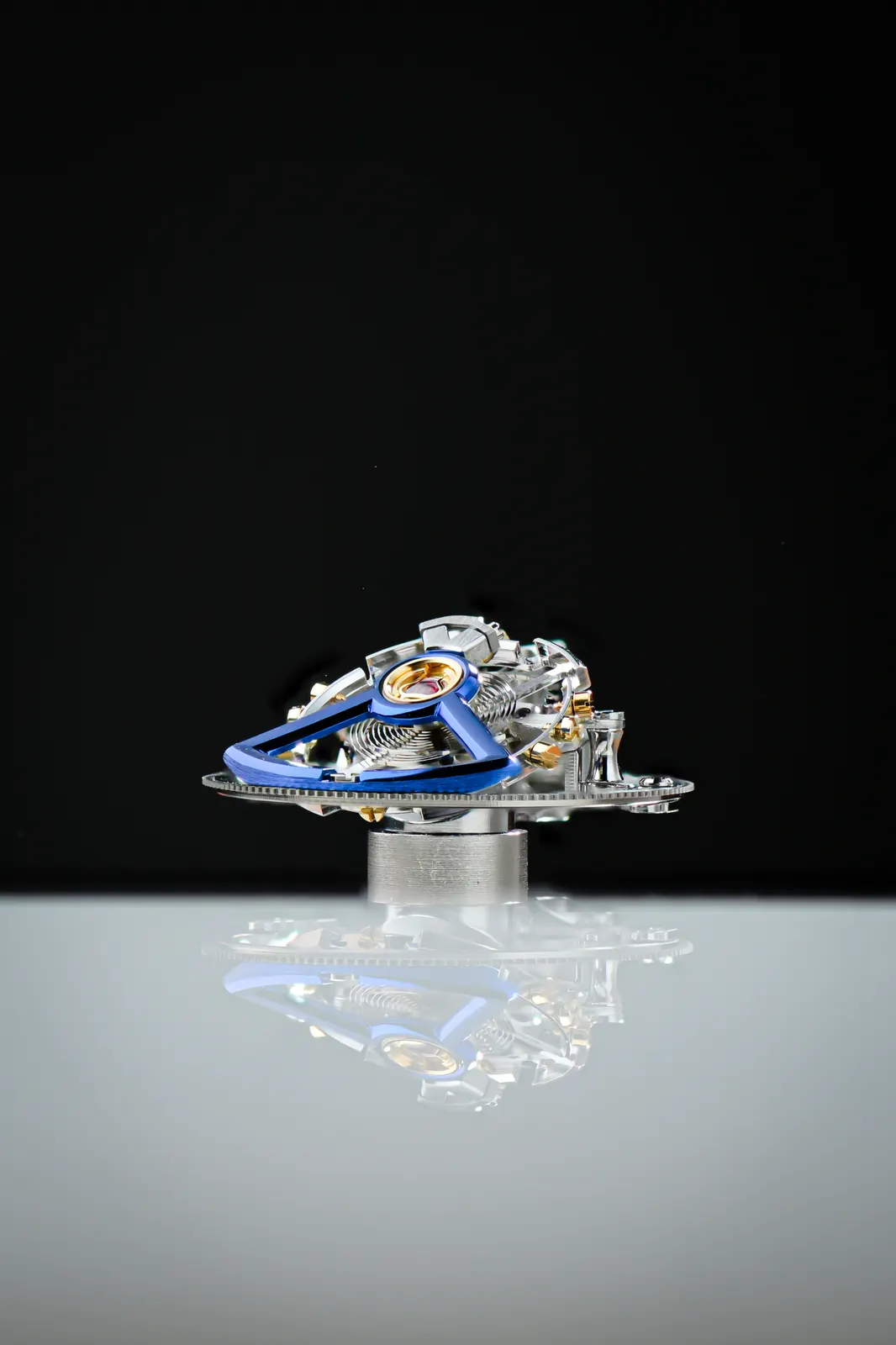
- 30°-inclined flying tourbillon in micro-arc oxidized black titanium cage; 60-second revolution
- Dial architecture: mirror-polished black onyx central plate (0.2 mm thick) and faceted white opal sub-dial at 3 o’clock
- H74 caliber: Grade 5 titanium bridges and mainplate, 287 components, 47 jewels, 55-hour power reserve
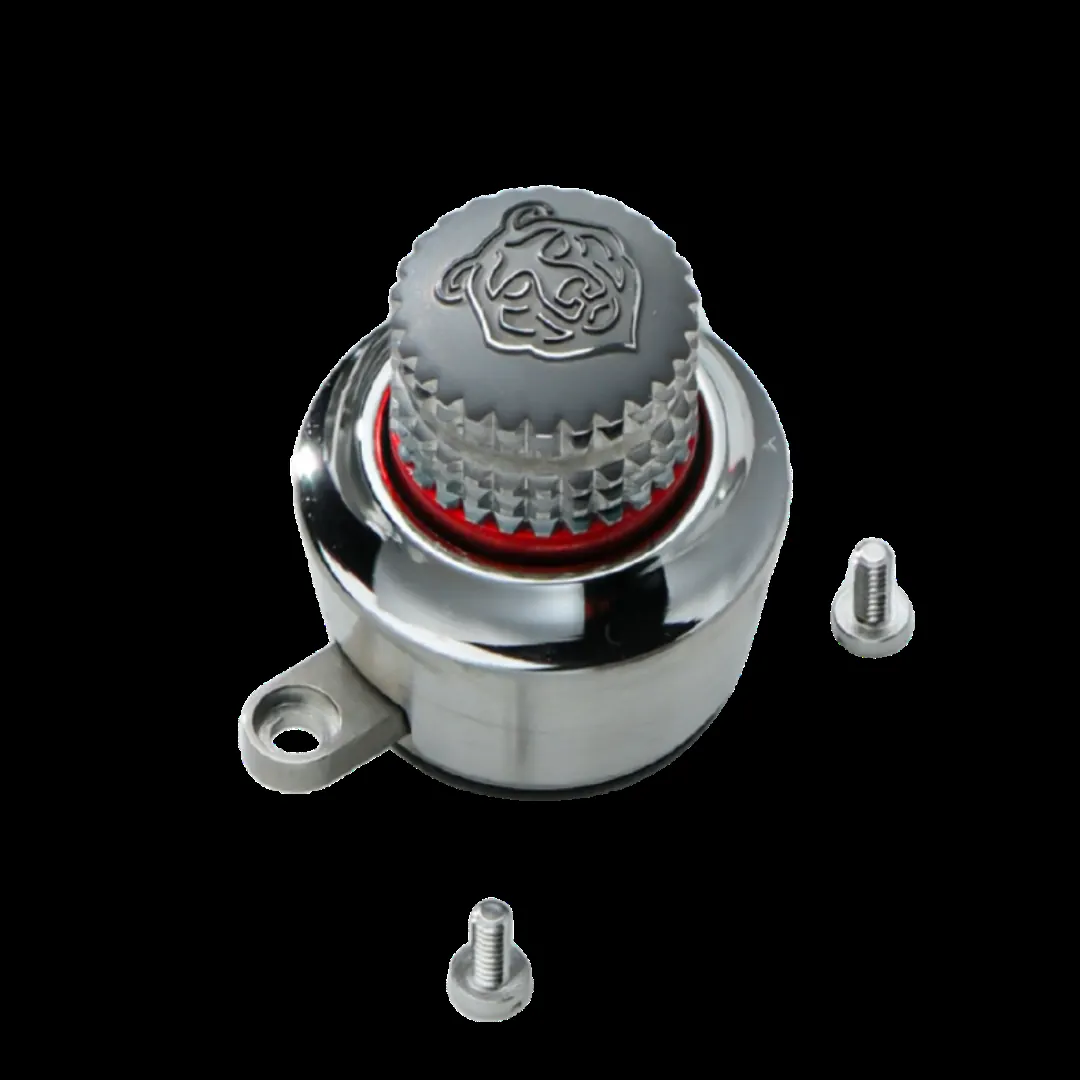
- Patented “Magic Crown” at 6 o’clock; titanium body, platinum cap; tested 28,000 cycles
- 10-year warranty; black textured rubber strap with Velcro closure and quick-release
What Sets It Apart
The DC1 has existed in steel since 2017. Its architecture, built around an asymmetrical stepped case, the Magic Crown at 6 o’clock, the 30°-inclined flying tourbillon, and the cascading H74 caliber, has never been altered. That structural discipline makes the 2026 platinum edition genuinely significant: nothing has been redesigned to flatter the new material. The original proportions had to survive the transition intact, and platinum, unlike titanium or gold, does not forgive.
Platinum grips every tool and retains the memory of each pass. On a case built around taut edges and sharp angles, preserving the geometry meant reworking every corner so it would not sag under the polisher. The entire case is hand-polished. The result is 43 mm of a material that carries its own gravitational authority, worn against the wrist on a case that has never been more demanding to produce.
The Dial’s Architecture
Twelve discrete components are layered beneath the sapphire crystal. The centrepiece is a large plate of mirror-polished black onyx, two-tenths of a millimetre thick. At that dimension, onyx is acutely sensitive to machining vibration and pressure variation; the majority of blanks break before completion, and five are begun for every one that reaches the dial. The finished surface is a deep, absolute black that redirects all attention toward the rotating cage behind it.
At 3 o’clock, the hour and minute sub-dial is faceted white opal, beveled to follow the domed curve of the movement. Opal shifts between translucent depth indoors and luminous vibration in direct light, a counterpoint to the onyx that prevents the dial from reading as monolithic. Rose gold flanges in 18-karat frame both the opal sub-dial and the tourbillon aperture at 9 o’clock, binding the materials into a single coherent architecture. The Magic Crown at 6 o’clock, titanium body with platinum cap, makes that material contrast legible at a glance.
The 30° Tourbillon and Its Rationale
David Candaux has never pretended the tourbillon is a functional necessity on the wrist. He is candid about it: the complication was invented for pocket watches held vertically, and in horizontal positions the classic tourbillon axis becomes perpendicular to gravity and its compensation stops. The 30-degree inclination changes this. The cage sweeps through a greater range of positions in every 60-second revolution, including the horizontal ones, and the chronometric averaging improves both in wear and at rest.
The cage itself is black through micro-arc oxidation, not PVD, not DLC. Localized plasma discharges convert the titanium surface into a dense ceramic layer that absorbs light rather than reflecting it. The oxide is the metal; in a hundred years, the cage will read identically. This solution is rare at Watches and Wonders and rarer still in an independent atelier, requiring mastery of gear geometry, lubrication, and dynamic balancing on a non-standard oblique plane, all resolved iteratively in the Solliat workshop.
The H74 Caliber and the Broader Significance
The H74 remains the only series-produced movement with bridges and mainplate entirely in Grade 5 titanium. Corrosion-resistant, anti-magnetic, and thermally stable, the material was chosen for its properties rather than its weight saving. The Fondation Haute Horlogerie recognizes the systematic application of one material across an entire movement as exceptional; Candaux has done so since his first piece. Eighteen mirror-polished recessed angles, Côtes du Solliat along the bridges, and circular graining beneath them reflect the finishing traditions of the Vallée de Joux, traceable to 1740.

Eight pieces. A case material that demands far more from every craftsman involved. An architecture unchanged since 2017, now carrying the weight, literal and otherwise, of platinum. The DC1 Platine Art du Tourbillon is not a variant. It is the original vision rendered in the one material haute horlogerie reserves for its most demanding executions.
Stay ahead of the latest releases. Subscribe to our newsletter for editor-curated coverage of luxury timepieces across the Middle East.
Frequently Asked Questions
What movement powers the David Candaux DC1 Platinum Art of the Tourbillon?
The DC1 Platinum houses the H74 caliber, developed entirely in-house at the Solliat workshop. It is a hand-wound movement with bridges and mainplate in Grade 5 titanium, beryllium copper wheels, and a 30°-inclined flying tourbillon completing one revolution every 60 seconds. Power reserve stands at 55 hours.
Why is the tourbillon inclined at 30 degrees in this watch?
David Candaux tilted the tourbillon cage 30 degrees so that it sweeps through a greater number of positions, including horizontal positions, during each 60-second revolution. This restores genuine chronometric value on the wrist, where a conventional tourbillon axis becomes perpendicular to gravity when the watch lies flat and its compensation ceases to function.
How many pieces of the DC1 Platinum Art of the Tourbillon are being produced, and what is the price?
The DC1 Platinum Art of the Tourbillon is a limited edition of 8 pieces, priced at CHF 248,000 each. Each piece carries a 10-year warranty and is delivered on a black textured rubber strap with a Velcro closure and quick-release system.
What is the black color of the tourbillon cage and how is it achieved?
The tourbillon cage is made of titanium colored through micro-arc oxidation, a process that sends localized plasma discharges to transform the surface into a dense ceramic layer integrated into the metal itself. Unlike PVD or DLC coatings, nothing is deposited on the surface; the titanium is transformed from within, producing a black that absorbs light permanently.
What is the 'Magic Crown' on the David Candaux DC1?
The Magic Crown is a patented, pressure-activated retractable crown positioned at 6 o'clock rather than the conventional 3 o'clock. It draws on the bistable cam mechanism of a retractable ballpoint pen and was tested 28,000 times without measurable wear. On the DC1 Platinum, its body is natural titanium and its cap is platinum, combining the two materials defining the piece.