The Standout Details
- MARLI New York is a fine jewellery house founded in 2014 by Maral Artinian, setting natural turquoise alongside brilliant-cut diamonds in 18-karat gold across three principal collections — Cleo, Avenues, and Tip-Top — each framed by the house’s signature architectural gold geometry.
- Turquoise has been valued for over six thousand years: by Pharaonic Egypt, by the Persian royal court (where it was called fīrūze, meaning “victory”), and by the indigenous peoples of the American Southwest.
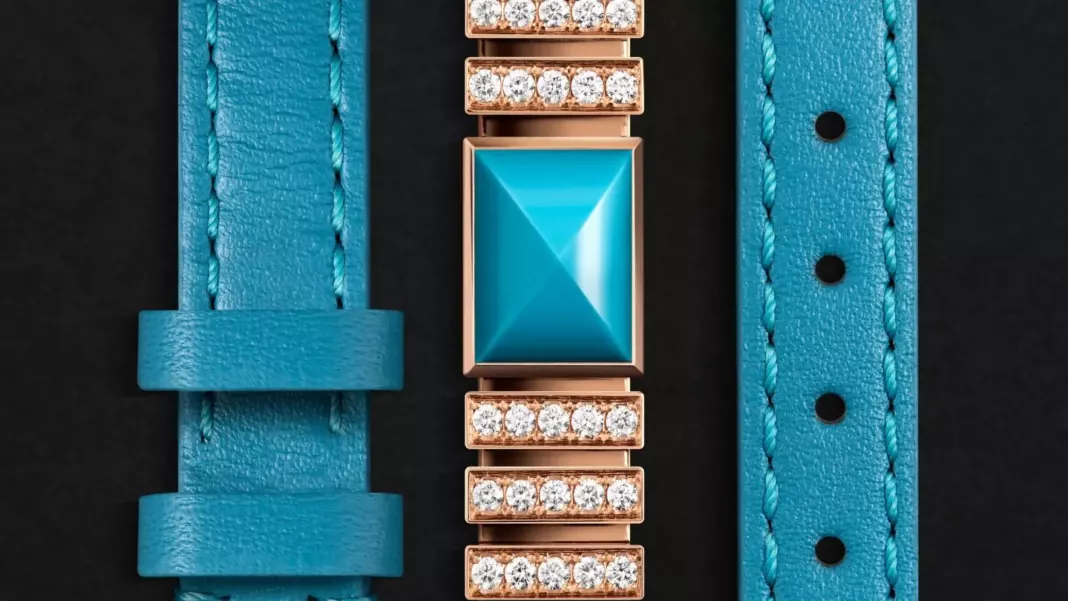
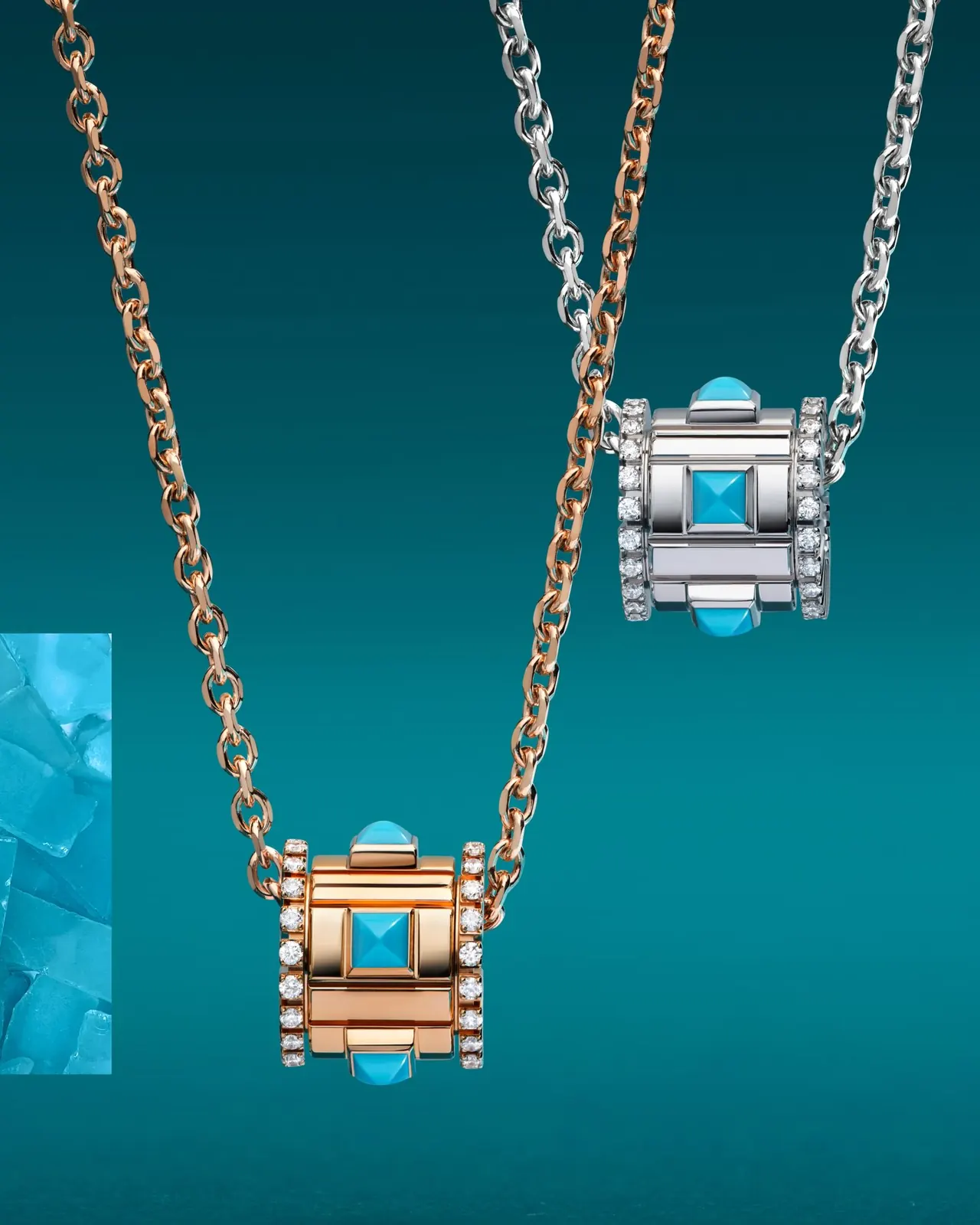
- Every MARLI turquoise piece is hand-crafted in 18K gold — yellow, rose, or white — with settings designed to expose the maximum surface area of colour.
- The house has boutiques across the Middle East and the United States, with complimentary worldwide shipping from marlinewyork.com.
Design: Geometry as the Argument
Artinian’s founding premise is precise and uncompromising: the gemstone is not surrounded by decoration — it is the decoration. Gold settings sweep around the stone in clean, fluid curves, withholding ornament so that the colour reads without interruption. This distinguishes MARLI from houses such as Van Cleef & Arpels or Bulgari, which build complexity through layered stone arrangements and elaborate metalwork narratives.
The design vocabulary draws directly from New York — its grid-like geometry, its pace, its confident femininity. Within that framework, turquoise occupies a specific and irreplaceable position. Its saturated, opaque blue-green delivers an immediate chromatic statement that transparent stones simply cannot produce at the same surface area. The tension between the stone’s ancient materiality and the gold setting’s contemporary precision is not incidental to MARLI’s aesthetic. It is the point.
The Cleo collection is the clearest articulation of this principle. Named after Cleopatra, it pairs turquoise with clean-line architecturein slip-on bracelets, slim rings, midi rings, drop earrings, and pendant necklaces. Given turquoise’s deep Egyptian lineage — the stone appears inlaid in the funerary mask of Tutankhamun alongside lapis lazuli and carnelian — the material choice reads as historically deliberate rather than decorative.
Materials: 18K Gold, Brilliant-Cut Diamonds, Natural Turquoise
The material specification at MARLI is consistent across the turquoise programme. Every piece uses 18-karat gold — in yellow, rose, or white according to the specific design — finished with brilliant-cut diamonds. The diamond’s sharp, cold fire against the turquoise’s warm, opaque surface is a deliberate pairing: the contrast is structural to the design, not cosmetic.
Turquoise itself is the oldest stone in the MARLI gemstone palette, which also includes lapis lazuli, green agate, black onyx, sea blue chalcedony, malachite, coral, tiger eye, milky aquamarine, and white agate. Each stone carries its own chromatic identity; turquoise, the house notes, is the most ancient and visually immediate among them. Persian turquoise — an intense, even blue with no matrix — set the historical benchmark for quality. MARLI sources natural turquoise with that standard of colour saturation in view.
Beyond jewellery, the house has extended the same material ethos into Swiss-made timepieces, with mother-of-pearl dials and pyramid motifs that carry the MARLI design vocabulary into Chopard-adjacent fine watchmaking territory. The finishing priorities remain the same: intentional design, precise execution, no superfluous decoration.
Market Position: A New York House for the Middle East Collector
Founded in 2014, MARLI has built its international footprint with particular intention in the Middle East. Boutiques across the region reflect a considered read of the Middle East collector’s sensibility: high colour, architectural confidence, and wearability across both formal and daily contexts. The house ships complimentary worldwide with signature packaging, positioning itself for direct acquisition as readily as boutique purchase.
The audience MARLI has cultivated values personal expression alongside traditional fine jewellery craft. Bold coloured stones, geometric gold forms, and the kind of historical depth that turquoise carries across six millennia — these are not niche preferences in the Gulf market. They are central to how the region’s collectors approach fine jewellery. MARLI, with its turquoise programme specifically, sits at the intersection of that demand and a design language disciplined enough to let the stone speak first.
Discover more at marlinewyork.com.
Stay ahead of the latest releases. Subscribe to our newsletter for editor-curated coverage of luxury timepieces across the Middle East.
Frequently Asked Questions
Which MARLI New York collections feature turquoise?
Turquoise appears across three principal MARLI collections: Cleo by MARLI, inspired by Cleopatra and the most prominent home for the stone within the catalogue; Avenues, which uses turquoise as a vivid accent against graphic gold lines; and Tip-Top, designed for what the House describes as the woman who is fearless in her femininity.
What metals and materials does MARLI use in its turquoise jewellery?
Every MARLI turquoise creation is hand-crafted in 18-karat gold, available in yellow, rose, and white gold depending on the piece, and finished with brilliant-cut diamonds that provide a precise counterpoint to the turquoise's soft opacity.
Where is MARLI New York based, and can buyers in the Middle East access the collections?
MARLI was founded in New York in 2014 by Maral Artinian and has since established boutiques across the Middle East, the United States, and select international luxury retail destinations, with complimentary worldwide shipping via marlinewyork.com.
What makes MARLI's design language distinctive compared with other fine jewellery houses?
MARLI builds visual impact through fluid geometry rather than layered stone settings or ornate metalwork. The gemstone is not surrounded by decoration but acts as the decoration itself, set within minimal gold frames that expose the maximum surface area of colour.
What is the cultural significance of turquoise as a gemstone?
Turquoise has been valued for over six thousand years across ancient Egypt, Persia, the pre-Columbian Americas, and the Ottoman trade routes. In Persian tradition it was called fīrūze, meaning victory, and the stone has been worn as a talisman of protection and a symbol of heavenly connection across more civilisations than almost any other coloured stone.