An Editor’s Read
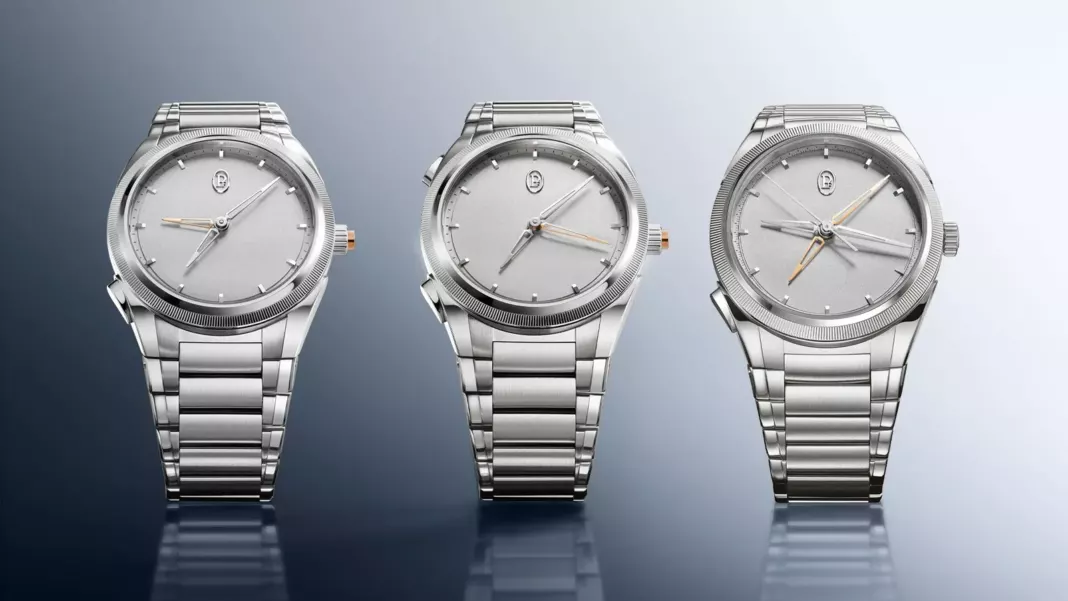
- Parmigiani Fleurier’s TONDA PF Platinum Trilogy is a set of three strictly limited watches — GMT Rattrapante, Minute Rattrapante and Chronographe Mystérieux — each produced in 30 pieces of 950 platinum, uniting the Maison’s three World Firsts to mark its 30th anniversary with the highest expression of the TONDA PF collection.
- Each complication is designed to appear only on demand, then withdraw completely, leaving the dial in the same serene state as a three-hand watch.
- The Chronographe Mystérieux is powered by the in-house PF053 calibre, with five coaxial central hands and a triple-clutch architecture — one vertical clutch and two horizontal clutches.
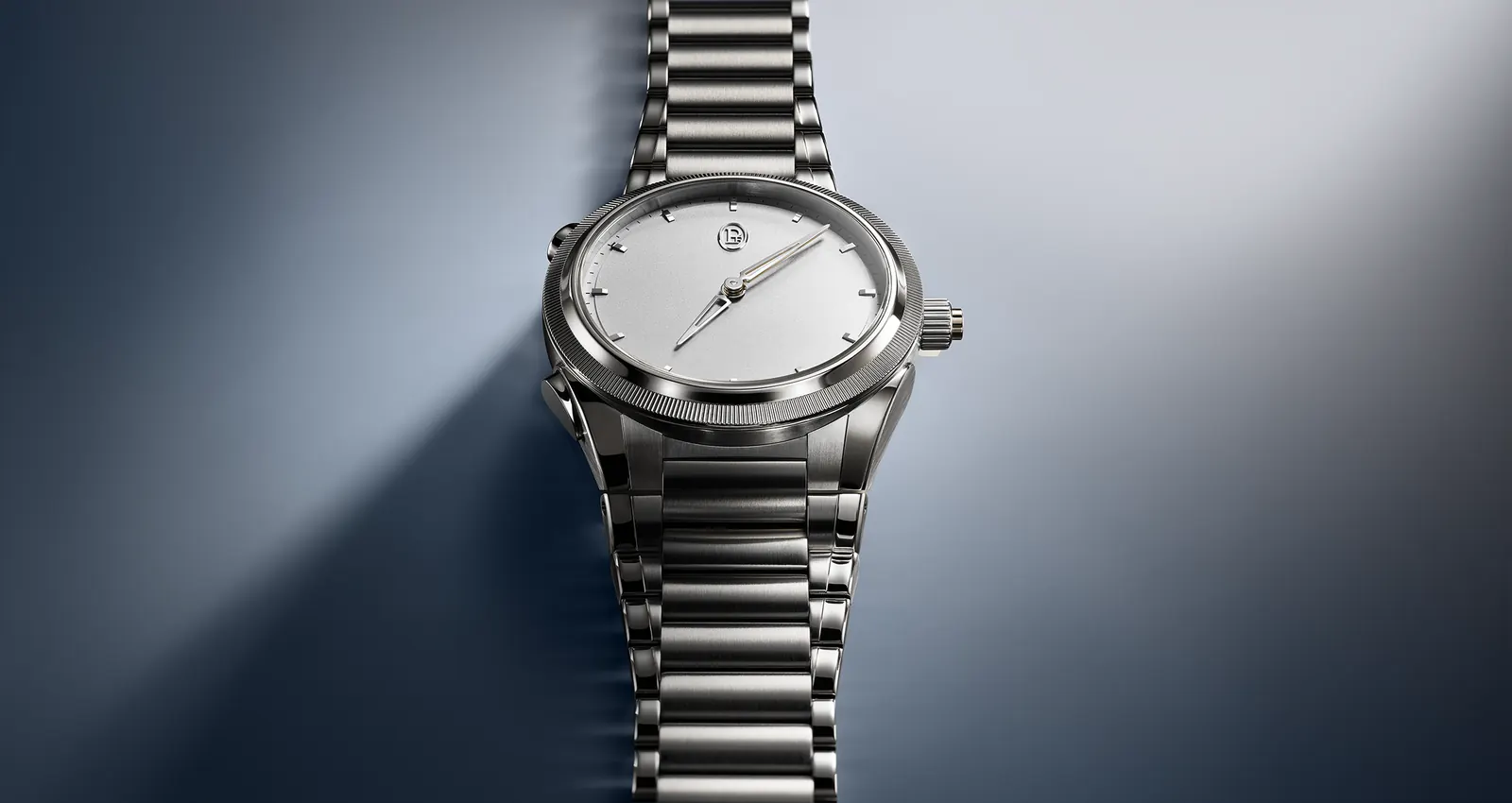
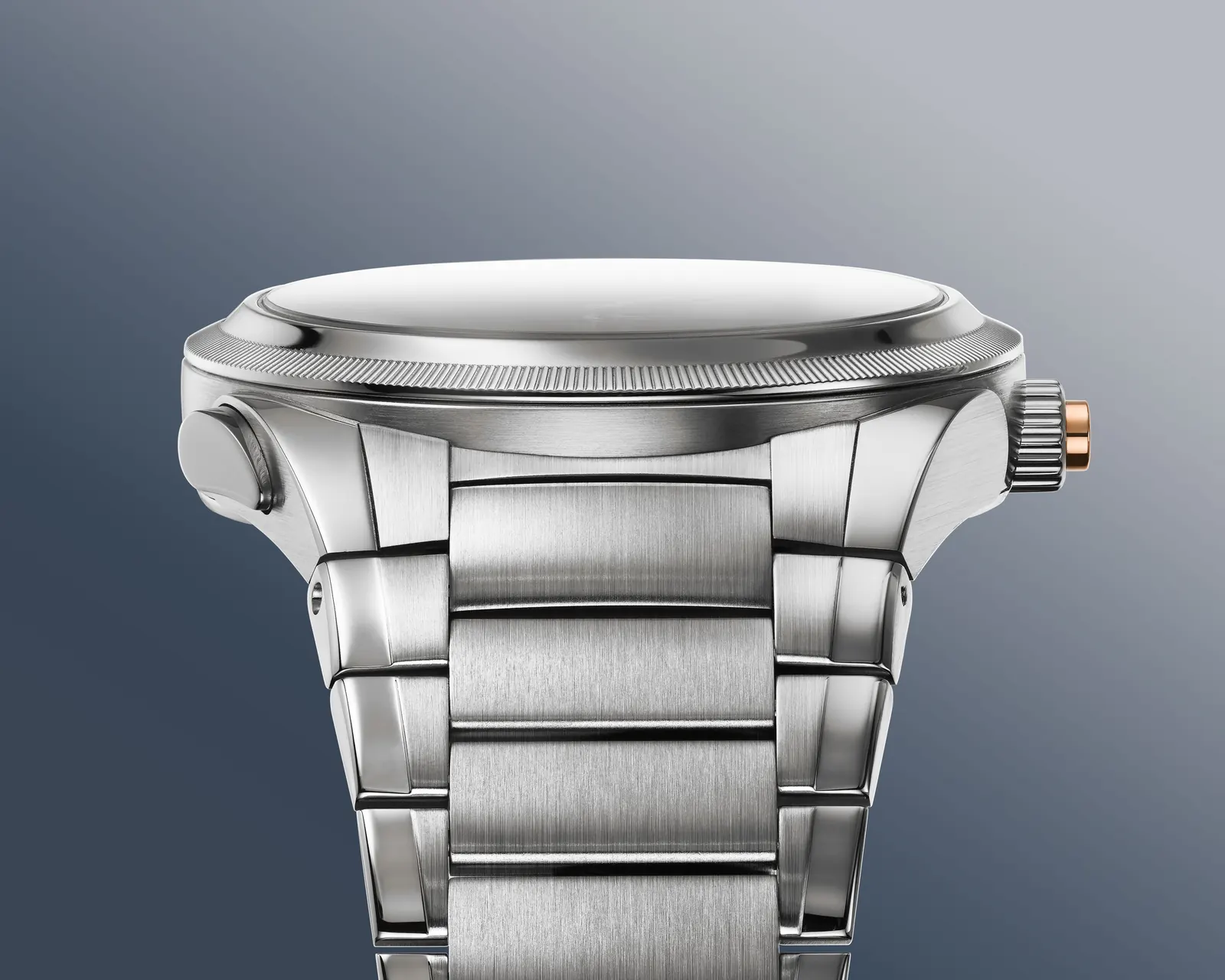
- 950 platinum covers every element: case, knurled bezel, integrated bracelet and sandblasted dial, giving each piece complete material coherence rather than decorative contrast.
The Founding Idea
Three complications in four years: the GMT Rattrapante, the Minute Rattrapante, the Chronographe Mystérieux. Each was a World First when it appeared within the TONDA PF collection. Now, for the Maison’s 30th anniversary, Parmigiani Fleurier draws them together into a single material statement — 950 platinum, 30 pieces each, no exceptions. The decision to unite them is not purely symbolic. It forces a question that sits at the centre of contemporary high watchmaking: what is a complication actually for?
The TONDA PF collection took its current form after the Maison’s repositioning in 2021, establishing a vocabulary built on proportional clarity, knurled bezels, integrated bracelets and an absence of superfluous indication. The Tonda PF Micro-Rotor Agave Blue illustrated that founding expression well. The trilogy asks whether that same discipline of restraint can hold under the pressure of the most demanding mechanical functions — and answers firmly that it can.
The principle Parmigiani Fleurier calls “Invisible Complications” is the governing logic. A complication should not permanently alter the reading of civil time. It appears when the wearer calls on it, performs its function with accuracy, then withdraws. The dial returns to its original state. The complexity has not disappeared; it has simply been placed entirely at the service of use rather than display.
Three Complications, One Shared Logic
The GMT Rattrapante addresses travel time with a precision that most dual-zone watches do not attempt. A rose gold hour hand is concealed beneath the principal hand and surfaces only when required to show home time. When it is no longer needed, it aligns perfectly beneath the main hand, and the watch reads again as a clean single-zone piece. The traveller carries two time zones without either one claiming permanent visual priority over the other.
The Minute Rattrapante occupies a rarer category. Measuring short, chosen intervals is a common practical need — a precise duration, an isolated moment within the day — yet few houses approach it at this level of mechanical refinement. A secondary minute hand appears on demand, measures the interval, then retreats beneath the principal hand without leaving any visual trace. The Maison regards this as perhaps the most radical of the three in its intelligence of use: it does not transpose an existing function but reformulates how a watch accompanies the brief moments of everyday life.
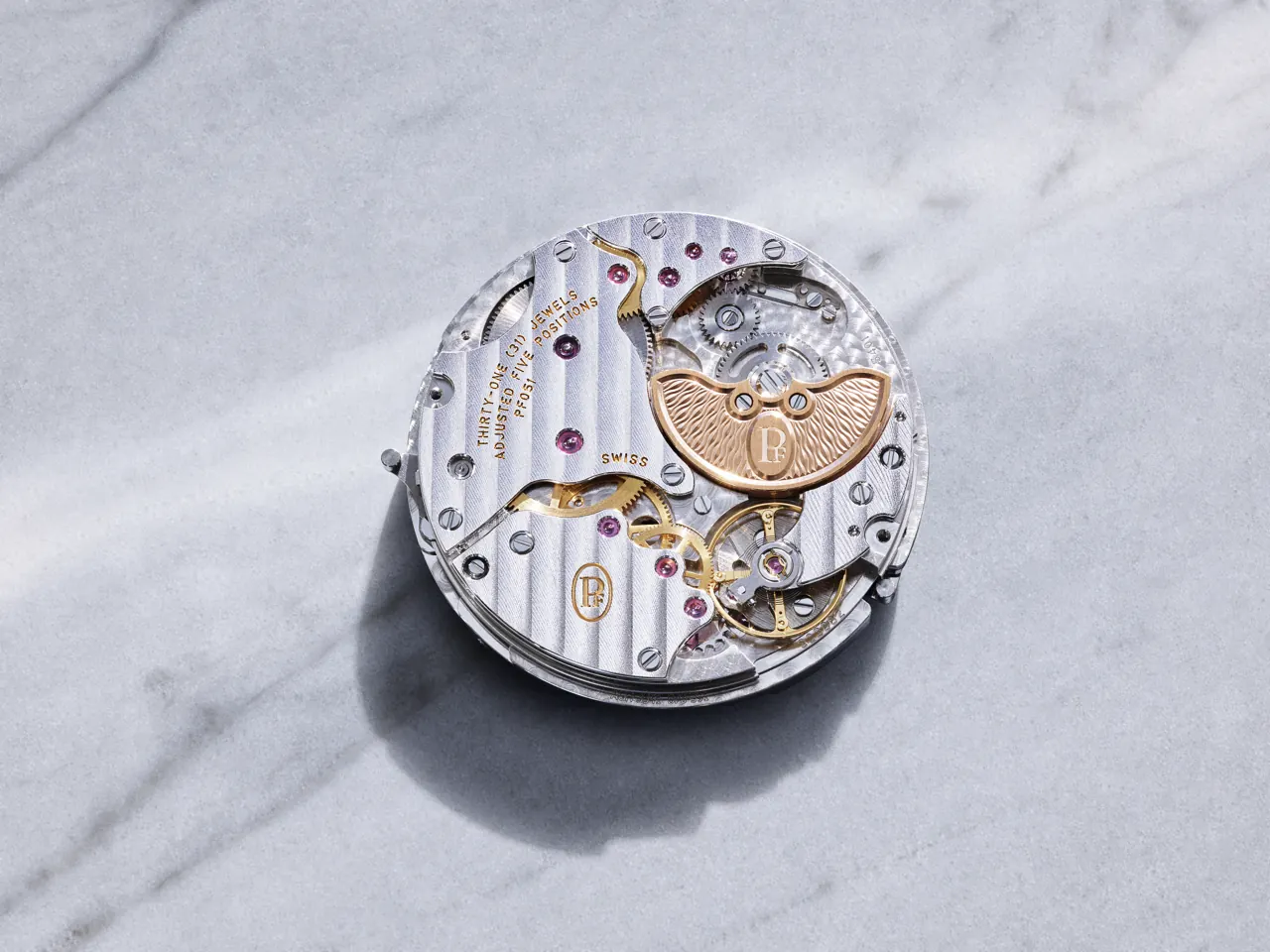
The Chronographe Mystérieux represents the trilogy’s culminating technical achievement. At rest, nothing on the dial signals the presence of a chronograph. Activated, the function unfolds through five coaxial hands at the centre of the dial, measuring hours, minutes and seconds without recourse to traditional subdials or peripheral counters. The in-house PF053 calibre was developed specifically for this architecture. Its triple-clutch system — one vertical clutch and two horizontal clutches — coordinates every phase: appearance, measurement, stopping, return and superposition. The construction is considerable; its visual presence, by design, is not. Presentations at Watches and Wonders rarely produce a chronograph this architecturally disciplined.
Platinum as Position
The choice of 950 platinum across all three pieces is not a finishing decision. It is an editorial one. Platinum’s muted white tone does not compete with the sandblasted dial surfaces; it deepens them. The alternating polished and satin-finished surfaces on the case and bracelet create a quiet interplay of light that only 950 platinum, at its specific density, can sustain with this degree of visual calm. The material does not embellish the architecture — it defines it.
Rare, slow to work and demanding of the craftsmen handling it, platinum imposes its own standards on everything around it. It is precisely this quality — not commercial cachet, but physical exigency — that Parmigiani Fleurier draws on here. For the Middle East collector who values presence over announcement, each of these 30-piece editions offers something that marketing cannot manufacture: a material and mechanical coherence that communicates only to those paying close attention.

Stay ahead of the latest releases. Subscribe to our newsletter for editor-curated coverage of luxury timepieces across the Middle East.
Frequently Asked Questions
How many pieces of each TONDA PF platinum trilogy watch are being produced?
Each of the three watches — the GMT Rattrapante, the Minute Rattrapante and the Chronographe Mystérieux — is strictly limited to 30 pieces, all crafted in 950 platinum.
What movement powers the TONDA PF Chronographe Mystérieux?
The Chronographe Mystérieux is powered by the PF053 calibre, developed specifically for this watch. Its architecture features five coaxial hands at the centre of the dial and a triple-clutch system comprising one vertical clutch and two horizontal clutches.
What makes the TONDA PF GMT Rattrapante different from a conventional GMT watch?
Rather than permanently displaying a second time zone on the dial or bezel, the GMT Rattrapante reveals a rose gold home-time hour hand only when the wearer requests it. Once dismissed, the hand returns beneath the principal hour hand, restoring the appearance of a single-time display.
Is the Parmigiani Fleurier platinum trilogy connected to the brand's anniversary?
The trilogy marks Parmigiani Fleurier's 30th anniversary. The three World Firsts — introduced over four years within the TONDA PF collection — are united here in 950 platinum editions of 30 pieces each as the highest expression of the Maison's watchmaking vision.
Where is Parmigiani Fleurier based, and what kind of house is it?
Parmigiani Fleurier is a Swiss manufacture based in Fleurier, Switzerland, positioned within the upper tier of independent haute horlogerie. The Maison is known for producing its own movements in-house and for a design language centred on proportional clarity and mechanical discipline.