Key Highlights
- Anniversary creation marking thirty years of Parmigiani Fleurier, released 29 May 2026
- Limited to five examples, each entirely conceived, assembled and finished within the Manufacture
- 456-component calibre with three barrels: 12-day power reserve and dedicated striking barrel
- Four-note carillon chime covering hours, quarters and minutes, regulated by an integrated flywheel
- Four serpentine gongs reinterpreted from a Perrin Frères pocket watch restored in 2000
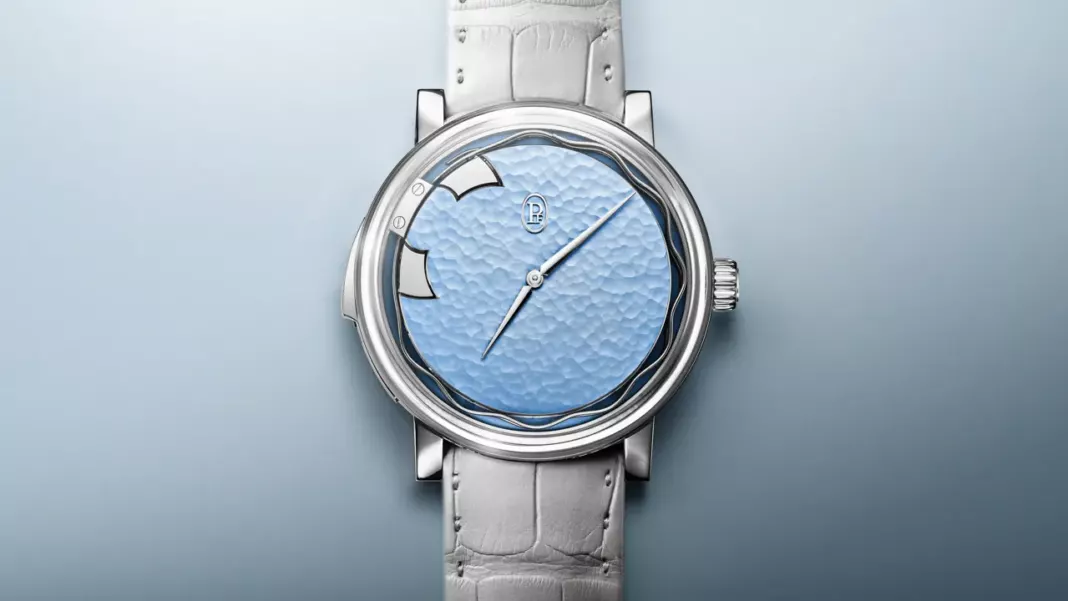
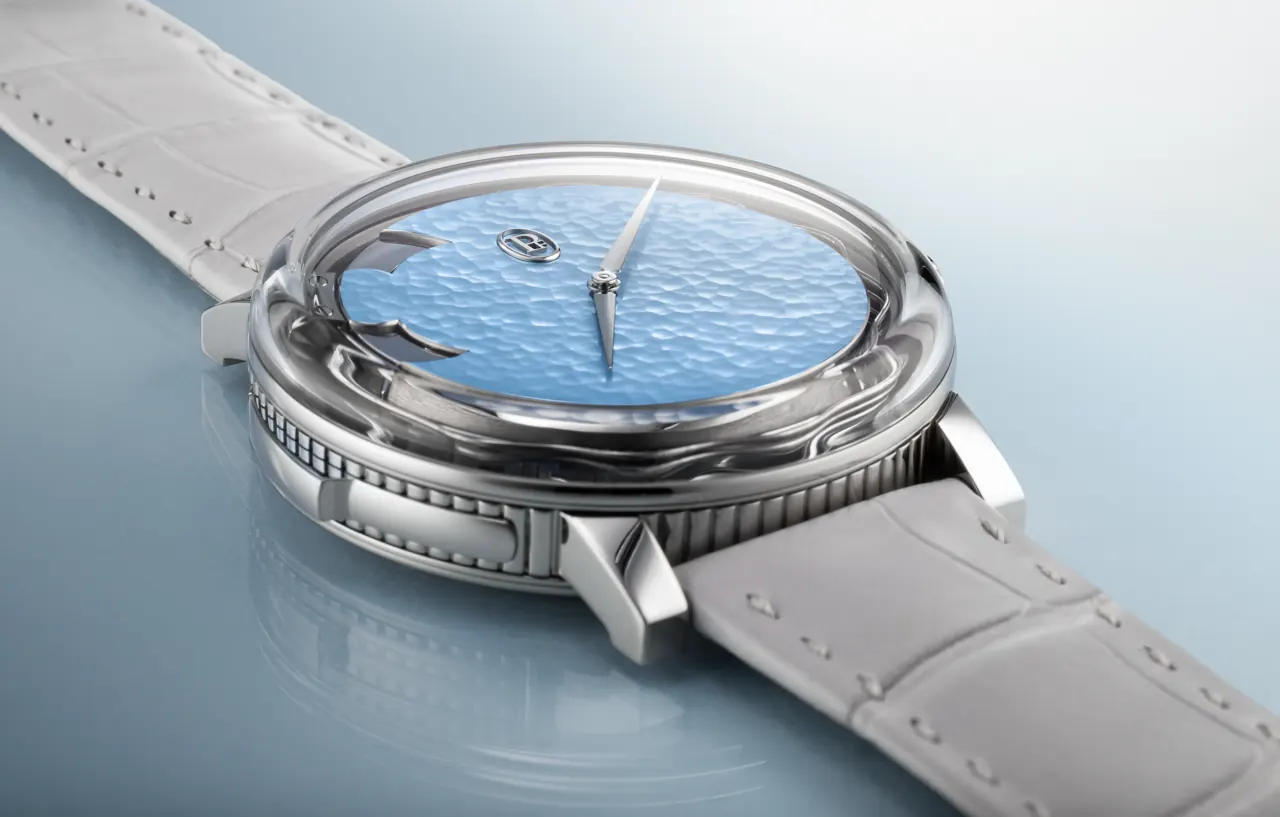
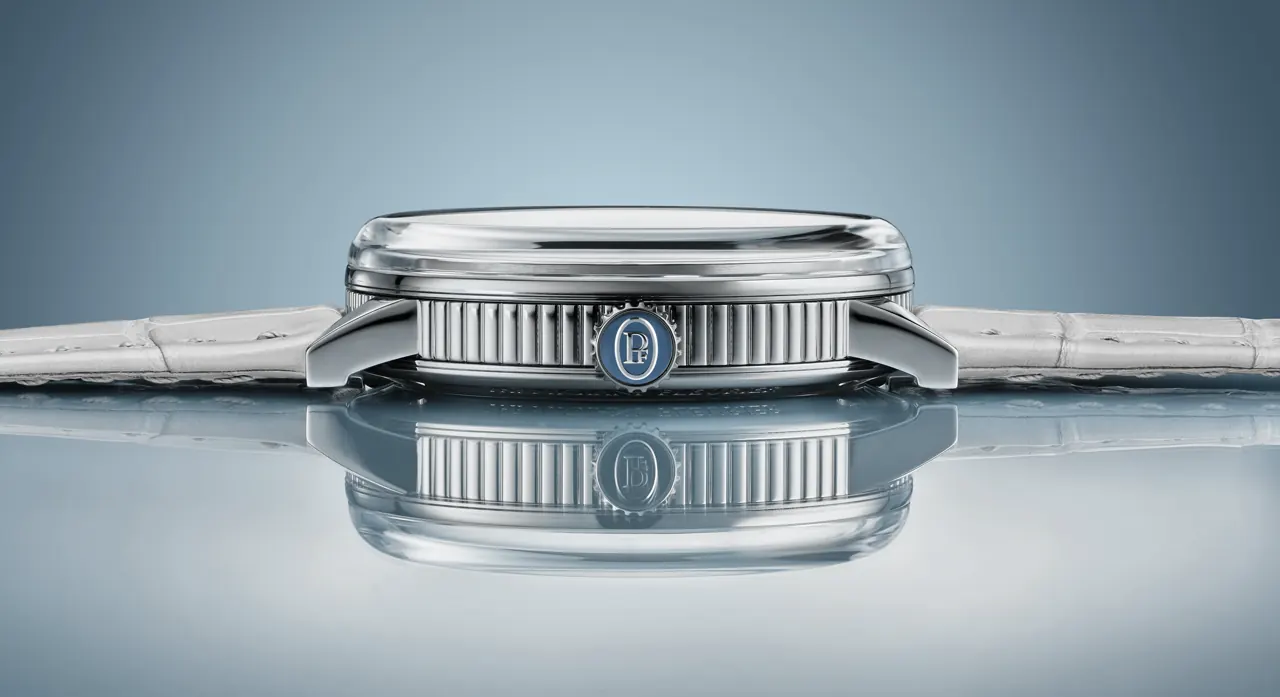
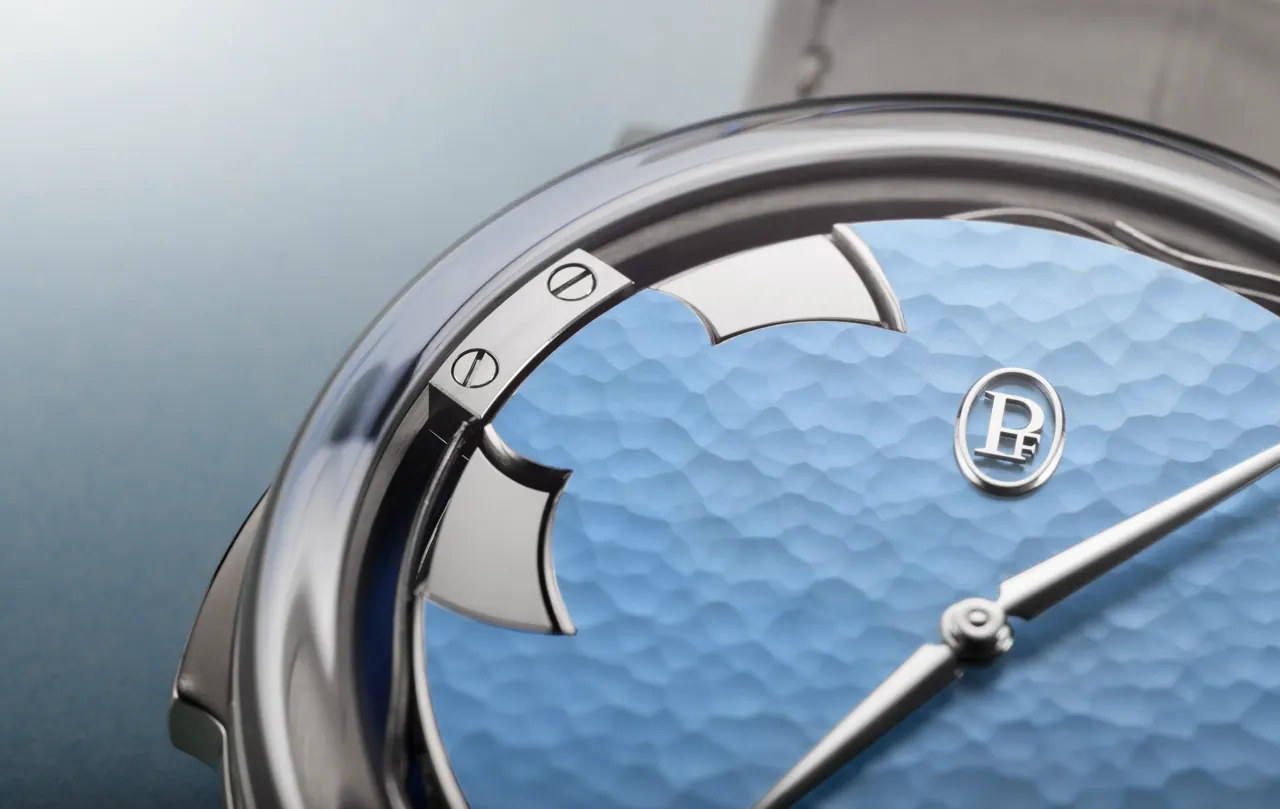
- White gold case with vertical gadroons; hand-hammered Morning Blue dial; glass box sapphire crystal
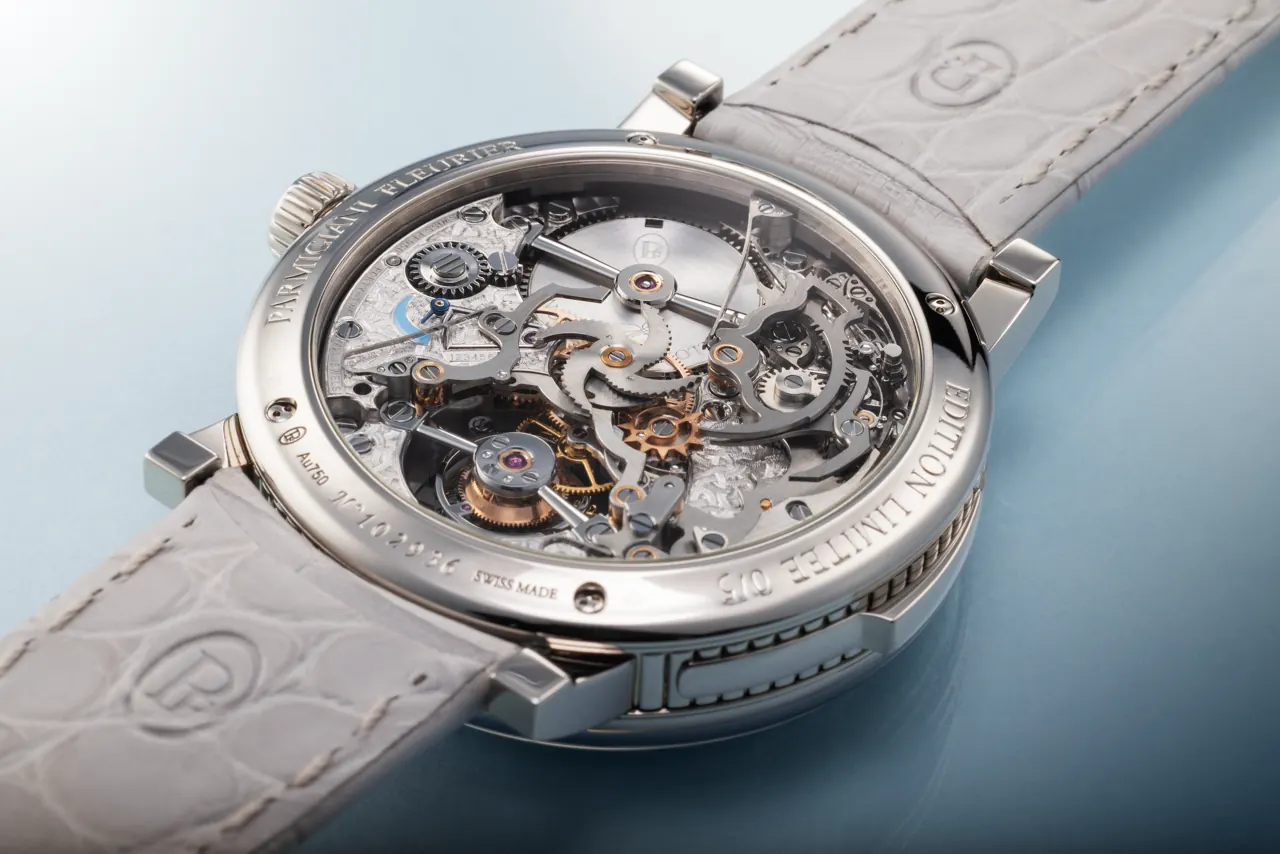
- Tourbillon and power-reserve indicator positioned on the case back; hammers visible from the dial side
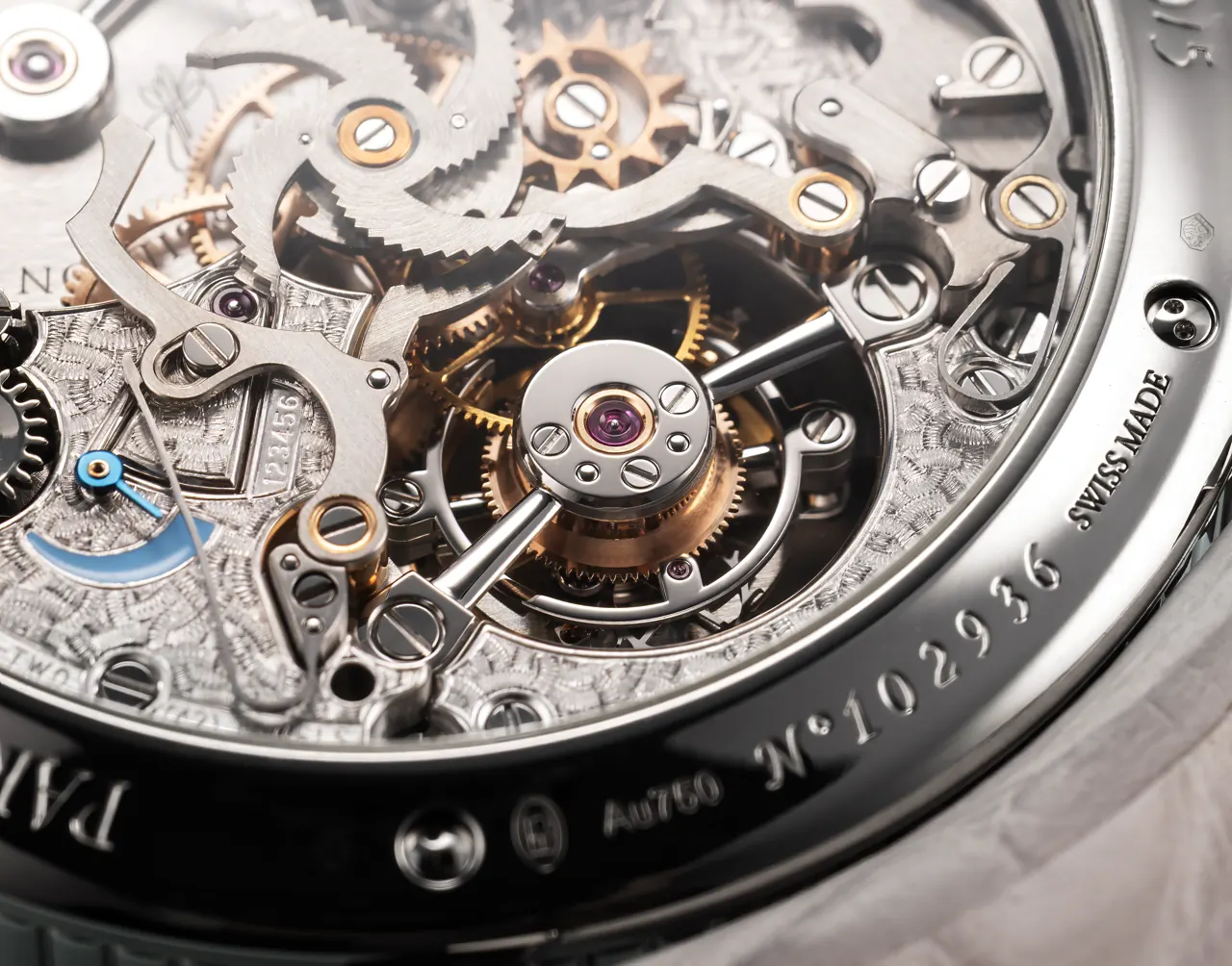
- Mezzo vibrato hand-engraving carried from the dial surface into the movement architecture itself
Why It Matters
Three decades in watchmaking is not a long time, unless those decades were spent building an entirely independent culture from within. Parmigiani Fleurier has never operated as an importer of tradition. It formed its own through Michel Parmigiani’s work as a restorer, a discipline that requires one to read the mechanical intelligence of an object before daring to propose anything new. The Carillon Tourbillon is the most direct statement that philosophy has ever produced. For collectors in the Middle East who value the rarity of genuine vertical integration, with movement, case, dial and striking mechanism all born in a single Manufacture in Fleurier, this piece occupies a category of its own. Five examples will exist in the world. Each one carries a living argument about what haute horlogerie is for.
From Restoration to Resonance
At the origin of the Carillon Tourbillon stands a Perrin Frères pocket watch, made in Neuchâtel in the early nineteenth century and restored by Parmigiani Fleurier in 2000 from the Sandoz Collection. Michel Parmigiani did not approach that historic piece as a source of quotations to copy. He studied its acoustic architecture, its energy logic and, most visibly, the long serpentine curves of its gongs. Those curves reappear on the Carillon Tourbillon as a principle of construction: they are acoustic components, spatial organisers and visual identity simultaneously. It is a rare instance of restoration becoming invention rather than reproduction, and it illuminates Parmigiani Fleurier’s founding conviction that history is never a static archive.
Movement & Materials
The calibre contains 456 components assembled by hand. Two superimposed main barrels transmit power through the gear train, delivering a 12-day power reserve, which is exceptional in a timepiece that also drives a chiming complication. A third, dedicated barrel powers the striking mechanism and is automatically rewound each time the slide is activated. The four-note melody assigns one low gong to the hours, one high gong to the minutes and two intermediate gongs to the quarter-hours; a regulating flywheel ensures the cadence flows evenly from the first strike to the last, without acceleration or drag. The tourbillon and power-reserve indicator sit on the case back, leaving the dial side composed and legible. The hammers are visible from the front, poised always at the threshold between silence and release.
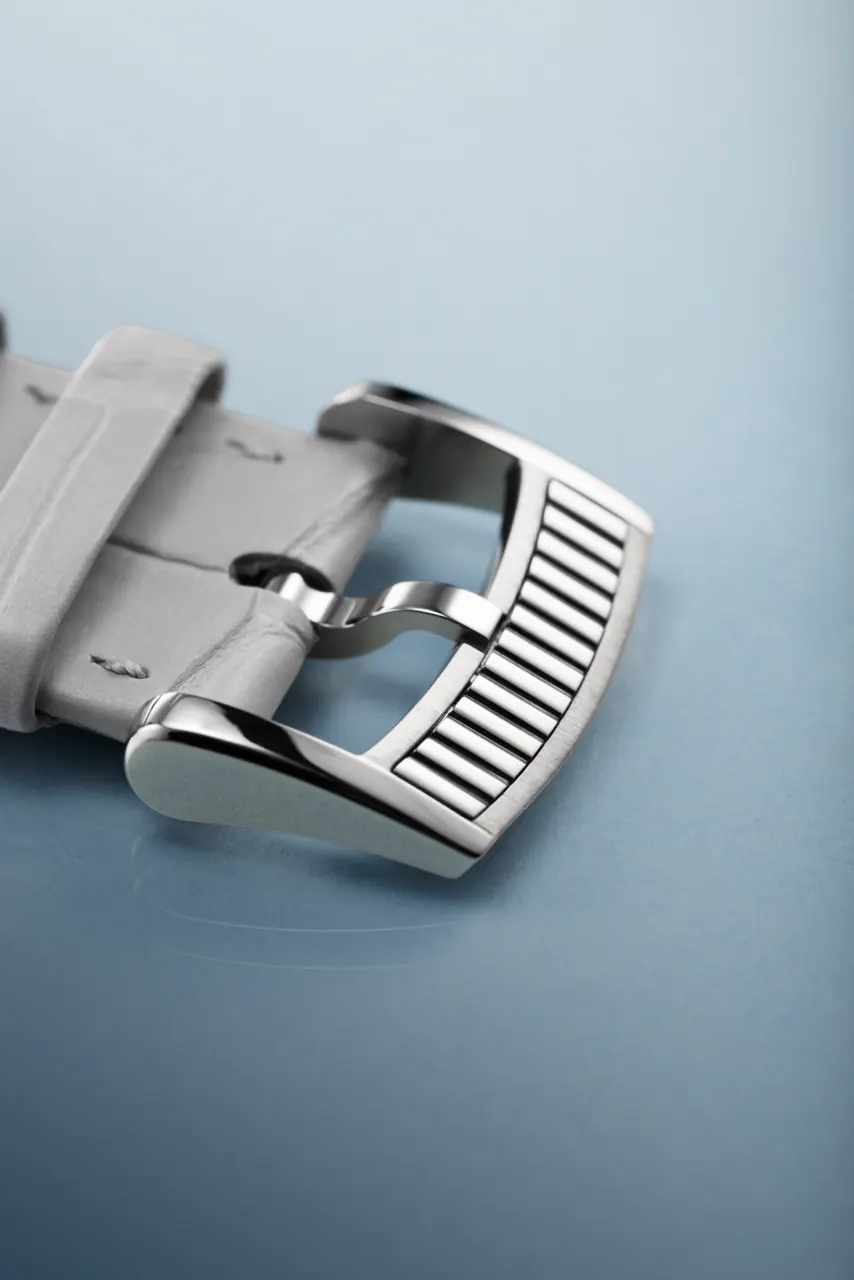
The white gold case extends the vocabulary of the Maison’s Armoriale, its vertical gadroons referencing the classical columns that have long informed Michel Parmigiani’s aesthetic thinking. White gold was chosen not purely for its appearance but for its acoustic properties: in a chiming piece, the case contributes to the density, clarity and resonance of each strike. The glass box sapphire crystal lifts above the dial to accommodate the architecture of the gongs, and the striking slide integrated into the case band requires a gesture that feels ceremonial rather than mechanical.
On the Wrist
The Morning Blue dial, crafted in hand-hammered white gold, sits between silver and azure, a tone that shifts with light without ever dominating the architecture around it. Its deliberately restrained proportions free the space the hammers and gongs require. The mezzo vibrato hand-engraving, previously reserved for the Armoriale dial surface, now extends into the movement components themselves, creating a visual correspondence with the acoustic event: what the carillon makes heard, the engraved metal makes visible. The Tonda PF Micro-Rotor Agave Blue and the Tonda PF Sport Chronograph Steel show the breadth of the Manufacture’s output across registers; the Carillon Tourbillon sits at a wholly different altitude, closer to the Tonda PF Micro-Rotor Agave Blue in its dialogue with colour, but constructed around a complication of entirely different scale.
Where It Sits in the Maison’s Line-Up
The Carillon Tourbillon belongs to the Objets d’Art Collection, pieces that Parmigiani Fleurier positions outside the rhythm of seasonal novelty. Five examples represent not a commercial edition but a statement of purpose: this is a creation that demands time, hands and a form of mastery that cannot be industrialised. The edition also inaugurates a hand-hammered aesthetic signature for the thirtieth anniversary that carries across other pieces in the anniversary programme. For collectors building holdings that look beyond the immediate moment, and for whom acquisition means participation in transmission rather than consumption, the Carillon Tourbillon defines a threshold. Parmigiani Fleurier has spent thirty years building toward a piece like this one.
For more on horology that matters in the Gulf, sign up for our weekly editorial briefing.
Frequently Asked Questions
How many examples of the Parmigiani Fleurier Carillon Tourbillon will be produced?
The Carillon Tourbillon is limited to five examples. Its rarity reflects the depth of craft involved — every component is conceived, developed, assembled and finished entirely within the Manufacture.
What is the power reserve of the Carillon Tourbillon calibre?
The calibre delivers a 12-day power reserve, achieved through two superimposed main barrels. A dedicated third barrel powers the striking mechanism and is rewound automatically each time the minute-repeater slide is activated.
What historic watch inspired the Carillon Tourbillon?
The piece draws direct inspiration from a Perrin Frères pocket watch made in Neuchâtel in the early nineteenth century, held in the Sandoz Collection and restored in the Parmigiani Fleurier workshops in 2000. The distinctive serpentine gongs visible on the current creation are reinterpreted from that historic reference.
What does the four-note chime of the Carillon Tourbillon sound like?
Four gongs compose the melody: one low-pitched gong for the hours, one high-pitched gong for the minutes, and two additional gongs each with a distinct note for the quarter-hours. A regulating flywheel ensures the cadence remains fluid and even from the first strike to the last.
Where is Parmigiani Fleurier based, and is the Carillon Tourbillon made entirely in-house?
Parmigiani Fleurier is headquartered in Fleurier, Switzerland. The Carillon Tourbillon is entirely conceived, developed, constructed, assembled and finished within the Maison's own Manufacture — an expression of full vertical integration in haute horlogerie.