
At a Glance
- TAG Heuer expands its luxury eyewear line with two new 2026 sunglass collections: Jack Heuer and Golden Age.
- The Jack Heuer frames are crafted in Japan from shiny palladium titanium with signature red bio-nylon temple tips.
- The Golden Age collection applies the Restomod philosophy, pairing classic silhouettes with contemporary acetate and precision engineering.
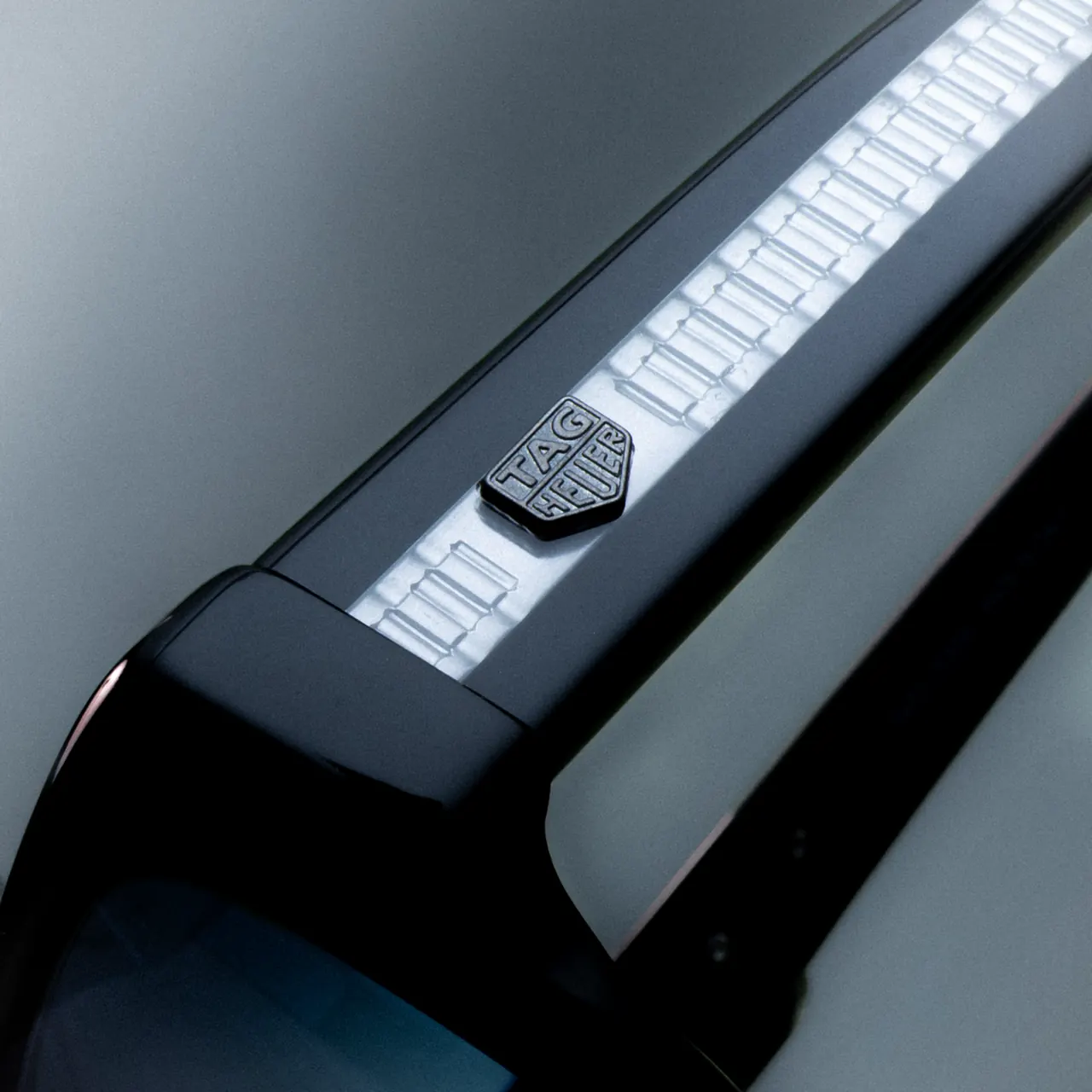
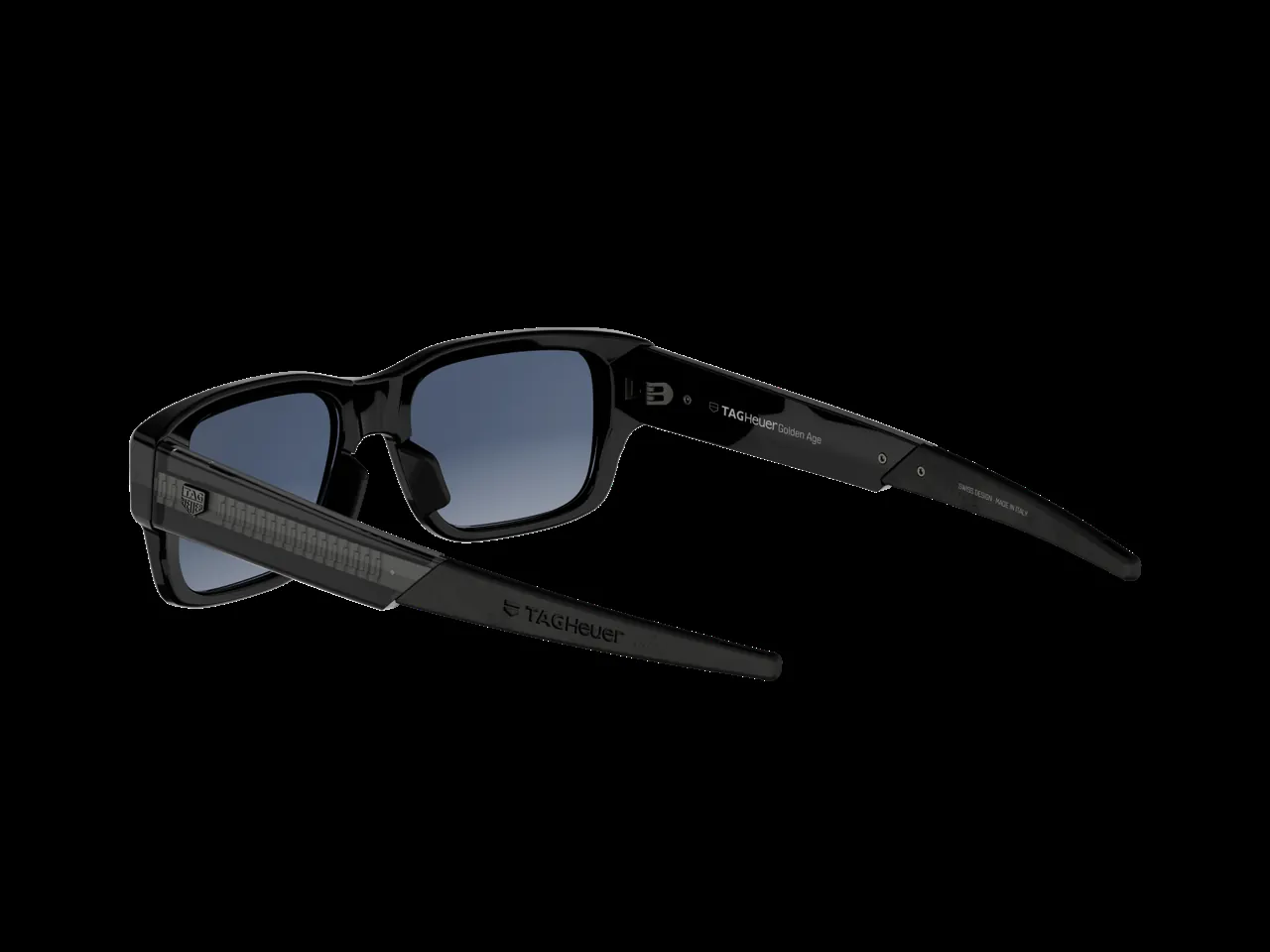
- Temple detailing on the Golden Age frames references the H-Links bracelet of the TAG Heuer Carrera Three Hands.
- Lens tints across the Golden Age line are drawn directly from Carrera dial colours: deep black, racing blue, vibrant red, and rich green.
- The Golden Age collection was developed in collaboration with brand ambassador and racing driver Patrick Dempsey.
- Both collections are produced by Thélios at its Manifattura in Longarone, Italy; all lenses are RX-compatible.
Early Impressions
TAG Heuer arrives at luxury eyewear with a clearly defined visual language and a 166-year heritage to draw from, not as a brand testing a new category.
The two 2026 collections are distinct in character and construction, yet read unmistakably as TAG Heuer. The Jack Heuer line is restrained and technical, rooted in the timing-stand culture of the early 1970s and the story of Jean Campiche, the man known across the paddock as “The Pianist” for his extraordinary speed in recording lap times at Le Mans. His work with Heuer from 1972 onward, culminating in securing the Maison’s position as Official Timekeeper of Formula 1 in 1992, gives the Jack Heuer frames a specific biographical weight. The Golden Age collection follows a different register: fuller, warmer, more consciously referential to Formula 1’s most stylistically defined decades.
Design & Materials
The Jack Heuer frame takes its cues from the pilot shape, filtered through motorsport’s 1970s aesthetic.
Manufactured in Japan from shiny palladium titanium, it is a rimmed construction that combines structural precision with genuinely low weight. Adjustable rubberised bio-nylon nose pads and titanium temples with bio-nylon end tips in signature red allow a personalised fit that holds its position. The TAG Heuer logo is engraved and lacquered directly onto the frame rather than applied as a badge. Solid smoke bio-nylon lenses carry a silver mirror coating that manages glare without altering clarity of vision.
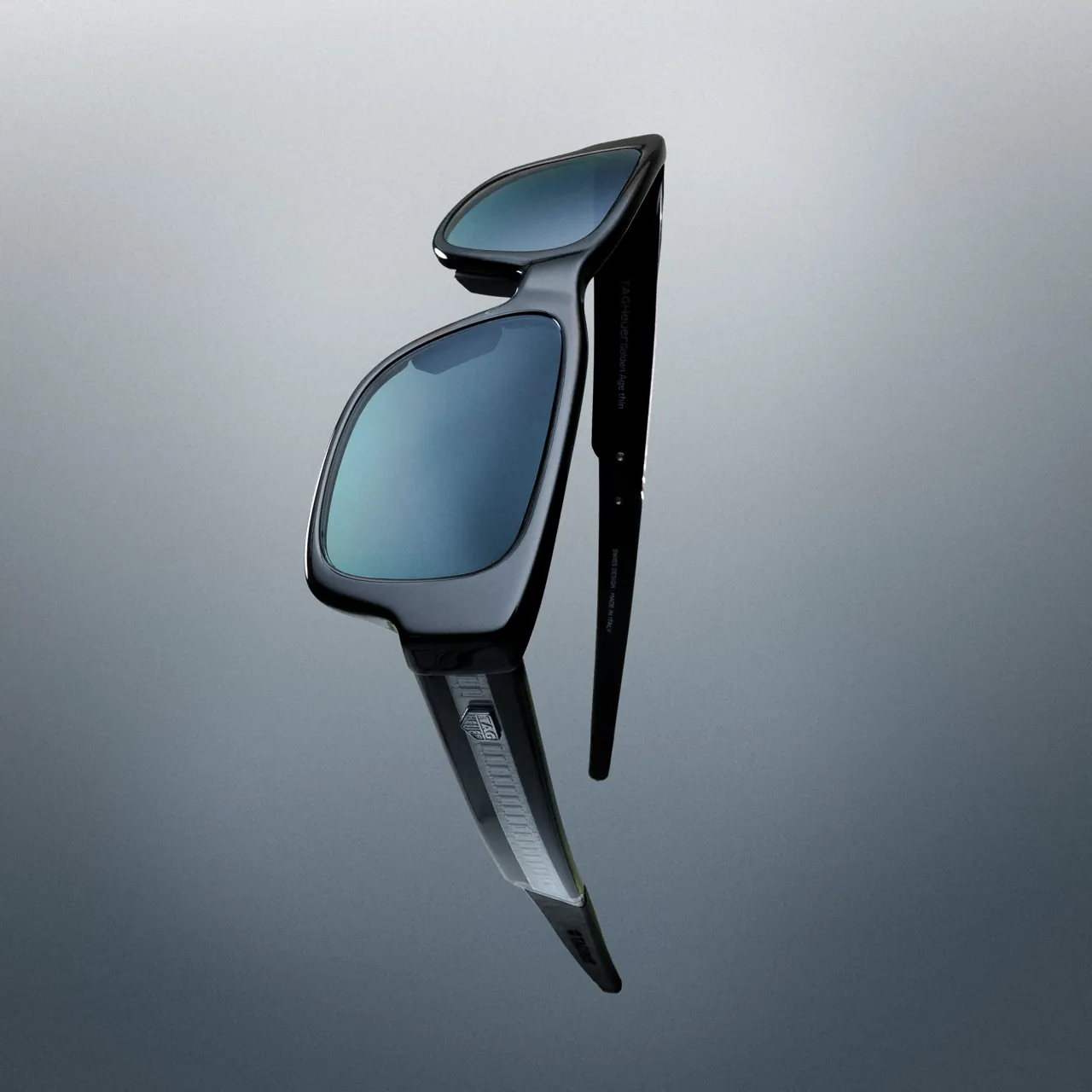
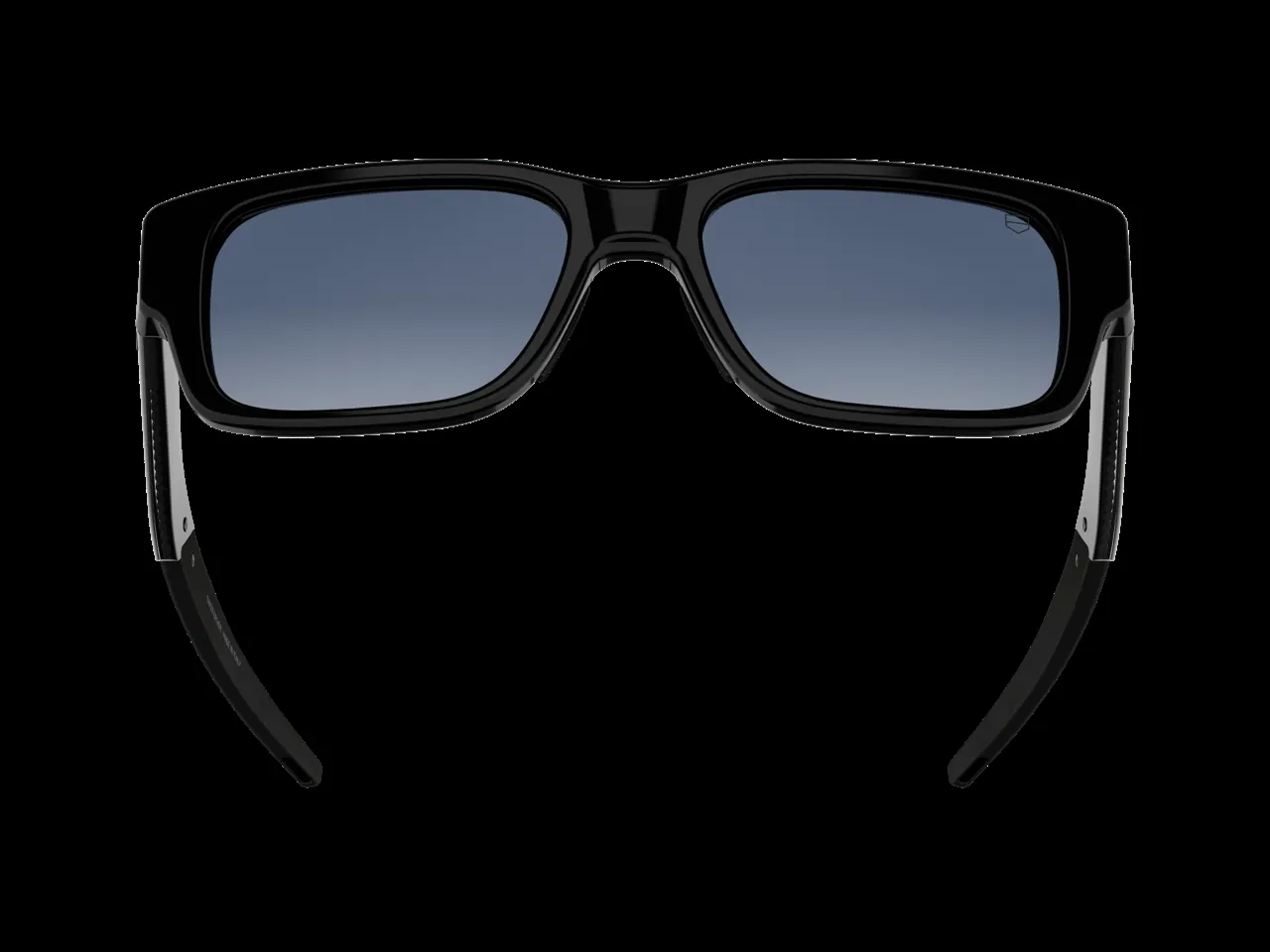
The Golden Age collection is built from full acetate, a deliberate contrast in material character. Its headline style pairs a shiny black front with black and crystal acetate temples, through which the H-Links inspired core wire structure is visible, creating a quiet dialogue between the frame and TAG Heuer’s watchmaking vocabulary. Gradient blue bio-nylon lenses provide effective glare reduction, with anti-reflective and anti-dirt coatings integrated as standard. A second Golden Age style takes a more reduced position: full shiny black acetate throughout, with solid smoke lenses. The optical line extends the range further through transparent crystal and olive green acetate variations.
Heritage & Lineage
The Carrera’s design codes appear throughout both collections in ways that reward close attention.
The Golden Age lens palette, deep black, racing blue, vibrant red, rich green, maps directly onto Carrera dial colours. This cross-category reference connects eyewear to the brand’s core watchmaking identity rather than treating the collections as independent merchandise. The relief metal shield running along the Golden Age temples is a detail conceived to reveal itself through movement, consistent with how TAG Heuer treats finishing on its timepieces. TAG Heuer was founded in 1860 by Edouard Heuer in the Jura Mountains; the core collection today remains anchored by two Jack Heuer-designed families, the Carrera and the Monaco. Both frame collections acknowledge this lineage without restating it.
Production sits with Thélios, the LVMH eyewear manufacturer whose portfolio includes Bulgari, Dior, Fendi, and others. Thélios operates its Manifattura in Longarone, Italy, where Italian craft execution meets each Maison’s brief. For TAG Heuer, that brief is clearly precision-first.
The Collections in Context
Many watch brands treat eyewear as a licensing exercise. TAG Heuer has approached these collections with the same brief it applies to its case design: every functional detail must have a reason.
Interchangeable nose pads, adjustable temple tips, RX-compatible lenses, anti-dirt and anti-reflective coatings on the Golden Age are engineering decisions, not luxury flourishes. The involvement of Patrick Dempsey, a racing driver with genuine circuit experience, reflects the same logic. His input in developing the Golden Age collection is presented as a practical test of whether the frames hold up to conditions where the quality of optics carries real consequence, not as a celebrity endorsement.
For Middle East collectors who have followed TAG Heuer through seasons at Watches and Wonders, these collections read as a coherent extension of the brand’s current Designed to Win positioning rather than a departure from it.
Stay ahead of the latest releases. Subscribe to our newsletter for editor-curated coverage of luxury timepieces across the Middle East.
Frequently Asked Questions
What materials are used in the TAG Heuer Jack Heuer sunglasses?
The TAG Heuer Jack Heuer sunglasses are crafted in Japan from shiny palladium titanium, with adjustable rubberised bio-nylon nose pads, titanium temples fitted with bio-nylon end tips in signature red, and solid smoke bio-nylon lenses with a silver mirror coating.
What is the Restomod philosophy behind the TAG Heuer Golden Age collection?
The Restomod concept, familiar from the automotive world, preserves a classic silhouette while upgrading it with contemporary materials and precision engineering. TAG Heuer applies this to the Golden Age collection to honour Formula 1's golden era without compromising modern standards of comfort and optical performance.
Who collaborated on the TAG Heuer Golden Age Sunglasses?
The TAG Heuer Golden Age collection was developed alongside brand ambassador Patrick Dempsey, an accomplished racing driver whose practical understanding of track demands informed the collection's engineering brief.
What is the connection between the Golden Age frames and TAG Heuer watchmaking?
Inside the temples, a core wire pattern drawn from the H-Links bracelet of the TAG Heuer Carrera Three Hands is visible through the crystal acetate, creating a visual link between eyewear and watchmaking. The lens tints are drawn directly from the Carrera dial palette, including deep black, racing blue, vibrant red, and rich green.
Who manufactures TAG Heuer eyewear?
TAG Heuer eyewear is produced by Thélios, an LVMH-owned eyewear manufacturer based at its Manifattura in Longarone, Italy, which blends each Maison's identity with Italian craftsmanship across a portfolio of prestigious luxury brands.