Key Highlights
- Flyback chronograph, dual time zone and date display unified on a single, counter-free dial
- HMC 730 calibre developed with AGENHOR, hand-wound, 383 components, 49 jewels
- Double barrel delivers a minimum 72-hour power reserve; power reserve indicator on movement side only
- 42 mm stainless steel case, 13.2 mm height, screw-down crown at 4 o’clock engraved with “M”
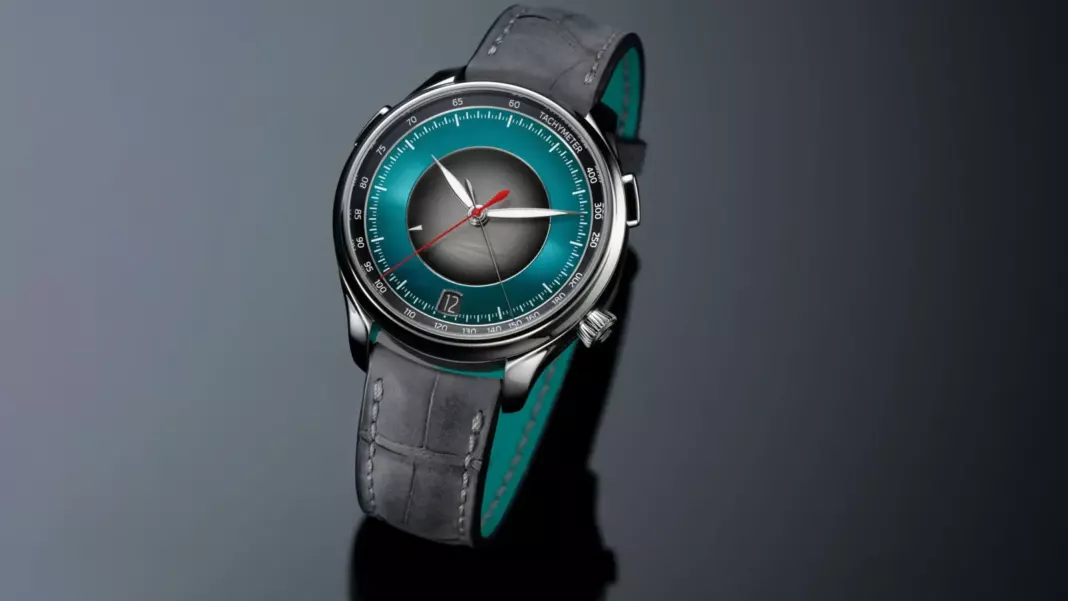
- Turquoise fumé sunburst dial with Blackor fumé central disc and Super-LumiNova white arrow
- Date adjustable both forwards and backwards without risk to the movement
- Grey alligator strap with nubuck finish and Moser-engraved steel pin buckle
Distinctive Traits
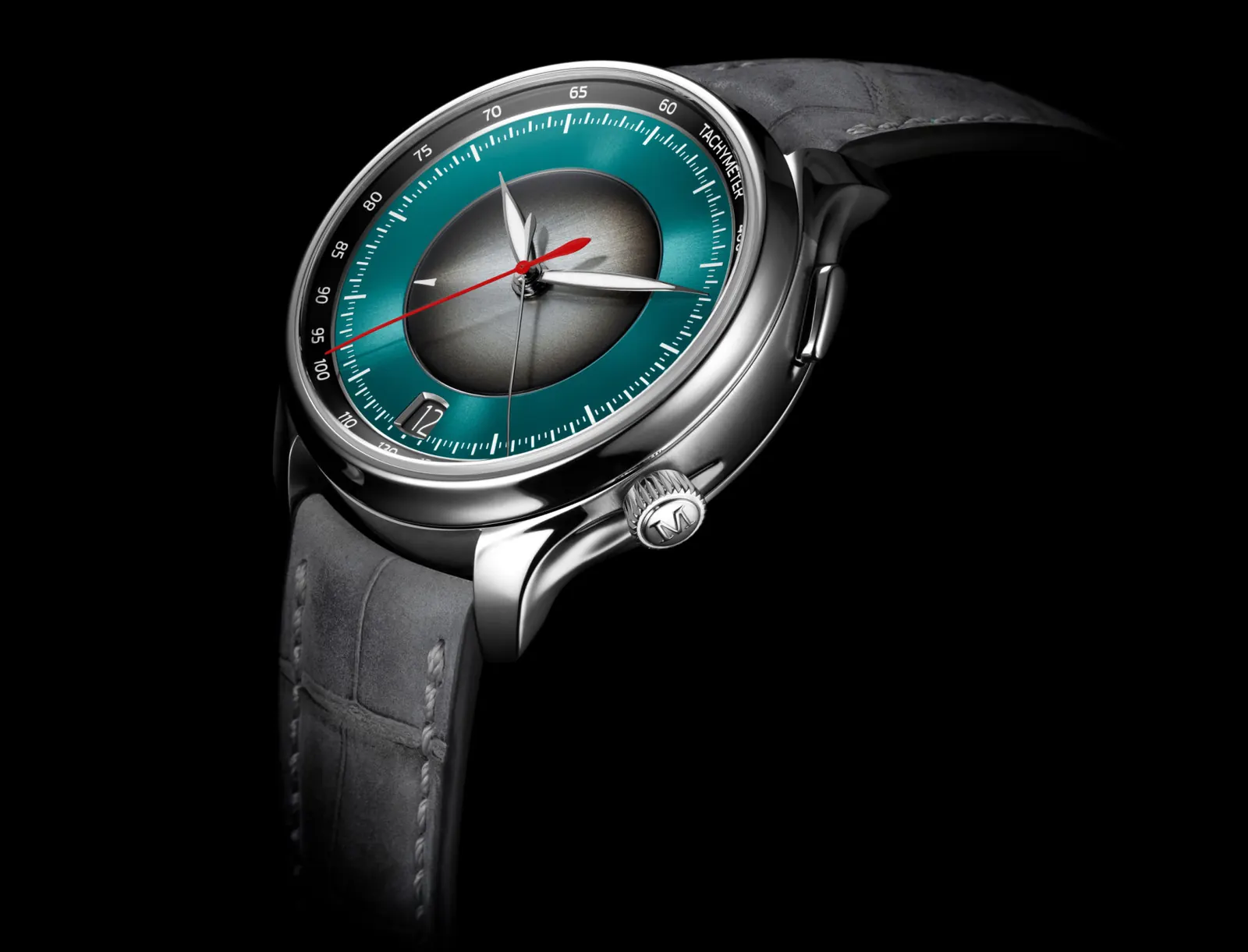
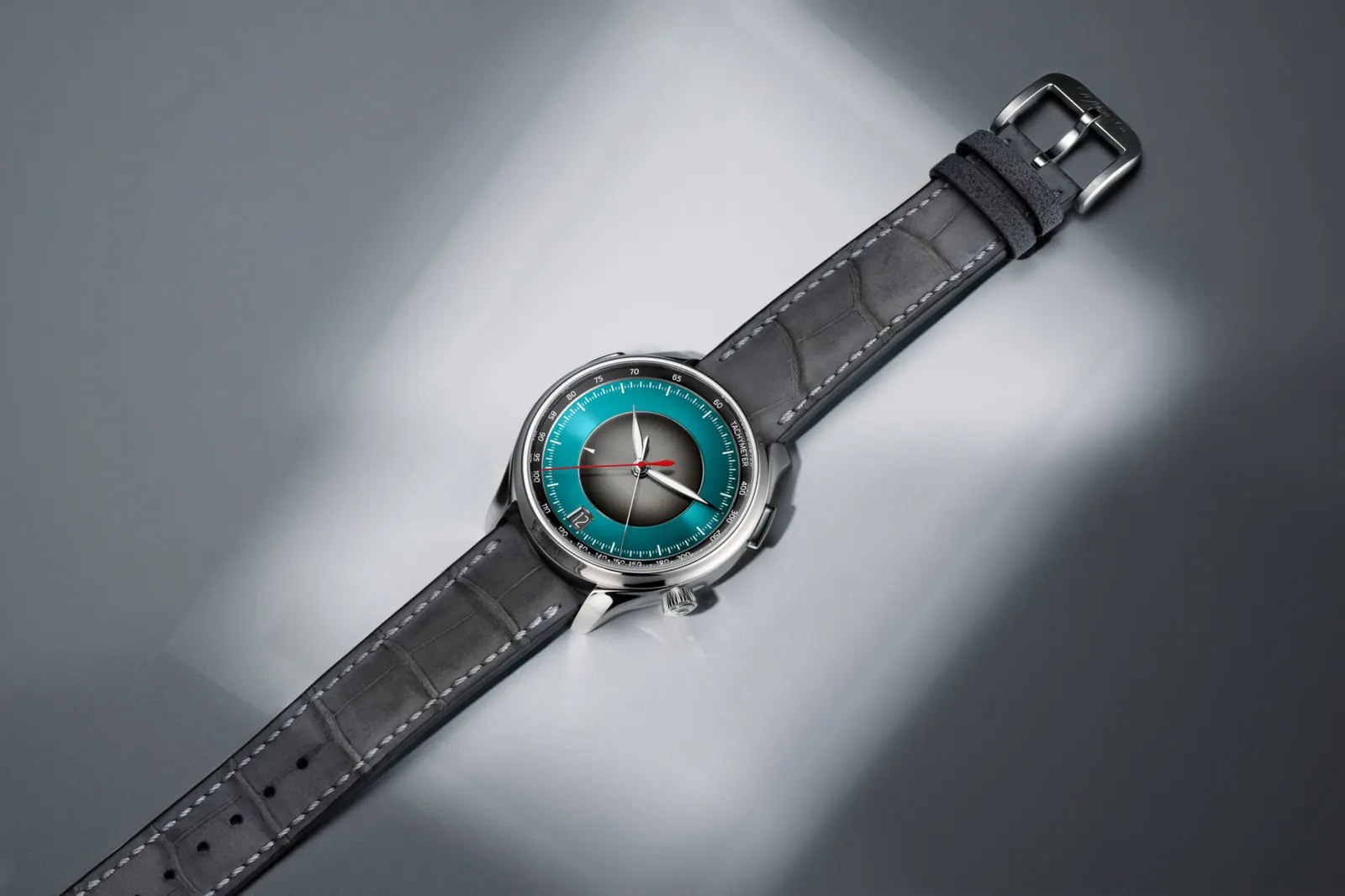
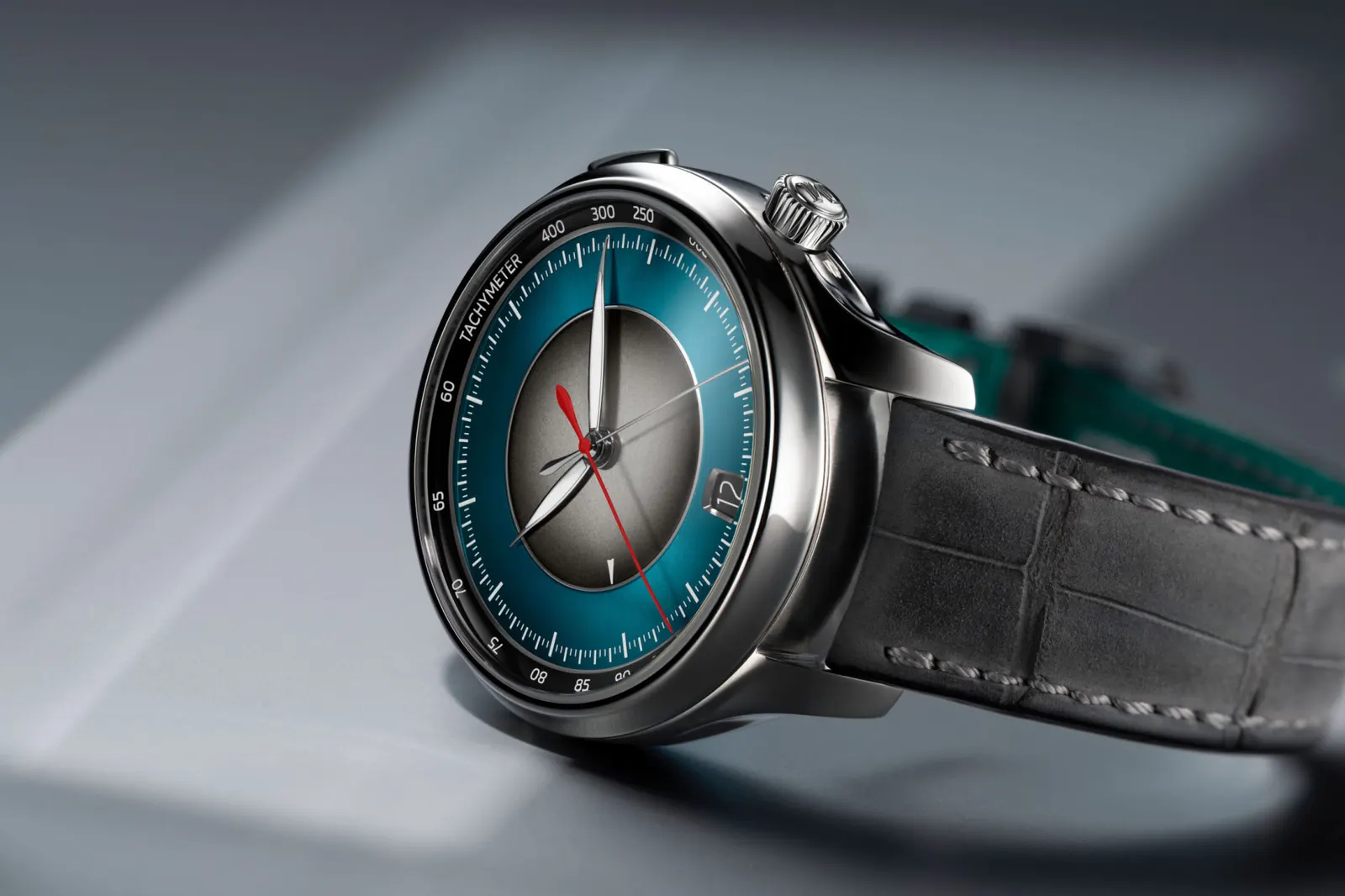
Three complications on a dial that reads as though it carries none. That is the governing tension of the Endeavour Flyback Chronograph Dual Time Date, and it is precisely what separates H. Moser & Cie.’s approach from the crowded field of haute horlogerie chronographs shown at Watches and Wonders and beyond. The flyback function, dual time zone and date coexist without a single subsidiary counter breaking the surface. The red central hand tracks elapsed seconds; a rhodium-plated hand records elapsed minutes. Both spring back instantly on command. The second time zone occupies the centre of the dial on a Blackor fumé disc, its white arrow with Super-LumiNova tip barely announcing itself against the turquoise sunburst ground.
Sophistication, here, is measured by what is withheld. The tachometric scale on the flange and the white minute track around the periphery provide visual structure without clutter, an aesthetic that references precision instrumentation while remaining genuinely elegant on the wrist.
Case, Dial and Finishing
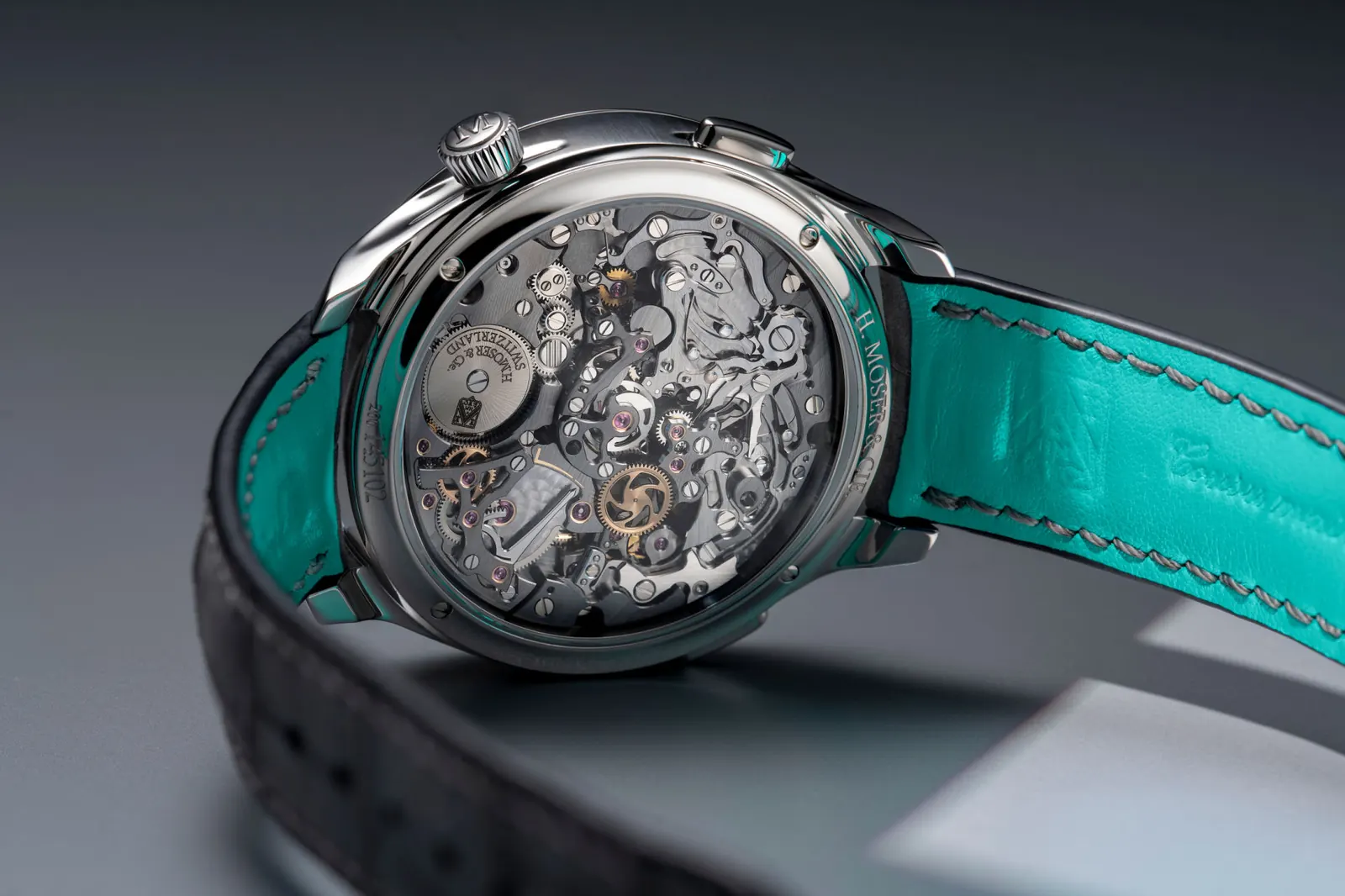
The 42 mm stainless steel case runs 13.2 mm tall, architecturally confident without reading as heavy. Chronograph pushers sit at 10 and 2 o’clock; the screw-down crown at 4 o’clock carries an engraved “M”. Water resistance stands at 3 ATM, appropriate for the dressy-sport positioning of the piece. The see-through case-back is the correct choice: it keeps the power reserve indicator off the dial and opens the HMC 730 to view.
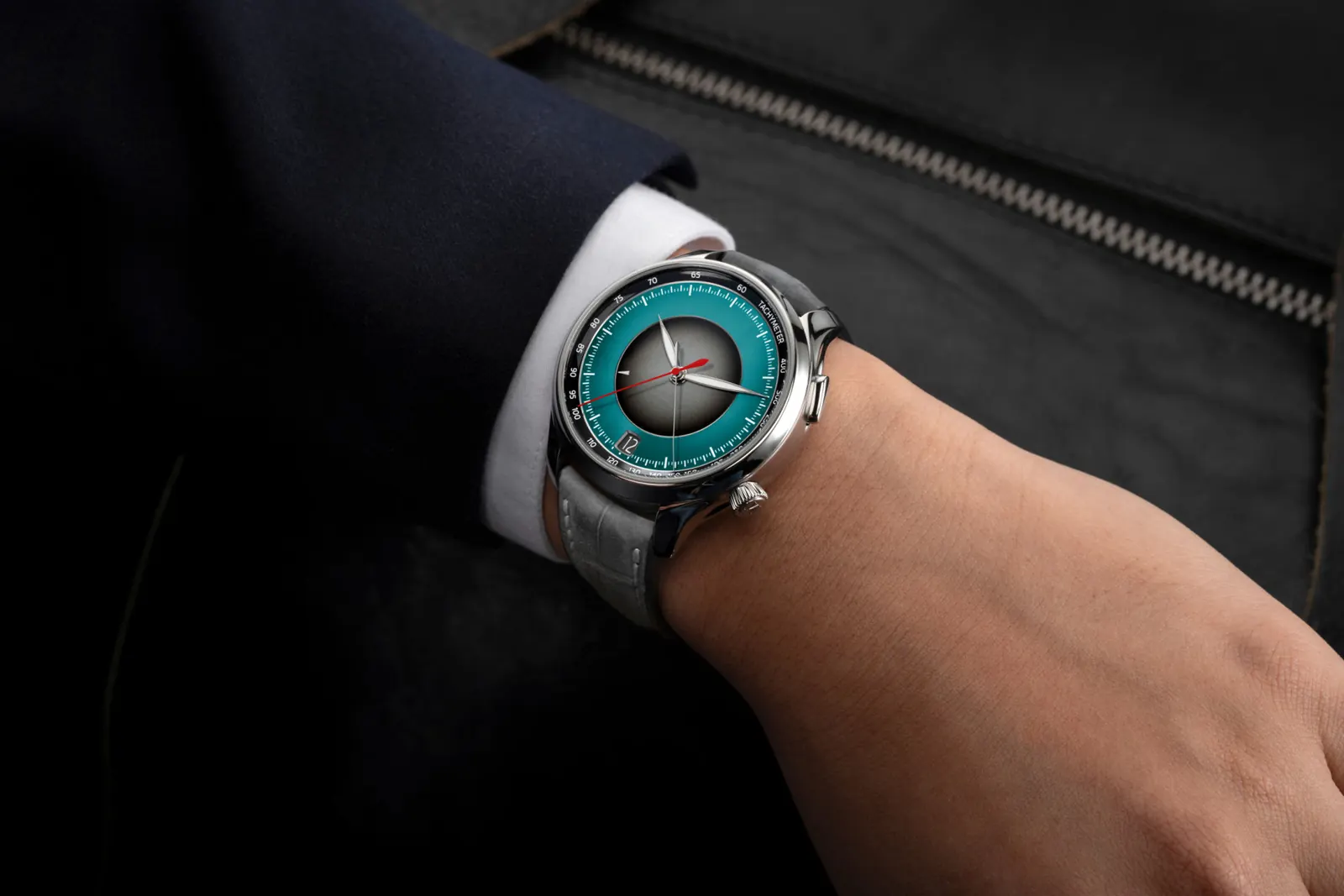
Leaf-shaped hour and minute hands, filled with Super-LumiNova, are slender enough to preserve legibility at a glance without diminishing the dial’s openness. The grey alligator strap with nubuck finish brings a tactile softness that works with the technical character of the case rather than against it. A Moser-engraved steel pin buckle completes the reference.
Movement Architecture
The HMC 730 is a direct reinterpretation of the HMC 902. AGENHOR, partner and co-developer, removed the automatic winding system and oscillating weight entirely, and the space reclaimed made it possible to integrate the dual time display and date within the available geometry. At 34.4 mm in diameter and 7.2 mm in height, the calibre runs at 21,600 vibrations per hour and counts 383 components across 49 jewels.
The column wheel and micro-tooth system, inherited from the HMC 902, are retained. A horizontal clutch with friction wheel eliminates unwanted jolts when the chronograph engages. The retrograde principle governs the elapsed minute hand: energy accumulates in a snail cam and releases it in a single, instant jump, a mechanism that improves reading accuracy and makes the Streamliner Small Seconds Lime Green look almost straightforward by comparison within the brand’s own catalogue.
The double barrel provides a minimum 72-hour power reserve. The date corrector operates in both directions without risk to the gear train, a convenience that most complex architectures cannot offer. The anthracite finish with Moser double stripes and partially skeletonised bridges bring visual depth without theatrics.
The Instrument Made Wearable
H. Moser & Cie. was founded in 1828, and the house has spent nearly two centuries earning the right to be concise. The Endeavour Flyback Chronograph Dual Time Date, reference 1730-1200, is the argument that complication and clarity are not opposing ambitions. They are the same one, pursued with enough discipline to arrive at both simultaneously.
For the modern traveller who requires a second time zone at a glance, a flyback function for precision timing and a date correctable in either direction, all without consulting a manual, this is a considered answer. The tachometric scale grounds it as an instrument. The fumé turquoise dial makes it something more.
For more on horology that matters in the Gulf, sign up for our weekly editorial briefing.
Frequently Asked Questions
What movement powers the Endeavour Flyback Chronograph Dual Time Date?
The watch is driven by the HMC 730 calibre, developed in partnership with AGENHOR. It is a hand-wound movement featuring a column wheel chronograph, double barrel, and a minimum 72-hour power reserve, with 383 components and 49 jewels.
What is the case size and material of the Endeavour Flyback Chronograph Dual Time Date?
The case measures 42.0 mm in diameter and 13.2 mm in height, crafted in stainless steel with a see-through case-back and water resistance to 3 ATM.
How does the dual time zone display work on this watch?
The second time zone appears at the centre of the dial on a Blackor fumé disc, indicated by a discreet white arrow with a Super-LumiNova tip. The display integrates into the dial without additional counters, preserving the minimalist composition.
What makes the HMC 730 different from the HMC 902 movement?
The HMC 730 is a hand-wound reinterpretation of the HMC 902. AGENHOR removed the automatic winding system and oscillating weight, freeing the space required to integrate the dual time display and date within the movement architecture.
What collection does the Endeavour Flyback Chronograph Dual Time Date belong to?
It belongs to the Endeavour collection of H. Moser & Cie., the brand's core line that consistently channels the house's minimalist philosophy across a range of complications.