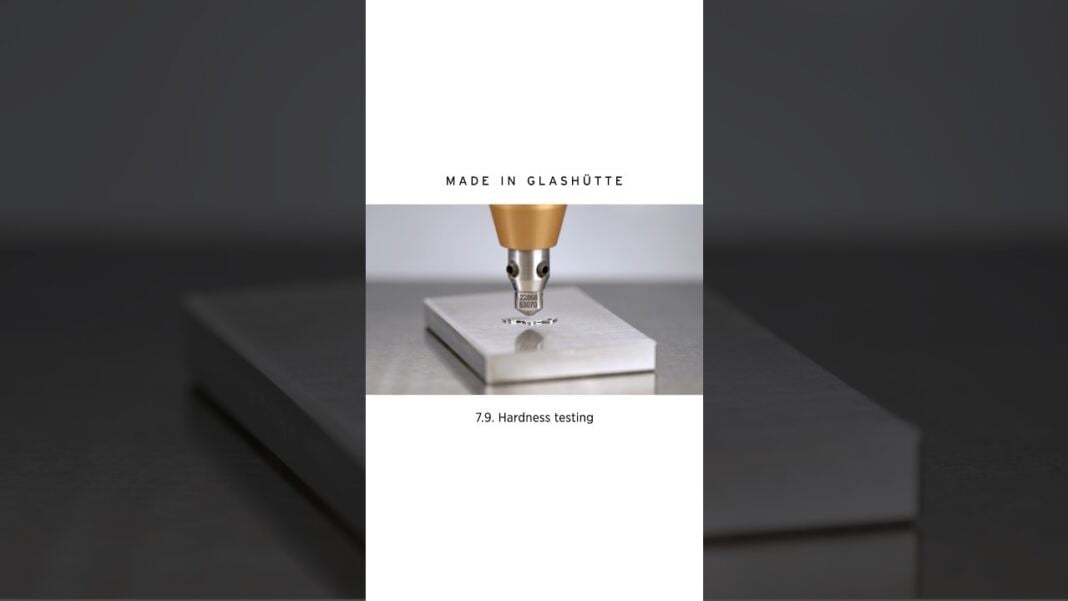
Material hardness is a primary determinant of watch functionality and longevity. Hardness testing measures resistance to wear and deformation—critical properties for components subject to friction, pressure, and impact.
The Importance of Hardness in Watchmaking
Harder materials resist deformation and surface damage better than softer alternatives, which matters for any component that moves repeatedly or bears load. Cases, bezels, and balance wheels all benefit from high hardness values. Testing ensures that selected materials deliver the performance promised in design specifications and marketing claims.
NOMOS GLASHÜTTE and Hardness Testing
NOMOS GLASHÜTTE operates under the “Made in Glashütte” certification standard, which mandates hardness testing across all components. The brand applies industry-standard test methods to verify that cases, bezels, and movements meet defined material specifications before assembly.
Made in Glashütte: 7.9 Hardness Testing
NOMOS GLASHÜTTE’s hardness testing procedure involves systematic evaluation of each timepiece’s structural elements. Components such as cases, bezels, and movements undergo tests aligned with DIN, ISO, and Glashütte-specific benchmarks. This testing protocol verifies material performance and confirms that components can withstand the stresses of assembly and daily use.
Crafting with Precision
Each NOMOS GLASHÜTTE watch combines material selection with precision assembly. The brand prioritizes materials that perform under real-world conditions—not only in appearance but in actual wear resistance. To learn more about how NOMOS GLASHÜTTE integrates these principles into their collections, explore NOMOS GLASHÜTTE.
Hardness testing verifies the foundation of quality control in luxury watchmaking. As horological standards continue to evolve, material verification through hardness testing remains essential to ensuring that every NOMOS GLASHÜTTE watch performs as engineered and endures across years of use.
Frequently Asked Questions
Why is hardness testing important in luxury watchmaking?
Hardness testing measures how well watch materials resist wear and deformation, which is critical for components that endure friction or impact. This ensures that luxury timepieces maintain their structural integrity and functionality over time.
What hardness testing standards does NOMOS GLASHÜTTE follow?
NOMOS GLASHÜTTE adheres to the “Made in Glashütte” certification, which involves hardness testing procedures that ensure cases, bezels, and movements meet defined material benchmarks and industry standards.
How does hardness testing affect the durability of NOMOS GLASHÜTTE watches?
Each NOMOS GLASHÜTTE watch undergoes hardness testing to confirm that components can withstand daily wear and assembly stress. This verification process ensures that every timepiece delivers the durability and reliability expected from the brand.