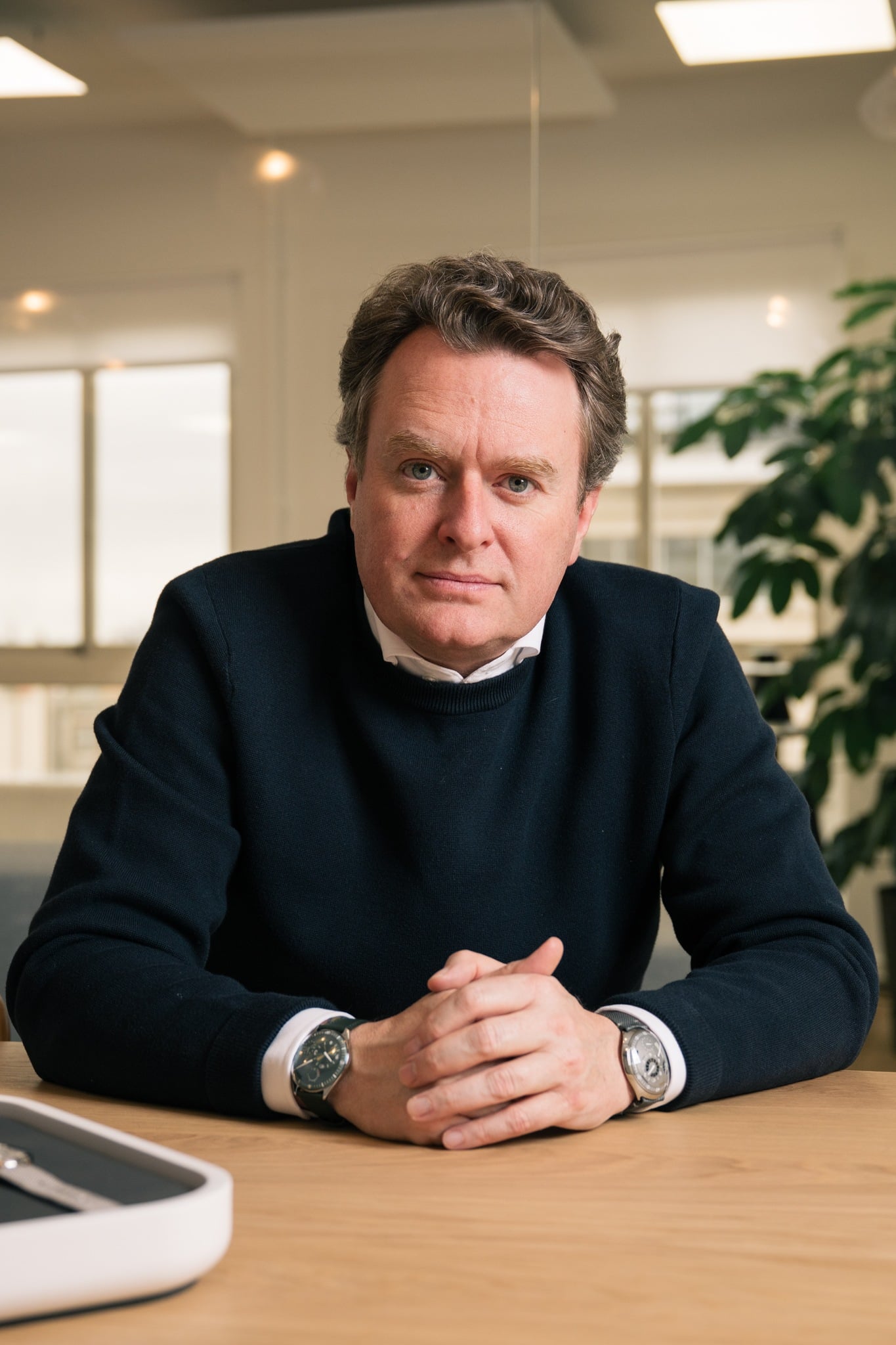
Our Editor-at-Large Isabelle Junod met Benoît Mintiens, founder and chief executive of Ressence, at Milano Watch Week on Friday 2 October 2026; he created the Antwerp company in 2010, after a career as an industrial designer.
What the interview reveals: a product designer who came to watchmaking from trains, medical devices
and furniture, and asked what a mechanical watch would look like if it were designed today; a first stand at Basel paid for with the savings set aside for a vintage car, three prototypes and a bed included in the price of the booth; a company of sixteen people, producing between six hundred and seven hundred pieces a year; a clientele that prefers less to more, in Europe, in the Americas and in Asia; and a name that reads as a rebirth of the essential.
Ressence at a Glance
- Founded in Antwerp in 2010 by Benoît Mintiens, an industrial designer by training.
- The name combines renaissance and l’essentiel: the rebirth of what a watch is for, displaying time.
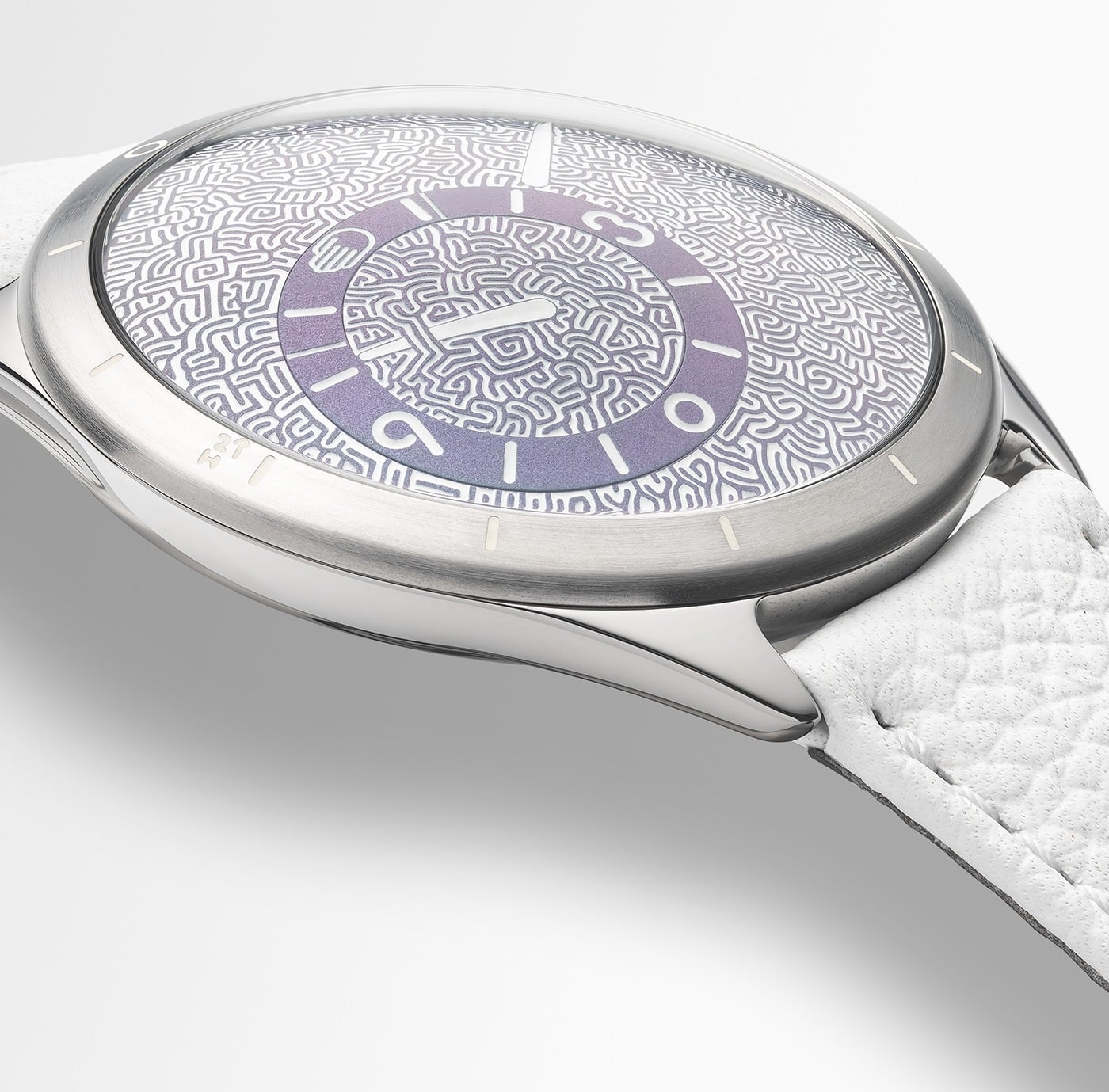
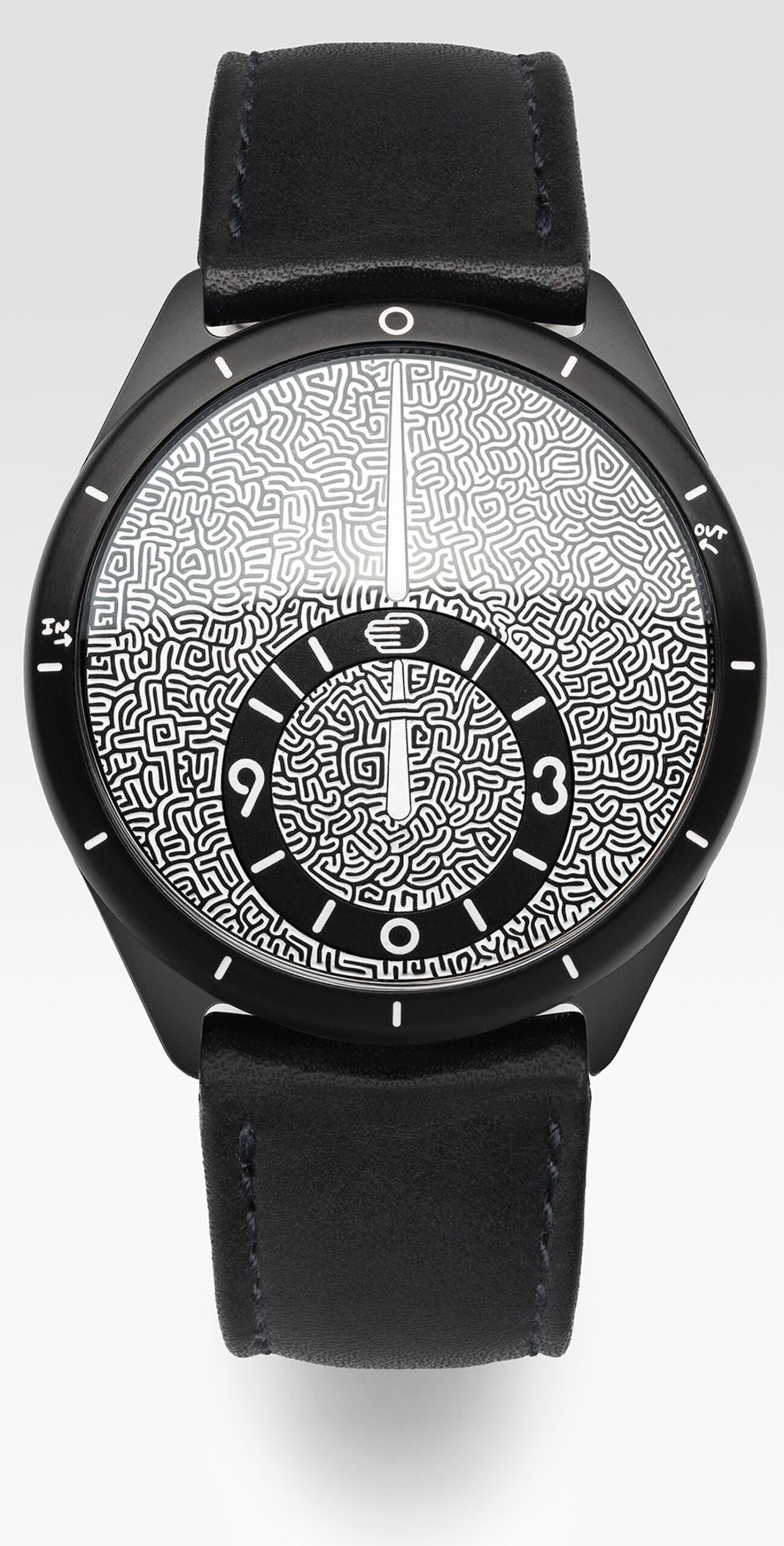
- The emblem is an open hand, drawn from the legend that gives Antwerp its name, turned into an inviting gesture.
- Sixteen people working for the company, with commercial representation in the markets; between six hundred and seven hundred pieces a year.
- Collection from twelve thousand five hundred to fifty thousand Swiss francs; no brand boutique to date.
- Signature: “Ahead of Time”. The company aims at a balanced distribution of revenue, roughly one third from Europe, one third from North America and one third from Asia.
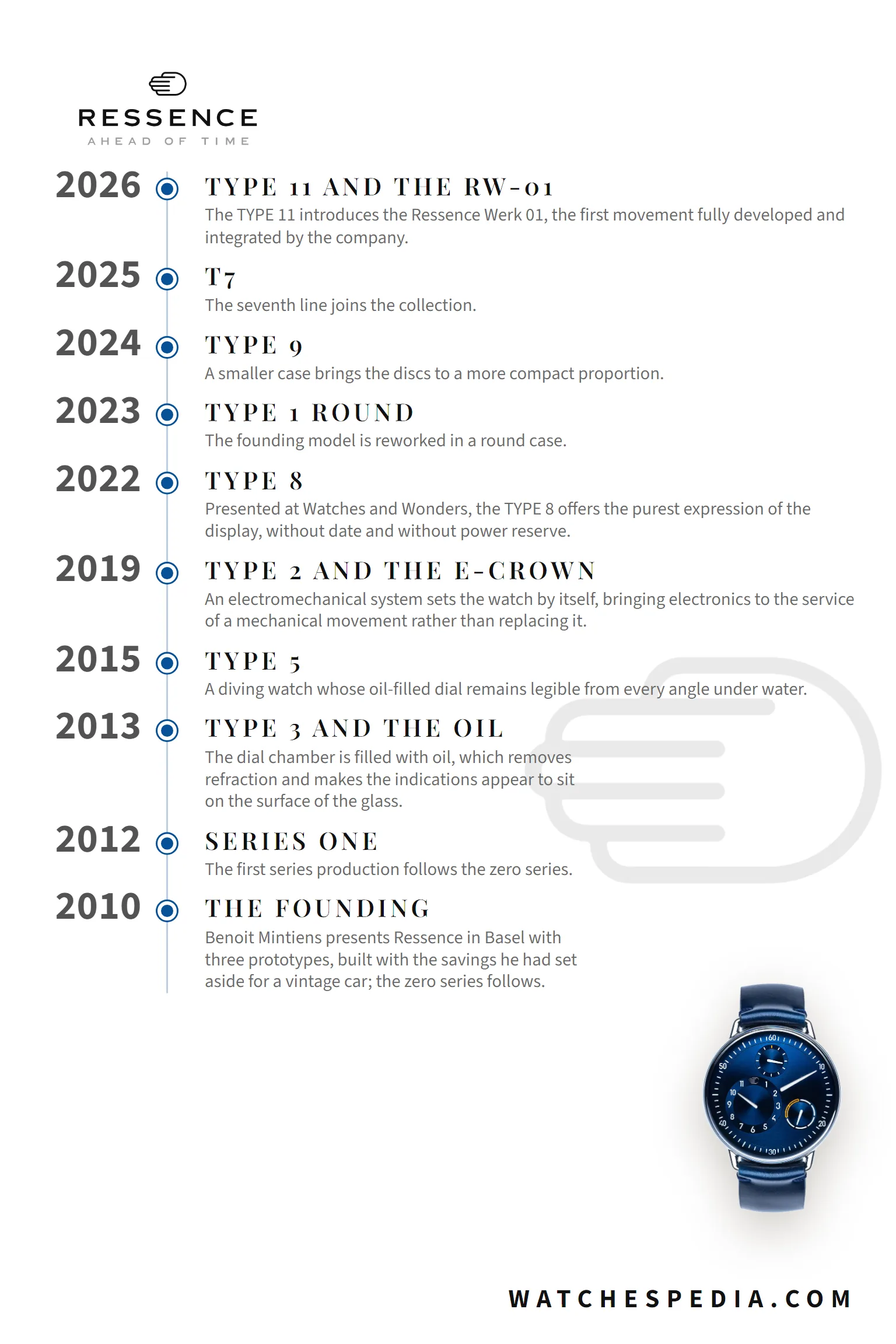
Ressence, 2010-2026: Ten Milestones
From Trains to Timepieces
You were an industrial designer before you were a watchmaker.
I worked as a consultant in a design agency, across a very wide range of industries: medical, transport, confectionery, furniture. What brought me into watches was a friend in the diamond business asked me to design a watch for him: a weekend undertaking, between friends. He then invited me to Baselworld, and that visit raised a question I could not put down. I saw that the major houses were relying on designs that were fifty years old, and I wondered how brands with such means did not work with the best designers in the world. I was still a designer with fresh eyes, and the commercial reasoning escaped me then, though I understand it perfectly today.
What was the question you took away?
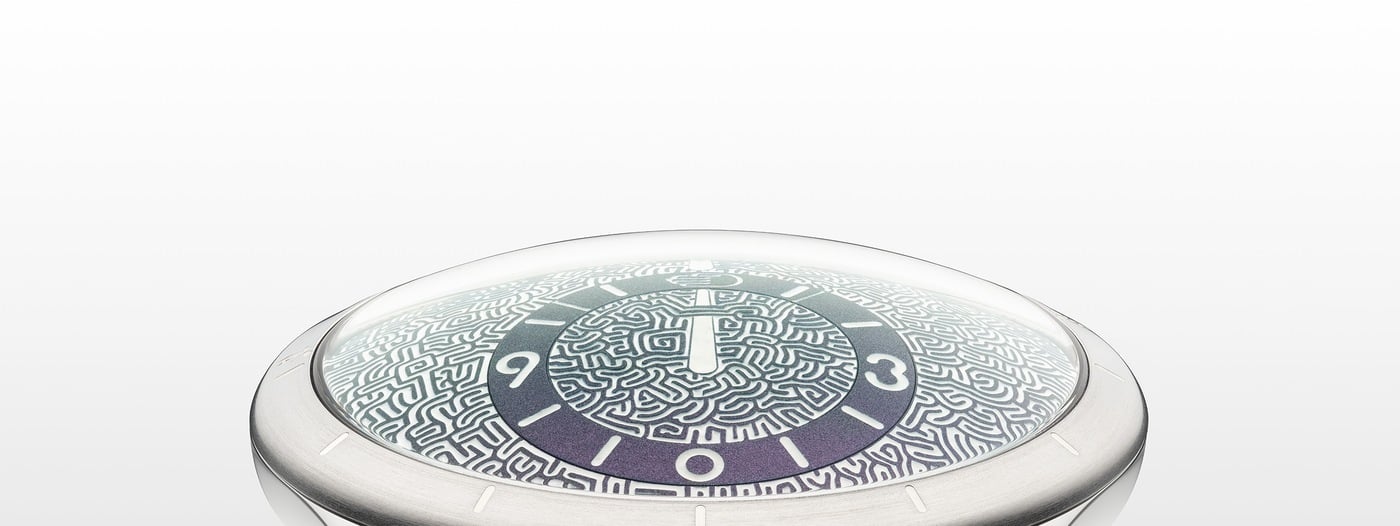
What would a mechanical watch look like if it were designed today, without the history and without the past? If watchmaking did not exist and you had to invent it, what would you make? That was the starting point: to apply the design methods of today rather than those of a century ago. Part of that work is also recognising what should not change. The way time is read works remarkably well once you have learned it, so there is no sense in redesigning it. The display itself, on the other hand, could be done differently: with discs rather than hands, which improves legibility.
How long from the first sketch to the first watch?
Two years. Baselworld was in 2008 and I introduced Ressence in 2010. In 2008 I imagined it as a pursuit for my weekends; my daughter had just been born, and a newborn asks for one’s hours. The year after, I went back because I wanted to see an Urwerk with my own eyes. Watch culture in Belgium is discreet, so Basel was the place to see one. I saw Urwerk, and I saw other independent houses, then at the beginning of their ascent, and it was a revelation: a watch company could be founded by one person. Seen from Belgium, a watch brand is at least a hundred years old and employs five thousand people, like a car marque. I remember telling one of the exhibitors: next year I will be standing next to you.
“Our clients appreciate the less, where the industry celebrates the more.”
A Vintage Car, and Three Prototypes
How did you finance the beginning?
I had been saving for the vintage car I had always wanted, and the calculation mattered to me. I decided to put that money into an adventure instead. Better than safe. Part of it paid for the stand, a fair price since a bed came with it, and the rest made three prototypes. That is how it began. It was only after the show that I felt secure enough to take a bank loan and finance the first production, and I have worked that way since.
You protected the system from the start.
Yes. I wanted a patent on the way Ressence displays time, and a patent runs on a clock of its own: for the first filing you have twelve months. I wanted to file as late as possible, to give myself time to decide whether I would carry on. So I had the first components made by companies that were not in the watch industry, around Antwerp, in the Netherlands and in Ghent, rather than risk the idea travelling.
Where do the name and the emblem come from?
Ressence combines renaissance and l’essentiel. For an industrial designer, the essence of a watch is to display time, so the name reads as a rebirth of showing the time. The hand comes from the legend behind the name of Antwerp, where a giant demanding tribute has his hand cut off and thrown: hand werpen. The hand of Antwerp is a stopping hand; I turned it into an inviting one, a hand that stands for your relationship with the watch and with time.
Sixteen People, Seven Hundred Watches
What is the company today?
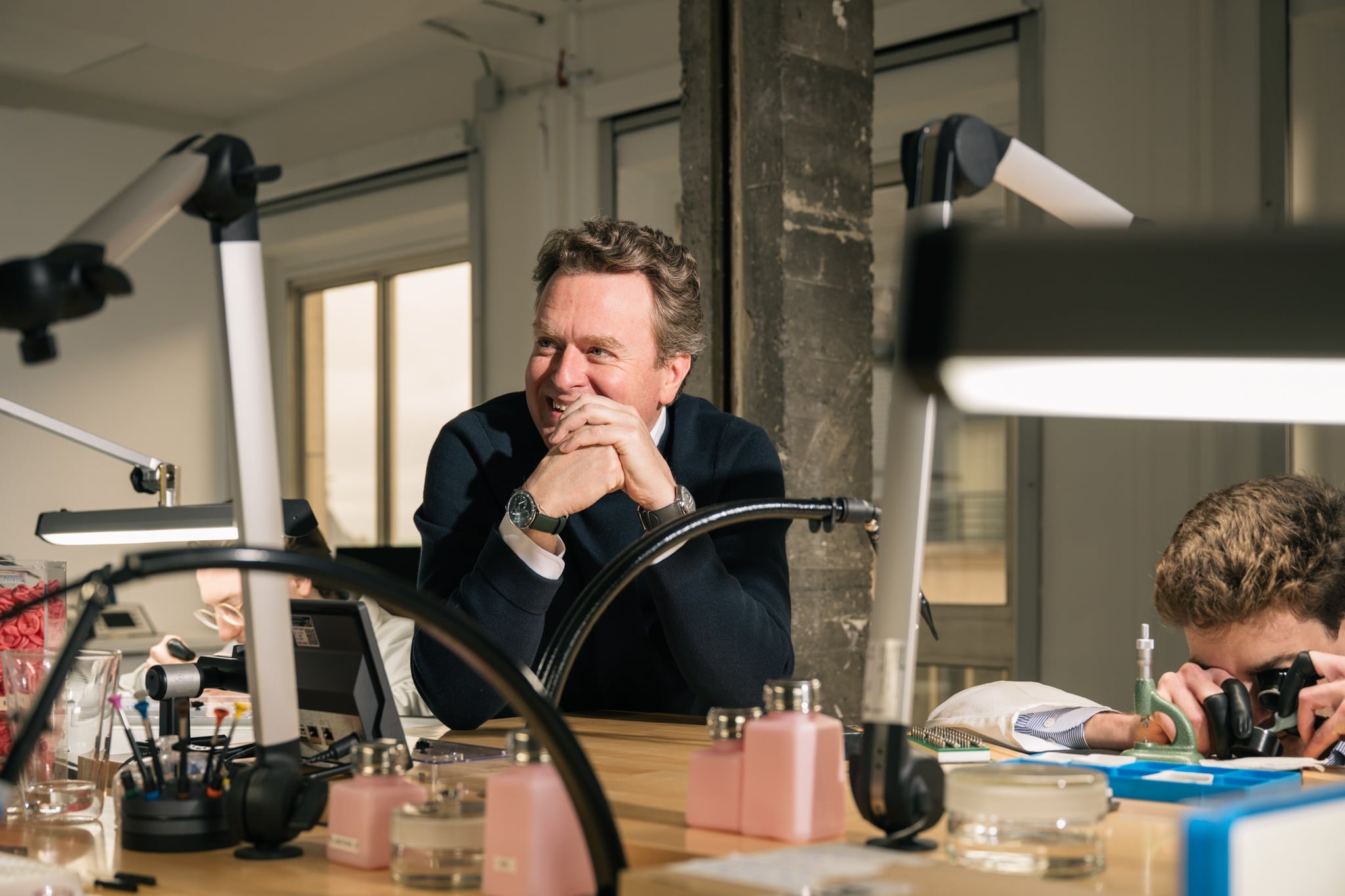
We are sixteen people working for the company, with commercial representation in the markets. We produce between six hundred and seven hundred pieces a year. What we deliver depends on what our suppliers can deliver, and we are working so that capacity is no longer the limit: able to make more when we choose, and to hold steady when we do not.
Is a boutique planned?
Not yet.
Clients Who Prefer Less
Who is the Ressence client?
What I am proudest of is our clientele. What distinguishes them is that they appreciate the less rather than the more. That alone narrows the circle considerably, because the industry very often celebrates the more: more complications, more components, more finishing. We believe in the power of simplicity. That does not mean our watches are simple; they are extremely complex, and we do not show it. That restraint is the sophistication we offer.
Where are they?
There is no single key market, because this philosophy is universal, whether you are European, American or Japanese. Our goal is a balanced revenue distribution, with roughly one third coming from Europe, one third from North America and one third from Asia.
And the Middle East?
We have worked there for many years, with partners of the first order, Ahmed Seddiqi & Sons among them, whose work is exemplary. A watch that shows less rather than more finds its audience there as readily as anywhere: the philosophy is universal, and every culture reaches it in its own way. These are local clients rather than visitors, and the region remains a strong market for us.
Is a Ressence a first watch?
Usually it comes later, though there are exceptions. We have a meaningful number of clients for whom a Ressence is the first watch they have ever worn. What draws them is the concept, a different vision, the way we design, rather than watchmaking as an industry. That share is considerable.
“Better than safe.”
Why Independents Are Being Noticed
Interest in independent watchmaking has grown considerably. How do you explain it?
We offer something the large groups are not built to offer: authenticity and proximity. When you buy from an independent brand, you buy a product. Our clients buy tangible craftsmanship, tangible and innovative engineering, real physical differences rather than differences of presentation. I believe that is the value we bring to this client, who may always have existed, and who now has somewhere to go.
Ahead of Time
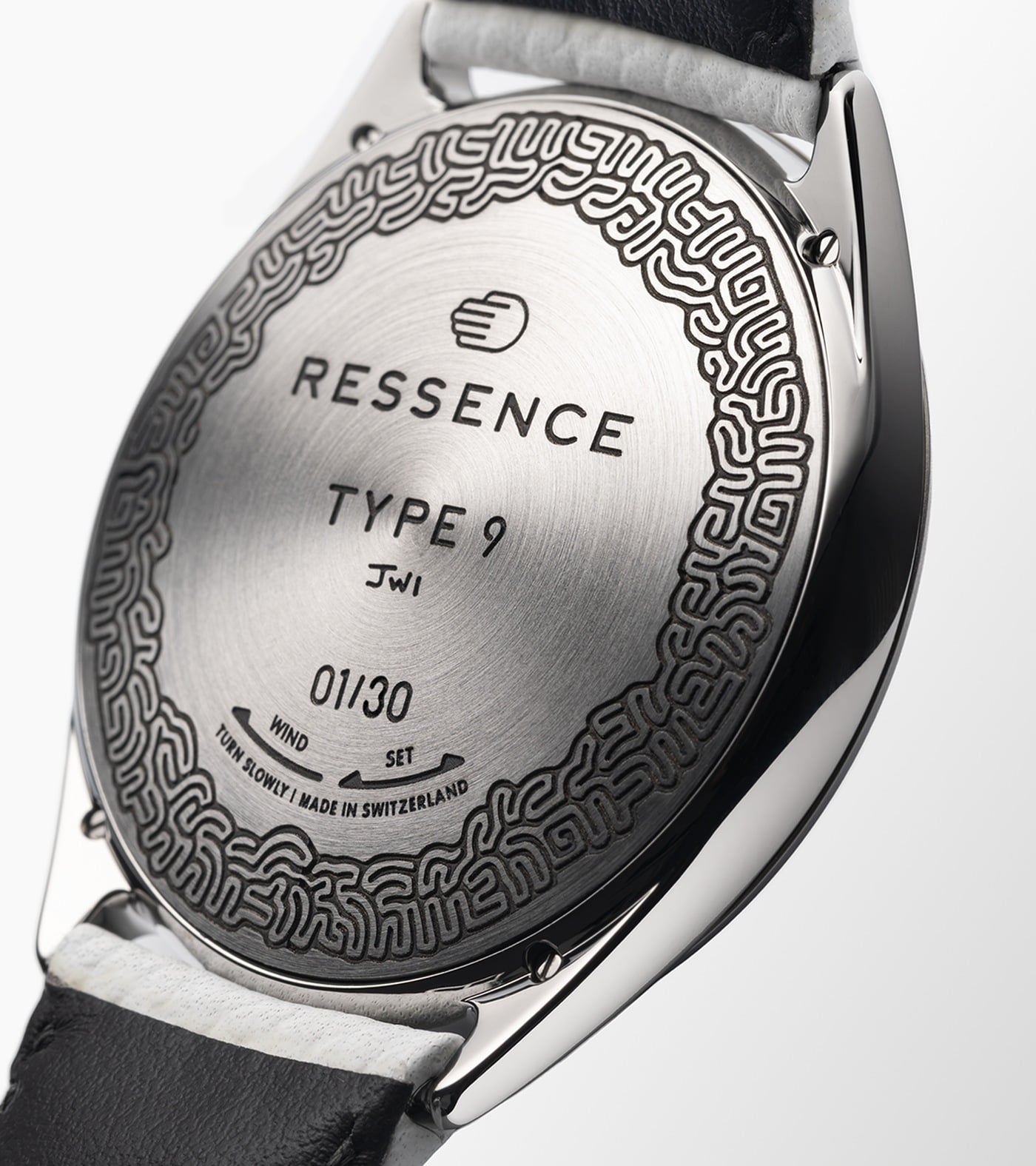
Your signature, and the price of entry?
Ahead of Time. The collection begins at twelve thousand five hundred Swiss francs and runs to fifty thousand. I would not call it expensive, because I know what it costs to make, though it remains a significant sum. The same multiplier applies to every model: what you pay reflects the cost of production. The base concept runs through the whole collection, the technicality behind it, the functions and the design. As for the younger generation, it interests me, and our pieces are contemporary in the way they are conceived and drawn, so the conversation is a natural one. The price simply means it is a conversation for the longer term.
Interview by Isabelle Junod, Editor-at-Large, WATCHESPEDIA.