An Iconic Timepiece
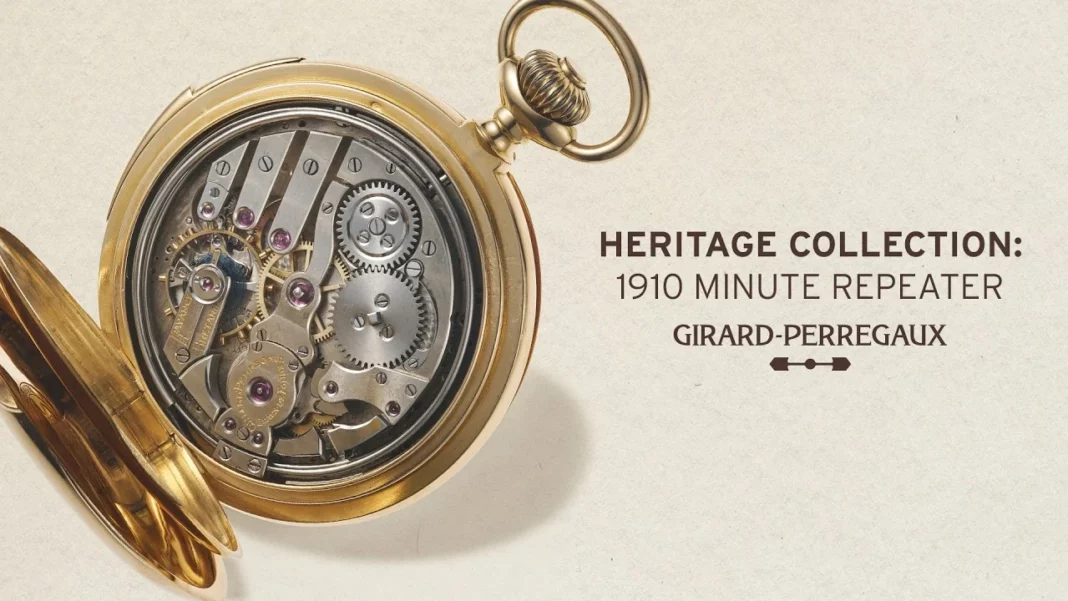
The Girard-Pergaux minute repeater emerged around 1910 as a demonstration of the brand’s commitment to precision in horology. The piece combines classical watchmaking methods with the technical demands of repeating mechanisms.
A Glimpse into History
Our Heritage – The Girard-Perregaux Minute Repeater documents how the brand advanced horological engineering across generations. The timepiece shows the evolution from hand-finished components to the repeating mechanism itself: a system of hammers, gongs, and cams that must be individually regulated and voiced. Each part demands specialized knowledge from master watchmakers trained over decades.
The Craftsmanship Behind the Minute Repeater
The minute repeater mechanism strikes hours on a bass gong, quarters on two gongs, and minutes on a treble gong—allowing the wearer to hear the precise time. Assembling these systems requires training that extends across years. The hammer springs must be calibrated so that each blow rings true; the cam profiles that govern the sequence cannot tolerate error measured in fractions of a millimeter. Girard-Pergaux watchmakers have refined this process since the early twentieth century.
An Ode to Sound
The repeater’s acoustic performance depends on gong composition and case resonance. Girard-Pergaux selected specific alloys and tuning methods to achieve harmonic balance across the hour, quarter, and minute strikes. For owners, this acoustic signature becomes instantly recognizable—the reason collectors seek out particular manufactures’ interpretations of the repeating function.
Timeless Elegance
The Girard-Pergaux minute repeater presents a classical case form with thin proportions that allow sound to project without dampening. The dial layout subordinates hours and minutes to the repeating mechanism’s requirements, often incorporating push-buttons positioned for easy access. This restraint in design supports rather than competes with the mechanism’s purpose.
Explore More with WATCHESPEDIA
To delve deeper into the world of luxury timepieces and discover the exceptional offerings from this renowned brand, explore GIRARD PERREGAUX collections.
Conclusion
The Girard-Pergaux minute repeater represents generations of technical refinement applied to a single function: acoustic time announcement. It serves collectors and horologists as a working record of the brand’s evolution in repeating complications.
Frequently Asked Questions
What is a minute repeater and how does it work?
A minute repeater strikes hours on a bass gong, quarters on two gongs of different pitch, and minutes on a treble gong. The wearer activates this sequence via a slide or pusher. The mechanism relies on a series of cams, hammers, and springs that must be individually regulated to ensure accurate and harmonious sound production.
When was the Girard-Pergaux minute repeater first created?
The Girard-Pergaux minute repeater dates back to around 1910, reflecting the brand’s established expertise in complications by the early twentieth century.
What makes the Girard-Pergaux minute repeater special compared to other luxury watches?
Girard-Pergaux brings specific acoustic tuning and case design to its repeating mechanisms. The gong selection, hammer geometry, and case proportions are all calibrated to produce a distinctive sound signature. Combined with the brand’s documented history in the complication, these details distinguish the Girard-Pergaux interpretation from other manufactures’ approaches to the minute repeater.