Key Highlights
- New GP9530 calibre, designed, developed and assembled in-house, with 475 components.
- Combines a minute repeater, tourbillon and self-winding system in an openworked architecture.
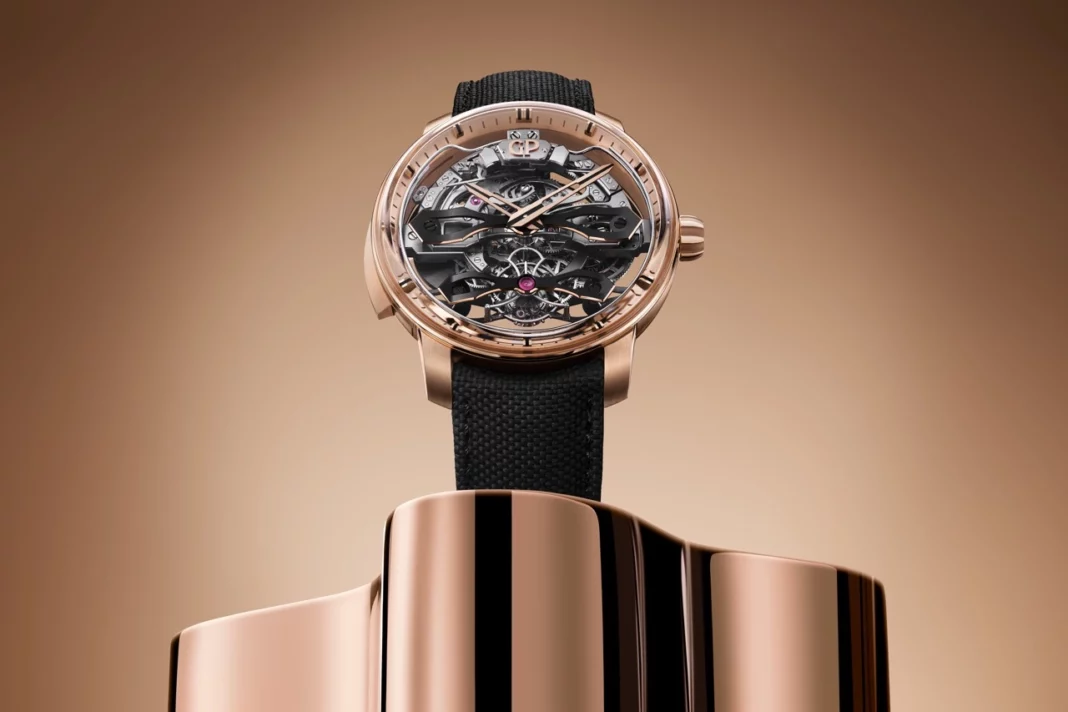
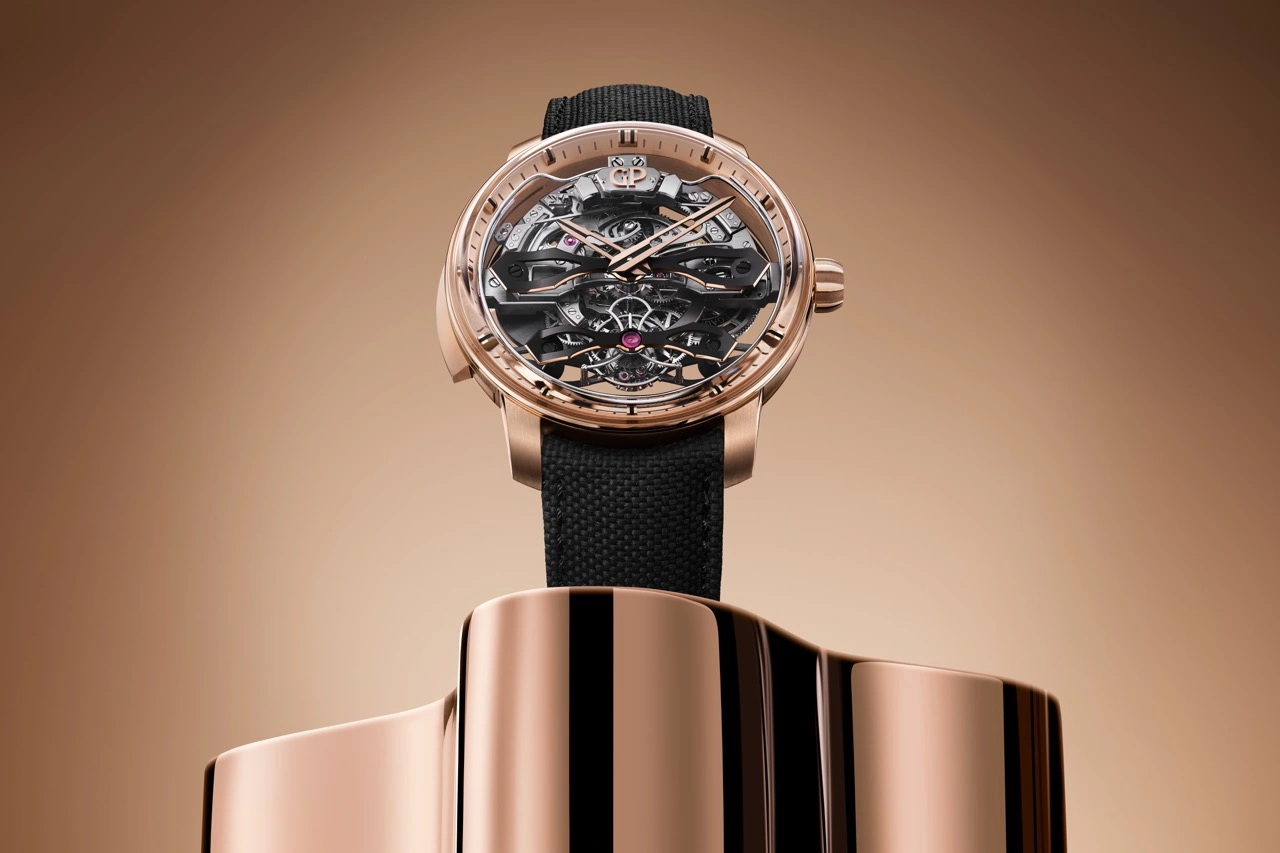
- Pink gold 46.00 mm case with box-type glare-proofed sapphire crystal front and back.
- Pink gold inner bezel ring, applied hour-markers and openworked hands with blue-emission luminescent material.
- Approximately 440 hours of assembly and decoration for the movement alone.
A contemporary tribute to Girard-Perregaux’s acoustic legacy
The Minute Repeater Flying Bridges arrives as a statement of intent from Girard-Perregaux — the third benchmark movement launched in under six months — built around the new GP9530 calibre. It signals exactly where the Maison stands on haute horlogerie: rooted in a minute repeater tradition stretching back to the 1820s, executed here with a thoroughly contemporary hand.
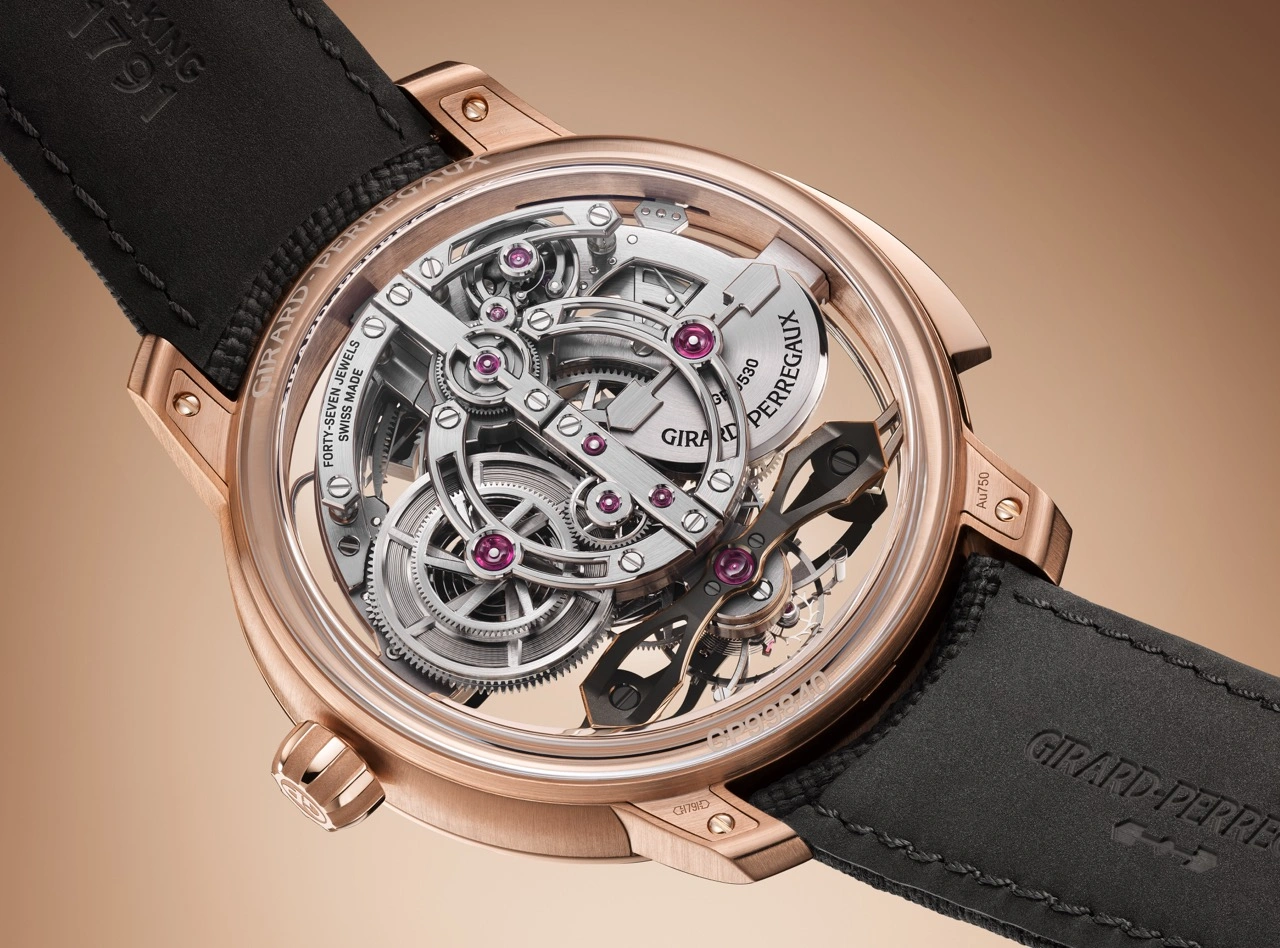
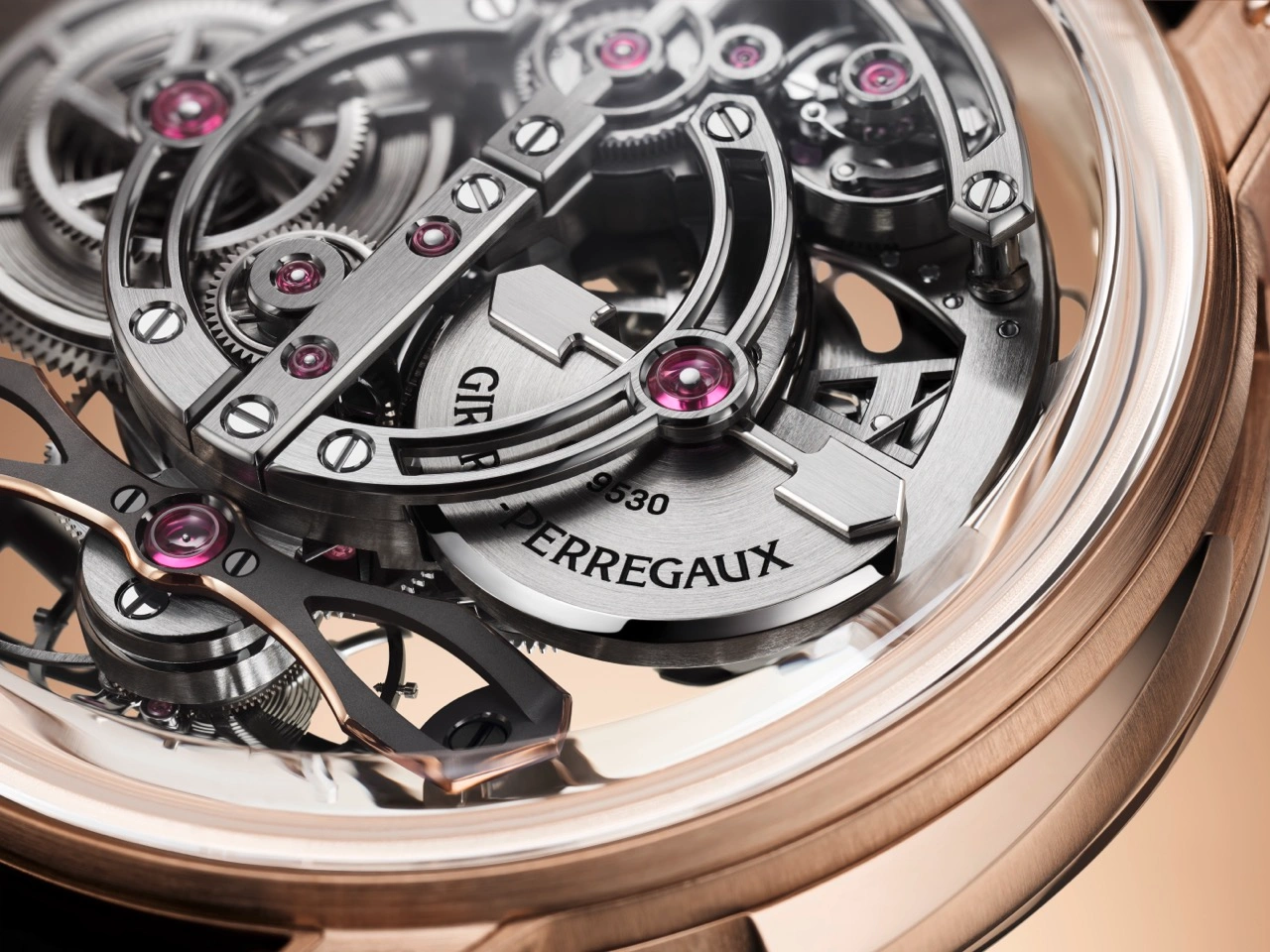
Entirely designed, developed and assembled in-house, the GP9530 stacks a minute repeater, tourbillon and self-winding system within a skeletonised architecture. The result is 475 components laid bare, their mechanical interplay visible at a glance, with roughly 440 hours of assembly and finishing poured into each movement.
Case architecture and presence
At 46.00 mm in diameter and 17.90 mm in height, the pink gold case is sized to serve the acoustics — a repeater needs volume to breathe — while making no concessions on wrist presence. Box-type glare-proofed sapphire crystals front and back deliver unobstructed views of the movement from every angle.
A pink gold inner bezel ring frames the skeletonised interior. Applied hour-markers carrying blue-emission luminescent material and matching pink gold openworked hands hold their own against the visual complexity beneath them, keeping the dial readable without closing off the depth below.
Movement, craftsmanship and complication
Skeletonising a chiming movement is among the harder engineering problems in mechanical watchmaking. Strip away material to create transparency and you compromise the resonance chamber; every gram and every bridge position affects what the wearer ultimately hears. The GP9530 resolves this by treating each component as both structural element and acoustic contributor — nothing is decorative in isolation.
The 440 hours devoted to assembly and finishing reflect the compounded difficulty of three complications sharing a single skeletonised stage. Girard-Perregaux has been building minute repeaters for two centuries; the GP9530 is where that institutional knowledge meets a calibre architecture that could only have been drawn today.
Wearing experience
Water resistance is rated at 30 metres (3 ATM), standard territory for a high complication of this nature. A black rubber strap with fabric effect cuts a sharp contrast against the pink gold case — deliberately so — while a pink gold triple folding clasp closes the pairing without ceremony. The overall effect is a chiming watch that sits comfortably in daily rotation rather than behind glass.

Why it matters
Three manufacture calibres in six months is a pace that demands attention. With the GP9530, Girard-Perregaux is not revisiting heritage for comfort — it is using that heritage as the foundation for something structurally and acoustically ambitious. For collectors in the Middle East building around pink gold complications, it sits alongside the Maison’s broader tourbillon and repeater canon as a piece that will age well on both the wrist and the register.
Frequently Asked Questions
What complications does the Girard-Perregaux Minute Repeater Flying Bridges combine?
The watch combines a minute repeater, tourbillon, and self-winding system within the in-house designed GP9530 calibre. All three complications are integrated into a transparent, openworked architecture that showcases the mechanical choreography of its 475 components.
How much time is spent assembling and finishing the GP9530 movement?
Approximately 440 hours of assembly and decoration are devoted to the GP9530 movement alone. This meticulous craftsmanship reflects Girard-Perregaux’s commitment to finishing and the complexity of combining multiple complications within a skeletonised layout.
What are the case dimensions and materials of the Minute Repeater Flying Bridges?
The watch features a pink gold case measuring 46.00 mm in diameter and 17.90 mm in height, paired with box-type glare-proofed sapphire crystals on both front and back. A pink gold inner bezel ring, applied hour-markers, and openworked hands with blue-emission luminescent material complete the design.