
Key Highlights
- The 28th Cartier Prize for Watchmaking Talents of Tomorrow was held on 24 June 2026 at the Maison des Métiers d’Art in La Chaux-de-Fonds, Switzerland, for the first time.
- Eleven young apprentices and technicians from France, Switzerland and Belgium competed under the theme “Shifting the balance: Reading and understanding time differently.”
- Six winners were selected across two categories: three Apprentice Watchmakers and three Technicians.
- First-prize winners in each category receive a Cartier watch and an internship with the Maison.
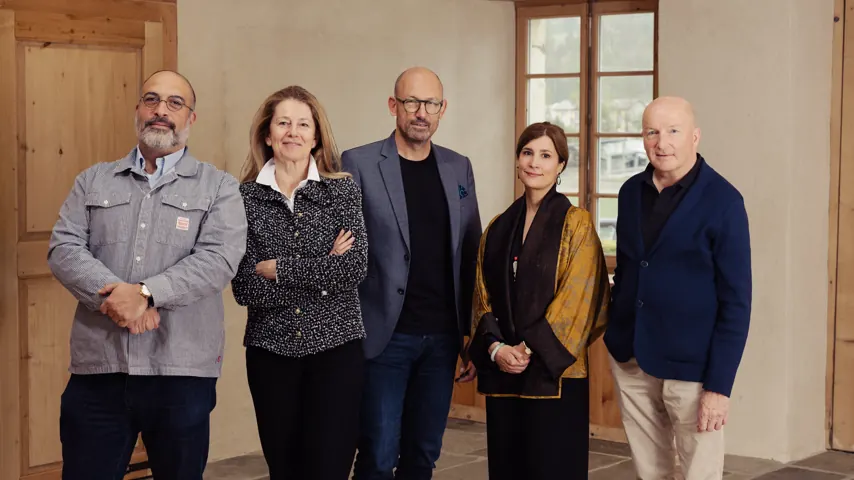
- The jury included jury members from the Fondation de la Haute Horlogerie, the Musée international d’horlogerie and the Cartier Collection.
- Applications for the 29th edition open in autumn 2026.

Distinctive Traits
The Cartier Prize for Watchmaking Talents of Tomorrow, now in its 28th year, occupies a distinct position among watchmaking competitions. Where most industry prizes celebrate finished product, this one rewards the act of reimagining a movement from first principles. The brief is deliberately open-ended, and the results are consequently harder to anticipate. For this edition, finalists were granted eighty hours across three months to move from sketch to working object, supported by mentors but ultimately judged on the coherence of their creative vision.
The choice of venue reinforced that ambition. The Maison des Métiers d’Art in La Chaux-de-Fonds, founded in 2014, is where Cartier preserves rare craft disciplines including enamelling and marquetry. Hosting the ceremony there for the first time positioned the prize squarely within a broader conversation about craft transmission rather than commercial innovation.
The Winning Creations
In the Apprentice Watchmakers category, first prize went to Aymeric Peters (IATA, Namur, Belgium) for Silence Choisi. The piece withholds time entirely until a key releases the mechanism, returning the hands to their correct position in a single instant, a logic drawn consciously from the split-seconds chronograph. Second prize ex-aequo recognised Layla Sluysmans, also from IATA Namur, for Nymphéa: a mechanical water lily in resin and Mexican ebony whose petals open on a two-hour cycle to reveal an enamel dial beneath. Edouard Nicod from the Lycée Edgar Faure in Morteau, France, shared the second prize for La Dualité Des Opposés, in which the dial becomes the structure, the hand stands still, and a sleeping Panthère acts as counterweight to the visible, moving heart of the mechanism.
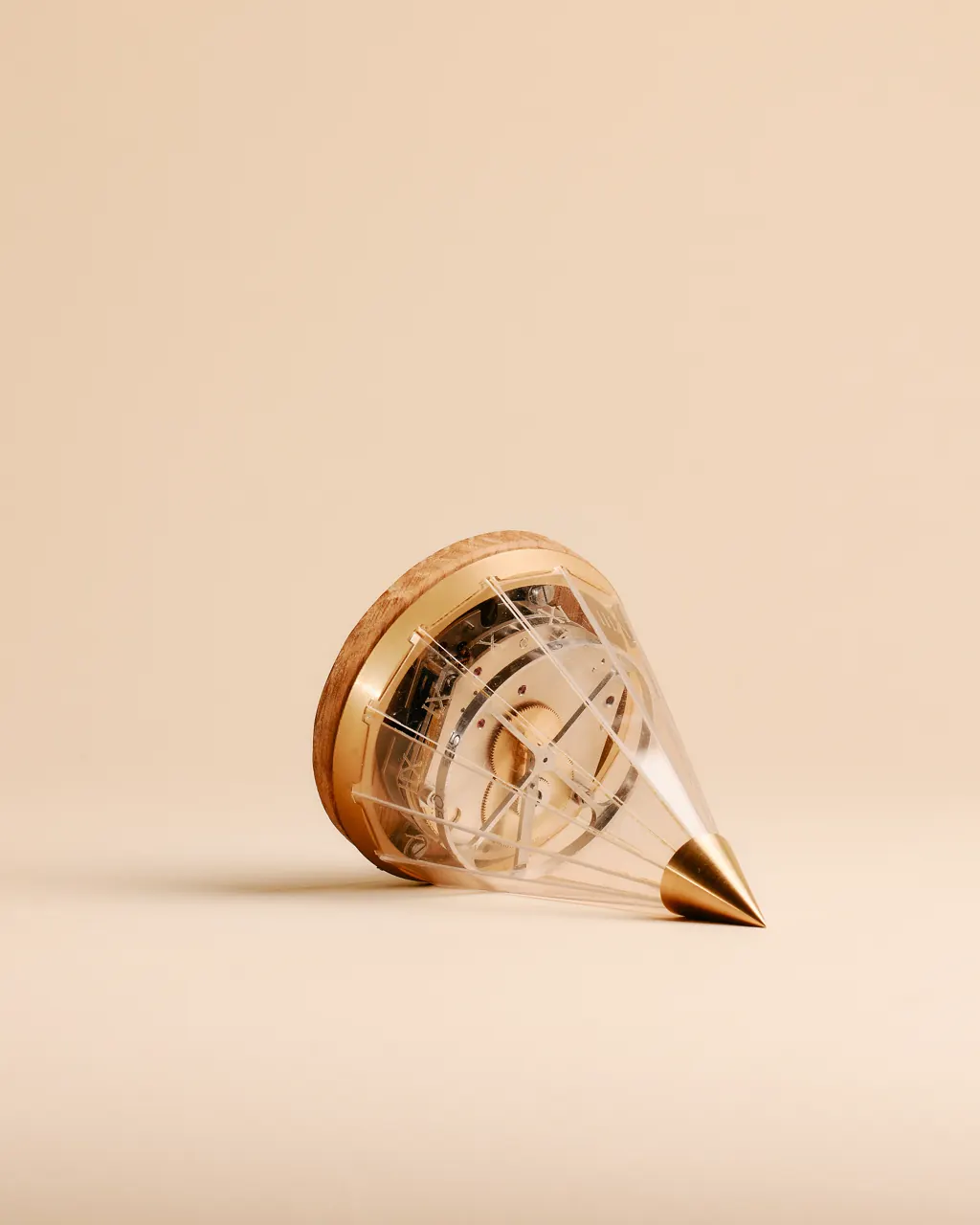
Among Technicians, Arthur Choquet (Lycée Jean Jaurès, Rennes) took first prize with Un Instant, a piece structured around Haussmann architecture in which building façades and Parisian streetlamps frame a meditation on temporal imbalance. Adam Deroche from Lycée Diderot in Paris claimed second prize for Médusée, a table clock where the hands remain fixed at 10:10 while the numerals themselves rotate into alignment, produced through a combination of ceramics, enamel, resin and watchmaking decoration. Third prize went to Adrien Stefenelli, also from Lycée Jean Jaurès in Rennes, for Echo, which dispenses with hands and dial entirely, replacing visual time-reading with a chime sounding at set intervals.

Heritage and Institutional Context
The Cartier Watchmaking Institute, founded in 1993, provides the organisational backbone for the prize. Since 2024, the competition has extended beyond third- and fourth-year watchmaking students to include ES-qualified microtechnology technicians in advanced vocational programmes, which explains the two-category structure that produced six winners this year from a field of twelve finalists. Jury deliberations were led by a panel that included Roy Davidoff, Pascale Lepeu as Director of the Cartier Collection, Nathalie Marielloni from the Musée international d’horlogerie, watchmaking specialist Pascal Ravessoud, and independent watchmaker Kari Voutilainen.
The prize sits within a longer Cartier commitment to craft education that also encompasses the Maison des Métiers d’Art and the broader training programmes at its manufactures. The Haryana necklace and other recent Cartier creations — among them the Cartier Love bracelet Colour Capsule — illustrate how the same savoir-faire nurtured through these programmes translates into finished work at the highest level of the Maison’s output.

Why the Prize Matters for the Wider Industry
More than 2,000 candidates have entered the Cartier Prize since 1995. That figure, accumulated across 28 editions, points to a consistent pipeline of trained talent at a moment when the broader industry frequently raises concerns about craft succession. The prize does not produce commercial pieces; it produces watchmakers. The distinction matters. Events such as Watches and Wonders showcase what established manufactures achieve; the Cartier Prize maps what the generation following them is already capable of imagining.

Applications for the 29th edition open in autumn 2026. For those following emerging watchmaking talent across the Middle East and beyond, the full prize archive is accessible at prixcartiertalentshorlogersdedemain.com.
Stay ahead of the latest releases. Subscribe to our newsletter for editor-curated coverage of luxury timepieces across the Middle East.
Frequently Asked Questions
What is the Cartier Prize for Watchmaking Talents of Tomorrow?
The Cartier Prize for Watchmaking Talents of Tomorrow is an annual competition established in 1995 by the Cartier Watchmaking Institute. It invites young watchmaking apprentices and microtechnology technicians from France, Switzerland, Belgium and Germany to transform a movement around a defined theme, rewarding both technical and creative ingenuity. Over 2,000 candidates have entered across its 25-year history.
What was the theme for the 28th edition of the Cartier Prize?
The 28th edition asked entrants to create a piece based on the motion of a pendulum, under the theme 'Shifting the balance: Reading and understanding time differently.' The brief challenged participants to move beyond conventional time-reading, drawing on creative references from within Cartier's own watchmaking world.
Who won first prize in the Apprentice Watchmakers category at the 2026 Cartier Prize?
Aymeric Peters from IATA in Namur, Belgium, won first prize in the Apprentice Watchmakers category for his creation Silence Choisi (Chosen Silence), a clock that suspends time rather than measuring it, triggered by a key mechanism that releases held-back hands in a manner inspired by a split-seconds chronograph.
Who won first prize in the Technicians category at the 2026 Cartier Prize?
Arthur Choquet from the Lycée Jean Jaurès in Rennes, France, took first prize in the Technicians category for Un Instant (A Moment), a piece with an architecture inspired by Haussmann-style Paris that explores the tension between imbalance of movement and the passing of time.
What do the winners of the Cartier Prize receive?
All six winners receive an exclusive immersion within the Maison and a Cartier watch. The first-prize winner in each of the two categories is additionally offered an internship opportunity with Cartier.