Key Highlights
- Reissue of the 1958 Tinkler quarter-repeater as limited gold and steel editions.
- Self-winding Angelus A600 calibre with 70-hour power reserve and refined finishing.
- 38 mm case with a pusher at 9 o’clock activating a quarter repeater for hours and quarters.
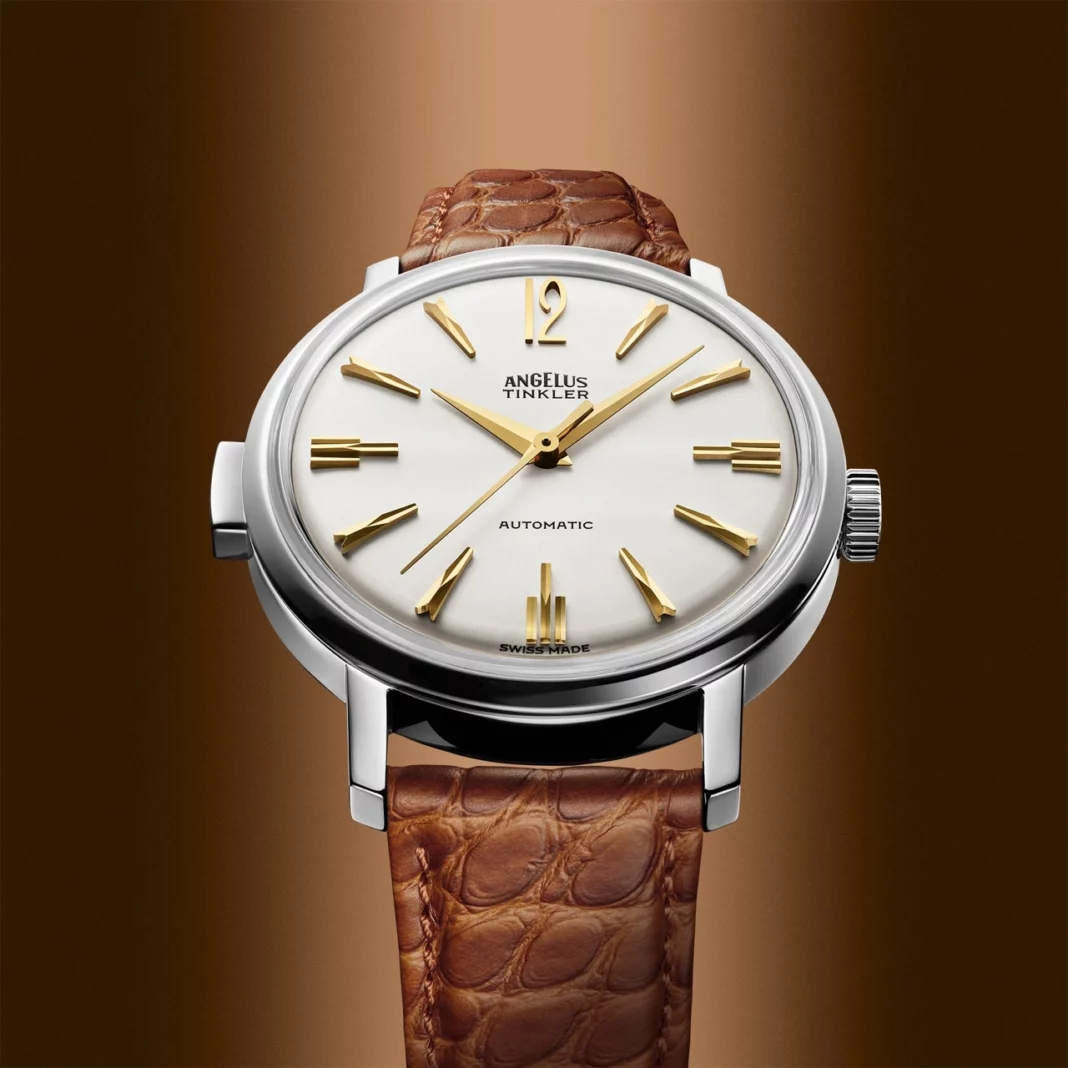
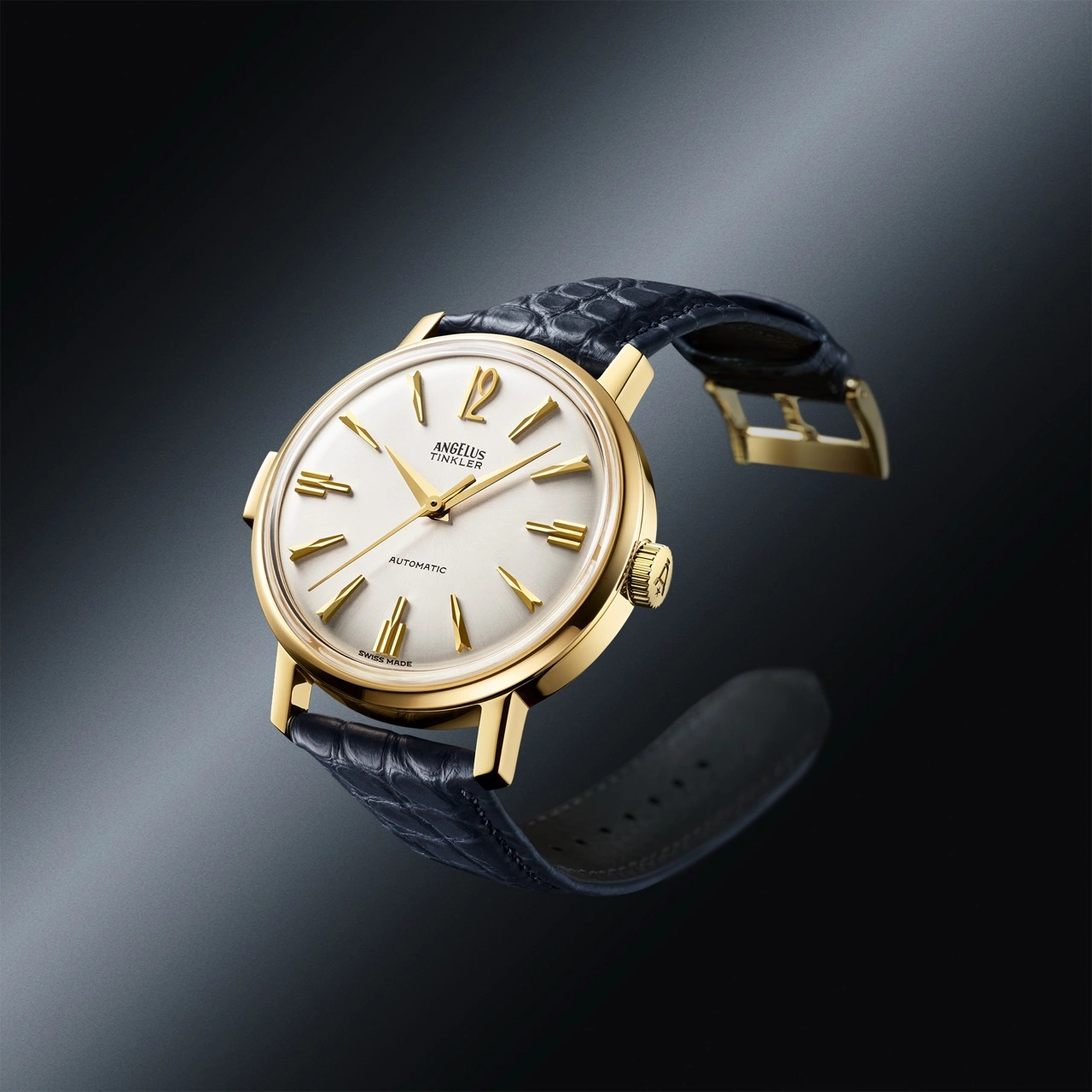
- White domed sunburst dial with distinctive markers and a modernist 12.
- Expresses Angelus‘ heritage in speciality striking watches.
A Quarter Turn Back to 1958
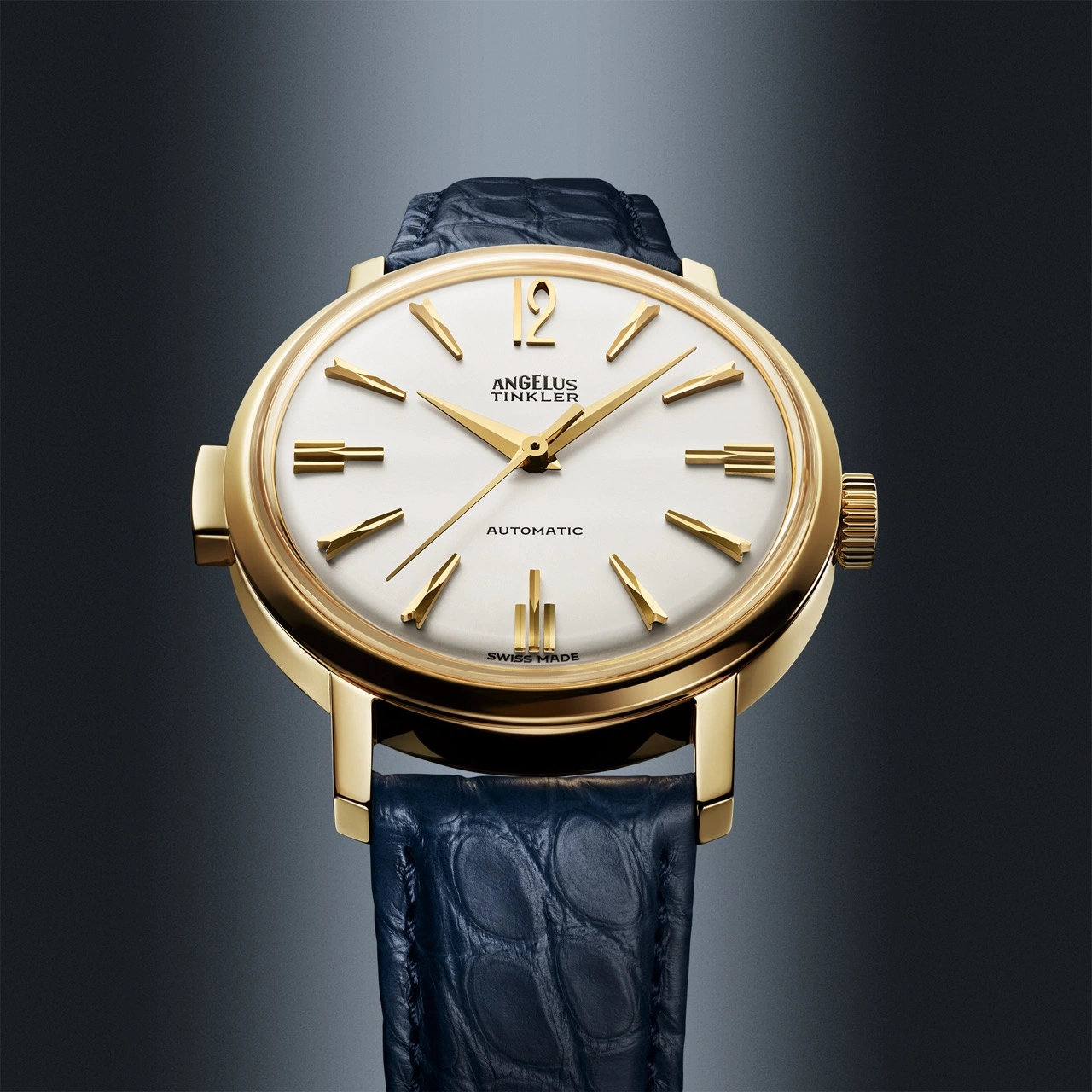
The Tinkler 1958 revisits Angelus’ original 1958 Tinkler wristwatch repeater, born from a patent for a striking wristwatch and long regarded as one of the more accomplished self-winding quarter-repeaters of its era. It returns as a limited series of 15 pieces in 18-carat yellow gold (3N) and 25 in stainless steel.
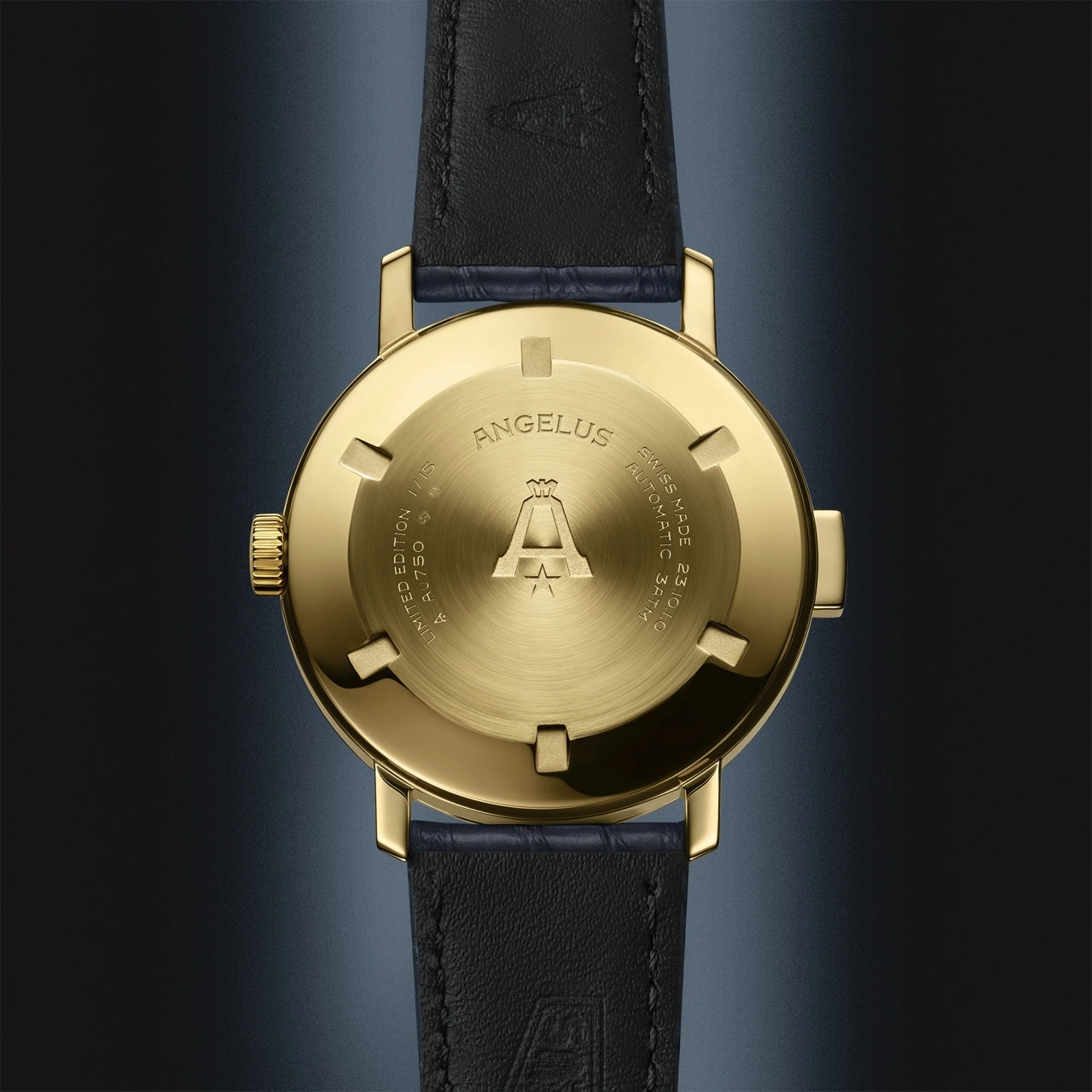
The 38.00 mm case is 12.03 mm thick, with a pusher at 9 o’clock — mirroring the crown — that activates the quarter repeater. A screw-down caseback in matching metal bears the Angelus “A” monogram, and a box sapphire crystal with anti-reflective treatment completes a profile that is vintage-inspired without being precious about it. Water resistance is rated to 3 bar.
Sound at the Heart of Angelus
Angelus has been bound to chiming mechanisms since 1891, when its very name evoked the bell marking the hours across towns and villages. On 15 April 1896, Albert and Gustav Stolz filed a patent for “a silent strike governor for repeater mechanisms”, cementing repeaters as a core competence of the manufacture.
The brand subsequently produced Braille-repeating watches for soldiers blinded during the First World War and pushed further into complications with the Chronodate in 1942. By the 1950s, wristwatch repeaters were again at the centre of its work, culminating in the 1958 patent for a striking wristwatch and the original Tinkler — direct ancestor of the piece reviewed here.
The Angelus A600 Calibre
The A600 is a self-winding movement developed specifically for this quarter-repeater configuration. It beats at 4 Hz (28,800 vph), delivers a 70-hour power reserve and measures 28 mm in diameter at a height of 7.35 mm.
Depressing the pusher at 9 o’clock triggers the striking sequence: single strikes mark the hours, then double strikes on two gongs count off each elapsed quarter for up to three quarters past the last full hour. The finishing is thorough — snail decoration on the main plate, palladium-plated bridges with Côtes de Genève, polished bevels, rimmed wheels, blued screws and a tungsten oscillating weight dressed in sunburst decoration.
Design, Dial and Straps
The domed white sunburst dial is a faithful nod to the vintage model, with faceted hour markers in 3N gold and a modernist numeral 12. At 3, 6 and 9 o’clock, exclamation-shaped appliqués reference the quarter-repeater layout — a quiet piece of visual wit that rewards close attention.
Gold hands echo the markers on the 18-carat version and read cleanly against the steel reference. Alligator flank leather straps complete each model: ink blue for the gold, saddle brown for the steel, both secured by pin buckles in matching 18-carat yellow gold (3N) or stainless steel as appropriate.
A Tradition of Specialities
The Tinkler 1958 sits squarely within the Angelus La Fabrique philosophy, where each reference is built around a specific function with a documented historical precedent — earlier examples include chronographs calibrated for motor racing, medical timing and telemeter readings. Bringing the Tinkler back as a contemporary quarter-repeater extends that logic into chiming complications, and both editions are conceived as tightly focused, limited pieces rather than catalogue fillers.
Why It Matters
For Middle East collectors, the Tinkler 1958 brings together compact 38 mm proportions, a mechanical quarter-repeater and a thoroughly documented Angelus lineage — in both gold and steel. The A600’s execution and the vintage-faithful design make a compelling case to anyone drawn to Swiss striking work with genuine pedigree behind it.
Those who have followed Angelus through the La Fabrique series will recognise the Tinkler 1958 as a natural continuation: the same discipline, the same historical rigour, applied now to the complication that gave the brand its name in the first place.
Frequently Asked Questions
What makes the Angelus A600 calibre special in the Tinkler 1958?
The Angelus A600 is a self-winding movement specifically created for the quarter-repeater configuration, beating at 4 Hz with a 70-hour power reserve. It features detailed finishing including snail finishing on the main plate, Côtes de Genève on palladium-plated bridges, and a tungsten oscillating weight with sunburst decoration.
How does the quarter repeater function on the Tinkler 1958?
Pressing the pusher at 9 o’clock triggers the striking sequence, with single strikes marking the hours followed by double strikes on two gongs to indicate each elapsed quarter hour for up to three quarters after the last full hour.
How many pieces of the Tinkler 1958 will be produced?
The Tinkler 1958 is limited to 15 pieces in 18-carat yellow gold and 25 pieces in stainless steel, making it an exclusive offering for collectors and connoisseurs of Swiss striking mechanisms.