Key Highlights
- 36 mm case in 18k white gold; movement: Calibre LTM self-winding mechanical, 38-hour power reserve
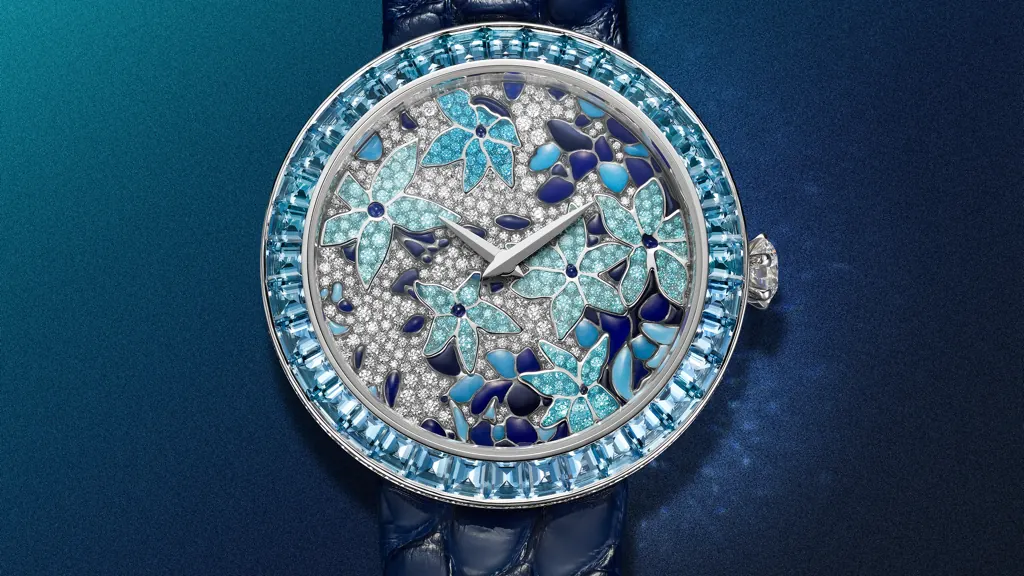
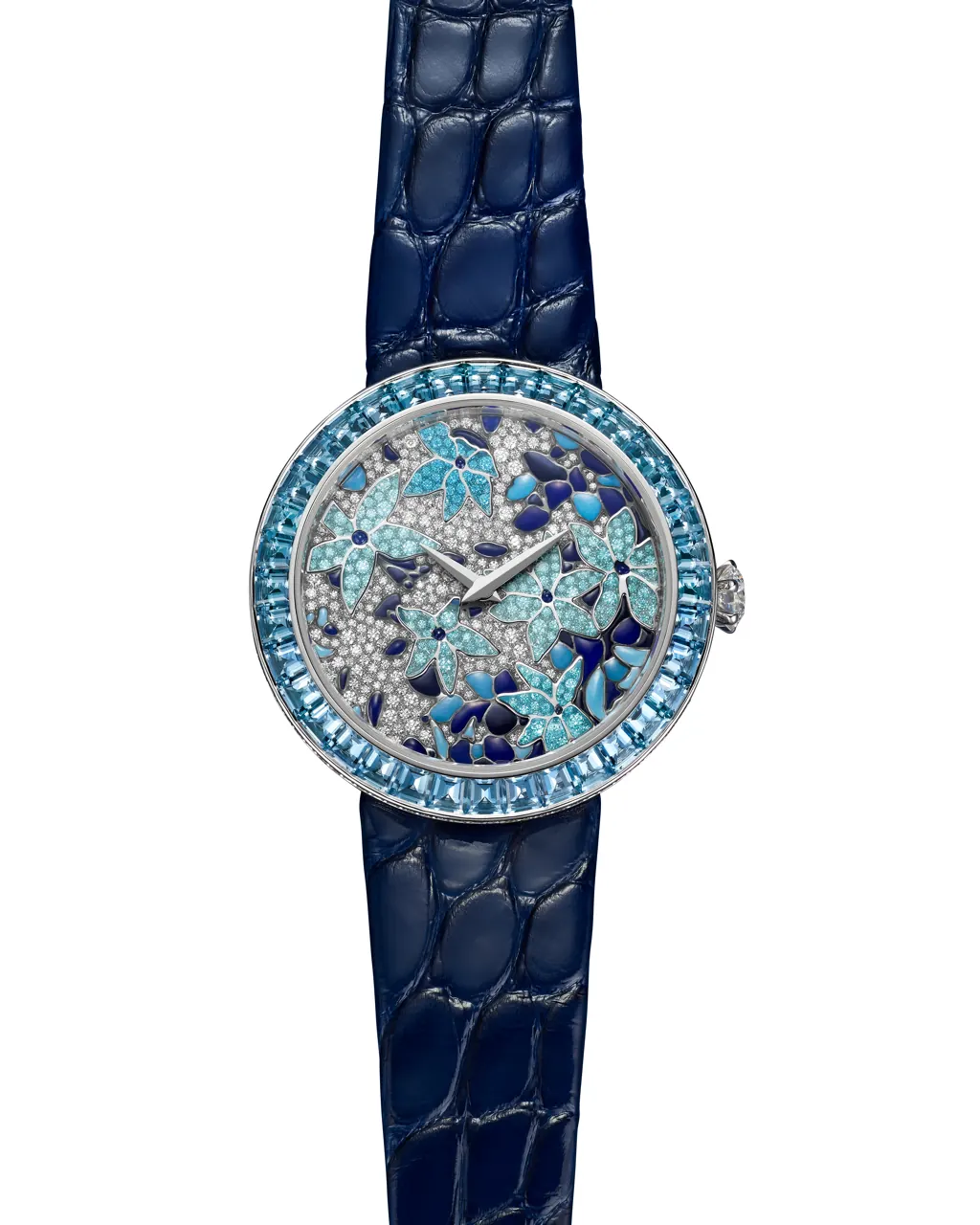
- Dial combines plique-à-jour clematis flowers with champlevé enamel motifs over a snow-set diamond background
- 904 diamonds totalling 3.28 carats; bezel set with 36 baguette-cut aquamarines of nearly five carats
- More than 100 hours of hand-craft per dial, including 55 hours of enamelling and 30 hours of stone-setting
- Design traces directly to a Tiffany Studios Clematis lamp shade produced around 1906
- Navy alligator strap; diamond-set 18k white gold T buckle; five-year international warranty; SKU 76537852
Points of Note
Two enamel techniques, each centuries old and each demanding years of specialist training, occupy the same 36 mm dial. That combination alone distinguishes the Eternity by Tiffany Enamel Clematis from the broader category of gem-set ladies’ watches produced by houses such as Van Cleef & Arpels or Piaget. Tiffany & Co. did not simply apply decoration to a dial; the dial itself is the object.
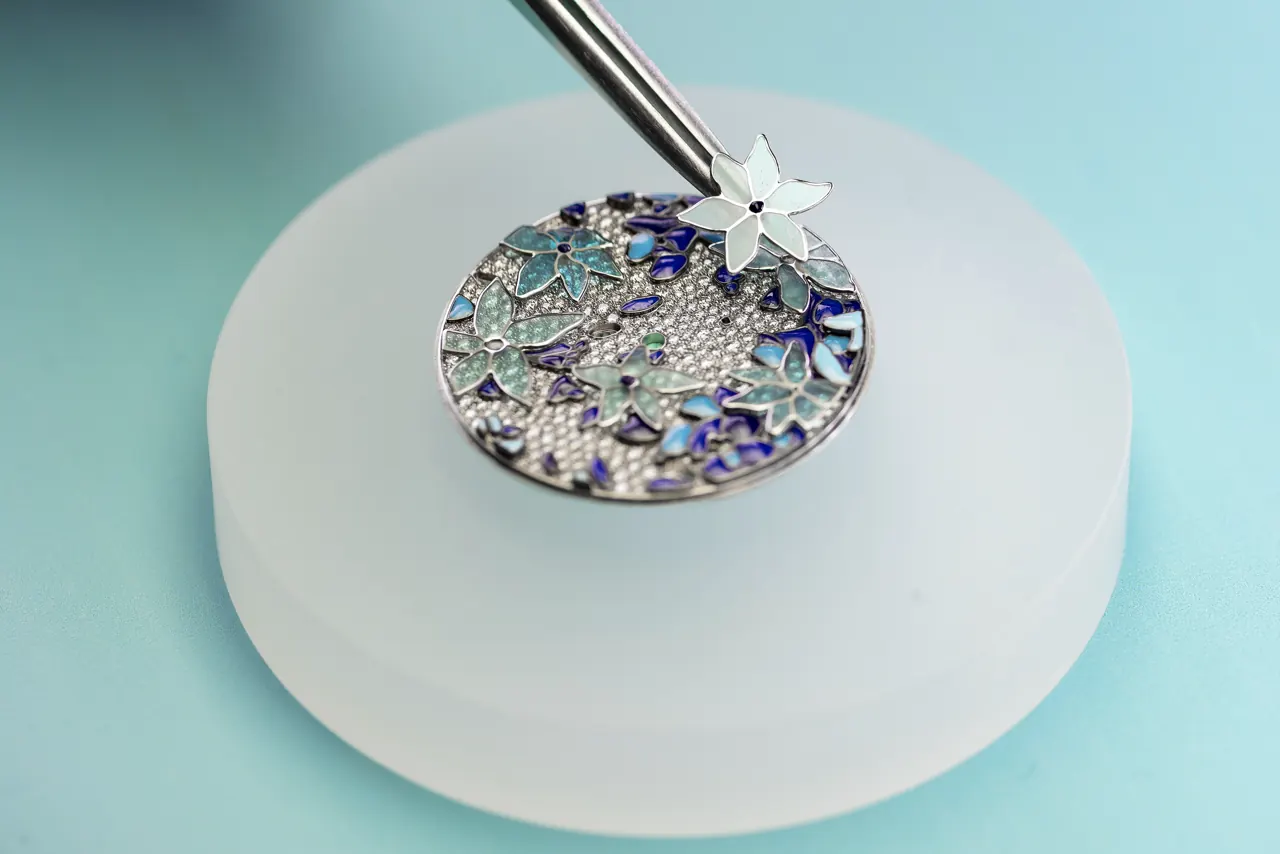
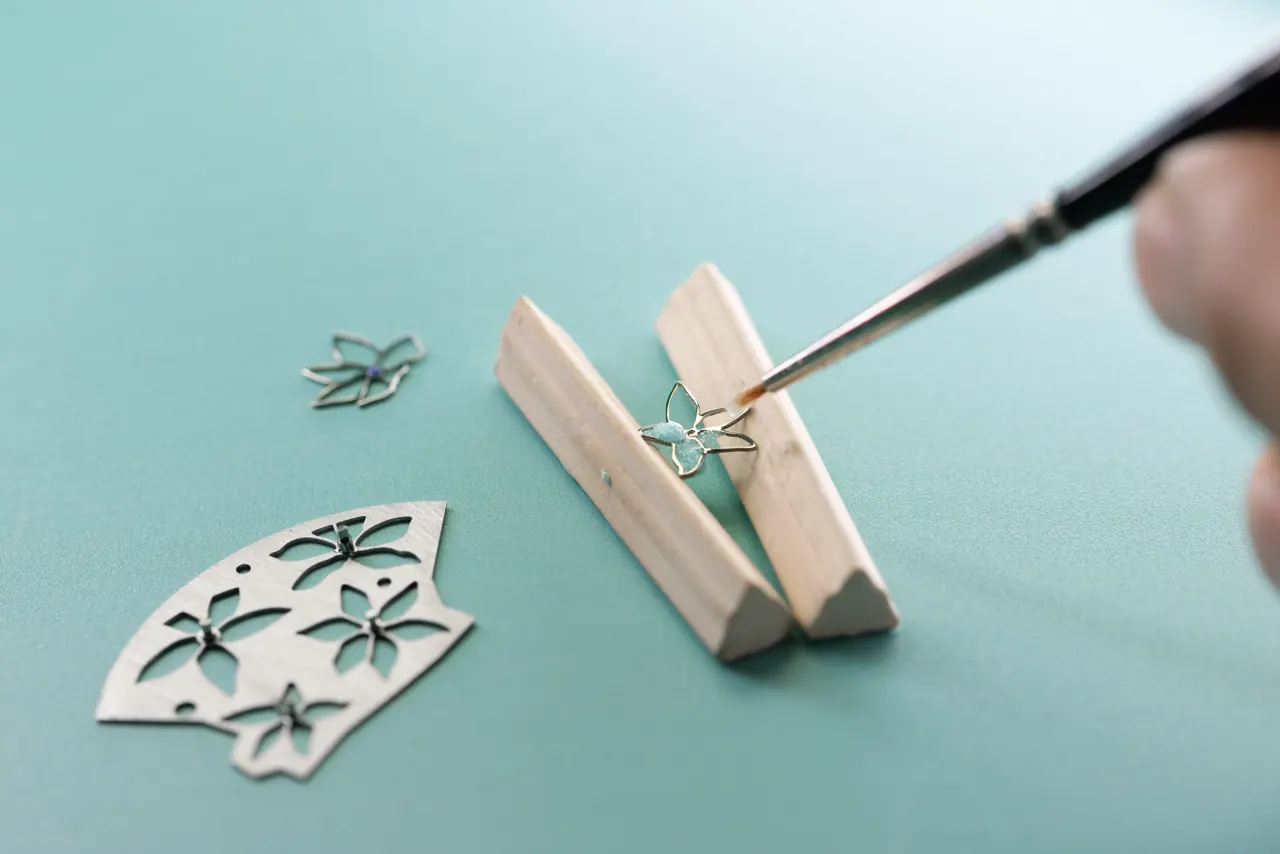
The six clematis flowers are built in plique-à-jour enamel, a technique believed to date to 6th-century Byzantium. Fine wires of 18k white gold form the outlines; the enameller then paints translucent colour into each opening, one layer at a time, firing after every pass and gradually raising the temperature until the enamel vitrifies. No metal backing supports the finished flower. Light passes directly through it, exactly as it passes through a stained-glass window. The stylised floral motifs scattered across the dial are worked in champlevé enamel, where individually crafted white gold pieces, some as small as 0.45 millimetres across, are hollowed out by hand, filled with colour layer by layer, fired, and finally polished to a cabochon finish that amplifies visual depth against the surrounding diamonds.
The Making of the Dial
The technical ledger is considerable. Nearly 60 individual champlevé elements are crafted before a single drop of enamel is applied. Four different shades of blue are used for the scattered motifs; each shade fires at a different temperature and requires a different number of firings. The two enamel colours used in the clematis flowers add a further coordination challenge, requiring micron-level placement of every component.
In total, assembling the dial takes more than 100 hours. Snow-setting the 432 diamonds on the dial surface alone accounts for nearly 30 of those hours; hand-enamelling and assembly consume a further 55. The completed dial sits within a case whose sides are entirely snow-set with an additional 461 diamonds, and the crown carries a single round diamond of 0.47 carats in the signature Tiffany Setting. The bezel introduces colour at a different scale, holding 36 baguette-cut aquamarines totalling nearly five carats, their pale blue-green reading as a direct extension of the dial palette.
Heritage & Lineage
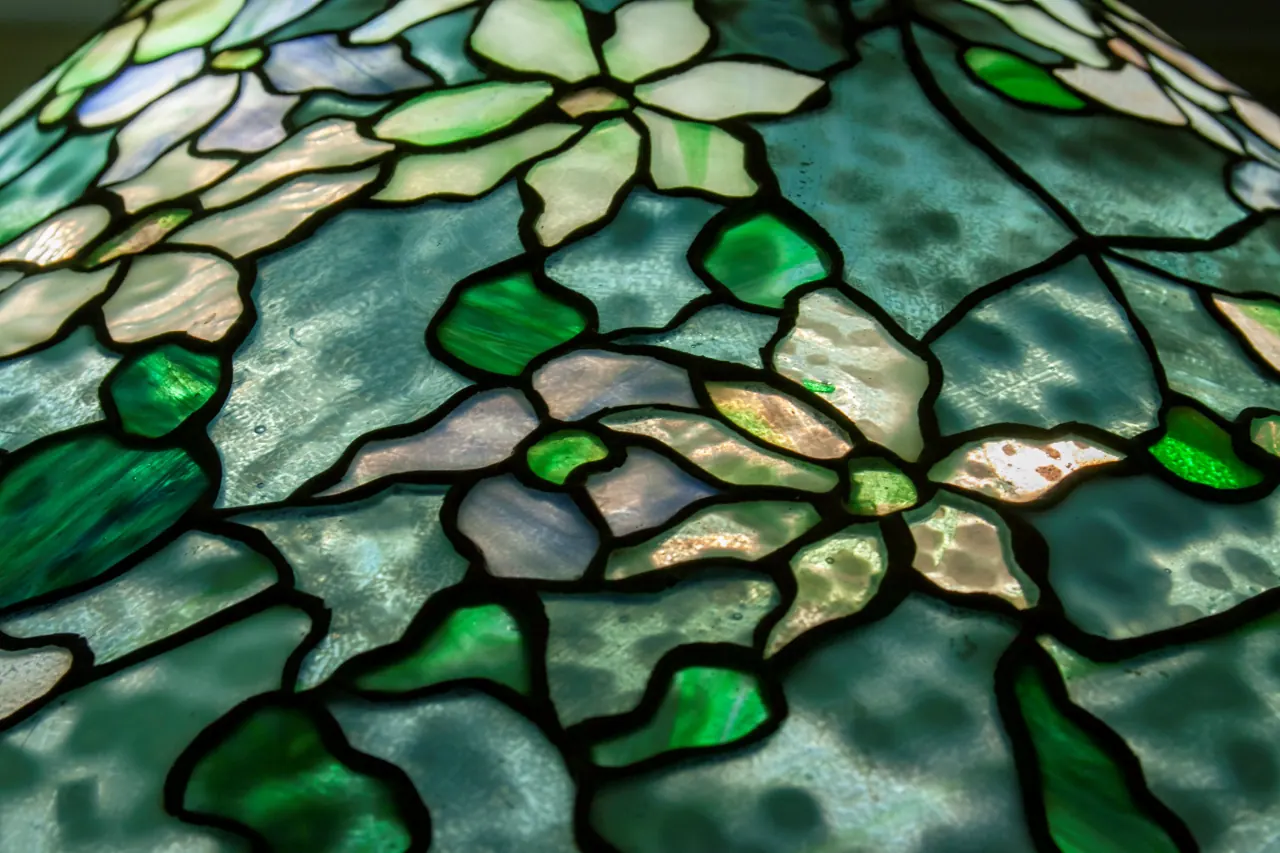
The source reference is precise. A Clematis hanging lamp shade produced by Tiffany Studios around 1906 shows a dense field of white and green flowers against a light green and blue ground. Tiffany Studios was founded in New York City in 1902 by Louis Comfort Tiffany, son of House founder Charles Lewis Tiffany and the brand’s first Art Director. The studio’s leaded-glass lamps, built from precisely shaped shards of coloured glass joined with copper foil or lead, are now among the most collectible objects of the Art Nouveau period.
Translating that formal language into a watch dial required not just technical expertise but interpretive precision. The aquamarine and turquoise tones of the plique-à-jour flowers echo the lamp’s background colours directly. The champlevé motifs, rendered in darker blues and scattered asymmetrically, capture the visual energy of the original composition without reproducing it literally. For collectors familiar with Chopard‘s enamel work or Tiffany’s own archive jewellery, this lineage is legible at a glance.
Availability & Edition Details
The Eternity by Tiffany Enamel Clematis carries SKU 76537852 and is covered by Tiffany & Co.’s five-year international limited warranty. The navy alligator strap is fitted with a diamond-set 18k white gold T buckle.
For more on horology and high jewellery that matters in the Gulf, sign up for our weekly editorial briefing.
Frequently Asked Questions
What enamel techniques are used on the Tiffany Eternity Enamel Clematis watch dial?
The dial combines two distinct enamel methods. The six clematis flowers are crafted in plique-à-jour enamel, suspending translucent colour within a fine 18k white gold wire framework to create a stained-glass effect. The stylised floral motifs scattered across the dial are crafted in champlevé enamel, where hollows are hand-filled with colour layer by layer before hand-polishing to a cabochon-style finish.
How many diamonds and gemstones does the watch contain?
The Eternity Enamel Clematis contains a total of 904 diamonds weighing 3.28 carats in aggregate, distributed across the dial (432 diamonds, 0.87 ct), the case sides (461 diamonds, 1.9 ct), the crown (one diamond of 0.47 ct), and the T buckle (10 diamonds). The bezel is set with 36 baguette-cut aquamarines totalling nearly five carats.
How many hours of work does it take to produce the dial?
Crafting, setting and assembling all dial components requires more than 100 hours in total. Of those, approximately 55 hours are devoted to hand-enamelling and assembly, and nearly 30 hours to the snow-setting of the 432 diamonds on the dial alone.
What movement powers the Tiffany Eternity Enamel Clematis, and what is its power reserve?
The watch is equipped with Calibre LTM, a Swiss-made self-winding mechanical movement with a 38-hour power reserve. The case measures 36 mm in 18k white gold.
What is the historical inspiration behind the Clematis design?
Tiffany & Co.'s designers drew on a Clematis hanging lamp shade produced by Tiffany Studios around 1906, itself an icon of Art Nouveau design. Tiffany Studios was established in New York City in 1902 by Louis Comfort Tiffany, son of the House's founder Charles Lewis Tiffany, and its leaded-glass lamps are among the most collectible design objects of the early 20th century.