Key Highlights
- Bvlgari has transformed boutiques in Rome, Milan and Paris into immersive, three-dimensional environments for Summer 2026.
- The installations revive archival illustrations by Italian artist and architect Davide Pizzigoni, who shaped Bvlgari’s visual identity from 1991 to 2007.
- Pizzigoni’s landmark Metamorphosis campaign (1992–1996) serves as a primary source reference for the window compositions.
- Each city’s installation is drawn from the same archival imagery but tuned to the specific architectural context of its boutique.
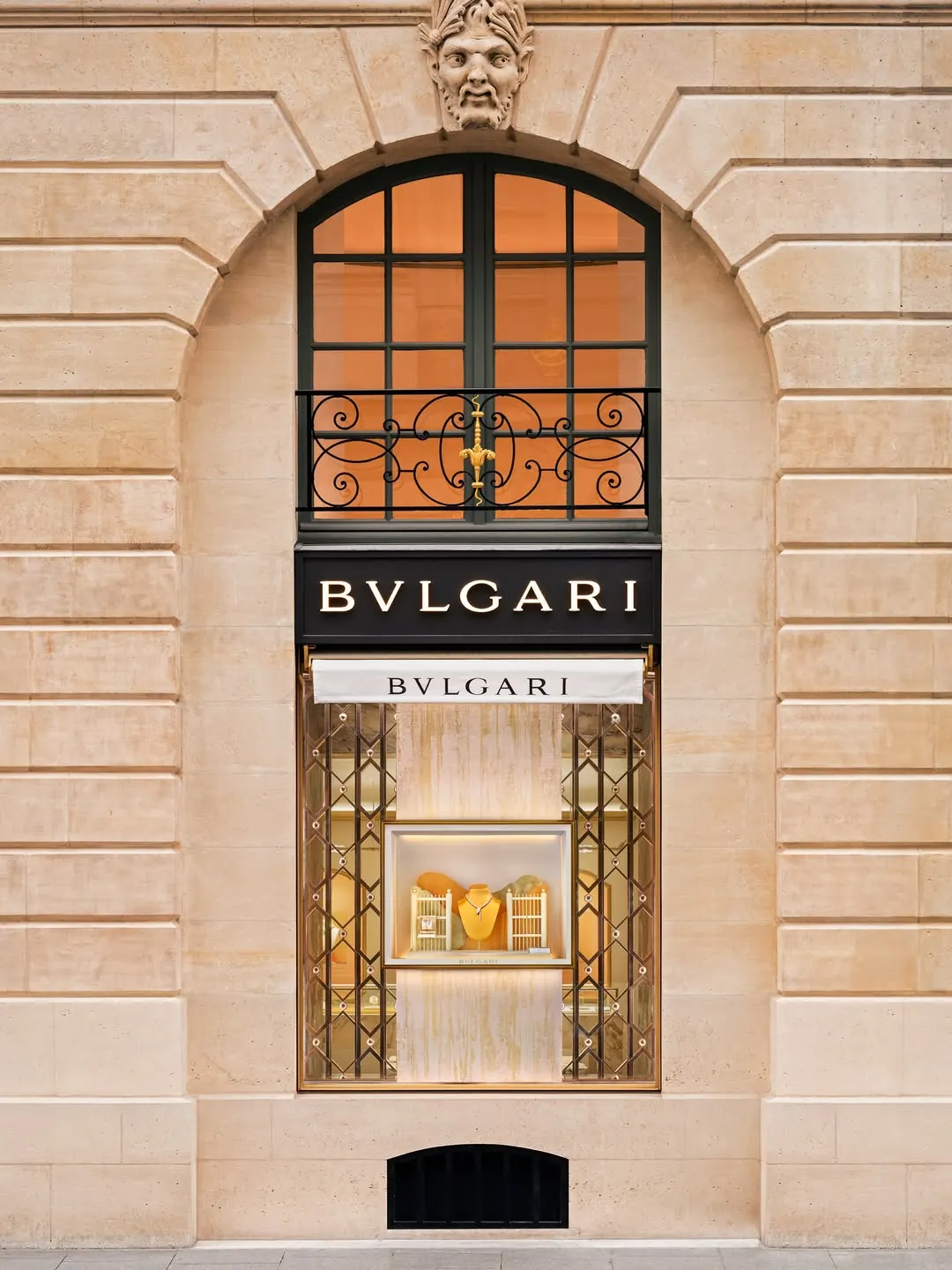
- The Paris installation is housed at the recently restored 23–25 Place Vendôme flagship, redesigned by architect Peter Marino.
- The project positions physical boutiques as narrative stages rather than transactional retail spaces.
First Look
Bvlgari’s Summer Windows arrive at a particular moment for luxury retail: when physical stores are increasingly judged by the quality of their atmospheres rather than the density of their display cases. The Maison’s response is a series of life-sized installations across its Rome, Milan and Paris flagships, each one lifting Davide Pizzigoni’s archival illustrations off the page and rebuilding them in three dimensions, inside the boutiques themselves.
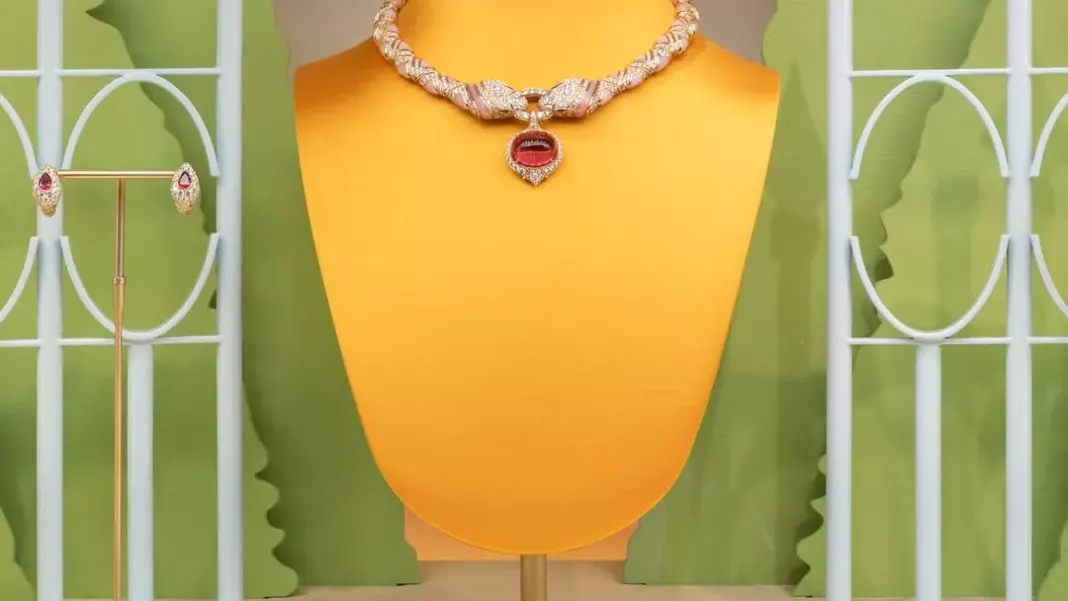
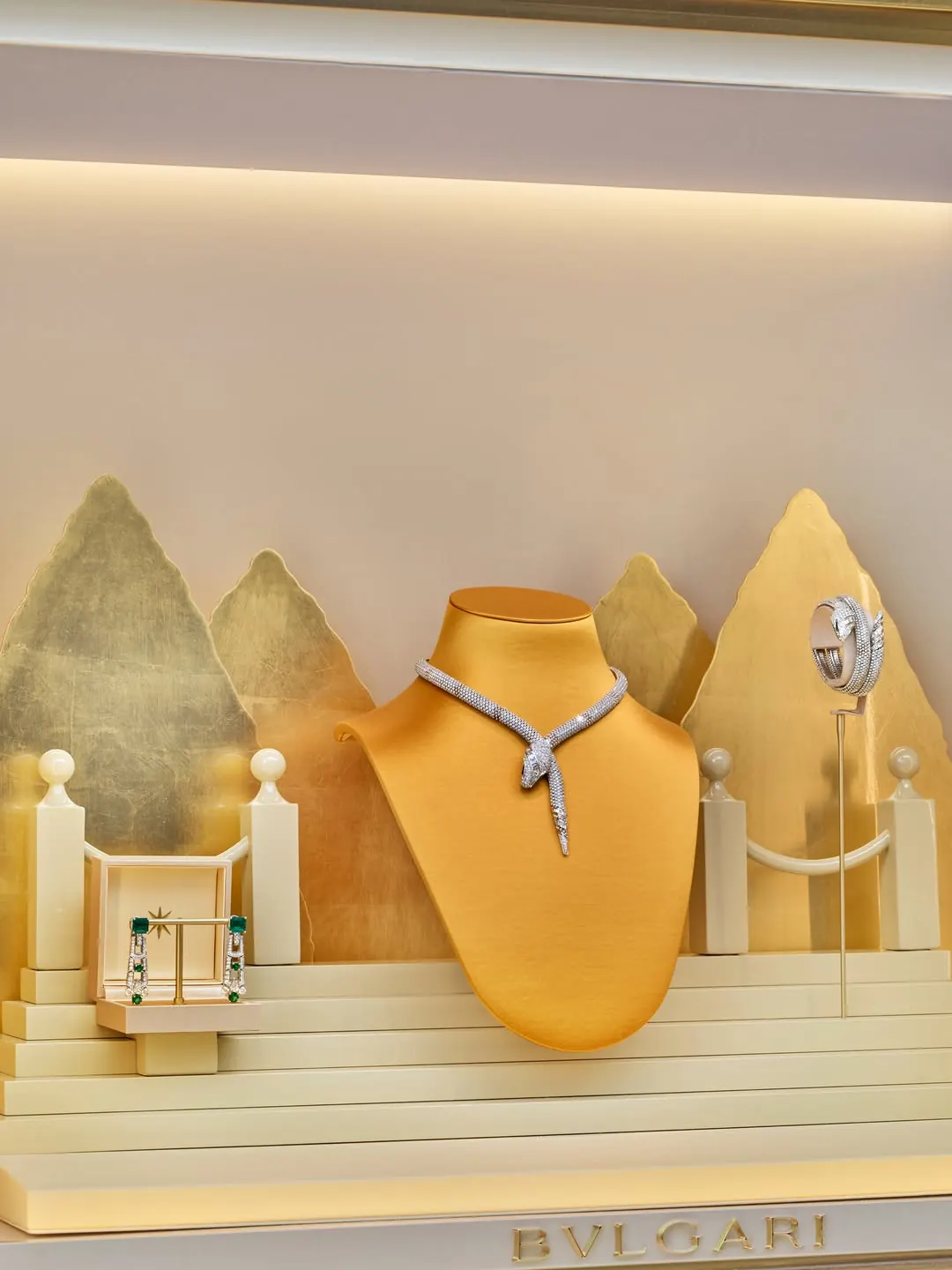
The effect is immediate. Colour, light and forced perspective are deployed to frame jewels within stage-like architectural compositions, a direct inheritance from Pizzigoni’s 1990s practice. The windows feel simultaneously archival and present-tense.
Design & Visual Language
Davide Pizzigoni’s illustrations are recognisable by their bold geometries, saturated colour palettes and theatrical architectural settings: sun-drenched Mediterranean villas, lush gardens, interiors framed by columns and arches. Between 1991 and 2007, these images defined how Bvlgari appeared in print worldwide. His Metamorphosis campaign of 1992–1996 remains one of the most-cited chapters in the Maison’s visual history.
For the Summer Windows, the central question was structural: what happens when a flat illustration becomes a room? The answer involves colour blocking, controlled lighting and forced perspective, tools that preserve the graphic energy of Pizzigoni’s originals while giving them spatial weight. Bvlgari’s jewels sit within these reconstructed compositions exactly as they did in the drawings: as the focal point of an architectural stage.
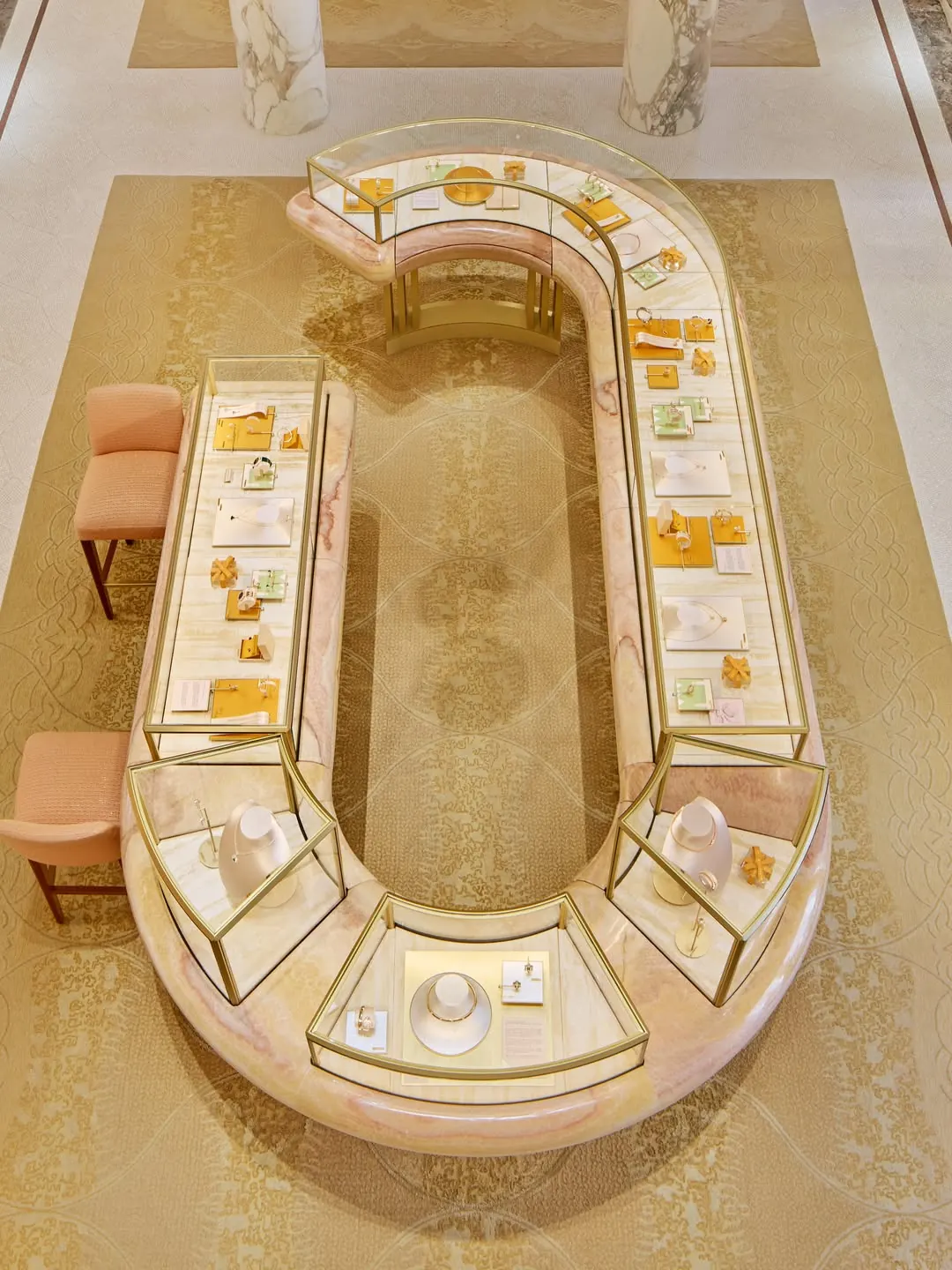
Three Cities, Three Moods
The project anchors itself across three flagships, each tuned to its own architectural register. In Rome, where Bvlgari was founded in 1884, the installations draw most directly on the Mediterranean villa imagery: open skies, sun-saturated terraces, the full warmth of the Maison’s southern Italian roots. It is the most literal interpretation of the archive.
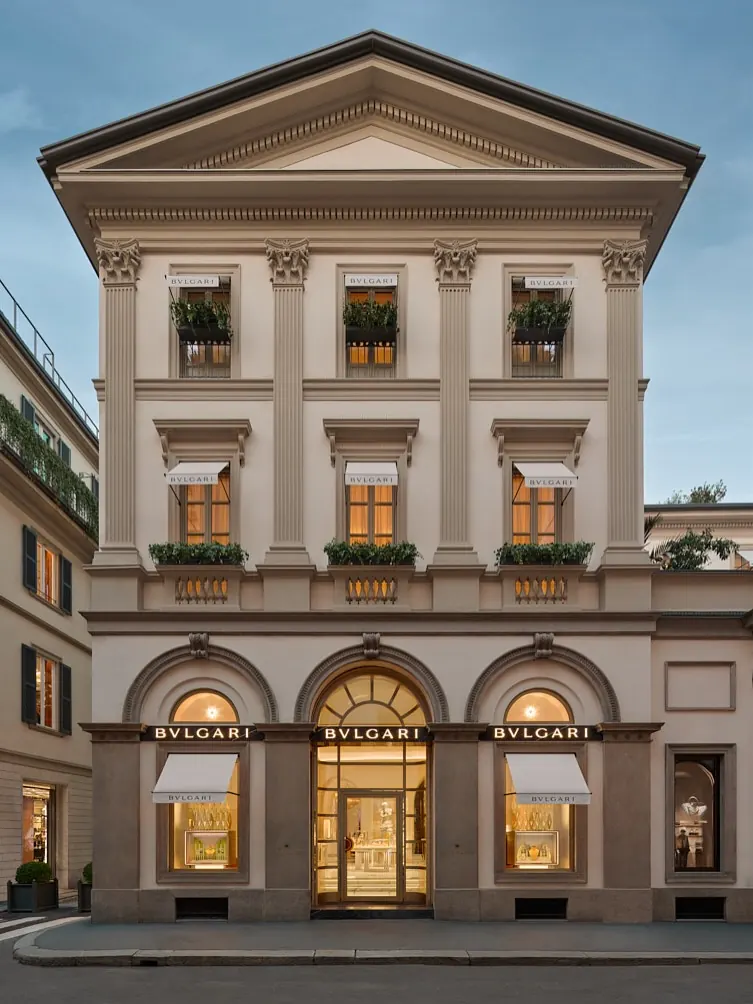
At Via Montenapoleone in Milan, the palette shifts toward vibrant colour blocking and lush garden detail, capturing the spirit of an Italian summer through a more urban, fashion-forward lens. The Serpenti Viper Artsmanship and B.zero1 Artsmanship collections have similarly explored this dialogue between Bvlgari’s Roman heritage and its broader Italian cultural register.
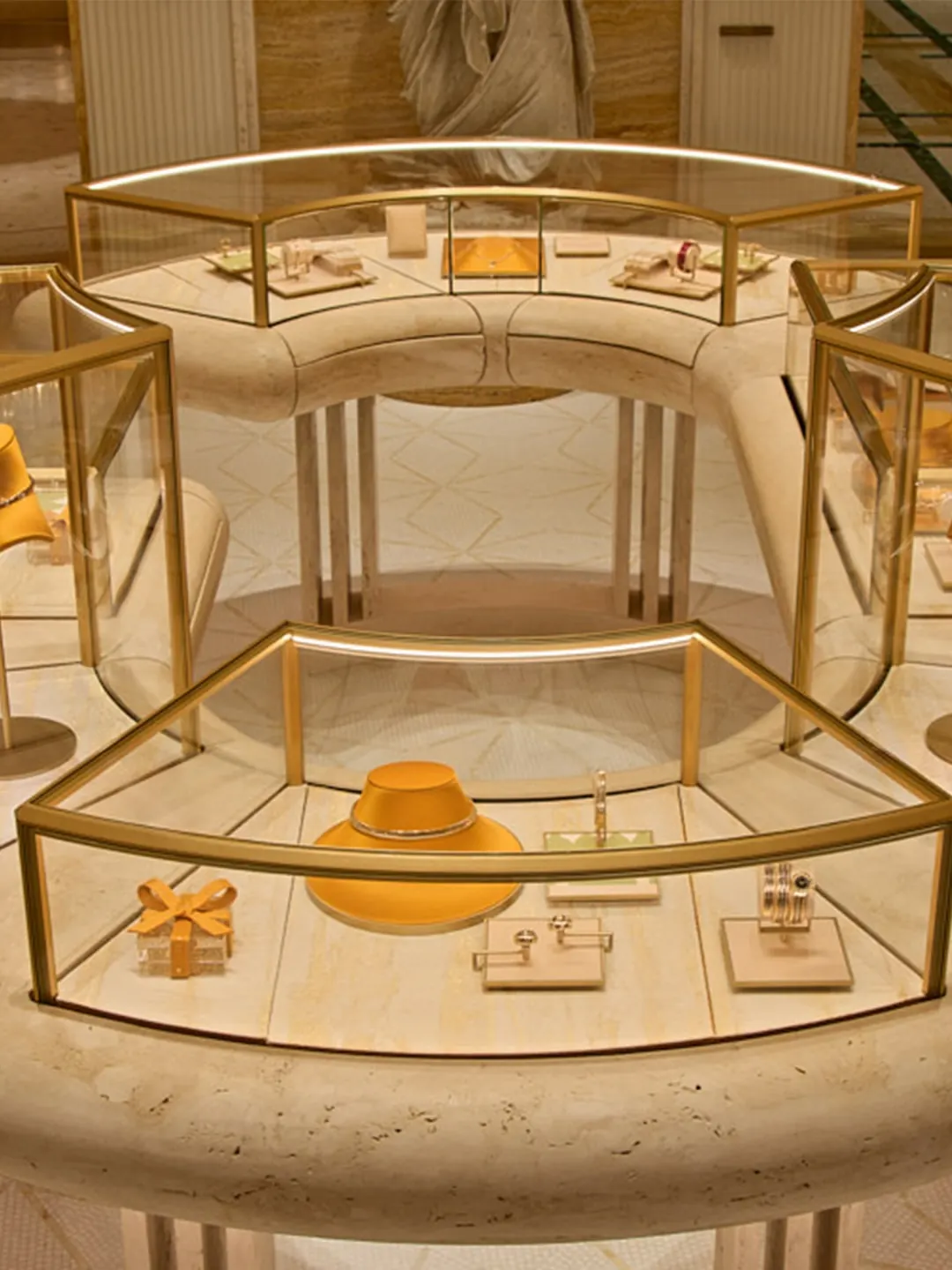
At 23–25 Place Vendôme in Paris, the recently restored Peter Marino-designed flagship provides the backdrop for a more considered dialogue: between Bvlgari’s Roman identity and its Parisian presence, a relationship the Maison has framed since 1956 as a continuous exchange of artistic heritage and savoir-faire.
The Artist and the Archive
Born in Milan, Pizzigoni trained as an architect before building a multidisciplinary practice spanning painting, illustration, and opera stage and costume design, with commissions from opera houses between Zurich and Tokyo. His works sit in private collections across North America, Europe and Asia.
His signature preoccupation is what he calls “the empty space,” the architectural void that, in his words, holds “the fullness of space itself.” That sensibility made him a natural collaborator for Bvlgari in the 1990s, and it is precisely what gives the Summer Windows their sense of theatrical depth: the space around the jewel is as considered as the jewel itself.
Returning to his archive is not a backward-looking exercise for Bvlgari. The same Mediterranean light, saturated colour and architectural drama that defined the Maison’s visual identity in the 1990s are presented here as a living language, not a historical reference. The boutique, in this framing, is the stage. The Summer Windows are the production.
Stay ahead of the latest releases. Subscribe to our newsletter for editor-curated coverage of luxury timepieces across the Middle East.
Frequently Asked Questions
Where can the Bvlgari Summer Windows 2026 installations be seen?
The Summer Windows are on view at three Bvlgari flagships: the Rome flagship boutique, the Via Montenapoleone boutique in Milan, and 23–25 Place Vendôme in Paris.
Who is Davide Pizzigoni and what is his connection to Bvlgari?
Davide Pizzigoni is a Milan-born artist and architect who oversaw Bvlgari's worldwide marketing and advertising campaigns from 1991 to 2007. During that period he created the landmark Metamorphosis campaign (1992–1996), designed accessory collections for the Maison, and produced its first porcelain collection.
What is the Bvlgari Metamorphosis campaign?
The Metamorphosis campaign, running from 1992 to 1996, was a visual series conceived by Davide Pizzigoni that placed Bvlgari jewels within bold, architecturally composed illustrations. It remains one of the Maison's most recognised visual signatures and is still referenced in Bvlgari's historical archives today.
How have Pizzigoni's two-dimensional illustrations been adapted for the boutique windows?
For Summer Windows, the archival drawings have been reconstructed as full three-dimensional environments built directly inside each boutique. Colour, light, and forced perspective are used to frame Bvlgari's creations without overpowering them, replicating the stage-like architectural compositions of Pizzigoni's original 1990s work.
Is each city's installation different?
All three installations draw from the same archival source material, but each is tuned to its boutique's architectural context. Rome leans into Mediterranean villa imagery; Milan at Via Montenapoleone uses vibrant colour blocking and garden motifs; and the Paris installation at the recently restored Place Vendôme flagship extends the dialogue between Bvlgari's Roman roots and its Parisian presence.