
At a Glance
- HM12 The Guardian is a combined wristwatch and 38.2 cm mechanical robot comprising nearly 1,500 components in total
- The in-house calibre features a flying tourbillon, instantaneous jumping hours, trailing minutes, and a mechanical face shield complication requiring over 200 dedicated components
- 84-hour power reserve; 646-movement components; 86 jewels; Grade 5 titanium case with three sapphire crystals
- The Guardian robot, developed by L’Epée 1839, includes a mechanical thermometer, integrated loupe, and a detachable UV torch
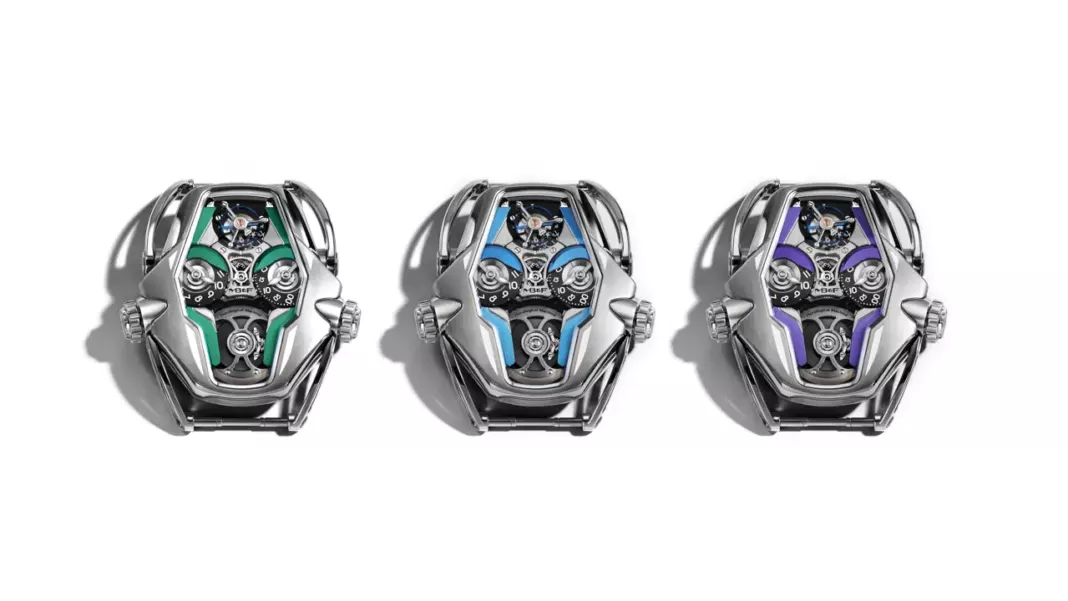
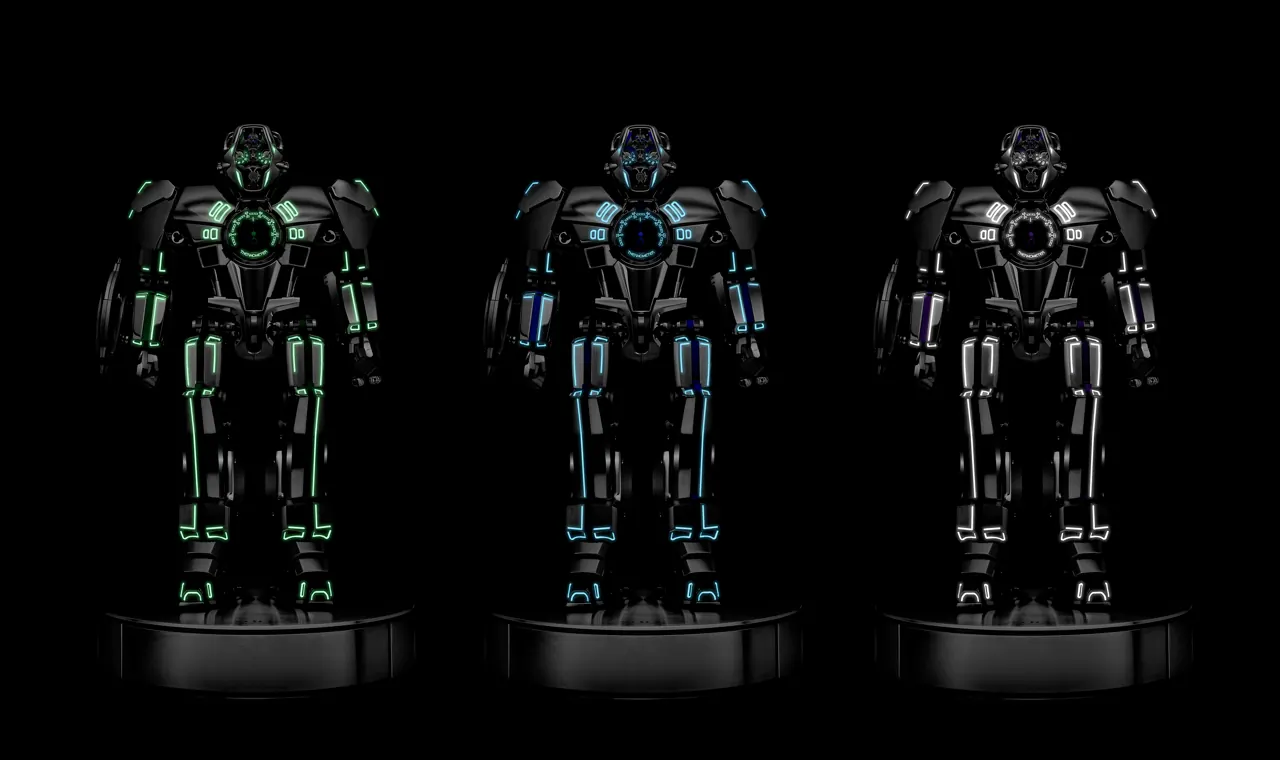
- Three limited editions of 12 pieces each — blue, purple, green — for a total of 36 pieces worldwide
- First Horological Machine conceived entirely by the Maximilian Büsser and Maximilian Maertens creative tandem
What Sets It Apart
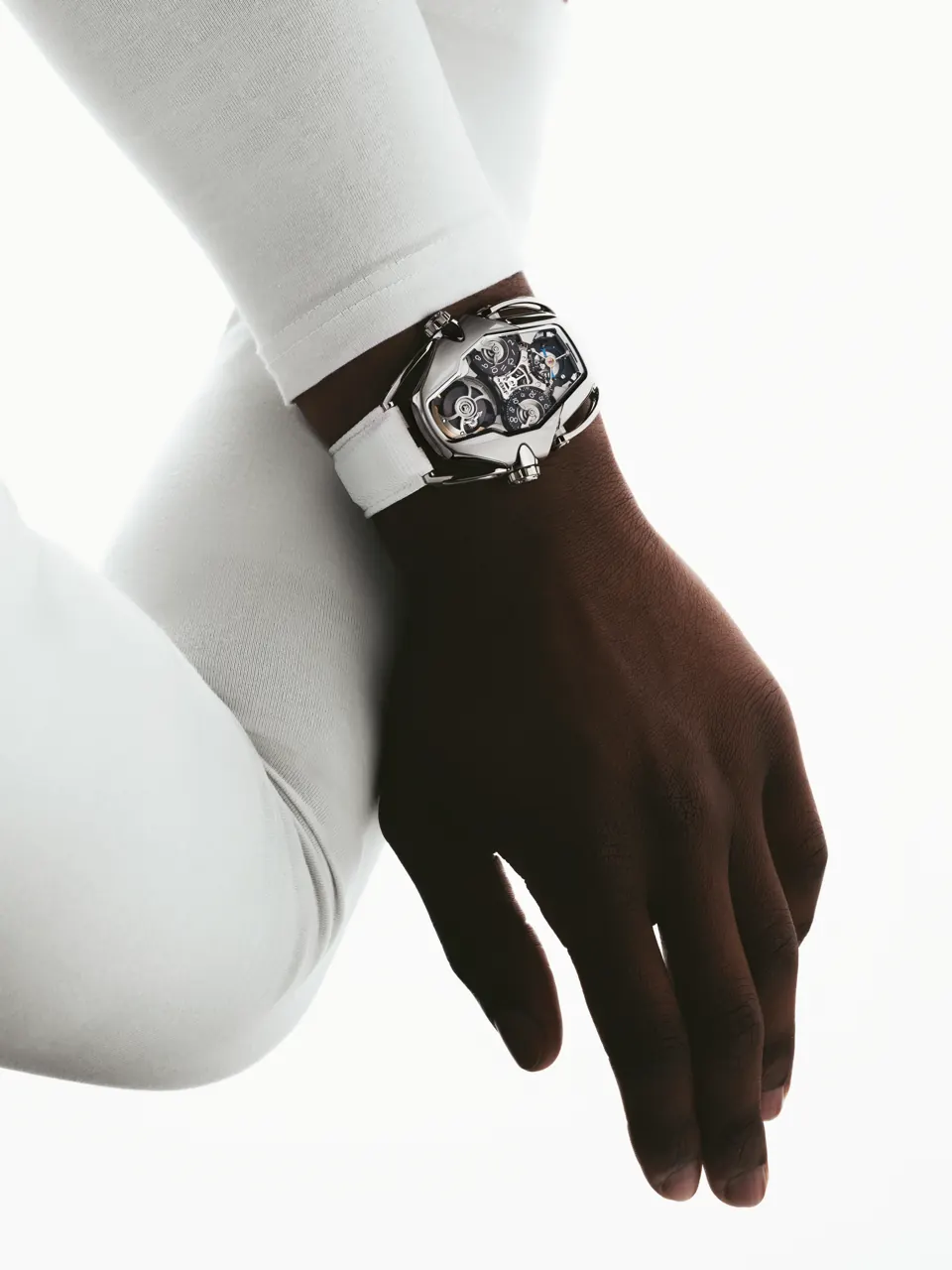
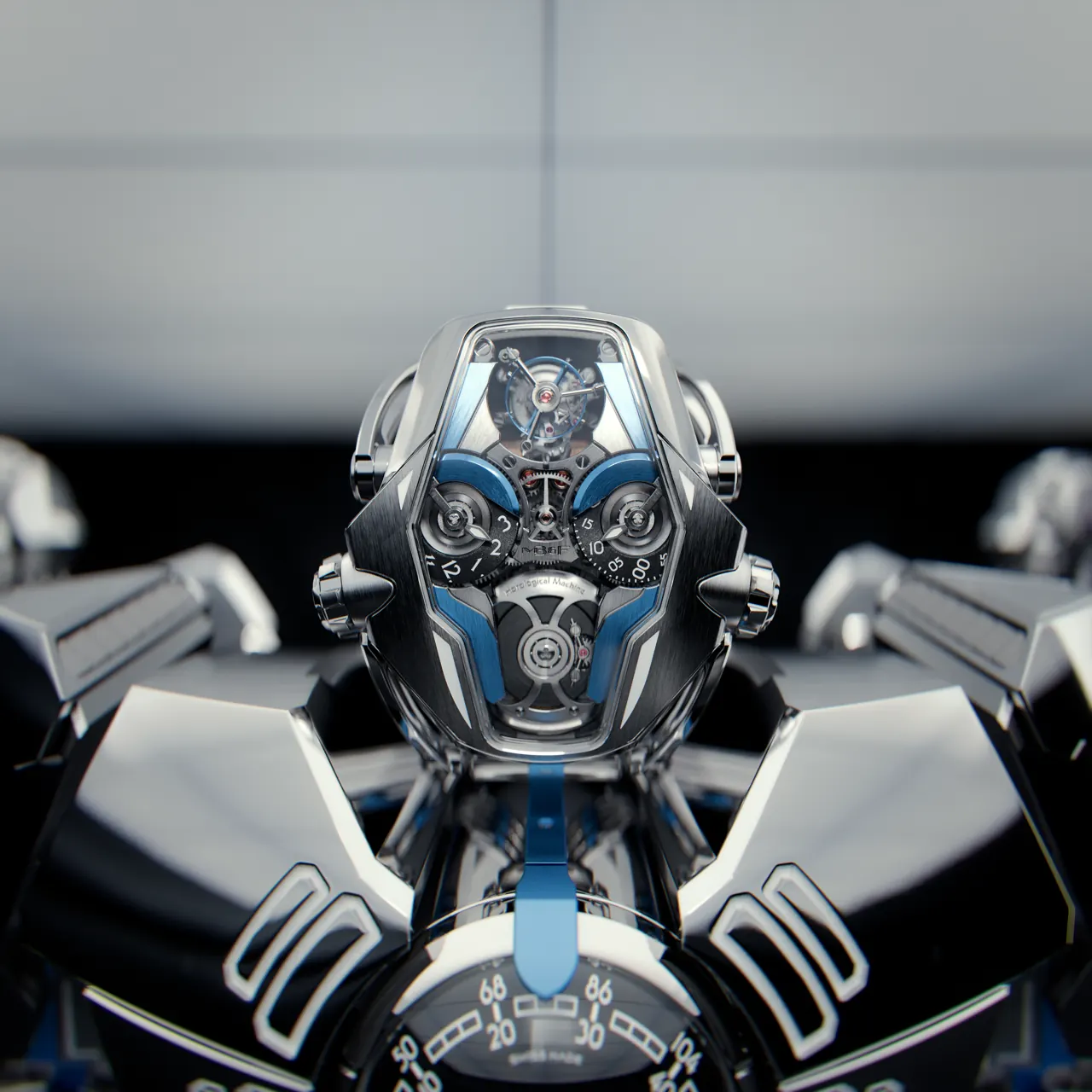
The face shield is the defining gesture of HM12 The Guardian. Actuated via the left crown, two shields traverse the dial in a continuous, linear motion, letting the wearer control how much of the watch face remains visible. The crown declutches once the shields reach their stop.
This mechanism is entirely independent from the timekeeping movement, with more than 200 components devoted to its function alone, a count that surpasses the total component tally of many conventional mechanical watches. Chatons, polished wheels, and inward angles are finished to the standard normally reserved for traditional horology. Development ran in parallel with the main calibre: one engineer focused on timekeeping, the other on the shield system, with constant coordination to avoid conflicts in space, kinematics, and function. The result is a single machine in which mechanics and narrative are inseparable.
Design & Mechanics
MB&F has always treated the watch case as a three-dimensional object rather than a container for a movement. HM12 takes that philosophy further than any previous Horological Machine.
The entire watch reads as a face. Instantaneous jumping hours occupy the left eye position; trailing minutes the right. Below, the MB&F battle-axe micro-rotor sits where a mouth would be. The flying tourbillon, fully exposed, functions as the brain, its classical aesthetic deliberately anchored in traditional watchmaking rather than science-fiction styling. The skull of HM12 is largely sapphire, with three crystals at the top, bottom, and 12 o’clock allowing light to strike the tourbillon from multiple angles. The Grade 5 titanium case measures 49.3 mm x 43.6 mm x 13.8 mm, with mobile lugs at 12 o’clock and fixed lugs at 6 o’clock.
Movement & Materials
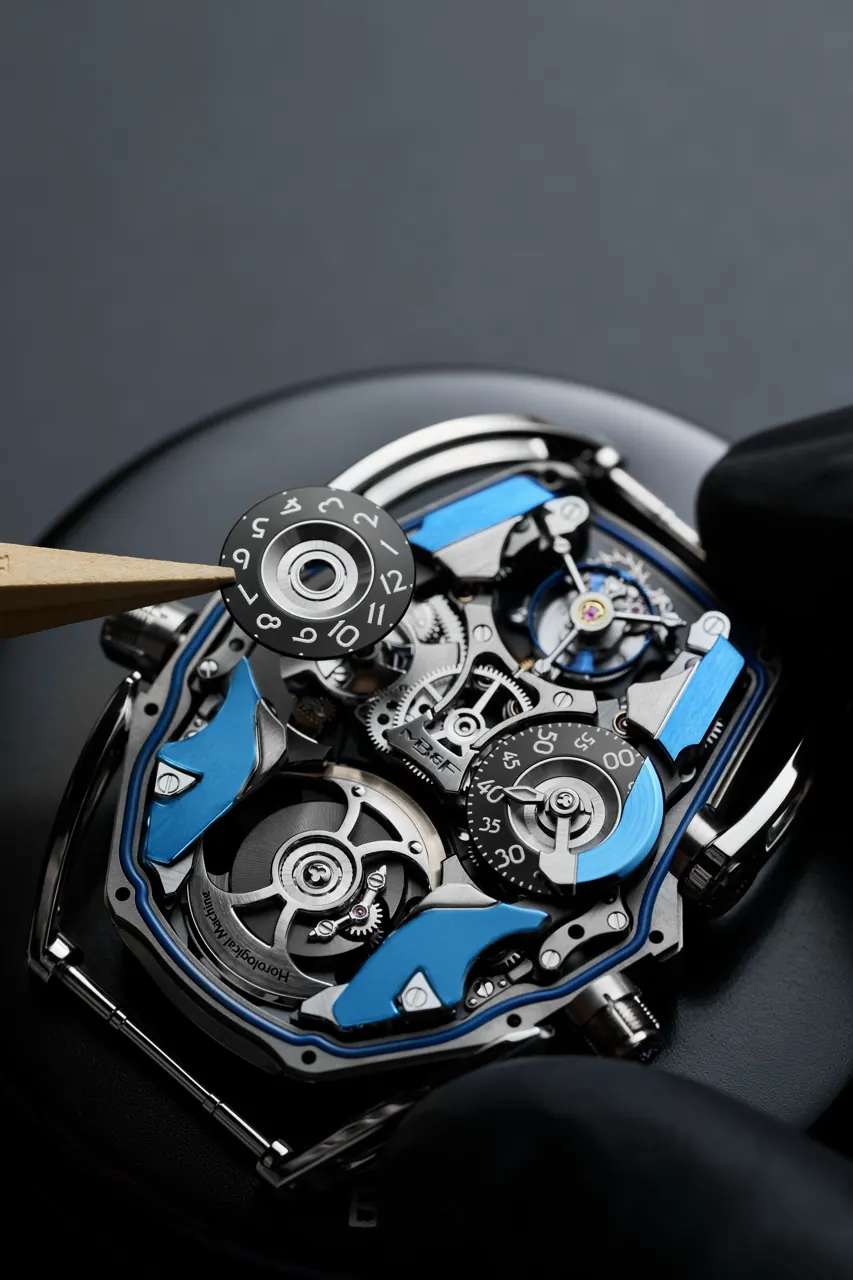
Turn HM12 over and the register shifts entirely. The front is expressive; the back is restrained and symmetrical, following the proportions of a human face.
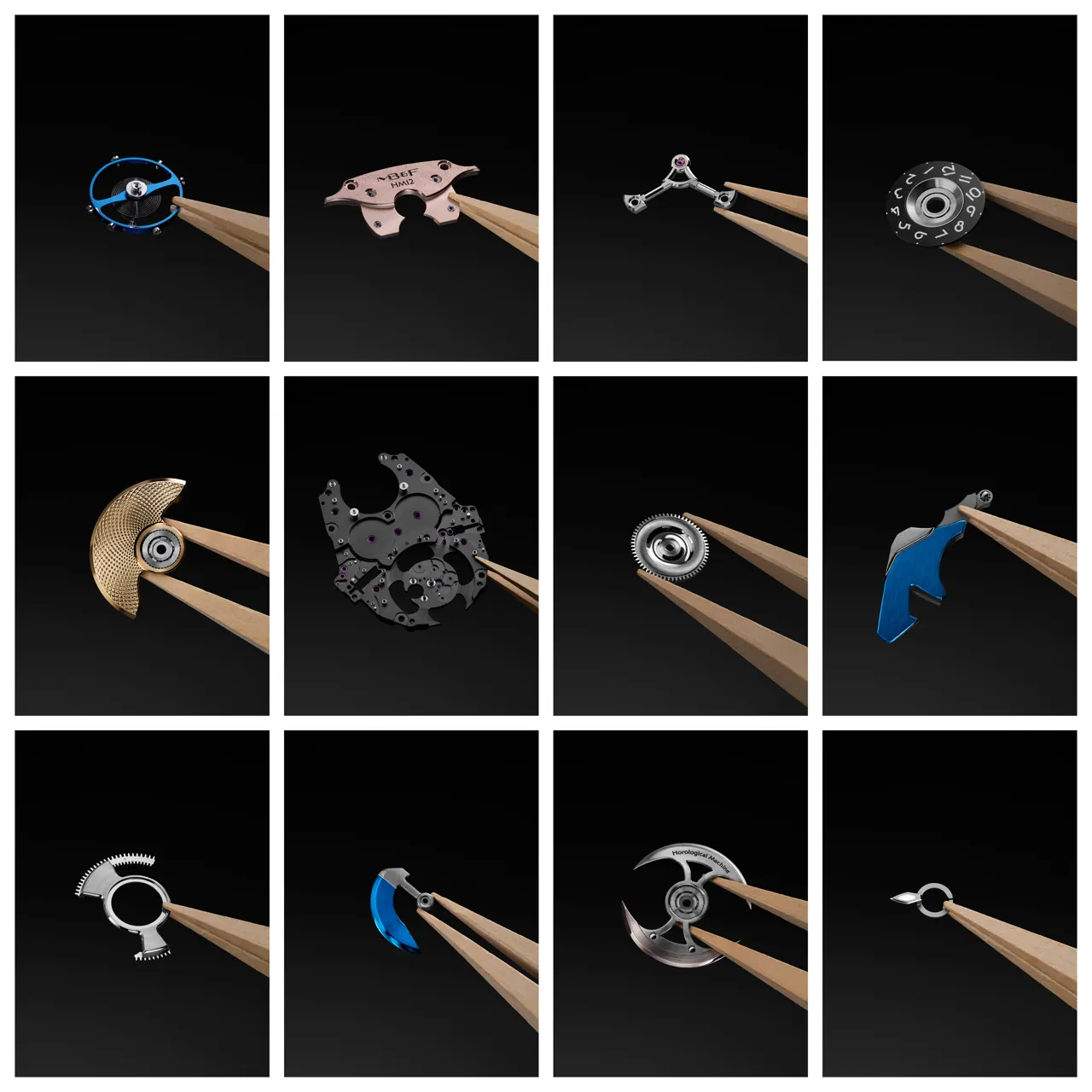
The in-house automatic calibre comprises 646 components, the majority hand-finished, and 86 jewels, with an 84-hour power reserve fed by a double-sided micro-rotor. Bridges are softly curved and hand-finished, the mainplate given a grained surface. The rear rotor carries a guilloché dome executed with the involvement of independent watchmaker Kari Voutilainen, a demanding exercise because the guillochage is applied to a curved, spherical surface rather than a flat plane. The calibre was shaped to follow the case architecture, not the reverse. HM12 sits consciously between the expressive language of the Horological Machines and the classical refinement characteristic of the Legacy Machines, the same productive tension visible in the LM Sequential Flyback EVO.
Why Collectors Care
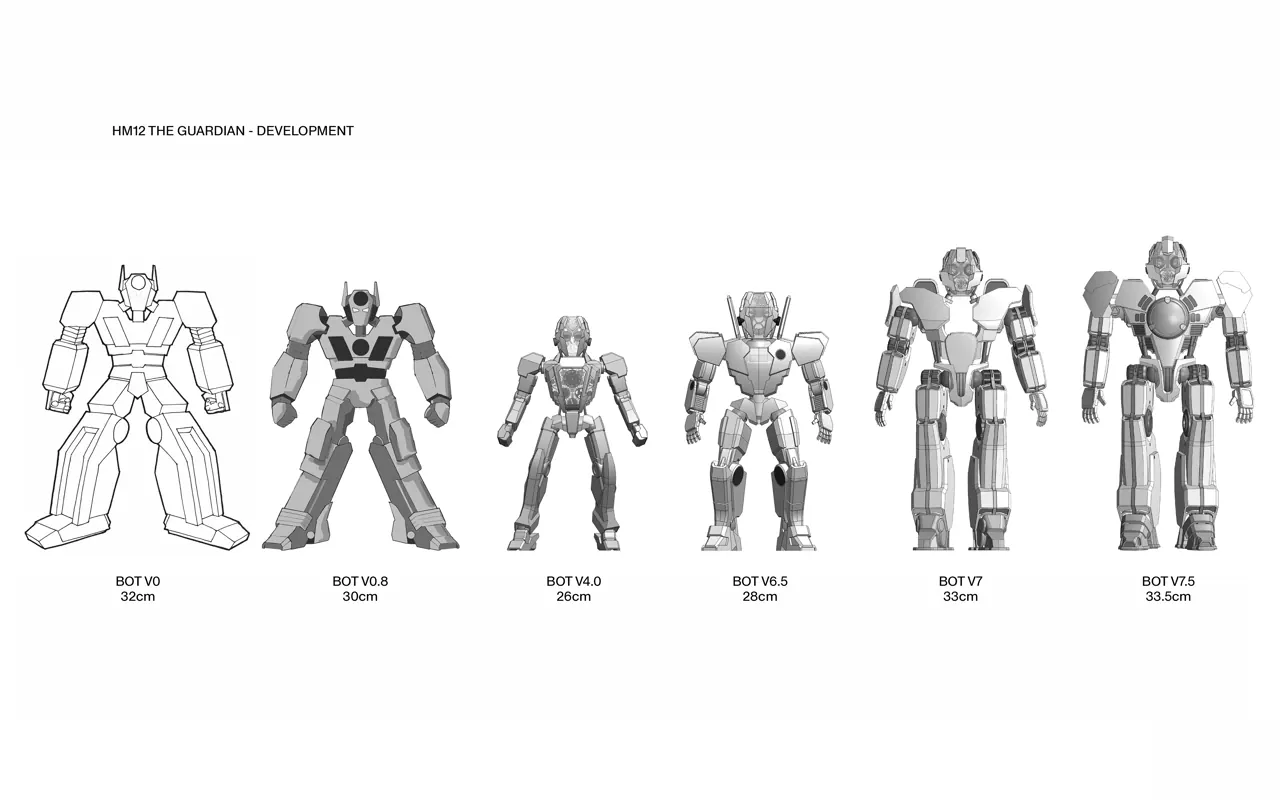
HM12 The Guardian arrives as MB&F opens its third decade, and the timing is deliberate. Originally conceived to mark the brand’s 20th anniversary, the project expanded over four years under the direction of Maximilian Maertens, the first Horological Machine developed entirely by the Büsser–Maertens tandem rather than through MB&F’s long-standing collaboration with designer Eric Giroud.
The Guardian robot, produced by L’Epée 1839, is not a display stand. It is a body built around the watch: 755 components including a mechanical thermometer at its chest, a loupe calibrated to inspect the movement, and a detachable UV torch engineered to activate the Super-LumiNova on both objects. The watch mounts onto the robot’s head via a quick-release clip; the strap stores in a hidden drawer in the base. The entire combined unit carries close to 1,500 components. Presented at Watches and Wonders and limited to 12 pieces per colour across blue, purple, and green, HM12 The Guardian is positioned as the object that reaffirms MB&F’s founding premise for a generation of collectors who may have encountered the brand only recently.
Stay ahead of the latest releases. Subscribe to our newsletter for editor-curated coverage of luxury timepieces across the Middle East.
Frequently Asked Questions
What movement does the MB&F HM12 The Guardian use?
HM12 houses an entirely in-house automatic calibre with a double winding micro-rotor, flying tourbillon, instantaneous jumping hours, trailing minutes, and the mechanical face shield function. The movement comprises 646 components, 86 jewels, and delivers an 84-hour power reserve.
How many pieces of the HM12 The Guardian will be produced?
MB&F will produce exactly 36 pieces in total: three limited editions of 12 pieces each, distinguished by colour — blue, purple, and green. No further editions are planned.
What is the face shield complication on the HM12?
The face shield is a fully mechanical system, independent of the timekeeping movement, dedicated to a pair of shields that move linearly across the dial via the left crown. It requires more than 200 components and allows the wearer to control how much of the dial face is exposed or concealed, from fully open to fully covered.
What is The Guardian robot and what does it include?
The Guardian is a 38.2 cm-tall mechanical robot developed by L'Epée 1839 that serves as the body for the HM12 wristwatch. It comprises 755 components, a mechanical thermometer in its chest, a loupe integrated into one arm, and a detachable UV torch on the other. The watch mounts directly onto the robot's head via a quick-release clip.
Who designed the MB&F HM12 The Guardian?
The concept originated with MB&F founder Maximilian Büsser, who framed the central idea. Product design and four years of development were led by Maximilian Maertens, marking the first Horological Machine conceived entirely by the Büsser–Maertens creative tandem. The Guardian robot was developed in collaboration with L'Epée 1839.