Key Highlights
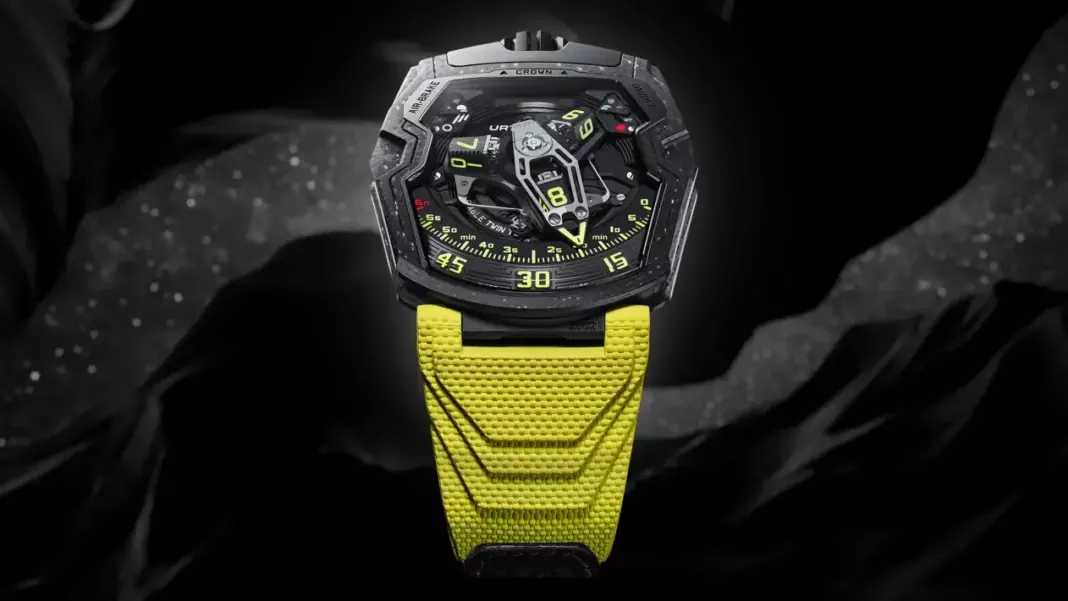
- Third and final piece in the UR-230 triptych, following the Carbon CTP “Eagle” and the ceramic “Polaris”
- Case in laminated composite ceramic developed exclusively for URWERK — layers of braided ceramic, fibreglass, and carbon fibre in a polymer matrix
- Calibre UR-7.30 housed in a hermetic titanium container functioning as a mechanical safe
- Satellite complication with wandering hours, retrograde 3D minutes hand, and three cubic hour satellites traversing a 120° sector
- Exclusive dual turbine self-winding system: shock absorption and aerodynamic regulation; switchable to manual mode via caseback control
- Limited to 35 pieces — CHF 150,000 excluding taxes
A Triptych Closed on a Cosmic Note
URWERK ends the UR-230 chapter not with brightness but with its deliberate absence. The Black Star follows the raw Carbon CTP “Eagle” and the mineral whiteness of the ceramic “Polaris” to close the 230 collection triptych — three distinct expressions of the same architecture, each governed by a different material philosophy. Where Polaris drew its identity from the North Star’s luminosity, the Black Star belongs to what Martin Frei, co-founder and artistic director, describes as “the interstellar void.”
The conceptual reference is precise. In astrophysics, a black star denotes the penultimate state of stellar collapse — absorbing light as a black hole does, but not entirely, suspended at the cosmic threshold between existence and erasure. For Frei, this becomes a design brief: “a deep, living black that does not deny light but reveals it by draping it in shadows — a glow born from the very heart of the night.” The result is a watch that earns its darkness rather than simply wearing it.
The Case: Engineering Fragility Into Strength
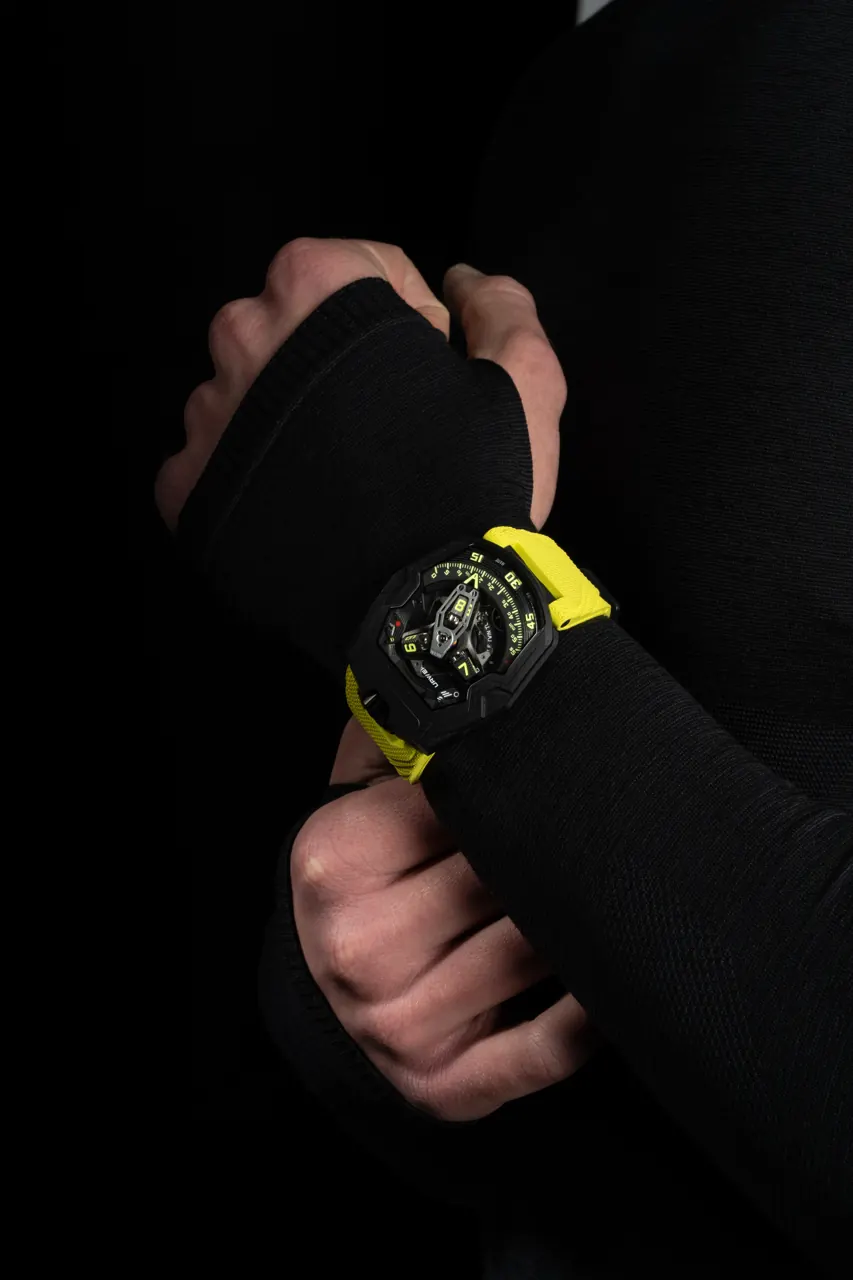
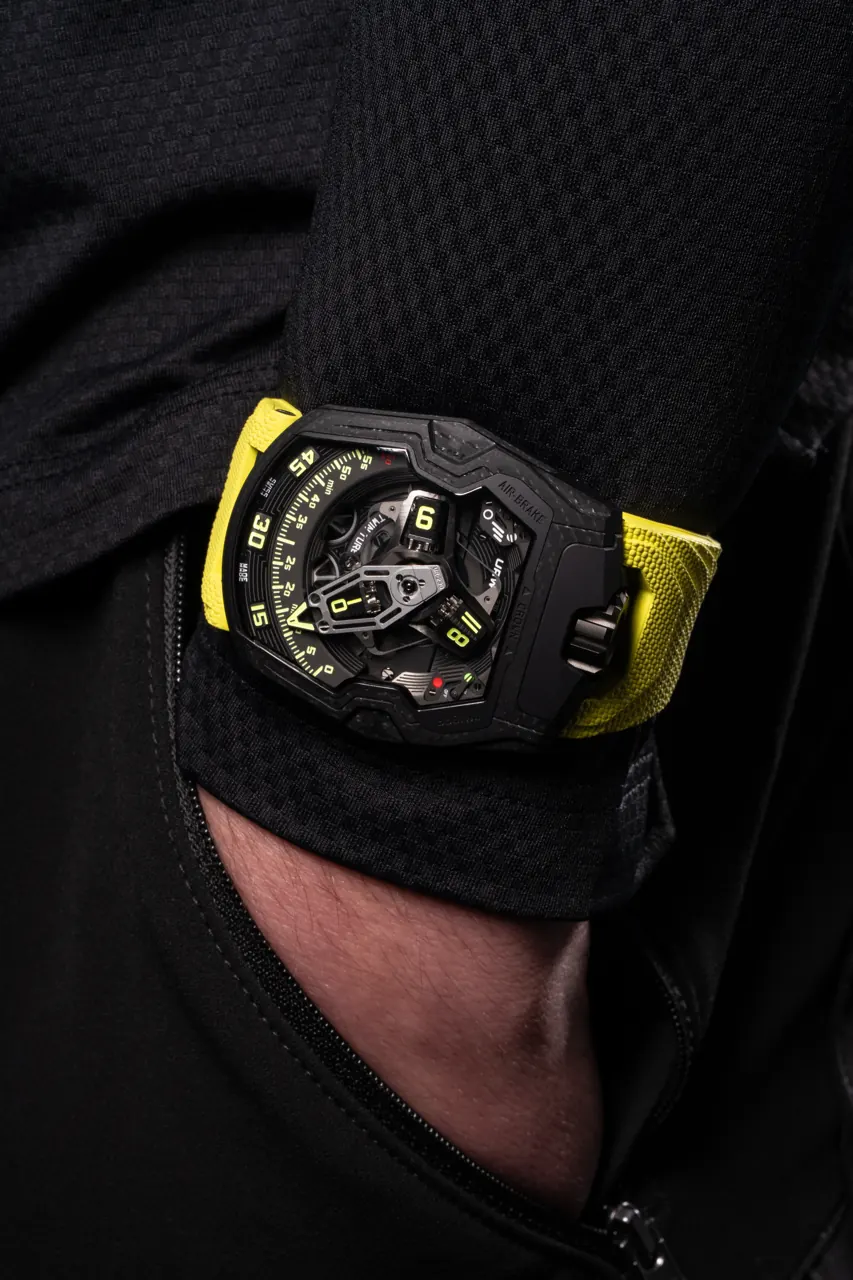
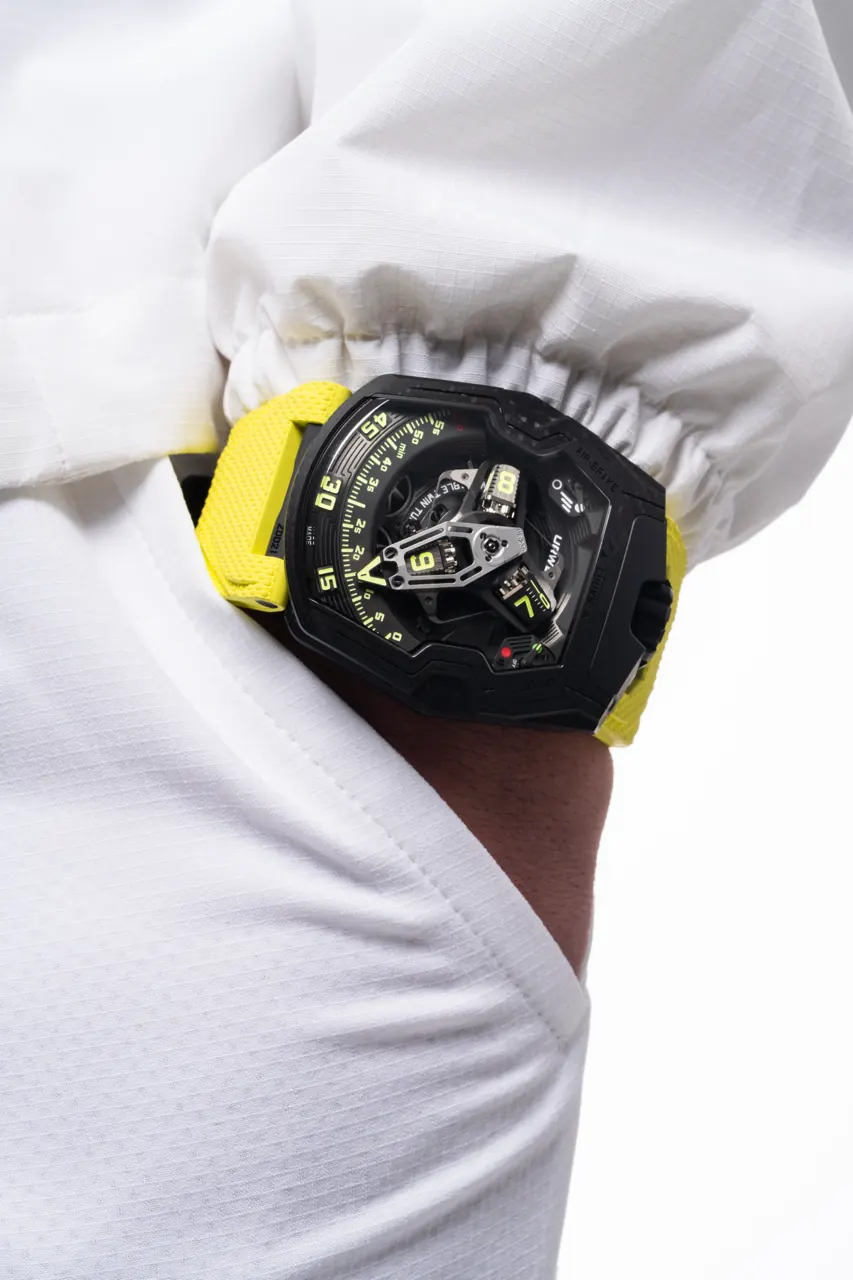
Ceramic’s visual appeal has long been shadowed by its vulnerability to impact. Felix Baumgartner was direct about the compromise this presented: beautiful, precise, shiny — and liable to crack from a single blow. The solution, developed specifically for URWERK, is a laminated composite ceramic that integrates braided ceramic with fibreglass and carbon fibre within a polymer matrix. Machining this material exposes a shiny relief punctuated by sparkling surface dots, producing what the manufacture describes as a vibrant black-light texture. The caseback is finished in black DLC-treated titanium, closing the shell with equal rigour.
Inside, Calibre UR-7.30 sits within a hermetic titanium container — effectively a mechanical safe — that isolates the movement from the case structure. It is a structural decision as deliberate as any aesthetic one, ensuring the calibre’s integrity independent of what surrounds it.
Wandering Hours, Retrograde Architecture
The Satellite Complication
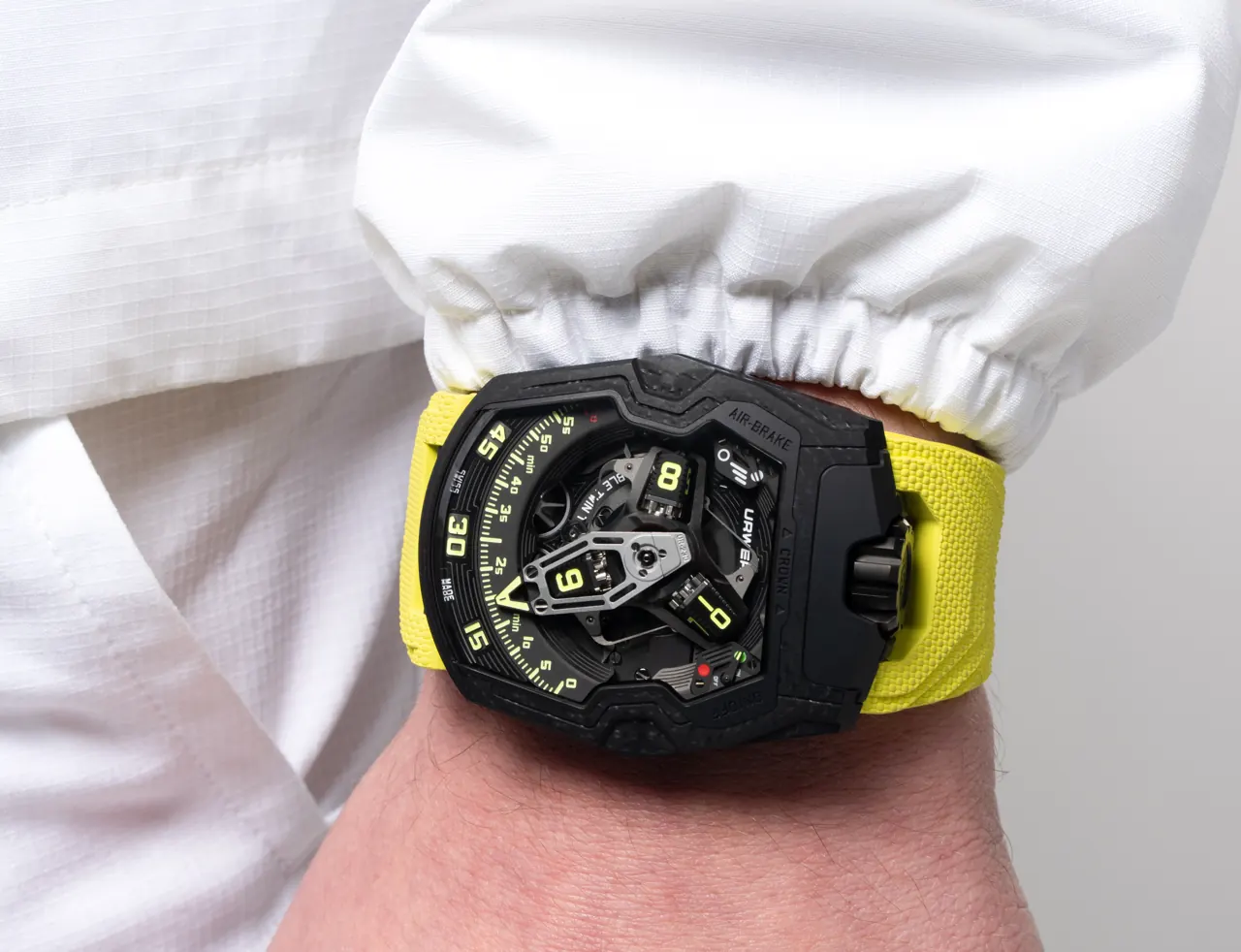
The UR-230 Black Star carries URWERK’s patented satellite complication — among the most spatially expressive timekeeping mechanisms in independent watchmaking, and a reference point discussed at length each year at Watches and Wonders. A central hub drives three cubic hour satellites, each a four-sided block that moves across a 120° sector over 60 minutes. The active satellite — the one aligned with the minutes rail — is accompanied by an openworked retrograde hand that tracks its arc from index 0 to 60, then snaps instantly back to zero to receive the next satellite. Time here is not read so much as observed in transit.
Dual Turbine Winding
The self-winding architecture relies on two turbines working in tandem. The first absorbs external shocks before they reach the movement; the second regulates airflow through the automatic winding mechanism, functioning as an aerodynamic brake. A control on the caseback allows the collector to adjust rotor load or disengage it entirely, switching to manual winding. Two symmetrical indicators at 11 o’clock and 1 o’clock display the current setting at a glance. It is a system that rewards the attentive owner — one who understands the watch as a living mechanism rather than a passive instrument.
Specifications and Edition Details
The UR-230 Black Star measures 44.81 mm wide by 53.55 mm long, with a thickness of 14.30 mm. Calibre UR-7.30 beats at 28,800 vph, carries 50 jewels, runs twin barrels for a 48-hour power reserve, and features a variable-inertia balance. Hour markers are painted with Super-LumiNova, with the carrousel cage finished in black rhodium plate and the satellite cam receiving a DLC coating. The strap is vulcanised rubber — the “Kiska” reference — with Velcro fastening. Water resistance is rated to 30 metres.
Production is capped at 35 pieces. The price is CHF 150,000 excluding taxes. For collectors tracking URWERK’s independent trajectory, the UR-101 Diamond Sky represents another point of comparison within the current portfolio.
URWERK produces approximately 150 watches annually. At that volume, a 35-piece allocation carries genuine scarcity — not by marketing decree but by the physical limits of a manufacture that has always defined itself as a laboratory rather than a production house. The Black Star closes the 230 story on those terms. New references are confirmed for 2026.
For full technical documentation, visit URWERK’s official press site.
Stay ahead of the latest releases. Subscribe to our newsletter for editor-curated coverage of luxury timepieces across the GCC.
Frequently Asked Questions
What materials are used in the UR-230 Black Star case?
The case is crafted from a laminated composite ceramic developed exclusively for URWERK, combining braided ceramic, fibreglass, and carbon fibre within a polymer matrix. The caseback is finished in black DLC-treated titanium, and the movement is housed in a hermetic titanium container that functions as a mechanical safe.
How does the satellite complication work on the UR-230 Black Star?
Three cubic hour satellites traverse a 120° sector over 60 minutes, with the active satellite aligned to the minutes rail accompanied by an openworked retrograde hand that tracks from 0 to 60 before snapping back to zero. Time is read by observing the wandering hours satellites in transit rather than on a traditional dial.
What is the dual turbine self-winding system in the UR-230 Black Star?
The movement features two turbines working together—the first absorbs external shocks before they reach the movement, while the second regulates airflow through the automatic winding mechanism as an aerodynamic brake. A caseback control allows the wearer to adjust rotor load or switch entirely to manual winding mode.