What makes a luxury object exclusive when almost anything can be ordered from a telephone? The question runs through The State of Luxury, the annual study by McKinsey & Company and The Business of Fashion. Its 2026 edition, published on 29 June 2026, draws on a survey of more than 2,000 luxury clients in the United States and China, and on extensive interviews in both markets. Its conclusion speaks directly to watchmaking: exclusivity is strongest when it feels earned.
The State of Luxury at a glance
| The study | The State of Luxury, McKinsey & Company and The Business of Fashion |
| Editions cited | 13 January 2025 and 29 June 2026 |
| 2026 survey | More than 2,000 luxury clients in the United States and China |
| 2019 to 2023 | Personal luxury goods grew 5 percent a year; price accounted for more than 80 percent of that growth |
| Identity | 68 percent of US clients say newer brands reflect their identity; 63 percent say so of established houses |
| Outlook | A global luxury market of US$700 billion by the end of the decade, growing 4 to 6 percent a year |
From price to meaning
The 2025 edition set the scene. Between 2019 and 2023, personal luxury goods, a field that includes fashion, leather goods, watches and jewellery, grew at a compound rate of 5 percent a year. In McKinsey’s words, “price increases accounted for more than 80 percent of growth during this period, while volume gains were more moderate.”
The 2026 edition looks at what comes next, through four dimensions of the client relationship: desirability, exclusivity, moments and discovery. Price tells a client what an object costs. Meaning tells a client why it matters. The study suggests that the coming years belong to the maisons able to raise the second as carefully as the first.
Two ways of belonging
One finding will interest every independent watchmaker. In the United States, 68 percent of the clients surveyed said that newer or disruptive brands better reflect their identity, while 63 percent said the same of established luxury houses. The two answers are not exclusive: a collector may feel at home with a historic manufacture and with a young atelier at once.
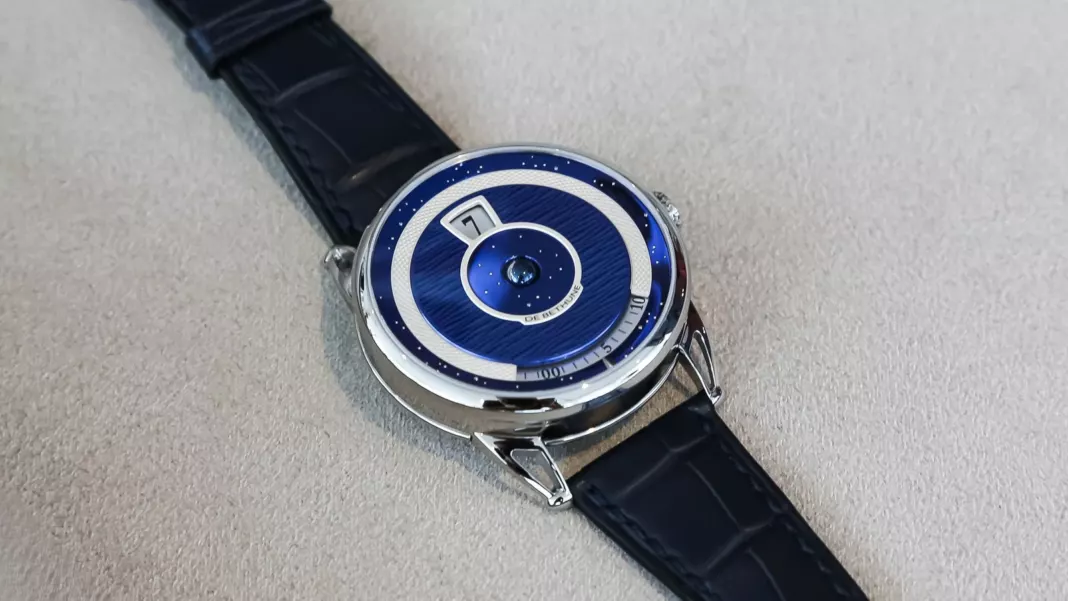
Watch collectors know this well. The same wrist that wears a grand complication from a house founded in the eighteenth century will welcome, the following season, a piece from an independent such as De Bethune, whose pieces are made in small numbers. At Geneva Watch Days 2026, heritage names and ateliers of a few people exhibited side by side, and visitors moved freely from one to the other.
Exclusivity that feels earned
On exclusivity, the study is precise. “Exclusivity is shifting from scarcity to insider recognition,” write its authors, who add that exclusivity “is tied to recognition, access, and experiences that feel earned rather than engineered.” They also observe that “immediate desire, not scarcity, is now the strongest driver of full-price purchasing.”
Fine watchmaking has a natural answer, because its rarity comes from the workbench. A numbered edition is limited by the hours of the people who finish it, by the supply of a dial maker, by the patience that a hand-bevelled bridge requires. When a maison says how many pieces exist and why, the number becomes part of the story, and the client becomes part of a small circle that knows it.
What we heard at Geneva Watch Days
Our Portrait of Giovanni Moro, co-founder of UNIMATIC, recorded at Geneva Watch Days 2026, reads like an illustration of the study. The Milan maison, a company of sixteen people, has kept its prices steady and free of promotions for eleven years, and releases capsule editions of 150 or 300 pieces that are never reissued once they have found their owners.
And then, in 2015, came the first watch: 300 numbered pieces of an automatic diver at around 500 euros. With a promise: we would never make one more.
Giovanni Moro, co-founder of UNIMATIC, to WATCHESPEDIA
A promise kept over eleven years is precisely what the study calls earned: the edition is small because the maison said it would be, and collectors who were present at the beginning are recognised for it.
Five ideas for watch and jewellery maisons
- Say the number, and say why. Pieces per year, pieces per reference, the hours behind each one.
- Recognise the collector. First access for existing clients, a welcome at the manufacture, the watchmaker’s name on the certificate.
- Answer desire promptly. A clear path from discovery to purchase, with a concierge who replies the same day.
- Keep a permanent home for the story. Heritage, leadership and current collections in one place that stays current all year.
- Let the leaders speak. Clients want to hear founders and master watchmakers in their own words.
The preferences of watch buyers themselves are explored in our reading of the Deloitte study, what watch buyers look for first, and the maisons we follow are gathered on the Brands page.
Frequently asked questions
What is The State of Luxury?
An annual study of the luxury sector by McKinsey & Company and The Business of Fashion. The 2026 edition was published on 29 June 2026 and surveys more than 2,000 luxury clients in the United States and China.
How much of luxury's growth came from price between 2019 and 2023?
According to the 2025 edition of the study, price increases accounted for more than 80 percent of the growth of personal luxury goods between 2019 and 2023, a period in which the sector grew 5 percent a year.
What does the study say about exclusivity?
That exclusivity is shifting from scarcity to insider recognition, and that it is tied to recognition, access and experiences that feel earned rather than engineered.
How large will the luxury market be by 2030?
The 2026 edition projects a global luxury market of US$700 billion by the end of the decade, growing 4 to 6 percent a year.
Sources: McKinsey & Company and The Business of Fashion, The State of Luxury, editions of 13 January 2025 and 29 June 2026; WATCHESPEDIA interview with Giovanni Moro, Geneva Watch Days 2026. Photo WATCHESPEDIA.