
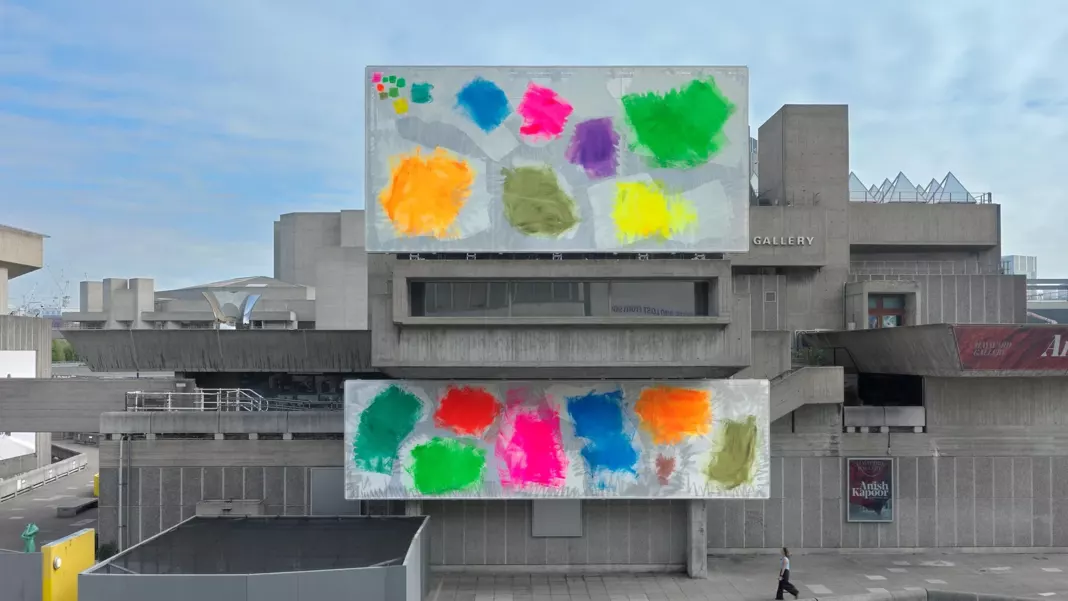
Until 15 November 2026, the Brutalist façade of London’s Hayward Gallery carries September, a two-panel painting by Swiss artist Renée Levi and the first painting commissioned by Audemars Piguet Contemporary.
On the South Bank of the Thames, a field of fluorescent green, pink, orange and blue frames one of London’s most recognisable buildings. Co-commissioned by the Hayward Gallery and Audemars Piguet Contemporary, the art programme of Audemars Piguet, September was unveiled on 23 September 2026. It is Renée Levi’s first large-scale public installation in the United Kingdom, and it opens a new chapter for the programme as well: after fourteen years of commissions in sound, film, sculpture and data, Audemars Piguet Contemporary has commissioned its first painting.
At a Glance: Audemars Piguet
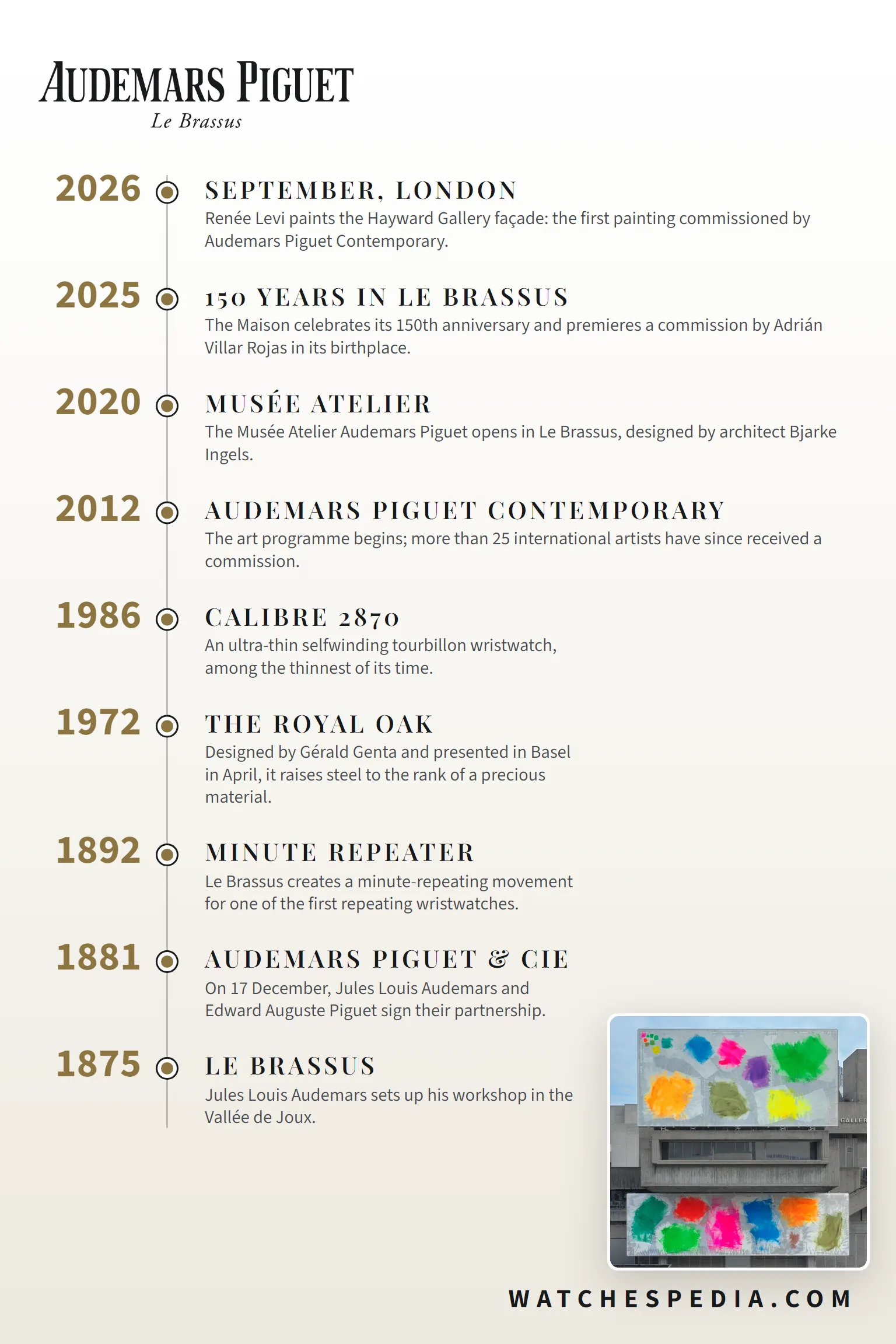
- Founded in 1875 in Le Brassus, in the Vallée de Joux; Jules Louis Audemars and Edward Auguste Piguet formalised their partnership in 1881.
- The oldest fine watchmaking manufacturer still in the hands of its founding families, the Audemars and the Piguet.
- Creator of the Royal Oak in 1972, designed by Gérald Genta.
- Audemars Piguet Contemporary, its dedicated art programme, has commissioned more than 25 international artists since 2012.
- Home of the Musée Atelier Audemars Piguet, opened in Le Brassus in 2020.
Audemars Piguet, 1875-2026: The Maison in Nine Milestones
A Painting Around the Eye of the Building
Opened in 1968 and listed Grade II as an architectural landmark, the Hayward Gallery is one of the great Brutalist buildings of London. Exposed concrete, bold protrusions and a strong geometric language give its façade a sculptural presence of its own. Levi takes its most distinctive feature, the protruding rectangular window often described as the “eye” of the building, as the pivot of her composition. One panel rises above it, the second extends below, and the painting expands around the window’s form.
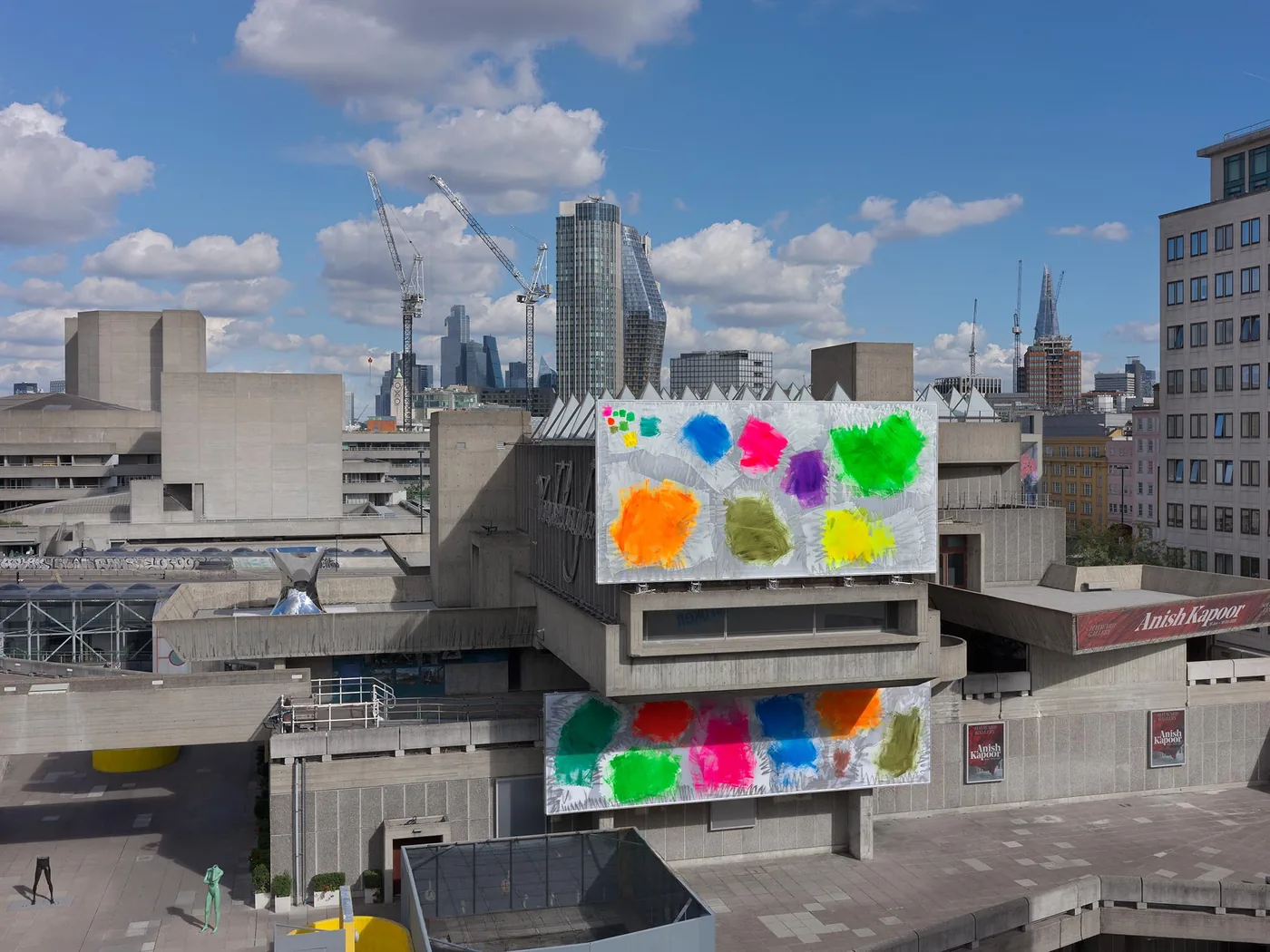
Across both panels, broad gestures in bright colour span the reach of a human arm. From a distance the work reads as a single composition; up close it becomes a field of individual marks, each one the trace of a movement of the painter’s body. The title belongs to the season: September is a month of change in weather, in light and in the pace of city life, and for eight weeks the work joins the daily route of everyone who walks along the river.
“Bringing a new warmth to the London skyline, Levi’s commission turns a routine walk along the Thames into an unexpected encounter with vibrant art to enjoy every day,” says Yung Ma, Curator at the Hayward Gallery.
Mesh, Gesture and the Scale of the Body
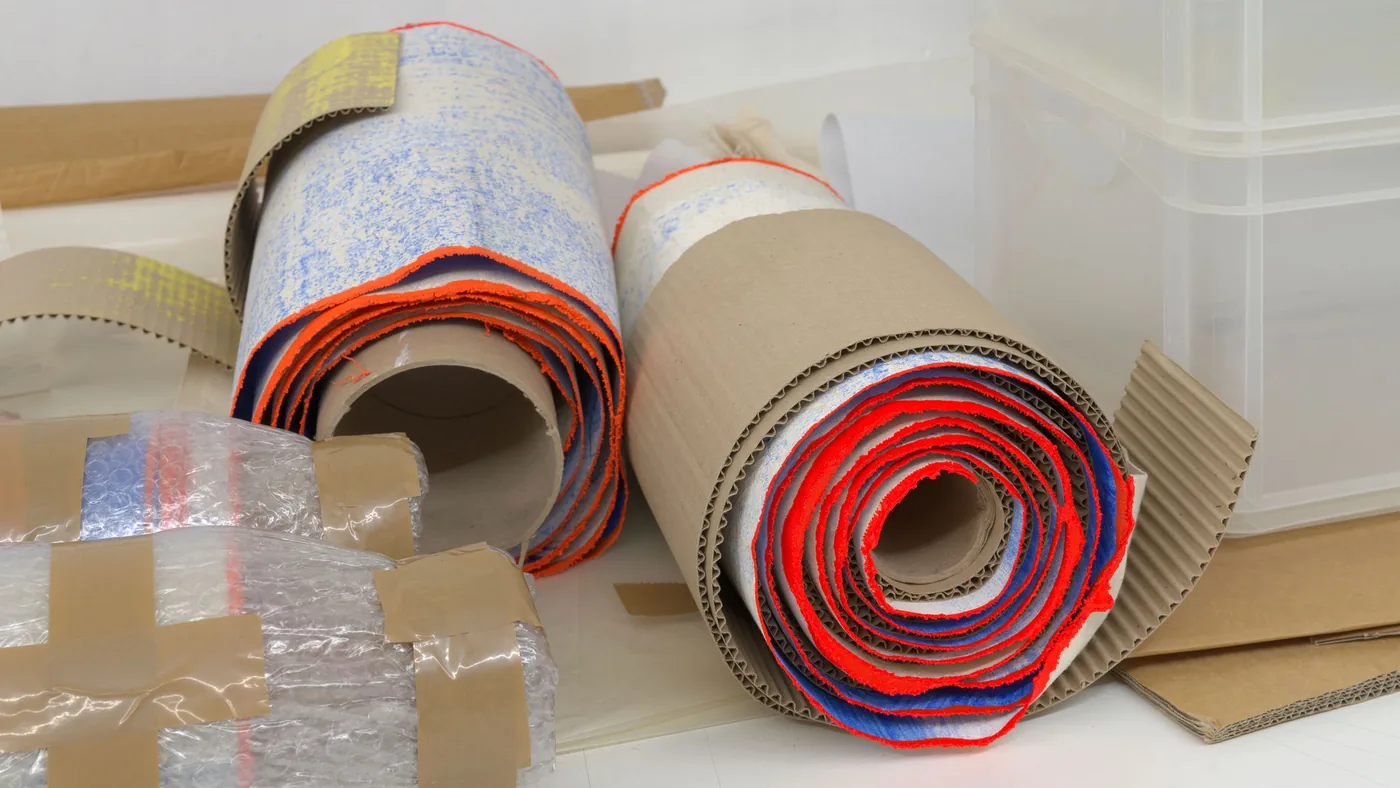
For the first time, Levi paints on industrial mesh, a material usually reserved for large-scale signage. Its open weave lets the air pass through the surface, which keeps the work resilient to the riverside weather, and the artist turns a commercial support into a painterly one. September exists both as a single composition and as an expandable series.
Born in Istanbul in 1960 and raised in Aargau, Levi lives and works in Basel. She studied architecture at HTL Muttenz/Basel, then at the Zurich School of Art and Design, and for more than thirty years her practice has questioned painting itself: colour, the application of paint, its materiality and its relationship to space. Her recent projects include Mira for the courtyard gallery of Kunstmuseum Basel (2025), LA ELLE at the Palais de Tokyo in Paris (2024) and Mia for the Lyon Biennale (2019). She received the Prix Meret Oppenheim in 2002, taught painting at the Institute of Art of the FHNW Academy of Art and Design from 2001 to 2022, and in 2023 won a public art competition for the Swiss Parliament Building in Bern.
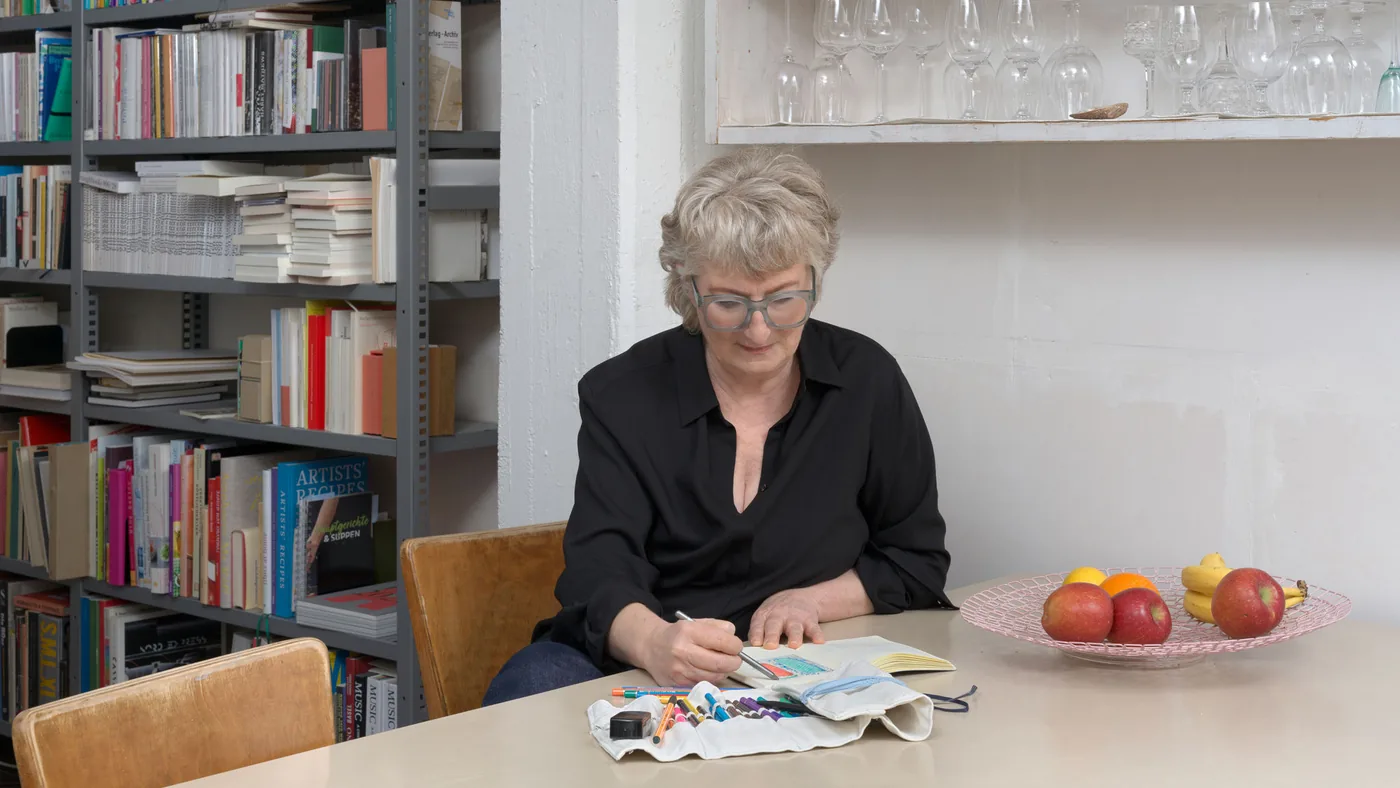
“September begins with an encounter between painting, the body in the act of painting, and the distinctive building of the Hayward Gallery,” Levi explains. “In this way, the painting unfolds over time – first through the act of painting, and later through the movement of people passing the Hayward Gallery.”
A First for Audemars Piguet Contemporary
Since 2012, Audemars Piguet Contemporary has commissioned international artists to create new works across a variety of scales and media. The works belong to the artists and enter their own body of work; two in-house curators follow each commission from its first idea to its exhibition, and the programme travels, partnering with cultural institutions to bring each piece to new audiences. Its artists include Cao Fei, Ryoji Ikeda, Tomás Saraceno, Meriem Bennani and Adrián Villar Rojas. The same programme carries the Maison’s Associate Partnership with Art Basel.
Painting now joins that list, and the choice speaks to the culture of the Manufacture. In the Vallée de Joux, experimentation with materials is the path by which new forms emerge, a spirit also at work in the Atelier des Établisseurs. Levi works the same way, letting a new visual language appear from the dialogue between constraint and possibility.
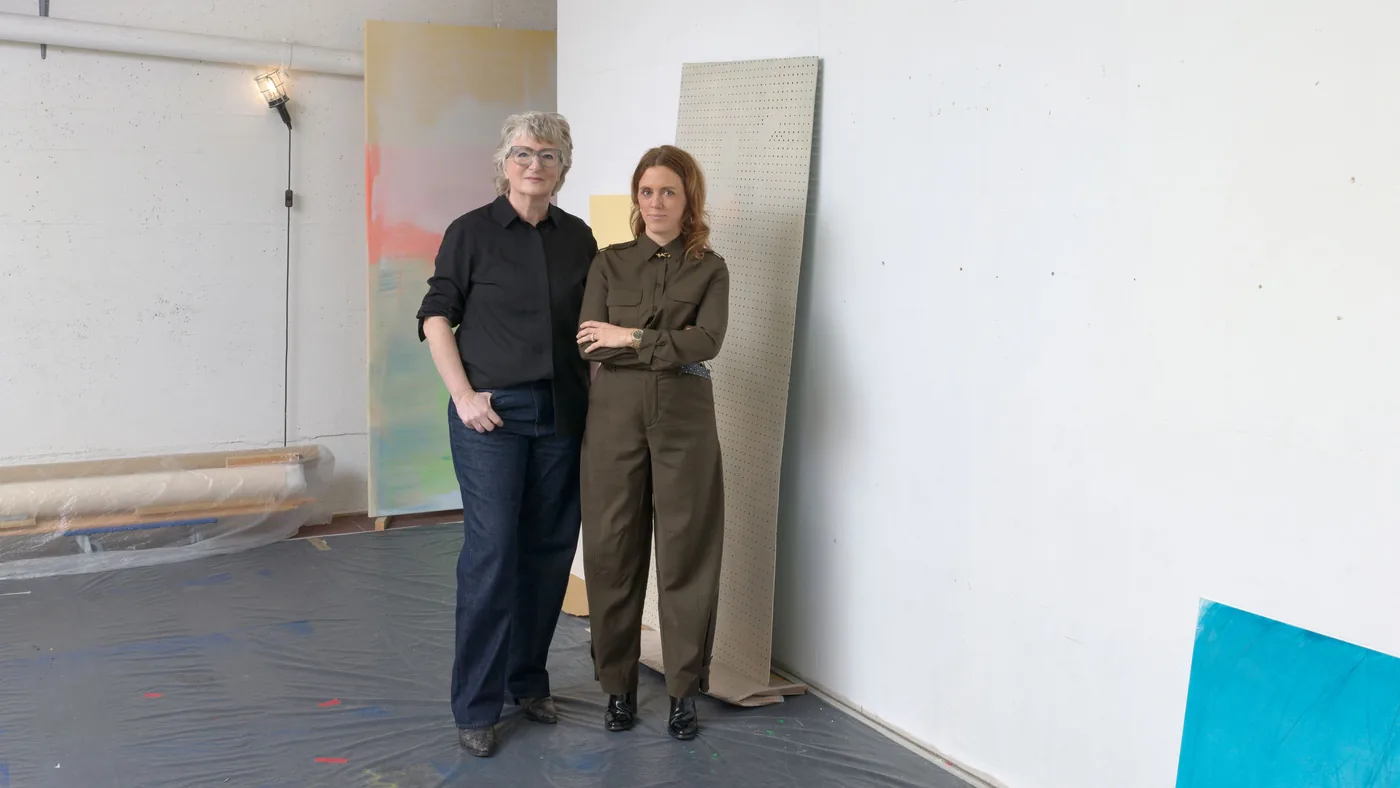
“As Renée’s first large-scale public installation in the UK, and the first painting commissioned by Audemars Piguet Contemporary, September reflects our mission to support artists as they explore new territories in their practice,” says Audrey Teichmann, Curator at Audemars Piguet Contemporary. “It also speaks to our shared commitment to excellence, experimentation and innovation through material, process and time.”
The programme also accompanies its earlier commissions. Adrián Villar Rojas’s Untitled (From the Series The Language of the Enemy), first presented in Le Brassus in 2025, is on view at the Aspen Art Museum until 11 April 2027.
Seeing September Before 15 November
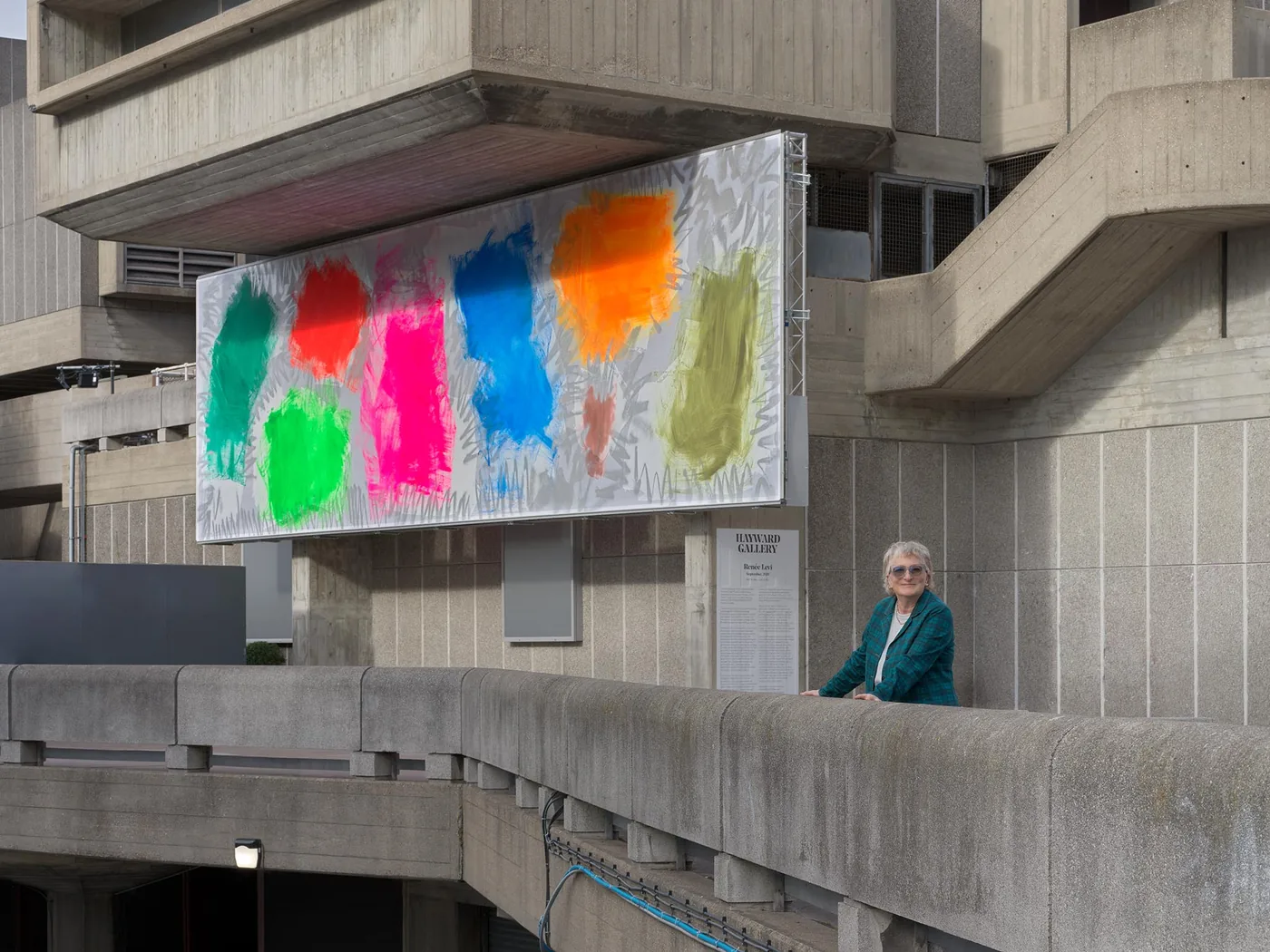
September remains on the façade of the Hayward Gallery, at the Southbank Centre in London, until 15 November 2026. Set in the open air, it invites every visitor and passer-by into a personal, unobstructed relationship with the work, in bright daylight and in shadow, whole from afar or in glimpses at an angle. For readers travelling to London this autumn, it offers an encounter with a leading Swiss painter, a Swiss manufacture and one of the city’s most celebrated buildings in a single view. Further details on the commission are available on the official Audemars Piguet website.
Frequently Asked Questions
What is September by Renée Levi?
September is a two-panel painting on industrial mesh, co-commissioned by the Hayward Gallery and Audemars Piguet Contemporary and unveiled on 23 September 2026 on the façade of the Hayward Gallery in London. It is the artist’s first large-scale public installation in the United Kingdom.
How long can September be seen in London?
The painting remains on the façade of the Hayward Gallery, at the Southbank Centre, until 15 November 2026. It is set in the open air, along the South Bank of the Thames, and is visible to every passer-by.
What is Audemars Piguet Contemporary?
Audemars Piguet Contemporary is the art programme of Audemars Piguet. Since 2012 it has commissioned more than 25 international artists, and September is the first painting it has commissioned.