Key Highlights
- Gemsetting was the first decorative art explored in depth at Richard Mille, dating to the RM 007 of 2005
- Precious stones function as structural and architectural components, not ornamental additions
- Materials including Carbon TPT®, sapphire, and ceramics require CNC or laser machining with tolerances of approximately one micron
- The RM HJ-01 marks the inaugural chapter of Richard Mille’s haute joaillerie collection, produced as four unique pieces
- An in-house gemsetting workshop, launched in June 2019, consolidates twenty years of accumulated expertise
Stones as Constitutive Elements
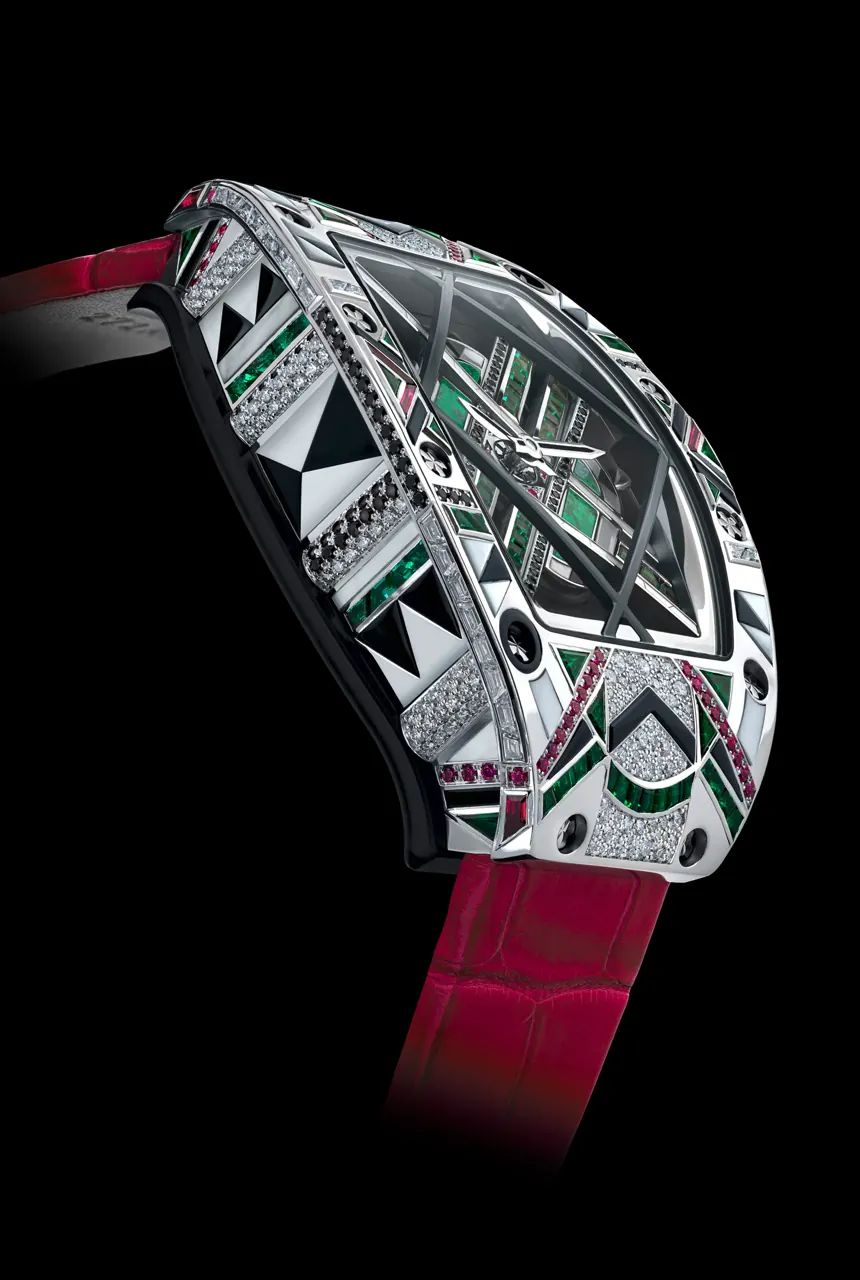
At most maisons, gemsetting is applied after the watch is designed, a final flourish on a finished object. Richard Mille has operated on a fundamentally different premise since 2005. Diamonds and coloured gemstones are conceived, from the outset, as constitutive elements of the watch, carrying the same architectural weight as case design, calibre layout, and material selection. They recompose the brand’s minimalist contours, join up in imaginary constellations, or conjure the silhouette of a talisman or symbolic figure.
The unique geometry of Richard Mille’s cases makes this far from straightforward. Whether tonneau-shaped, round, or rectangular, their arched silhouettes and elaborately engineered pillars require each cavity to be sculpted individually, sized to the precise dimensions of the stone it will receive. The gemsetter must work with exceptional accuracy, because any deviation in a curved case registers far more visibly than on a flat dial surface. Every curve of the case must be bathed in consistent, brilliant light.
When Gemstones Enter the Movement
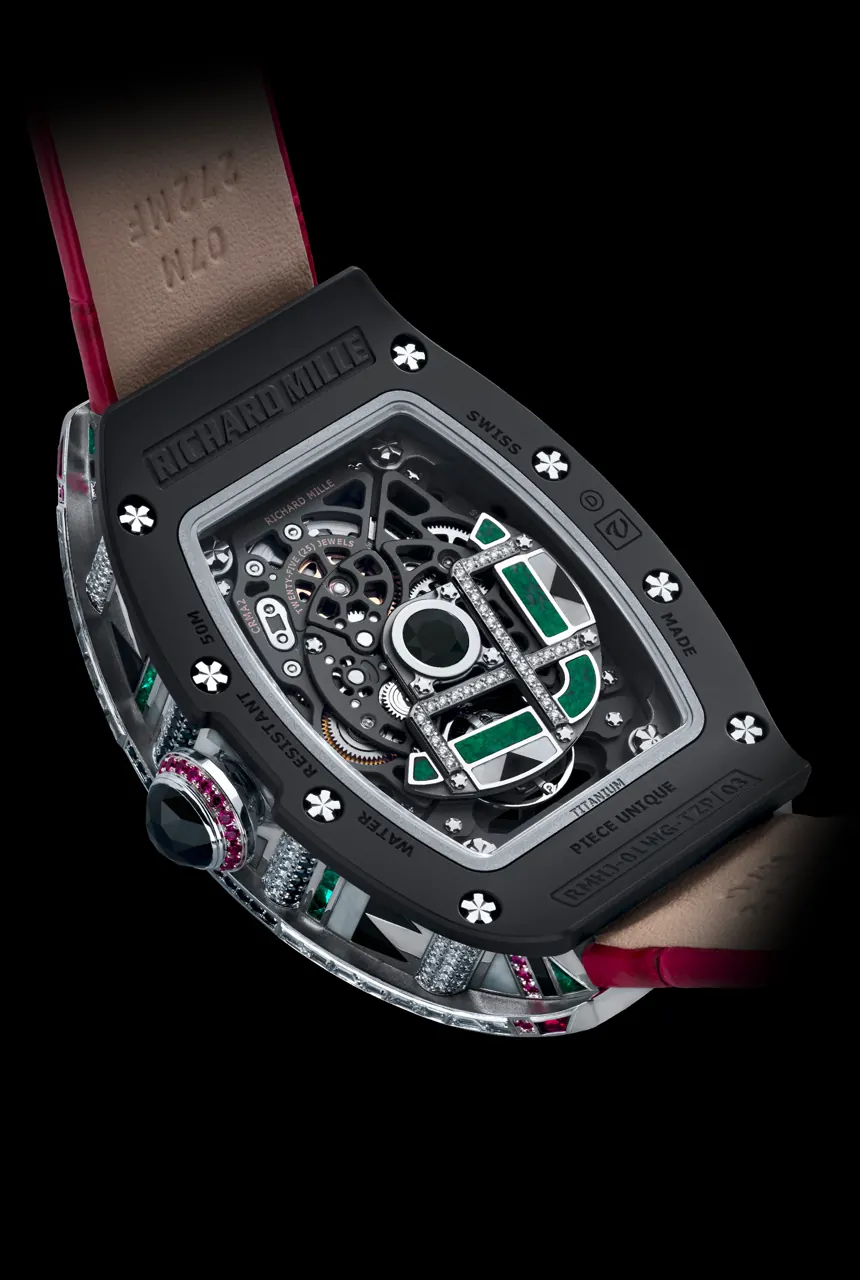
Richard Mille pressed further than the case. By 2008, with the RM 018 Tourbillon Boucheron, stones had entered the sanctum of the movement itself. Gear wheels were constructed from gemstone, a feat that required over four years of development and placed the discipline on new technical ground. The following year, the RM 019 Tourbillon took this logic further still, with a movement baseplate carved entirely from black onyx, a breathtakingly delicate operation given the material’s brittleness under cutting tools.
These were genuine engineering achievements. They proved that gems could assume load-bearing, functional roles within a calibre’s architecture, and that an entirely new discipline was forming at the intersection of haute horlogerie and fine jewellery.
Cécile Guenat and the Expansion of a Creative Language
From 2015 onward, a more expansive creative mandate took hold. The arrival of Cécile Guenat as Head of Design and Development accelerated the process. A graduate of the Geneva University of Art and Design, Guenat works without distinction between the categories of haute horlogerie and fine jewellery. Under her direction, precious stones have begun to appear on Carbon TPT®, cutting-edge ceramics, and sapphire itself, materials that were previously considered inhospitable to gemsetting.
Technical Impossibility as Creative Ambition
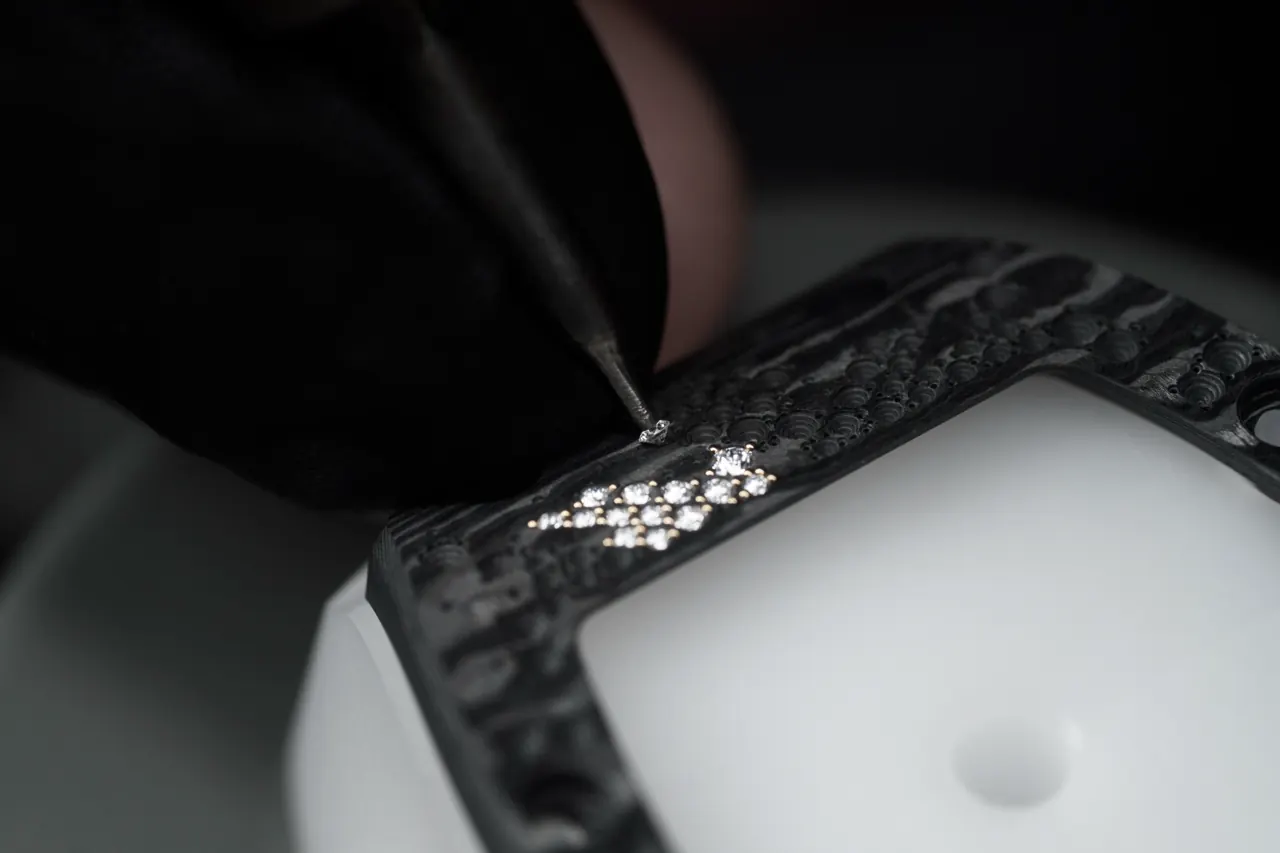
The challenge with these materials goes well beyond hardness. Carbon TPT® is a layered composite; ceramics fracture unpredictably; sapphire transmits every imperfection in the cutting process. Minute cavities must be machined using CNC equipment, or in the case of sapphire, by laser, with margins of error measured in single microns. The gemsetter then introduces tiny gold claws by hand to secure each stone. The process demands that engineering and craft operate in unison, with neither discipline permitted to compromise the other.
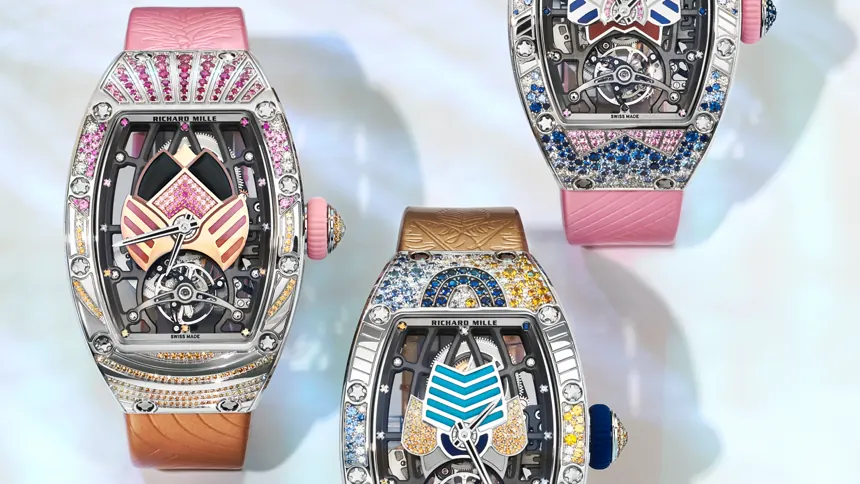
The RM 07-02 Sapphire Automatic, whose case is crafted entirely in pink sapphire, and the RM 71-01 Talisman Automatic Tourbillon, Richard Mille’s first in-house automatic tourbillon calibre, stand as clear evidence that this synthesis produces results unattainable by conventional means. The RM 71-02 Talisman Tourbillon pushes the register further, drawing from the energy and chromatic excess of 1970s disco culture through a profusion of precious stones.
The RM HJ-01: A First Chapter in Haute Joaillerie
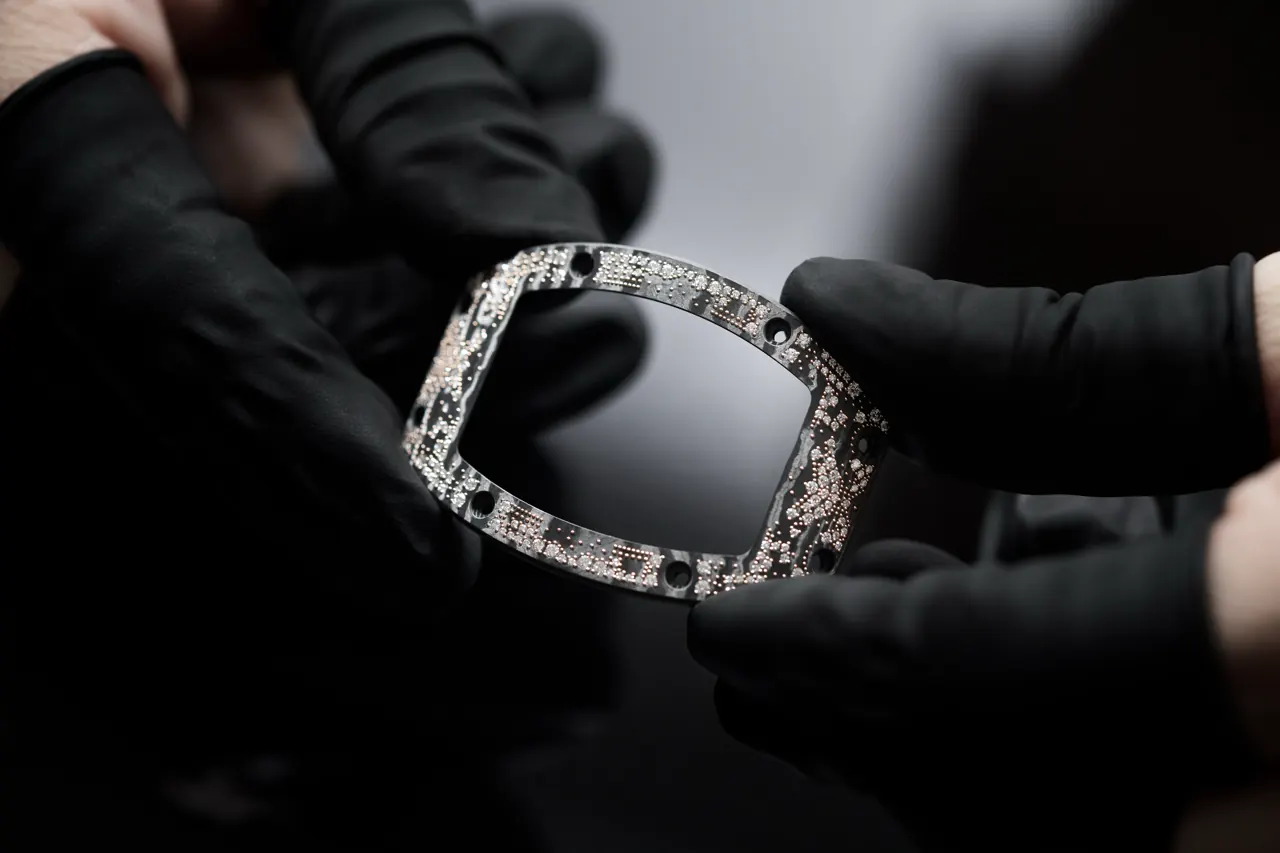
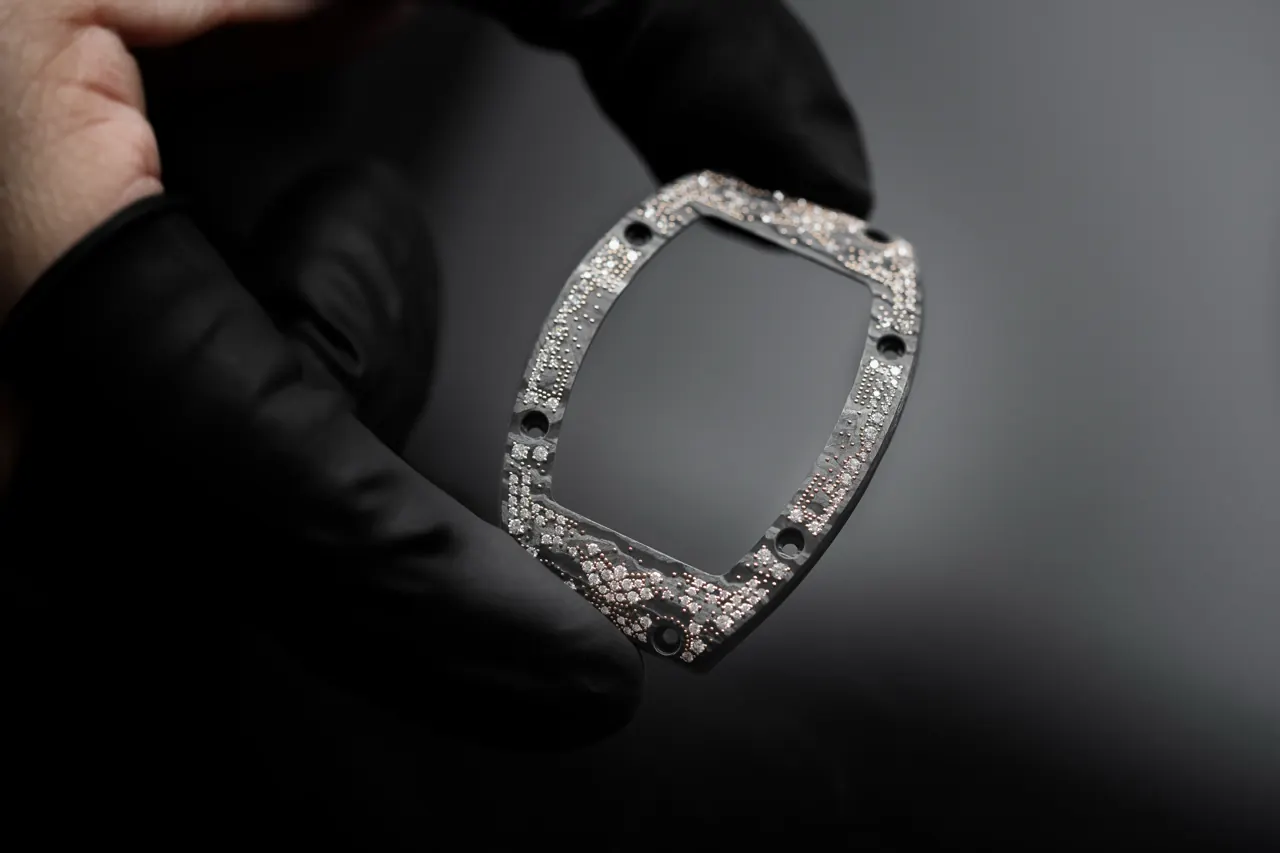
All of this work culminated in the RM HJ-01, the inaugural piece of Richard Mille’s dedicated haute joaillerie collection. Produced as four unique works, it revisits the tonneau case with bold, uncompromising lines in striking colours: ruby, blue sapphire, violet sapphire, and emerald. Setting techniques range across bezels, bead setting, and snow settings, each chosen not for convention but for what each stone’s geometry demands.
The RM HJ-01 crosses the realms of traditional high jewellery, fine arts, and watchmaking without deferring to any one of them. It is the product of twenty years of accumulated knowledge, made possible by the opening of an in-house gemsetting workshop in June 2019, a facility purpose-built to push the limits of the craft beyond what any external atelier could accommodate. That workshop is no endpoint. At Richard Mille, the technically impossible has historically served as the starting point.
For more on how leading maisons are redefining the relationship between watchmaking and the decorative arts, subscribe to our newsletter for editor-curated coverage of luxury timepieces across the Middle East.
Frequently Asked Questions
When did Richard Mille first explore gemsetting as a decorative art?
Richard Mille first explored gemsetting in depth with the RM 007 in 2005, introducing precious stones as structural and architectural components rather than purely ornamental additions to the watch.
How does Richard Mille treat gemstones differently from other luxury watch brands?
At Richard Mille, gemstones are conceived from the outset as constitutive elements of the watch, carrying the same architectural weight as case design and calibre layout, rather than being applied as a final decorative flourish after the watch is designed.
What milestone did Richard Mille achieve with the RM 018 Tourbillon Boucheron in 2008?
The RM 018 Tourbillon Boucheron marked the first time gemstones entered the movement itself, with gear wheels constructed from gemstone—a feat that required over four years of development and established an entirely new discipline at the intersection of haute horlogerie and fine jewellery.
Explore more from RICHARD MILLE: Richard Mille Partner Grégoire Saucy Joins the McLaren Driver Development Programme 2026 · Richard Mille Cup Returns For Its Third Edition In June 2026.