Key Highlights
- Launch of the 1737 collection at Watches and Wonders Geneva 2026, less than two years after Favre Leuba’s revival.
- Triple calendar with moon phase powered by the FLD06 automatic caliber with 56-hour power reserve and precision of ±5 seconds per day.
- 39mm stainless steel case with 100m water resistance, sapphire exhibition caseback, and 4N gold-toned movement.
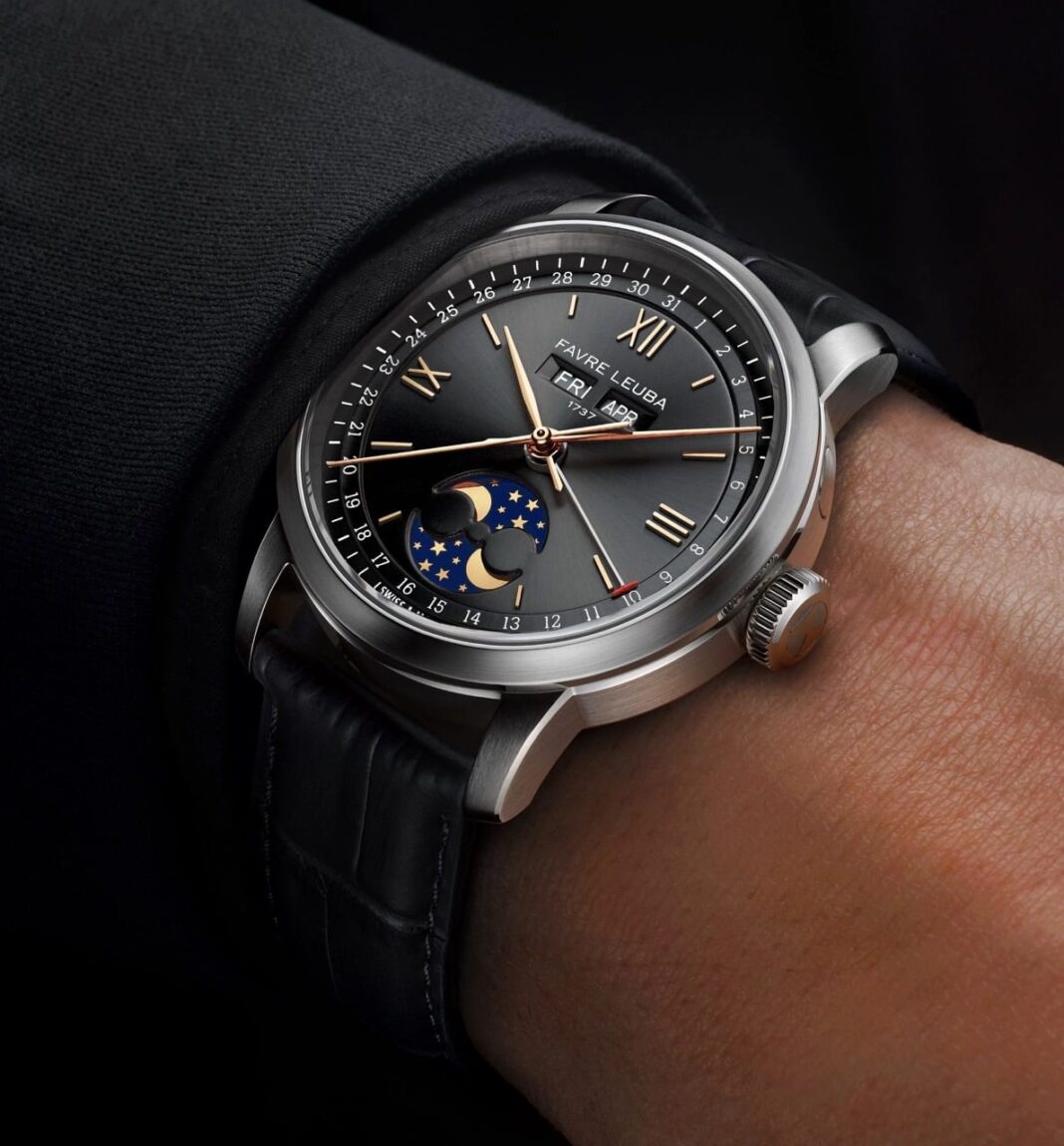
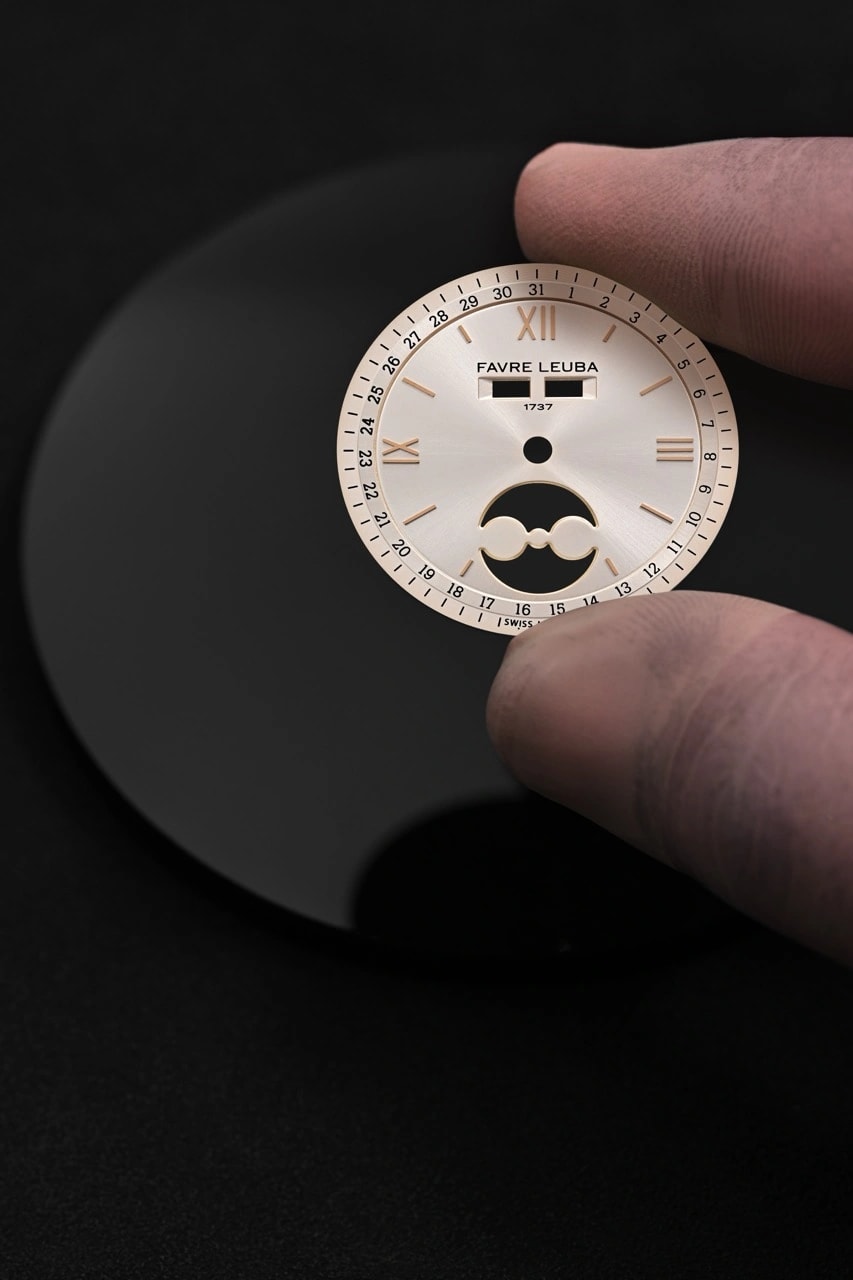
- Dial with twin apertures for day and month, moon phase at 6 o’clock, and a pointer date scale.
- Quick-release blue leather strap with engraved Favre Leuba sablier pin buckle; retail price CHF 3’500.
A New Pillar: The 1737 Collection
With the 1737 Triple Calendar, Favre Leuba inaugurates a collection that pays tribute to the maison’s founding year and marks its debut at Watches and Wonders Geneva 2026. Arriving less than two years after the brand’s revival, the 1737 line joins Chief, Deep Raider, Sea Sky and Harpoon as a core pillar and signals Favre Leuba’s return to refined daily-wear complications.
This first reference anchors the collection in classical watchmaking through the triple calendar and moon phase, long-standing Favre Leuba signatures that link Abraham Favre’s 1737 beginnings in Le Locle with the brand’s post-2024 relaunch era.
A Legacy of Calendar and Moon Phase Complications
Favre Leuba’s decision to lead the 1737 line with a triple calendar moon phase draws directly from its historic portfolio. In 1946 the maison introduced the Datora, combining a triple calendar—day, date and month—with a moon phase display and, in some versions, a chronograph.
Around 1950, Favre Leuba produced additional triple calendar moon phase watches with Bovet & Frères using the caliber 1162, followed in the 1950s by triple calendars and calendar chronographs equipped with Valjoux calibers. The 1737 Triple Calendar continues this line of complications that has long formed part of the brand’s identity and reconnects the revived company with its mid-century production.
Case, Dial and Complications
The 1737 Triple Calendar is housed in a 39mm stainless steel case inspired by Favre Leuba’s geometric 1970s designs, measuring 12.11mm thick with a 47.1mm lug-to-lug and 20mm lug width. Water resistance is 10 ATM (100m), with sapphire crystal front and sapphire exhibition back framing the 4N gold-finished movement, while recessed correctors at 2 and 10 o’clock adjust the month and day.
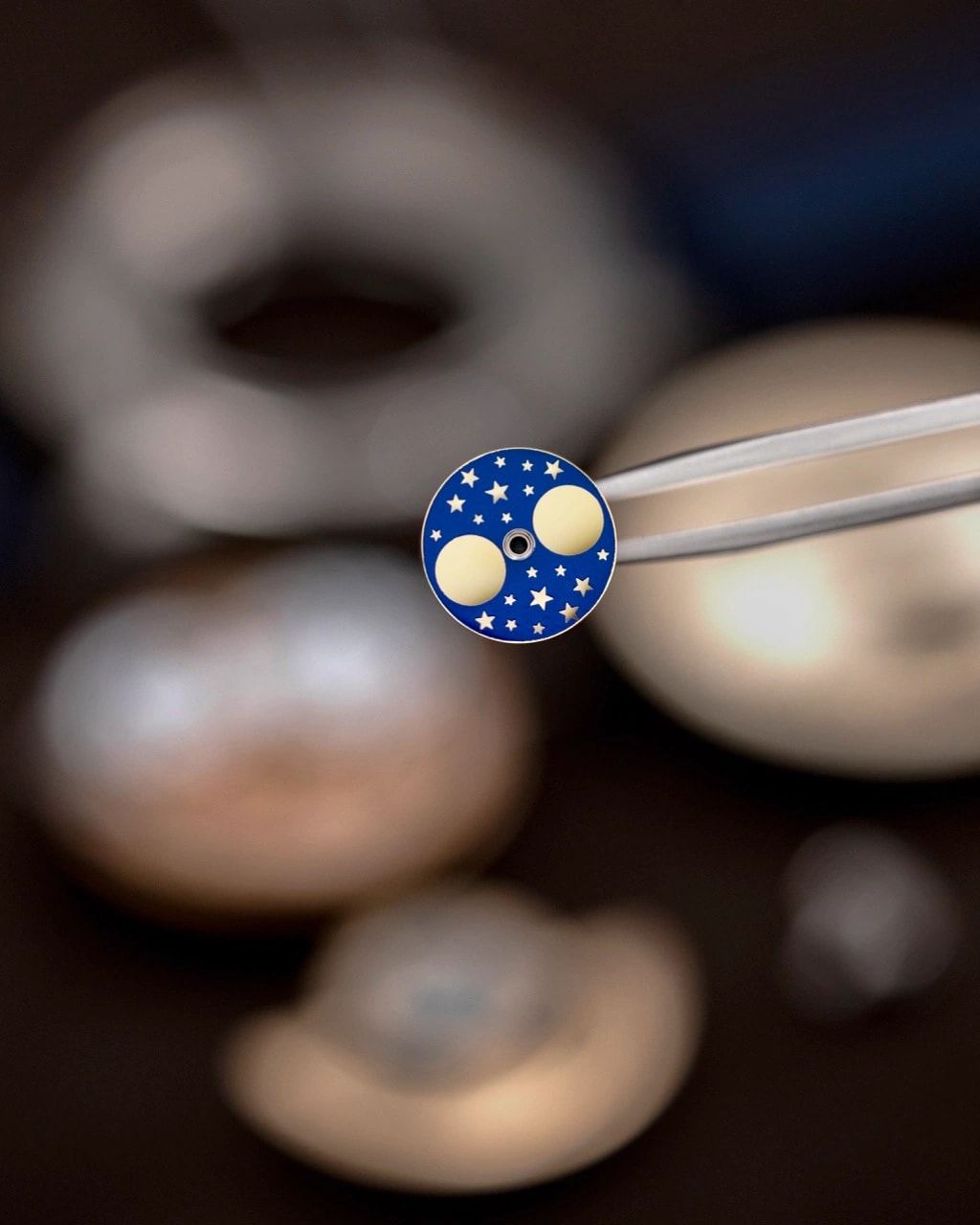
The dial favours clarity, with a sunray-finished centre encircled by a pointer date scale and snailed minutes track. Applied 4N gold-finished markers mix Roman numerals and stick indexes, twin apertures at 12 o’clock display day and month, and a moon phase at 6 o’clock completes the full calendar.
Movement and Mechanical Detailing
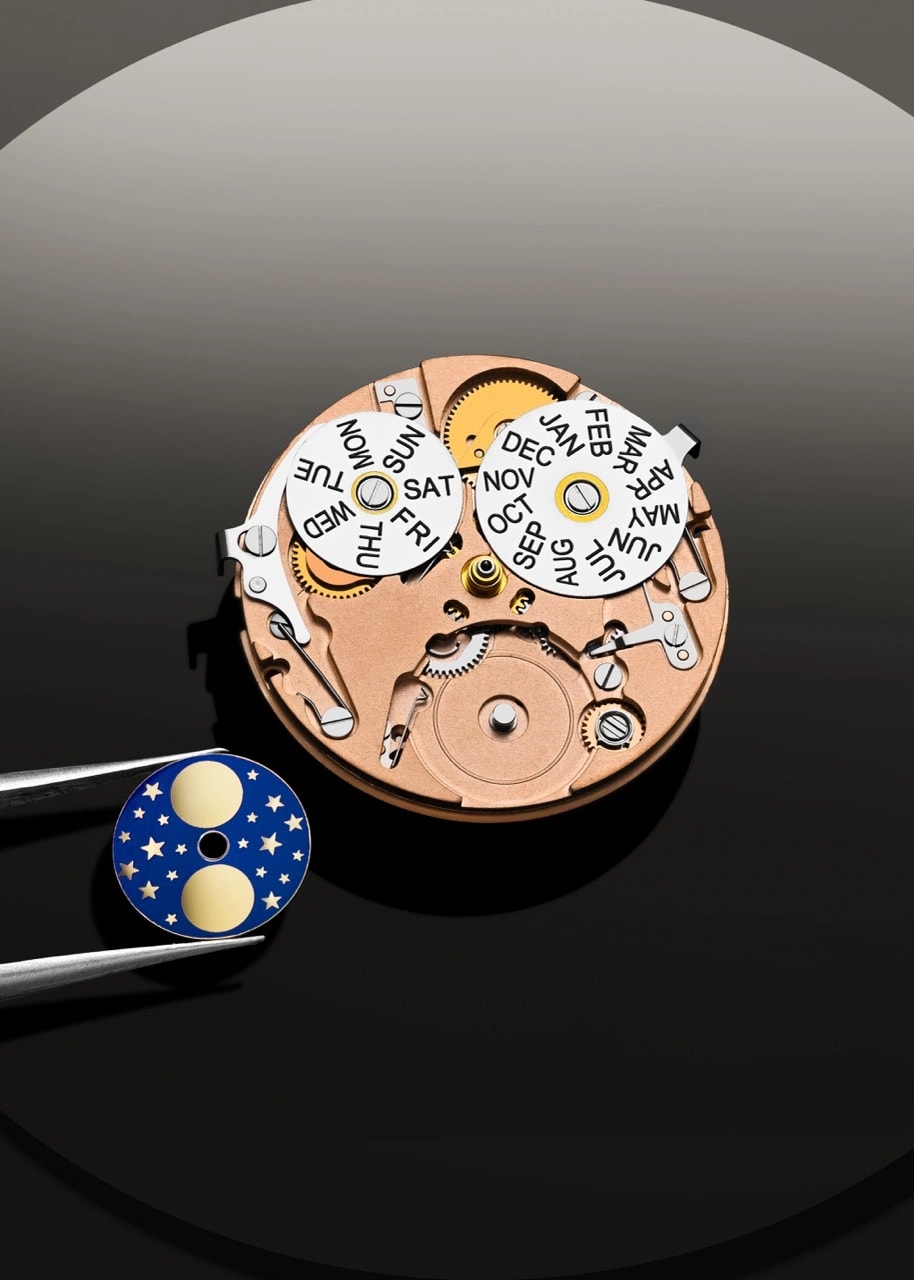
At the heart of the 1737 Triple Calendar lies the FLD06 automatic caliber, supporting the triple calendar suite—day, date, month and moon phase—with a 56-hour power reserve, 28,800 vibrations per hour (4 Hz), and specified precision of plus or minus five seconds per day.
Visible through the sapphire back, the 4N gold-finished FLD06 is decorated with Côtes de Genève, perlage, blued screws and diamond snailing. A custom skeletonised rotor continues these codes with Côtes de Genève, paper snailing and an engraved sablier logo.
Strap, Wearability and Value
The watch is delivered on a blue leather strap secured by a stainless steel pin buckle engraved with the Favre Leuba sablier monogram, with a quick-release system enabling tool-free strap changes.
Positioned at a retail price of CHF 3’500 and backed by a two-year warranty extendable to three years, the 1737 Triple Calendar offers triple calendar and moon phase indications in a Swiss-made package at the heart of Favre Leuba’s renewed collection.
Why It Matters
For collectors in the Middle East, the 1737 Triple Calendar unites a historic complication set, contemporary design and 100m water resistance for everyday practicality. As Favre Leuba debuts at Watches and Wonders Geneva 2026 and advances its Renaissance era, this reference offers a focused entry into the revived collection that aligns long-standing Swiss watchmaking know-how with modern expectations of reliability and value.
Frequently Asked Questions
What complications does the Favre Leuba 1737 Triple Calendar feature?
The 1737 Triple Calendar displays day, date, and month via twin apertures at 12 o’clock, along with a moon phase indicator at 6 o’clock, all powered by the FLD06 automatic caliber with a 56-hour power reserve.
When did Favre Leuba first introduce triple calendar moon phase watches?
Favre Leuba introduced its first triple calendar moon phase watch, the Datora, in 1946, combining day, date, month, and moon phase display. The brand continued this tradition with additional triple calendars in the 1950s using Bovet & Frères and Valjoux calibers.
What is the case size and water resistance of the 1737 Triple Calendar?
The 1737 Triple Calendar features a 39mm stainless steel case measuring 12.11mm thick with 100m water resistance (10 ATM), sapphire crystal front and exhibition caseback, and is inspired by Favre Leuba’s geometric 1970s designs.