At a Glance
- Contemporary Japanese artist Makoto Ofune created a one-of-a-kind artwork exclusively for the Bvlgari Shinsaibashi Flagship in Osaka.
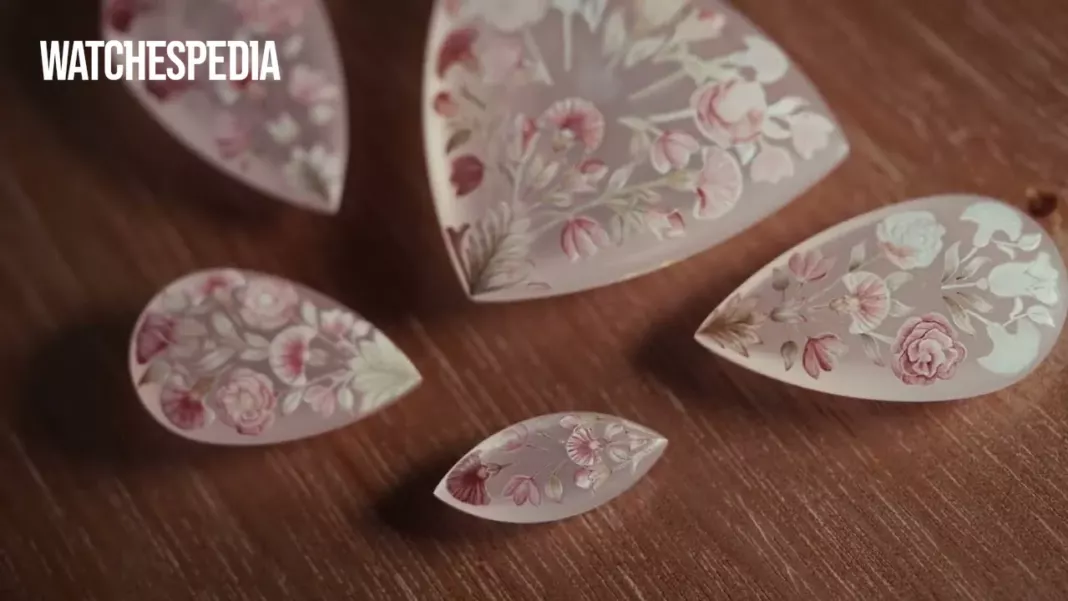
- The artwork is produced by hand-crushing mineral and gemstone pigments, which are then layered onto traditional Japanese hemp paper.
- Ofune’s practice centres on the hidden strength of natural materials, treating minerals, gemstones, and time itself as sources of artistic expression.
- The commission represents a dialogue between ancestral Japanese craftsmanship and BULGARI’s contemporary creative vision.
- The collaboration celebrates the shared pursuit of beauty and enduring savoir-faire between the Roman maison and the Japanese artist.
A Roman Maison Meets Japanese Mastery
BULGARI, the Rome-founded luxury house renowned for its bold integration of colour, gemstones, and artistic heritage, has long sought dialogue with creative voices beyond its own tradition. The commission of Makoto Ofune for the Bvlgari Shinsaibashi Flagship in Osaka represents one of the most considered expressions of that impulse: a meeting between two cultures that share an uncompromising respect for material integrity and handmade precision. Rather than a decorative gesture, this is a work conceived from the ground up to inhabit a specific, significant space.
The Shinsaibashi district of Osaka carries considerable weight in Japan’s luxury retail landscape, and the BULGARI flagship there occupies a position of cultural as well as commercial importance. By inviting an artist of Ofune’s calibre to contribute an original work, BULGARI signals that its vision for the boutique extends well beyond product display. It is conceived as a living environment where craft, beauty, and meaning converge. For collectors and connoisseurs across the Middle East who travel frequently to Japan, the Shinsaibashi flagship now offers an additional dimension of cultural engagement.
Makoto Ofune and the Language of Mineral Pigments
Makoto Ofune is a contemporary Japanese artist whose practice is rooted in the expressive potential of natural materials. His work for BULGARI begins with the physical act of hand-crushing mineral and gemstone pigments, a labour-intensive process that transforms raw geological matter into a medium capable of holding light, texture, and depth simultaneously. Each pigment carries its own character, shaped by the conditions under which it formed over geological time, and Ofune’s method honours that inherent identity rather than overriding it.
These crushed pigments are then layered onto traditional Japanese hemp paper, a support material with its own centuries-long lineage in East Asian artistic practice. Hemp paper possesses a particular tensile quality and surface texture that responds to mineral pigments in ways that synthetic or Western paper stocks cannot replicate. The result is a work in which every element, substrate, pigment, and application, is the product of deep material knowledge accumulated across generations of craft tradition. It is this layering of time within the object itself that gives the artwork its conceptual resonance alongside its visual presence.
Gemstones as Artistic Raw Material
What distinguishes Ofune’s approach is the elevation of gemstones from objects of adornment to primary artistic ingredients. In the BULGARI commission, minerals and gemstones are not referenced or depicted; they are ground down and physically incorporated into the surface of the work. This act of transformation echoes BULGARI’s own philosophy toward precious stones: that their value lies not only in their appearance but in the knowledge, patience, and skill required to unlock what they contain. The parallel between the jeweller’s atelier and the artist’s studio becomes unexpectedly precise at this level of material engagement.
Ancestral Craft and Contemporary Creativity in Dialogue
BULGARI has described the Ofune commission as a dialogue between ancestral craftsmanship and contemporary creativity, a framing that rewards careful consideration. Ancestral craftsmanship, in this context, encompasses both the Japanese traditions that inform Ofune’s technique and the Italian goldsmithing heritage that underpins BULGARI’s own savoir-faire. Neither is treated as a relic; both are understood as living disciplines that continue to evolve through the hands of practitioners who have chosen depth over convenience.
This ethos connects naturally to other moments in BULGARI’s creative history where artistic collaboration has informed the maison’s broader identity. The Serpenti Viper and B.zero1 Artsmanship editions similarly explore the intersection of jewellery craft and external artistic influence, suggesting that the Shinsaibashi commission is part of a sustained, considered programme rather than an isolated gesture. Together, these projects articulate a coherent creative philosophy: that enduring luxury must be rooted in genuine making.
For the work commissioned by the Osaka flagship, the outcome is an artwork that belongs entirely to its location, created for that space, in response to that space, and unlikely to exist in quite the same form anywhere else. This specificity is itself a form of luxury, one that transcends category and speaks to collectors who understand that true rarity is not merely a matter of limited production numbers but of irreplaceable creative circumstance.
Why It Matters
For luxury enthusiasts and collectors across the Middle East, many of whom engage deeply with both Japanese design culture and Italian jewellery heritage, the BULGARI and Makoto Ofune collaboration at Shinsaibashi offers a compelling point of reference. It demonstrates that the most meaningful expressions of luxury today emerge at the intersection of artistic disciplines, cultural traditions, and materials with genuine histories. The official film documenting the collaboration is available on the Bvlgari YouTube channel for those wishing to observe Ofune’s process firsthand.
Stay ahead of the latest releases. Subscribe to our newsletter for editor-curated coverage of luxury timepieces and jewellery across the Middle East.
Frequently Asked Questions
Who is Makoto Ofune and what did he create for BULGARI?
Makoto Ofune is a contemporary Japanese artist commissioned by BULGARI to create a one-of-a-kind artwork for the Bvlgari Shinsaibashi Flagship in Osaka. The piece was made by hand-crushing mineral and gemstone pigments and layering them onto traditional Japanese hemp paper.
What materials does Makoto Ofune use in his artwork for BULGARI Shinsaibashi?
Ofune's artwork employs hand-crushed mineral and gemstone pigments applied in layers onto traditional Japanese hemp paper, combining natural materials with ancestral craft techniques.
Where can I learn more about the BULGARI Shinsaibashi collaboration with Makoto Ofune?
The official film documenting the collaboration between BULGARI and Makoto Ofune is available on the Bvlgari YouTube channel. Further information about the Shinsaibashi Flagship can be found on the official BULGARI website at bulgari.com.