WATCHESPEDIA follows independent and artistic watchmaking across our luxury watch reviews and guides, alongside the maisons and releases shaping the scene in our latest watch news.
At a Glance
- Chess reimagined as a gallery-scale industrial art object by Jason Wilbur
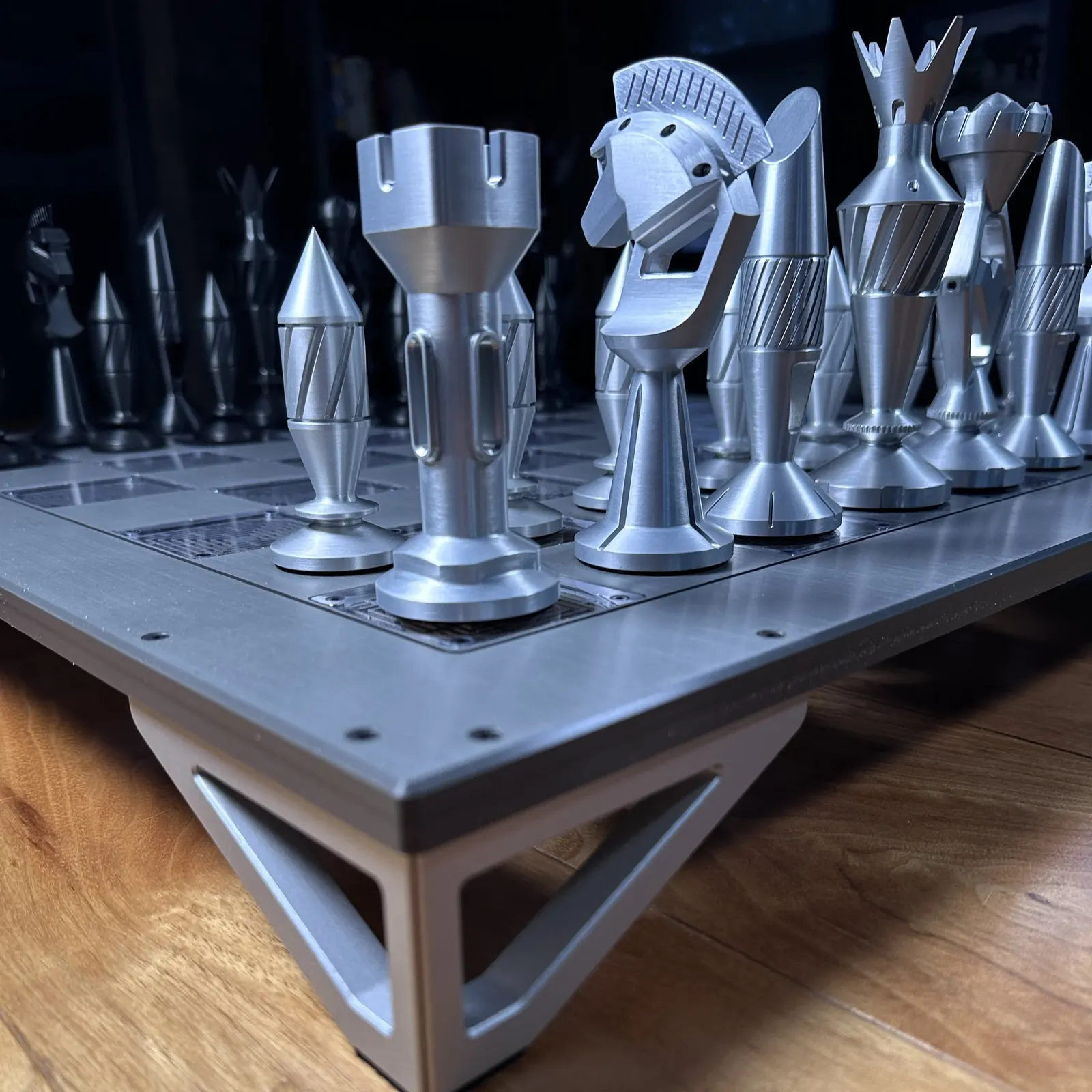
- Machined aircraft-grade aluminium and modern industrial materials throughout
- Signed and numbered limited edition of exactly ten pieces
- Engineered three-dimensional surfaces with sculptural chess pieces
- Developed from hand sketches through CAD to precision-machined reality
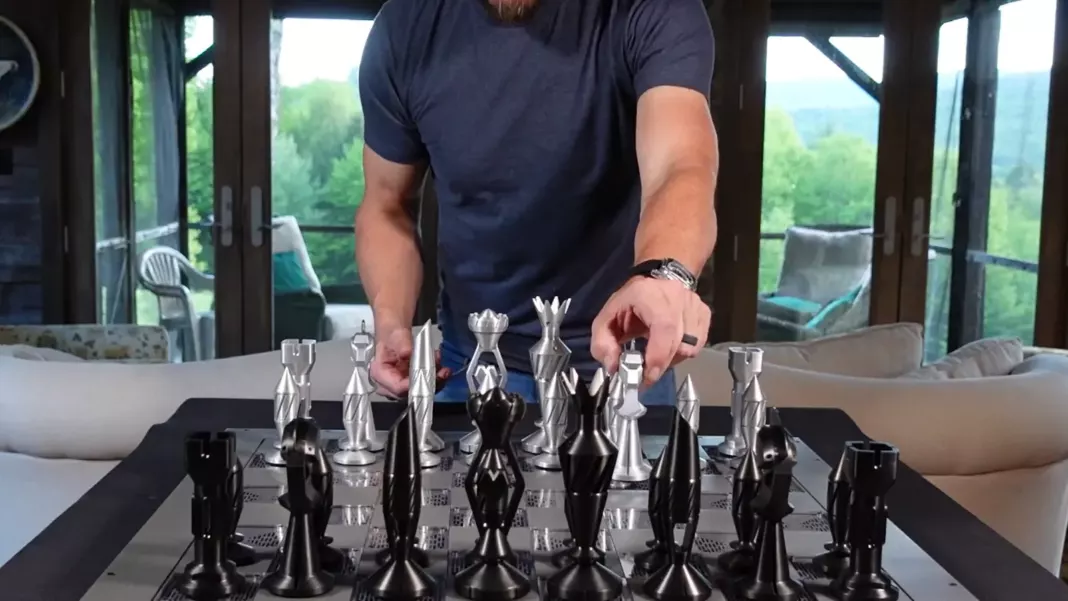
- Built to command a table with the presence of a machine and the gravity of a sculpture
At the Origin of the Object
The Battlefield Mk1 did not begin with a brief. It began with fragments.
Dreams, sketches, and mechanical visions accumulated around a central idea: that chess, the oldest codified game of conflict and strategy, deserved to exist as something more permanent than carved wood or moulded resin. Jason Wilbur collected these fragments over time, allowing geometry, force, and hierarchy to pull themselves into a coherent form before a single dimension was committed to CAD. The result is an object that feels less designed than summoned — as though it demanded to exist and the designer simply answered the call.
Design & Materials
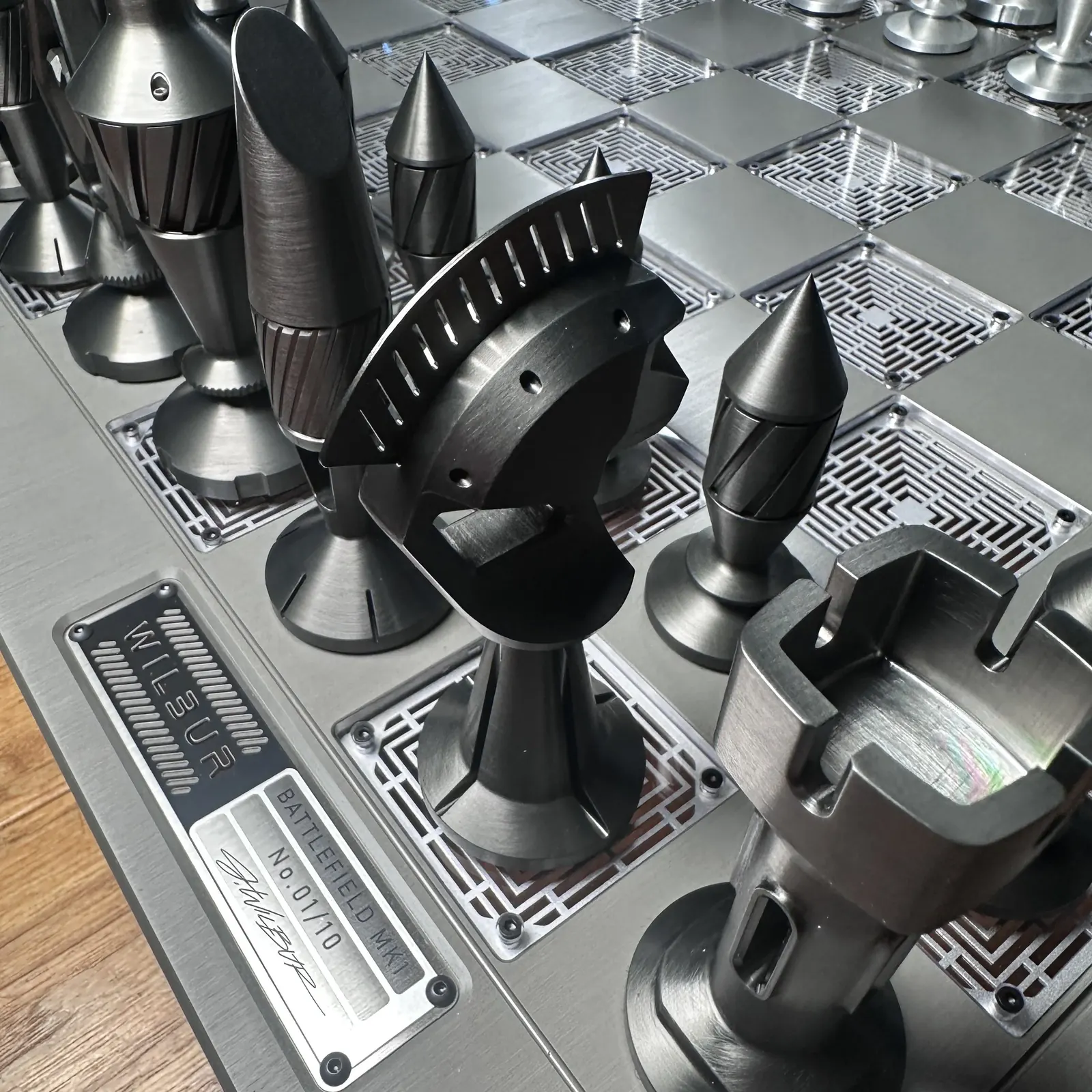
Every surface on the Battlefield Mk1 carries a reason for its existence.
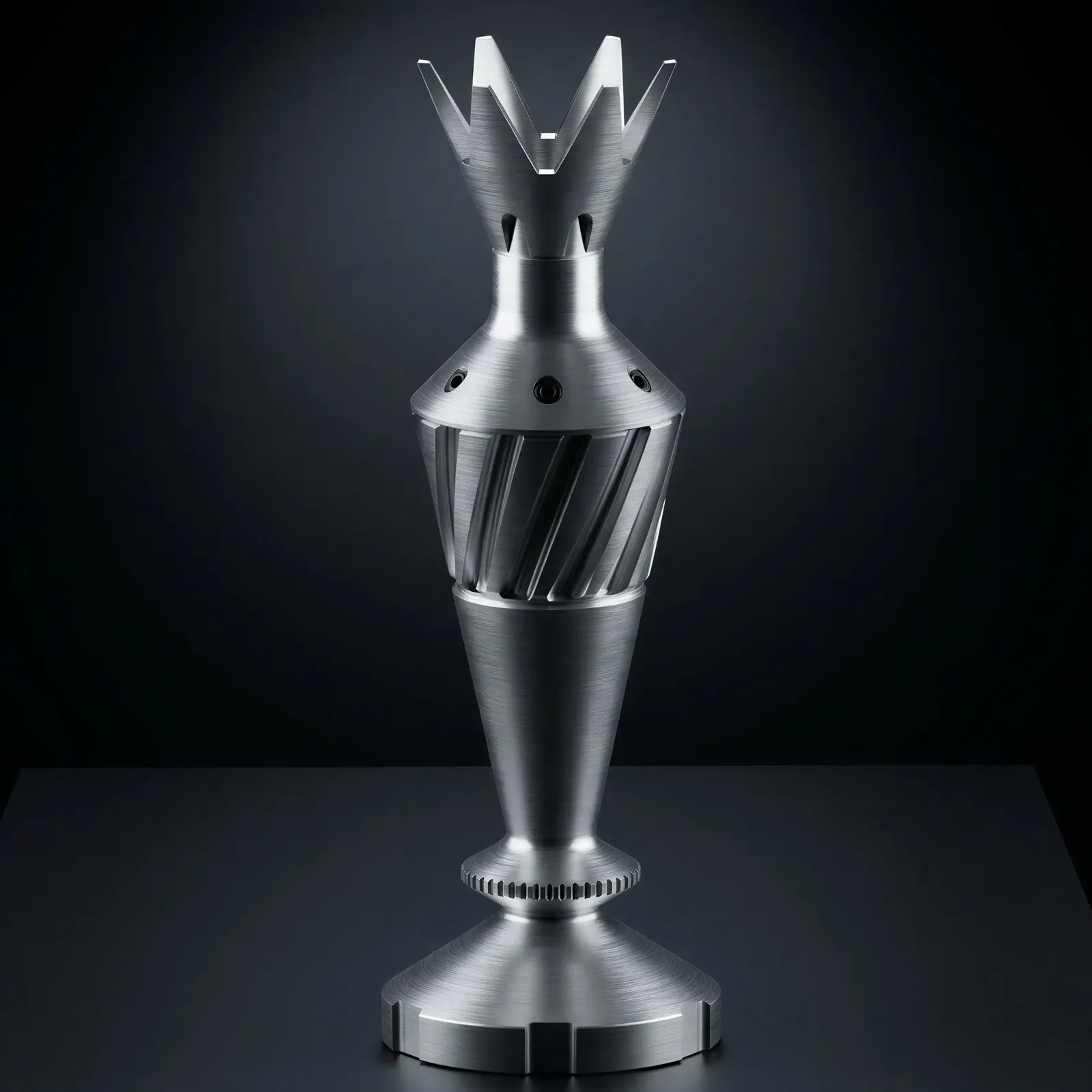
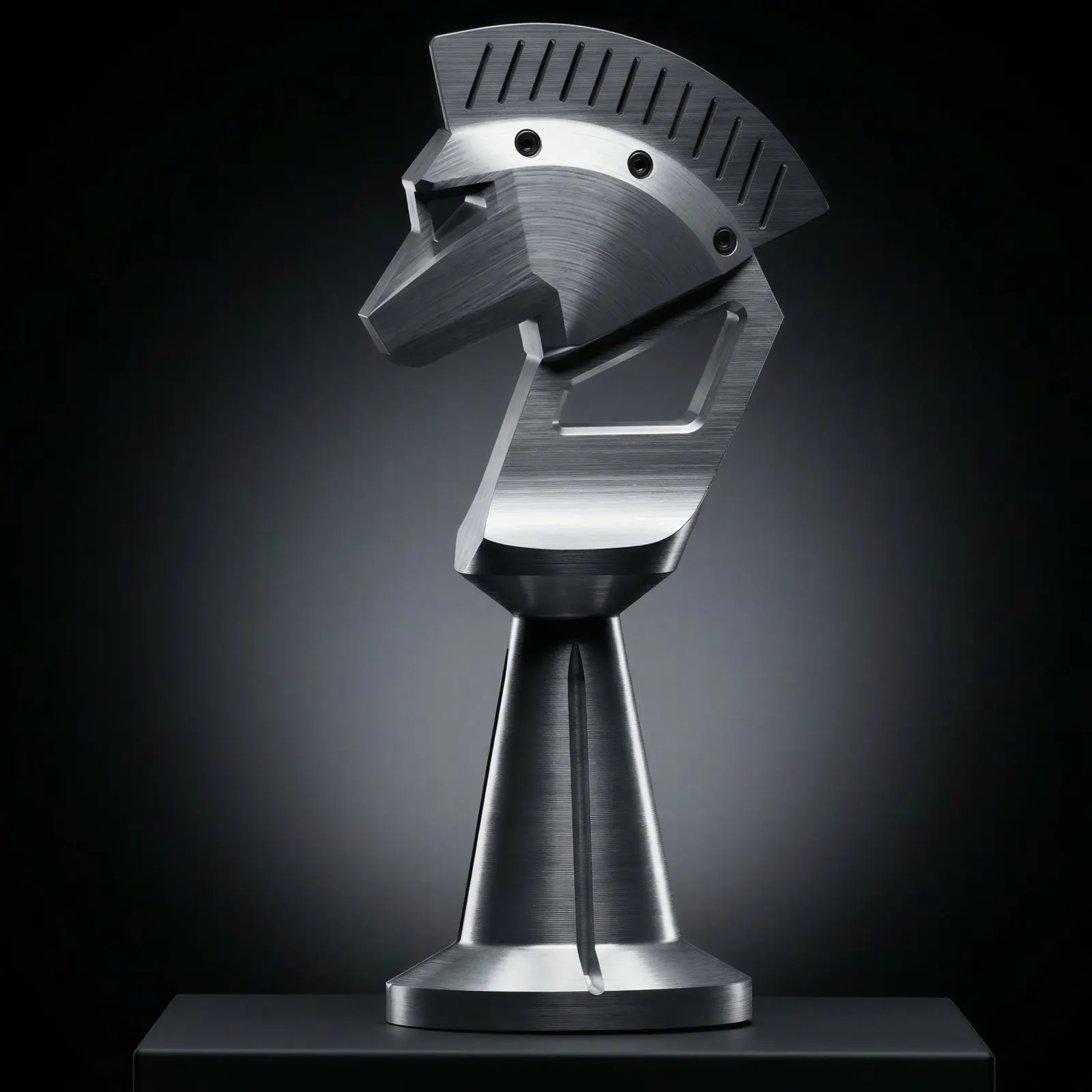
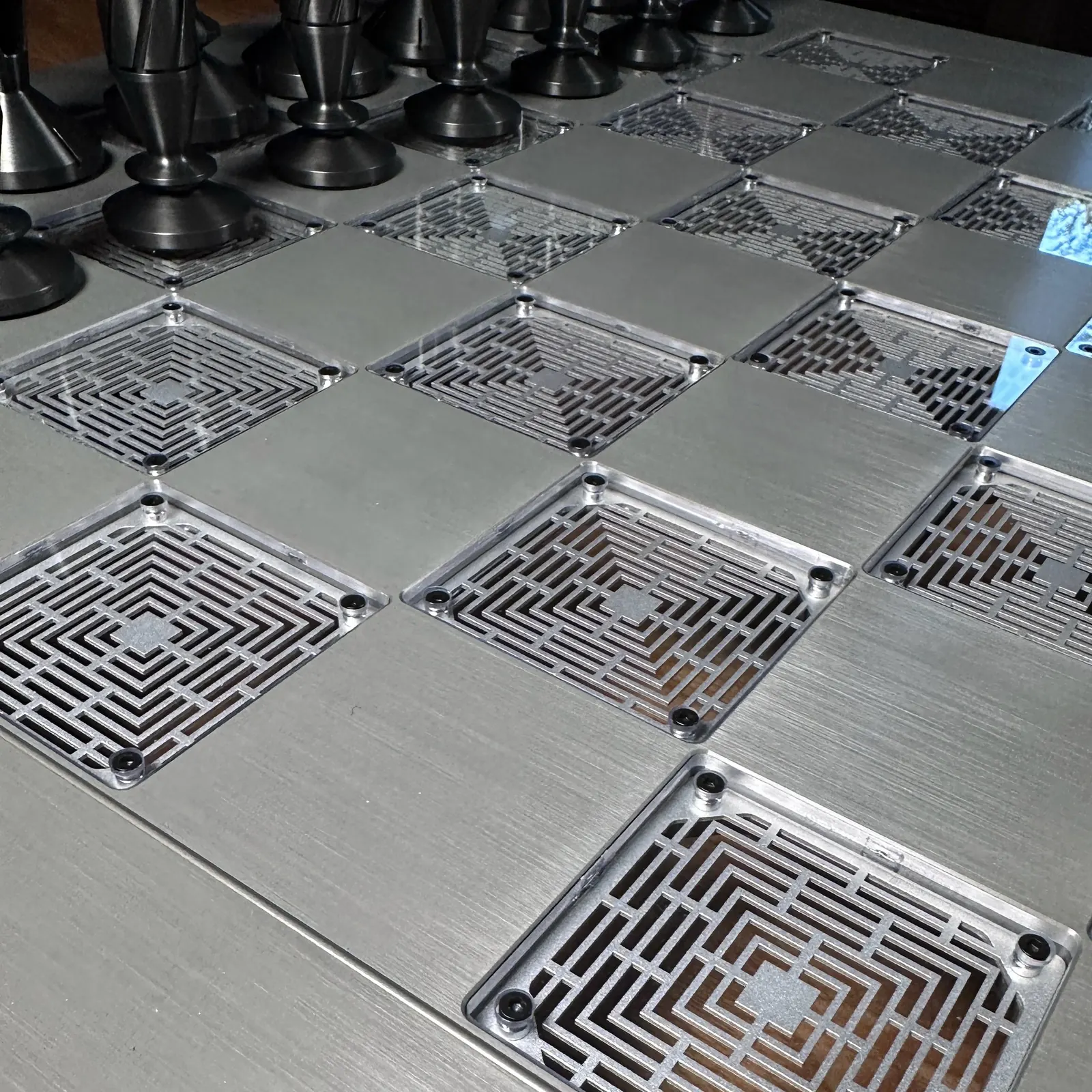
Aircraft-grade aluminium was chosen not for its lightness but for its capacity to be machined into surfaces that hold both precision and personality simultaneously. Combined with modern industrial materials, the construction creates engineered depth — planes that shift under light, edges that carry intention. The chess pieces themselves are sculptural forms, each one shaped by the same logic that governs the board: geometry as hierarchy, mass as authority. Nothing about the Battlefield Mk1 reads as decorative. It is a gallery-scale industrial art object built to command a table, and the materials make that claim physical rather than rhetorical.
Rarity & Collectibility
Ten. That is the entire production run of the Battlefield Mk1, fixed and non-negotiable.
Each piece is signed and numbered by Jason Wilbur, placing it firmly within the canon of collectible art objects rather than the more familiar territory of luxury goods manufactured to market appetite. For collectors in the Middle East accustomed to evaluating rarity across haute horlogerie and contemporary sculpture alike, the Battlefield Mk1 occupies a category of its own: functional in the strictest sense, yet too considered in its making to reduce to utility. The edition count of ten is not a marketing instrument — it is a structural truth of the object, matching the scale of ambition with a scale of production that preserves meaning. A decade from now, the question will not be whether to acquire one, but whether one remains available.
For more on horology that matters in the Gulf, sign up for our weekly editorial briefing.
Frequently Asked Questions
How many editions of the Battlefield Mk1 will be produced?
The Battlefield Mk1 is produced as a fixed limited edition of exactly ten pieces. Each is signed and numbered by its designer, Jason Wilbur.
What materials are used to construct the Battlefield Mk1?
The Battlefield Mk1 is constructed from machined aircraft-grade aluminium combined with modern industrial materials. Every surface is engineered to create presence and three-dimensional depth.
Who designed and made the Battlefield Mk1?
The Battlefield Mk1 was designed and made entirely by Jason Wilbur, the founder behind Wilbur Supermachines. The object developed through hand sketches, CAD refinement, and precision machining.
What scale is the Battlefield Mk1 intended for?
The Battlefield Mk1 is described as a gallery-scale industrial art object built to command a table. Its proportions and weight are calibrated to carry the authority of both sculpture and functional chess set.
What is the concept behind the Battlefield Mk1?
The Battlefield Mk1 translates the geometry, hierarchy, and tension of chess into a physical artifact with the presence of a machine and the gravity of a sculpture. It treats the ancient game of strategy as the starting point for a rare industrial art object.