
Key Highlights
- Limited edition of twenty watches in 18-carat yellow gold
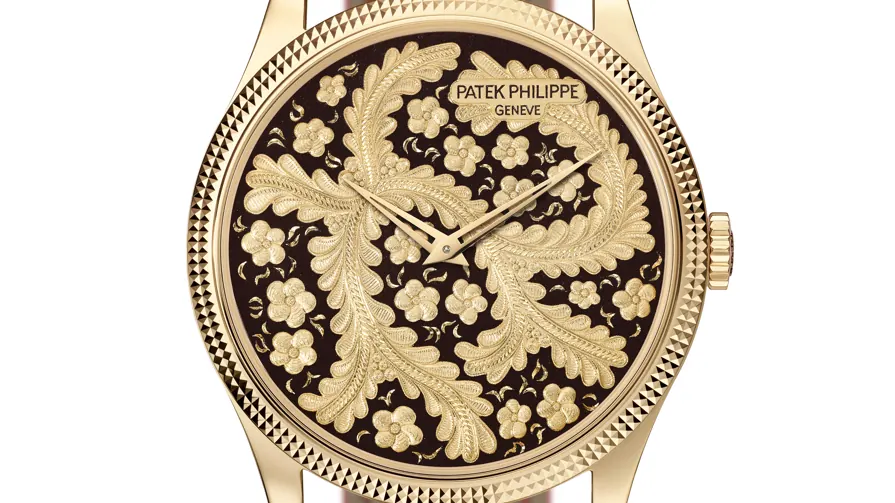
- Hand-engraved dial reproducing the gold and black embroidery of the matador’s traje de luces
- Three distinct engraving techniques: chasing, dry-point needle work, and onglette graving
- Clous de Paris hobnail bezel; pierced dauphine-style yellow gold hands
- Calibre 240 ultra-thin self-winding movement, visible through sapphire crystal case back
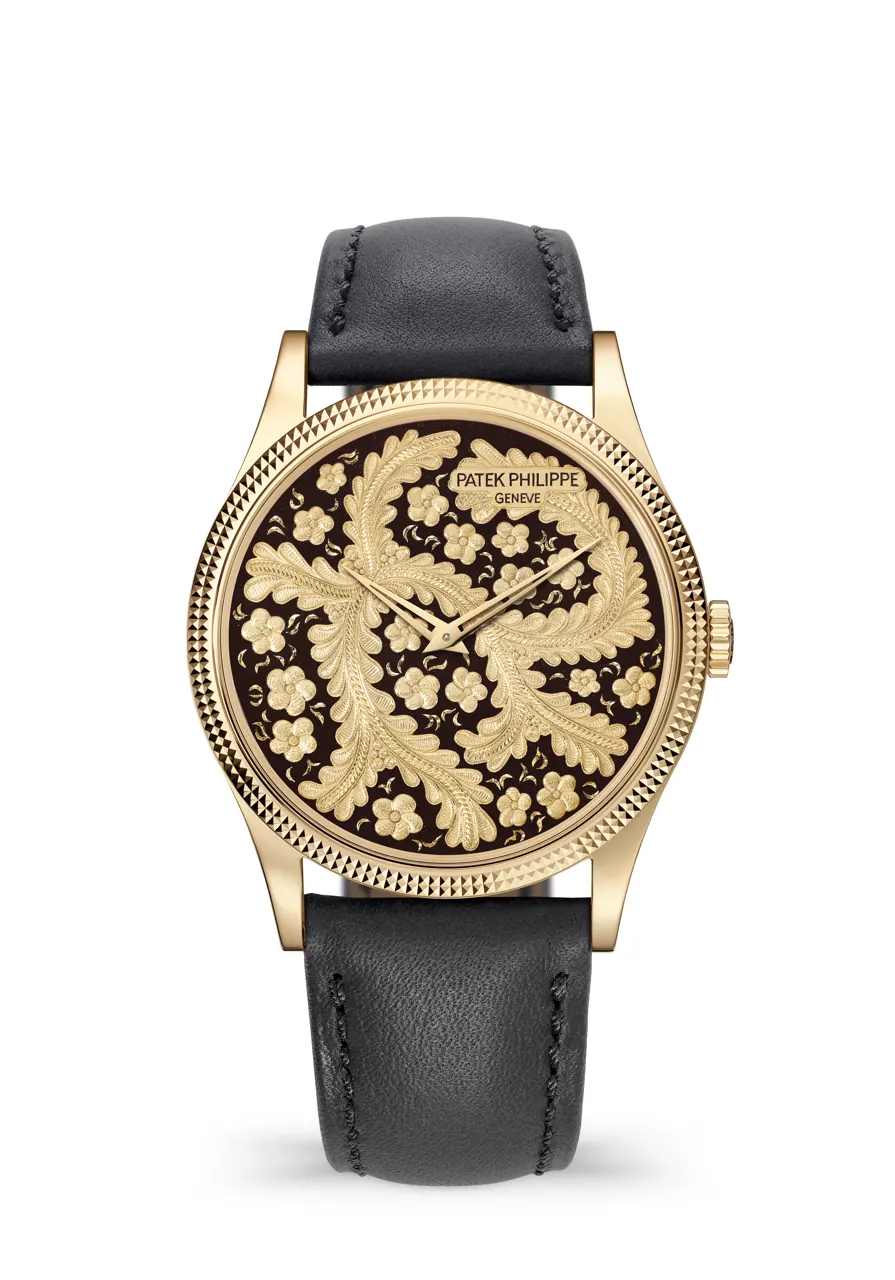
- Supplied with red and black grained calfskin straps, both with yellow gold prong buckle
First Impressions
The 5177J-001 arrives as one of those pieces that forces a pause. The black dial does not merely provide contrast; it creates a stage, and everything placed upon it performs.
Patek Philippe’s Rare Handcrafts collection has long given the Manufacture’s master artisans the latitude to pursue subjects that would be impractical in any volume production context. Here the chosen subject is the traje de luces, the ceremonial suit worn by matadors in the bullring, whose gold and black embroidery has been a symbol of courage and craft in Spanish culture for centuries. Translating that textile vocabulary into engraved metal, at a diameter calibrated for the Calatrava case, demanded both conceptual clarity and extraordinary technical patience. The result, across an edition of just twenty pieces, justifies both.
Design & Materials
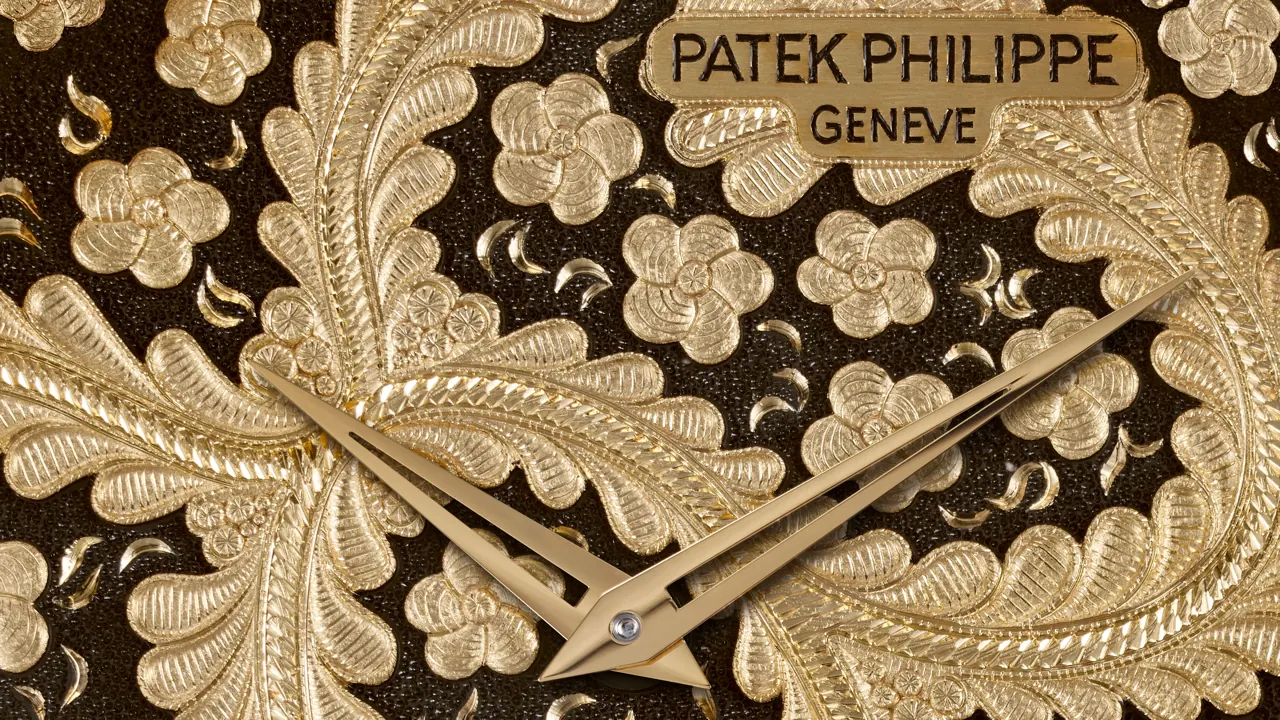
The engraver’s process began with chasing the upper layer of the dial to produce a silky, directional texture — the neutral ground from which all subsequent ornament would emerge. A dry-point needle then traced fine lines in the metal to capture the softness and subtle sheen of woven gold thread. Where the original embroidery would show a line of stitching running through the centre of each decorative element, an onglette graver reproduced that detail with a precision that adds a delicate brilliance impossible to achieve through any other means.
This layering of techniques matters. Each tool leaves a distinct optical signature: the chased ground absorbs light differently from the needle-worked lines, which differ again from the onglette’s brighter, sharper cuts. The eye reads depth where none physically exists, which is precisely what fine embroidery achieves in textile form. The intense black background intensifies these effects, drawing out the warmth of the yellow gold ornament in a way that a pale or silvered dial simply could not.
The case itself carries the Clous de Paris hobnail pattern on the bezel — a signature of the Manufacture that provides a further layer of fine texture at the periphery without competing with the dial. Pierced dauphine-style hands in yellow gold keep the time-telling legible while maintaining the period elegance appropriate to the Calatrava lineage. For those who wish to explore further examples of Patek Philippe‘s hand-finishing artistry, the Reference 6105G 001 offers a complementary perspective from within the same tradition.
Movement & Mechanics
Calibre 240 needs little introduction to the serious collector.
The ultra-thin self-winding movement has been a cornerstone of the Manufacture’s slimmest dress pieces for decades, and its placement here is entirely deliberate. A thicker movement would compromise the proportions of the Calatrava case; Calibre 240 preserves them. The sapphire crystal case back ensures the movement is not merely a technical specification but a visual component of the watch, its finishing visible to anyone who turns the piece over. For a reference whose front face celebrates one form of artisanal labour, the back provides a contrasting but equally considered tableau in the form of haute horlogerie finishing. Those keen to follow Patek Philippe’s full Rare Handcrafts programme, often first shown at Watches and Wonders, will find the calibre a consistent thread across the collection.
Market Position
Twenty pieces. That number defines the conversation before any other detail enters it.
Within the Middle East collector community, Rare Handcrafts references occupy a particular position: they are acquired with the understanding that they will never be widely seen, and that the artisanal hours embedded in each example are genuinely irreplaceable. The 5177J-001 arrives accompanied by two grained calfskin straps — red and black, both with yellow gold prong buckles — an acknowledgement that the watch’s own palette is inherently dramatic and that the wearer may wish to calibrate that drama according to occasion. For a piece this scarce, the accessory detail is a considered gesture rather than a standard inclusion. Collectors in the region familiar with Patek Philippe’s approach to limited handcraft editions will recognise the 5177J-001 as a reference whose cultural subject, technical complexity, and edition size place it firmly at the upper register of what the Manufacture produces outside its grand complications.
Stay ahead of the latest releases. Subscribe to our newsletter for editor-curated coverage of luxury timepieces across the Middle East.
Frequently Asked Questions
How many examples of the Patek Philippe 5177J-001 Matador will be produced?
The 5177J-001 is a limited edition of twenty watches, each in 18-carat yellow gold.
What movement powers the Patek Philippe 5177J-001?
The watch houses Calibre 240, an ultra-thin self-winding movement that can be admired through a sapphire crystal case back.
What engraving techniques were used to create the 5177J-001 dial?
The engraver first chased the dial surface to produce a silky texture, then used a dry-point needle to etch fine lines evoking gold embroidery threads, before an onglette graver reproduced the stitching detail at the centre of the motif.
What straps are supplied with the Patek Philippe 5177J-001?
The reference comes with two straps: one in red grained calfskin and one in black grained calfskin, each secured by a yellow gold prong buckle.
What collection does the 5177J-001 belong to?
The 5177J-001 belongs to Patek Philippe's Rare Handcrafts collection, which showcases the Manufacture's traditional artisanal techniques including engraving, enamel painting, and marquetry applied to the Calatrava case family.