The owner of Cartier and Van Cleef & Arpels is reported to be in advanced talks to join the consortium bidding for De Beers, a move that would bring one of the world’s great jewellery groups closer to the origin of its stones.
The Essentials
- Richemont is in talks to join the Global Diamond Consortium, the group led by former De Beers chief executive Gareth Penny, according to Bloomberg and Reuters, both citing people familiar with the matter.
- Anglo American, which put De Beers up for sale in May 2024, holds around 85% of the company; the government of Botswana holds the remaining 15% and has a right of first refusal.
- Officials have indicated that a transaction could be completed in the fourth quarter of 2026. Richemont and Anglo American have reserved comment on the talks.
- Dubai, the crossroads between producing nations and consumer markets, traded a record US$41.7 billion in diamonds in 2025.
A Jeweller at the Source
On 15 October 2026, Reuters confirmed an earlier Bloomberg report: Compagnie Financière Richemont is discussing a place in the Global Diamond Consortium, the investor group assembled to acquire De Beers from Anglo American. According to Bloomberg, the negotiations are advanced, while Richemont’s participation remains to be confirmed. Reuters reported a valuation of about US$1 billion for De Beers, and noted that the American jewellery retailer Signet could also join the bid.
The consortium is led by Gareth Penny, a former chief executive of De Beers, and it has drawn support from producing nations, Namibia and Angola among them. Any agreement would still rest with Botswana, De Beers’ long-standing partner and holder of a first right of refusal. A spokesperson for the Botswana presidency said the government would comment once a transaction had been concluded and signed.
For Richemont, the logic is one of supply and authority. The group’s jewellery Maisons, Cartier, Van Cleef & Arpels and Buccellati, are its most valuable houses, and its chairman Johann Rupert has spoken publicly of his commitment to natural diamonds in high jewellery. A seat at the De Beers table would give the group a stronger voice over a key part of its supply chain. The board that would weigh such a step has itself been evolving: in September, Richemont named Johann Rupert’s son Anton Rupert Non-Executive Co-Deputy Chairman, a formal milestone in the group’s succession planning.
A Considered Precedent
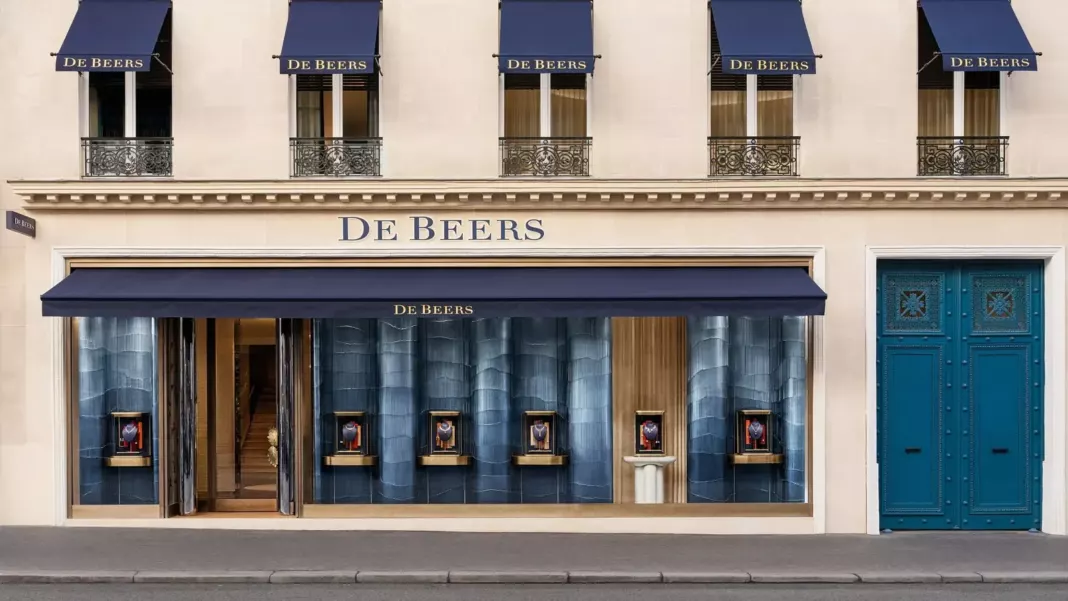
A jewellery house investing upstream has precedent. Graff, the London diamond house, holds a 14.9% stake in Gem Diamonds, owner of the Letseng mine in Lesotho. Richemont would bring that model to an altogether different scale: De Beers operates mines and exploration in Botswana, Namibia, Angola, South Africa and Canada, and its own jewellery brand, from the Lotus collection to its high jewellery, carries one of the most recognised names in the diamond world.
Analysts at RBC described Richemont’s potential participation as “strategically meaningful”, and framed it as long-term positioning in the natural diamond category rather than a financial event. Richemont’s balance sheet allows that patience: the group reported around €9 billion in net cash at the end of June 2026.
Why Dubai Is Watching
Between the mines of southern Africa and the jewellery counters of Paris, New York and Riyadh lies Dubai. According to DMCC, citing Dubai Customs data, the emirate’s diamond trade reached a record US$41.7 billion in 2025, up from US$35.8 billion a year earlier, with a record 359.5 million carats traded. Natural diamonds accounted for US$39.9 billion of that value, close to 96%, and natural polished diamonds alone reached US$18.7 billion. The Dubai Diamond Exchange is the region’s largest diamond tender facility.
Those figures place the Gulf at the heart of the question Richemont is weighing. The rough stones of Botswana, Namibia and Angola travel through Dubai on their way to cutting centres and, ultimately, to the boutiques where collectors in the Emirates and the Kingdom choose their jewellery. A jeweller with a stake in the source would speak with greater authority on where a stone began, a subject of growing importance to clients across the Middle East.
What Comes Next
The transaction remains to be concluded. The consortium must align its partners, Botswana must decide whether to exercise its right, and regulators must approve the final structure. Anglo American’s chief executive Duncan Wanblad said in July that the group still had a number of interested buyers and continued to make progress. Should Richemont join, the house behind Cartier would hold a voice, alongside producing nations, in the future of the most storied name in diamonds. WATCHESPEDIA will follow the transaction as it unfolds; the full coverage of the house is gathered on our De Beers page.
Sources: Reuters, via Business Day, 15 October 2026; Bloomberg; DMCC, 13 July 2026.
Frequently Asked Questions
Is Richemont buying De Beers?
Richemont is reported to be in talks to join the Global Diamond Consortium, the investor group led by former De Beers chief executive Gareth Penny that is bidding for De Beers. The agreement remains to be signed, and Richemont has reserved comment.
Who owns De Beers today?
Anglo American holds around 85% of De Beers and the government of Botswana holds around 15%. Anglo American put the business up for sale in May 2024, and Botswana has a right of first refusal on any transaction.
When could the De Beers sale be completed?
Officials indicated in 2026 that a transaction could be completed in the fourth quarter of the year, subject to agreement among the consortium partners, Botswana’s decision and regulatory approvals.
How large is Dubai’s diamond trade?
According to DMCC, citing Dubai Customs, Dubai’s diamond trade reached a record US$41.7 billion in 2025, with 359.5 million carats traded. Natural diamonds accounted for US$39.9 billion of that value.