
Key Highlights
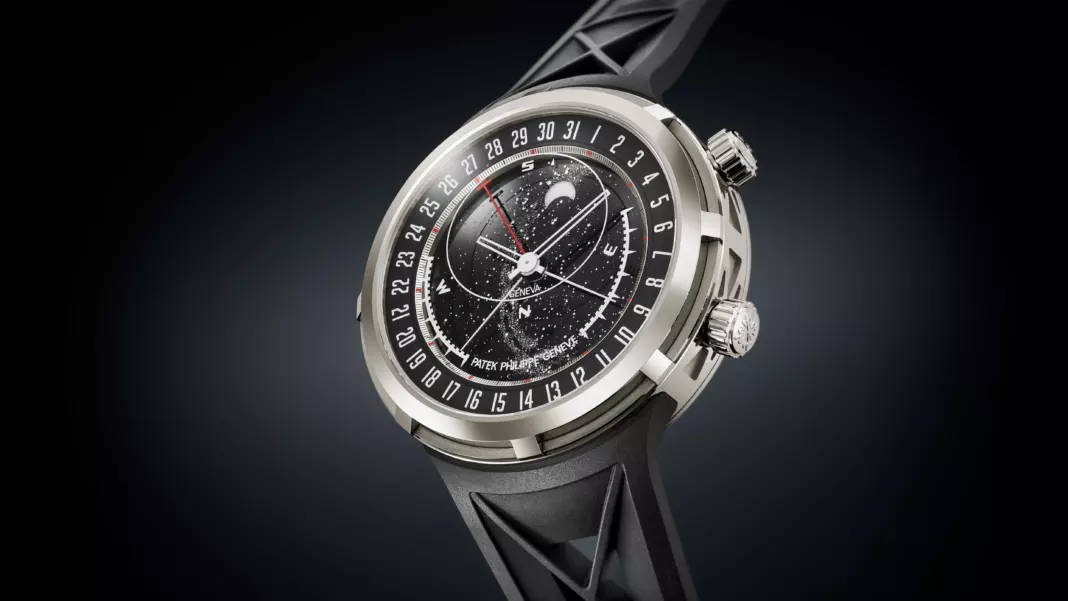
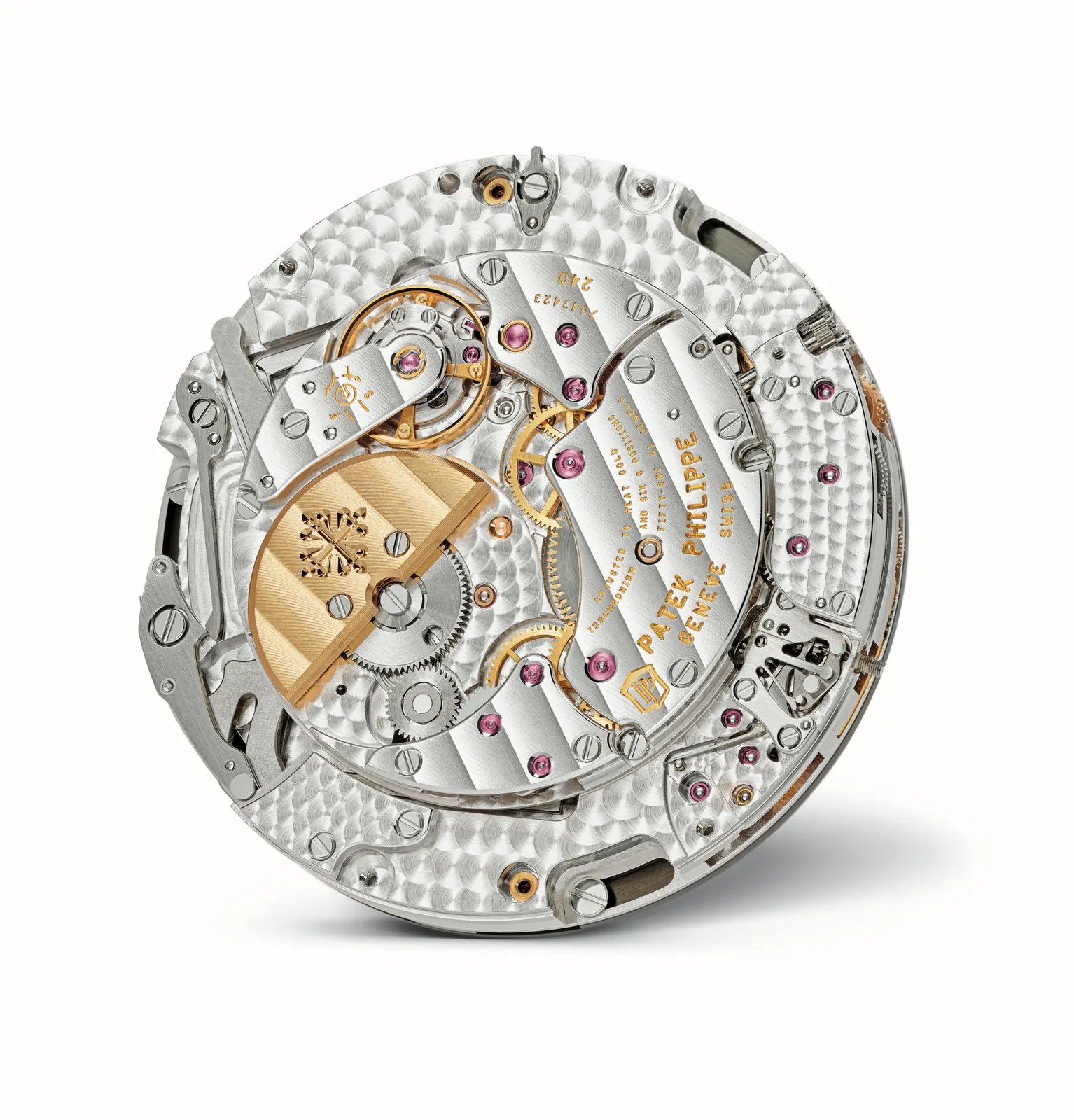
Reference 6105G-001 is the first Patek Philippe wristwatch in the current collection to display times of sunrise and sunset in Geneva. It houses the new Caliber 240 C LU CL LCSO — 426 parts, 7.93 mm in height, with a 38–48-hour power reserve — and carries a patented simultaneous corrector for Summer Time and Winter Time: one press adjusts civil time and astronomical indications together. The moon phase requires correction only once every 3,000 years. The 47 mm 18K white gold case with X-shaped motif is the result of five years’ development and six patent applications. The watch was presented at Watches and Wonders 2026.
A Complication Reserved, Until Now, for Legends
Within Patek Philippe’s grand tradition of astronomical complications, the display of sunrise and sunset times has occupied an almost mythological position. It appeared in the bespoke pocket watches commissioned by James Ward Packard in 1927 and Henry Graves Jr. in 1933. It featured among the 33 complications of the Calibre 89 in 1989, and again in the Star Caliber 2000. For nearly a century, this indication belonged exclusively to unique commissions and anniversary supercomplications, never a catalogued wristwatch.
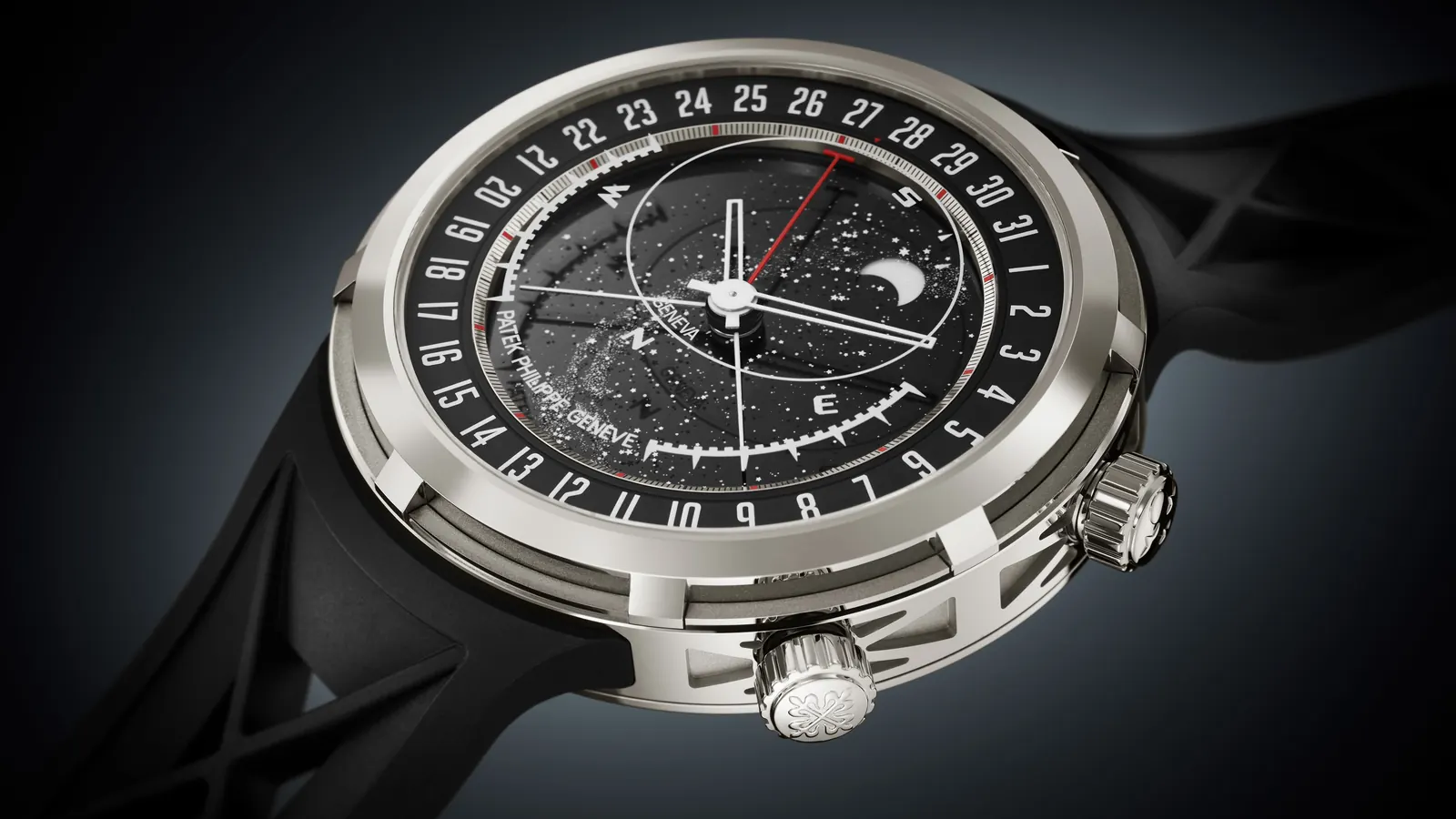
Reference 6105G-001 changes that. Five years of development and six patent applications separate this watch from a simple evolution of the Celestial Reference 6102. What Patek Philippe has engineered is a mechanism of genuine novelty: it displays sunrise and sunset times throughout the year and synchronises those indications with civil time during the twice-annual changeover between Summer Time and Winter Time, a problem that has historically rendered such watches impractical in countries observing daylight saving.
The Correction Mechanism
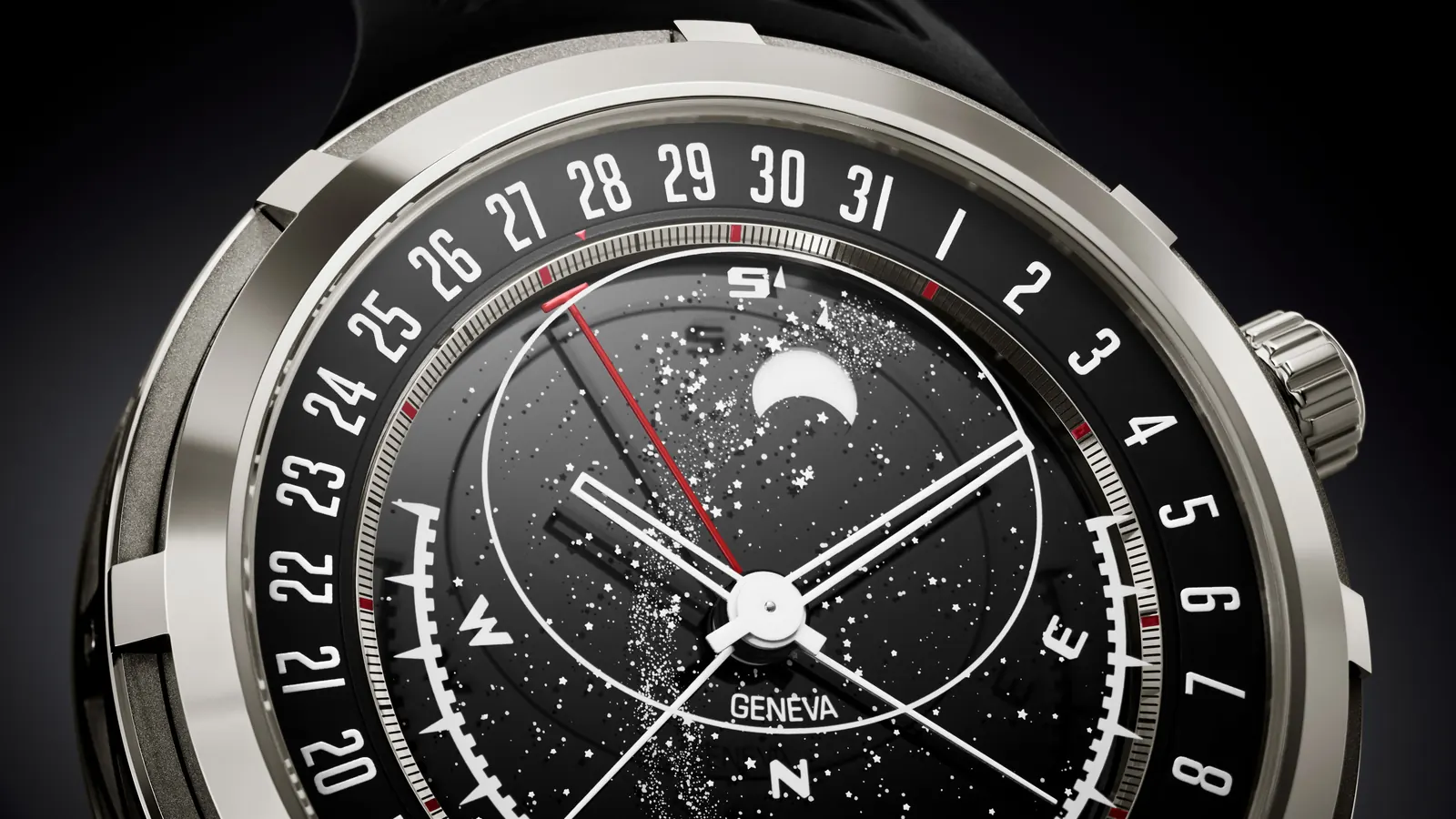
Two push-pieces at 9 o’clock and 10 o’clock manage the seasonal hour changes. A single press at 9 o’clock advances civil time by one hour for Summer Time; a single press at 10 o’clock reverses the adjustment for Winter Time. One action simultaneously repositions the hour-hand star, rotates the date disk by 1/31st of a turn, and — because the sunrise and sunset scales are printed on that same date disk — adapts both astronomical indications without any separate setting. A built-in safety system prevents repeated activation.
Caliber 240 C LU CL LCSO
Architecture and Dimensions
The sunrise and sunset mechanism is driven by two ovoid cams, each completing one full rotation per year. Their contours geometrically encode the annual variation in the Earth’s axial tilt relative to its orbital plane. A patented double feeler-spindle, just 0.48 mm thick, traces those contours continuously via two flexible arms, transmitting the positional data through a rack system to the corresponding hands. The entire assembly adds only 1.12 mm to the movement’s height, bringing Caliber 240 C LU CL LCSO to 7.93 mm for a total of 426 parts.
The movement retains the hallmarks of the 240 family: a 22K gold off-center mini-rotor for self-winding, a Gyromax® adjustable-inertia balance at 21,600 vibrations per hour, and a Spiromax® balance spring in Silinvar®. Rate accuracy conforms to the 2024-revised Patek Philippe Seal tolerance of −1/+2 seconds per 24 hours.
Sky-Moon Display
Three superposed disks animate the dial. A sapphire crystal disk carries the star chart on its upper surface and the Milky Way on its reverse, completing one rotation per sidereal day (23 hours, 56 minutes, 4.09 seconds). Below it, a PVD-blackened mineral crystal disk rotates every 24 hours and 50 minutes to represent the lunar day. A third mineral crystal disk, guided by a planetary gear within a circular aperture, displays moon phases with an error accumulation requiring correction only once every 3,000 years.

Case Design and Wearability
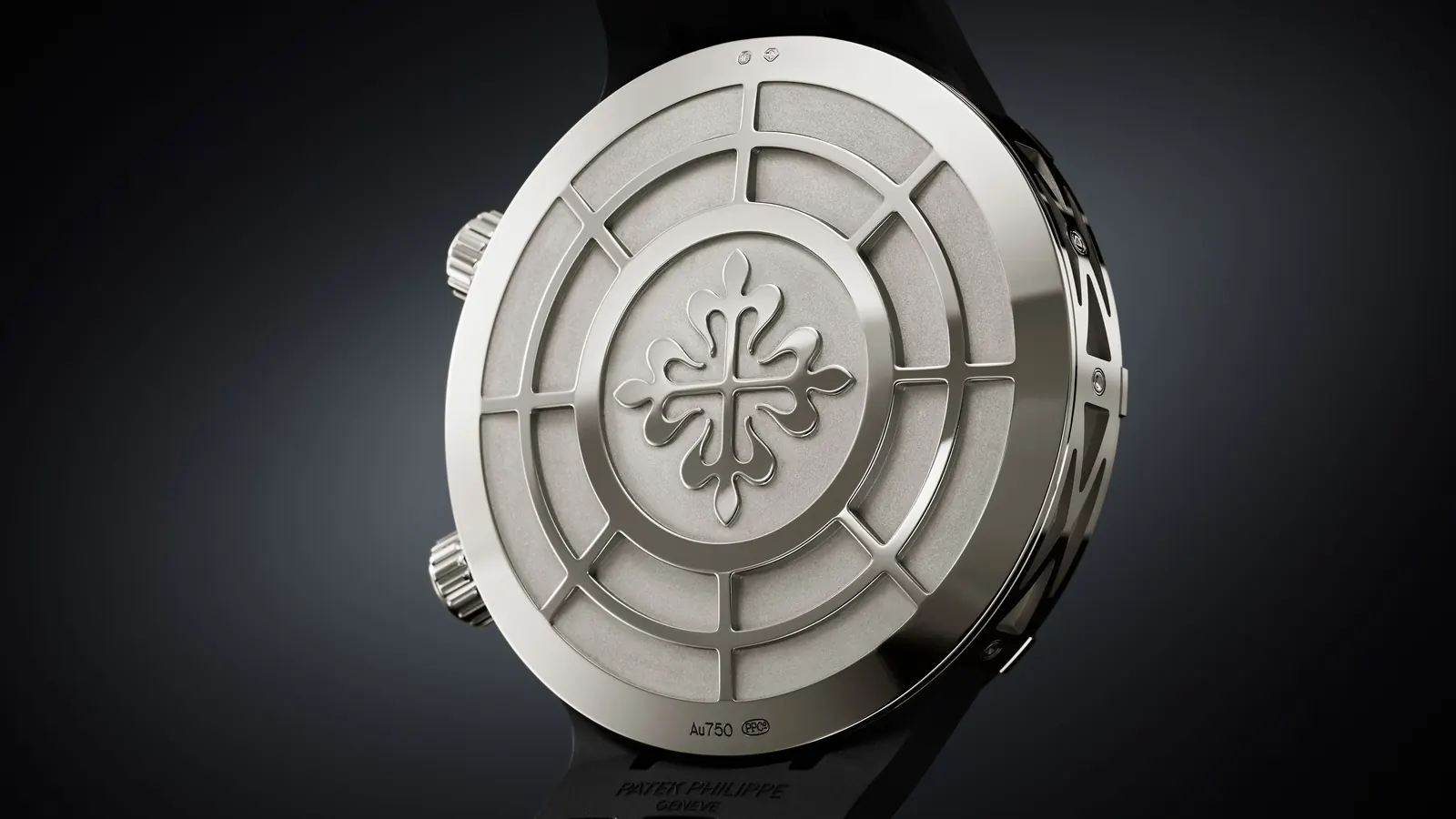
At 47 mm in diameter and 12.39 mm in height, the white gold case is unambiguous in its presence. The X-shaped motif worked in relief across the caseband, evoking the tubular structures of space modules, is carried through to the solid caseback, where it frames a Calatrava Cross. Contrasting polished and satin-brushed surfaces generate a depth effect rarely seen in a case of this geometry.
The black polymer strap, vulcanized with the same X-shaped motif, attaches via a lug-free integrated system and conforms naturally to the wrist. A patented triple-blade fold-over clasp in 18K white gold closes the design. Two crowns manage the watch’s functions: the screw-down crown at 4 o’clock for winding and time-setting, and a patented bayonet-disconnectable crown at 2 o’clock for setting all astronomical indications.
For collectors in the Middle East seeking watches that carry genuine mechanical substance alongside visual authority, Reference 6105G-001 sets a standard that few pieces across the entire industry can match. The sunrise and sunset complication is no longer an artefact of history; it is now a catalogued Patek Philippe wristwatch.
Stay ahead of the latest releases. Subscribe to our newsletter for editor-curated coverage of luxury timepieces across the Middle East.
Frequently Asked Questions
What makes the Patek Philippe Reference 6105G-001 historically significant?
The Reference 6105G-001 is the first Patek Philippe wristwatch in the current collection to display times of sunrise and sunset. This complication previously appeared only in bespoke pocket watches and anniversary supercomplications, never in a catalogued wristwatch until now.
How does the Caliber 240 C LU CL LCSO handle daylight saving time adjustments?
The movement features a patented simultaneous corrector with two push-pieces at 9 and 10 o’clock; a single press at either position adjusts civil time by one hour while automatically repositioning the sunrise and sunset scales printed on the date disk, solving the historical impracticality of such watches in daylight saving countries.
How accurate is the moon phase display on the Reference 6105G-001?
The moon phase complication achieves such precision that it requires correction only once every 3,000 years, representing one of the most accurate lunar indications available in a wristwatch.
Explore more from PATEK PHILIPPE: PATEK PHILIPPE collection.