Laureato Three Gold Bridges: A 234-Year Legacy of Watchmaking Expertise
GIRARD-PERREGAUX has marked 234 years of horological development with the Laureato Three Gold Bridges. The watch combines the brand’s established technical foundation with contemporary case finishing—polished and satin surfaces that define its visual identity. Each piece undergoes assembly by a single master watchmaker, a production method that concentrates quality control at the hand level rather than distributing it across a workshop floor.
The In-House Calibre GP9620
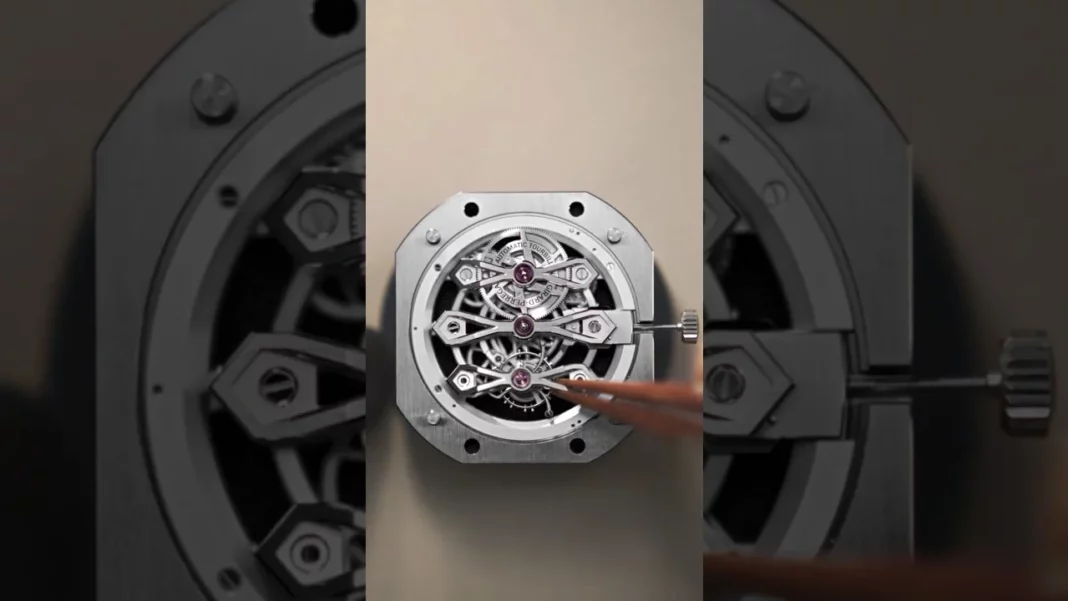
The Laureato Three Gold Bridges houses the calibre GP9620, an in-house movement assembled entirely by one master watchmaker. This approach ensures direct accountability for component fit and finishing. Every gear, bridge, and jewel passes through a single pair of hands before the watch leaves the manufacture, establishing a direct lineage between craftsperson and finished object.
The Golden Bridges
The three gold bridges that give the watch its name serve dual purpose. Structurally, they elevate the movement’s upper section, creating sight lines that reveal the balance wheel and gear train from above. This transparent construction allows regulation adjustments without full disassembly and provides the owner with continuous visual confirmation of the movement’s operation. The bridges themselves are finished surfaces—not hidden components tucked behind a display caseback.
Case and Design Language
The case combines polished and satin finishes across its surfaces, a contrast technique common to formal sports watches. The juxtaposition of surface treatments creates visual rhythm without relying on applied decoration. The Laureato Three Gold Bridges maintains proportions suited to both formal and casual contexts, its architectural clarity reading equally well under office lighting or in casual environments.
Two Centuries of Development
GIRARD-PERREGAUX’s 234-year history spans the transition from pocket watch manufacturing to wristwatch production, the quartz disruption of the 1970s, and the mechanical revival beginning in the 1990s. The Laureato Three Gold Bridges positions itself within this trajectory, referencing established GIRARD-PERREGAUX design language while maintaining current production standards. The single-watchmaker assembly method mirrors historical practice at the manufacture’s founding while employing contemporary materials and tolerances.
For current GIRARD-PERREGAUX offerings and references across the collection, explore GIRARD PERREGAUX on WATCHESPEDIA.
Frequently Asked Questions
What is the movement inside the Laureato Three Gold Bridges?
The Laureato Three Gold Bridges features the in-house calibre GP9620, which is assembled entirely by a single master watchmaker to ensure every component is fitted and finished to specification.
What are the three gold bridges and why are they important?
The three gold bridges elevate the movement and provide a view of the balance wheel and gear train from above. They serve both structural and functional purposes, allowing for regulation adjustments while remaining visible through the caseback.
How long has GIRARD-PERREGAUX been crafting watches?
GIRARD-PERREGAUX has a 234-year history of watchmaking, spanning from pocket watch manufacturing through mechanical wristwatch production to the present day.