The Fusion of Tradition and Innovation
Greubel Forsey designs watches by combining hand-assembly methods developed over centuries with modern horological knowledge. Hand Made 1 demonstrates this approach: the case architecture, movement geometry, and finishing all reflect decisions made directly by the manufacture rather than outsourced to suppliers or automated systems.
Hand Made 1: A Masterpiece in Watchmaking
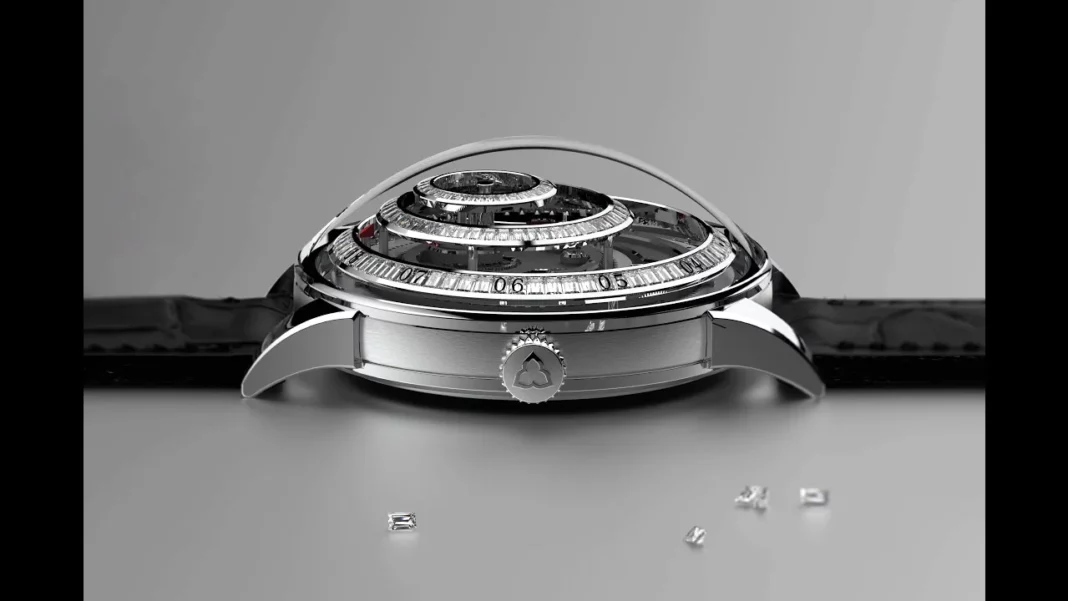
Hand Made 1 represents a deliberate choice by Greubel Forsey to manufacture a watch where each component passes through the hands of a single craftsperson or small team from start to completion. The movement features hand-finished bridges, hand-assembled jewels, and hand-regulated timekeeping elements. The dial displays are integrated into the movement architecture itself—not simply applied to a blank plate—which allows observers to see both the mechanism and its operation simultaneously.
Unrivaled Craftsmanship
The movement inside Hand Made 1 requires several thousand hours of labor to complete. Greubel Forsey’s artisans file, polish, and adjust each component without the use of CNC machinery for final finishing stages. The bridges are shaped by hand; the rotor is weighted and balanced by hand; the balance hairspring is installed and timed by hand. This absence of automated finishing distinguishes Hand Made 1 from watches where only selected visible surfaces receive hand-finishing while hidden components are machine-processed.
Design Elements
Hand Made 1’s case is machined from solid metal—typically white gold or platinum—with all edges and surfaces brought to a consistent finish. The dial layout positions the escapement, balance, and train wheels across the visible face so that the rate-setting components remain accessible for adjustment. The rotor, visible through an exhibition caseback, rotates on a specially designed pivot that reduces friction while maintaining precise alignment. These arrangements serve dual purposes: they reveal the mechanism while enabling the craftsperson to service and regulate the watch without full disassembly.
Why Choose Hand Made 1?
Owning a GREUBEL FORSEY watch means acquiring a timepiece where production decisions cannot be delegated or rushed. Hand Made 1 appeals to collectors who distinguish between watches assembled in factories and watches completed by individual makers. Its limited production—typically single-digit annual output per model—and the documentation of the specific artisan responsible for each watch create direct accountability between maker and owner that industrial manufacture cannot replicate.
To discover more about the collections by this manufacture, click here to explore GREUBEL FORSEY collections. You will find watches that apply hand-assembly and hand-finishing methods across a range of movement architectures and case designs.
Frequently Asked Questions
What makes the Greubel Forsey Hand Made 1 different from other luxury watches?
Hand Made 1 is assembled and finished entirely by hand without CNC machinery for final stages. Every component—from the bridge shaping to the balance hairspring installation—is completed by individual craftspeople rather than production lines. This direct maker-to-owner responsibility distinguishes it from watches where hand-finishing applies only to visible surfaces while internal components are machine-processed.
How is the Hand Made 1 designed to combine aesthetics with performance?
Hand Made 1’s dial layout positions the escapement, balance, and train wheels where they are both visible and functional. The rotor rotates on a precisely designed pivot that minimizes friction while maintaining alignment. The case architecture, dial arrangement, and bridge geometry all enable the artisan to regulate and service the watch without full disassembly, ensuring that form and function remain integrated rather than competing.
Who should consider purchasing a Greubel Forsey Hand Made 1?
Hand Made 1 attracts collectors who value direct maker accountability and recognize the distinction between factory assembly and hand-completion by individual artisans. The watch suits those who view ownership as a relationship with the craftsperson responsible for the mechanism, rather than as acquisition of an industrially-produced product.