Unveiling the Étirage Technique
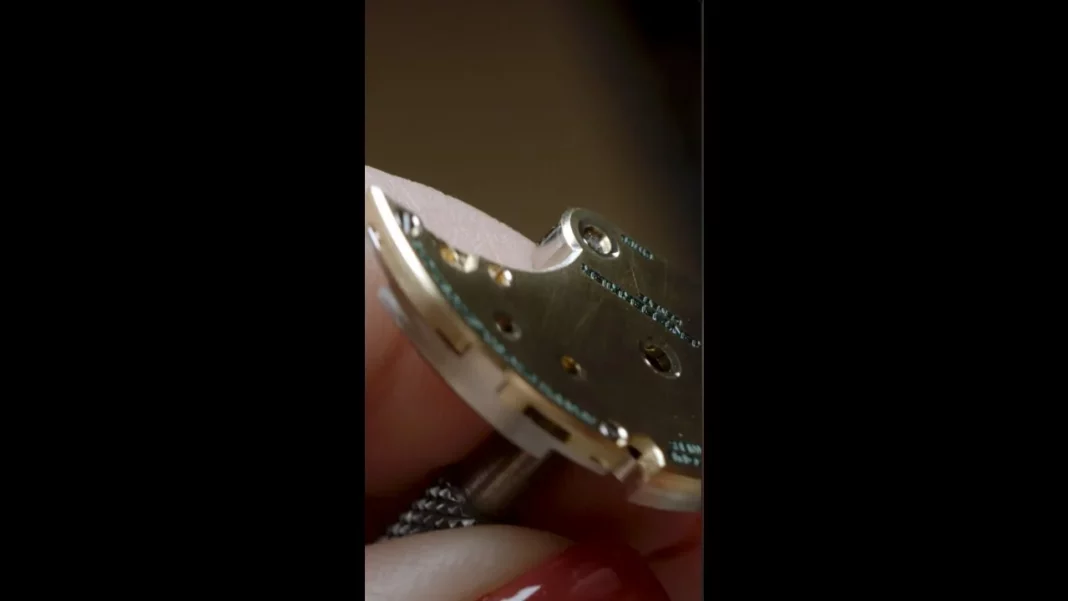
Étirage emerged from 19th-century pocket watch making as a specialized finishing process that elevates watch movements through deliberate surface treatment and decoration. The term describes how artisans hand-draw abrasive compounds across component surfaces to create directional patterns—a labor-intensive method that adds visual refinement to plates, bridges, and balance cocks while serving no functional purpose beyond aesthetic expression.
The Craftsmanship Behind Étirage
Artisans who practice Étirage spend hours on each movement, working with files and abrasive stones to produce consistent linear striations. LAURENT FERRIER watches display this finish across their movement architecture, with surfaces revealing parallel grain patterns that shift in light. The technique demands steady hand control and familiarity with metal grain characteristics to avoid marring.
Historical Influence
Pocket watch makers of the 1800s applied Étirage to movements visible through display case backs, establishing a tradition where decoration signaled quality and justified premium pricing. The technique fell into relative disuse during mass production eras but has been deliberately revived by contemporary manufacturers who view it as proof of manual finishing commitment. Modern brands including LAURENT FERRIER have re-adopted Étirage as a signature differentiator, applying it across all visible movement surfaces rather than reserving it for flagship pieces.
The Art of Transformation
Étirage converts raw-machined components into finished parts through controlled material removal. LAURENT FERRIER artisans evaluate each surface under magnification, selecting appropriate grit levels and applying consistent pressure to achieve uniform pattern depth. The result reveals the metallic character of the alloy underneath—typically brass, gold, or specialized white metal—and creates depth perception that changes as the watch moves through different lighting angles.
Why Choose a Watch with Étirage?
A timepiece featuring Étirage demonstrates commitment to visible finishing standards, signaling that the manufacturer considered internal presentation as important as external casing. For collectors seeking watches with legible movement architecture—whether through transparent case backs or display windows—Étirage surfaces provide immediate verification of finishing quality. The technique remains labor-intensive enough that its presence correlates directly with production volume and pricing tier.
To explore the collections and finishing specifications of LAURENT FERRIER, visit the LAURENT FERRIER brand section and examine how Étirage distinguishes their movements across different model families.
Conclusion
As manufacturing techniques continue advancing, hand-applied finishing like Étirage persists as a deliberate choice by watchmakers committed to traditional standards. Each LAURENT FERRIER movement demonstrates this continuity with 19th-century practice, with visible surface patterns confirming that human skill remains embedded in the production sequence. The technique serves as documentation—proof that artisans invested time in completing work invisible to casual observation.
Frequently Asked Questions
What is Étirage in luxury watchmaking?
Étirage is a hand-finishing technique that applies directional surface patterns to movement components through controlled abrasive treatment. Originating in 19th-century pocket watch production, it creates linear striations across plates and bridges—a visual indicator of manual finishing labor that contemporary makers like LAURENT FERRIER employ as a signature detail.
How does LAURENT FERRIER apply Étirage to its timepieces?
LAURENT FERRIER artisans execute Étirage by hand-drawing abrasive compounds across movement surfaces under magnification, creating consistent parallel grain patterns. The process reveals the underlying metal’s character and varies in appearance depending on light angle and viewing perspective. Each surface receives individual attention to maintain uniform pattern depth across all visible components.
Why should collectors invest in watches with the Étirage technique?
Watches featuring Étirage demonstrate manufacturing commitment to finishing standards beyond functional requirements. The technique’s labor intensity correlates directly with production cost and serves as visible evidence of artisanal involvement in assembly. For collectors examining movements through transparent case backs, Étirage surfaces provide immediate confirmation of finishing quality and justify premium positioning.