
OMEGA
Key Highlights
- La Chaux-de-Fonds, 1848. Louis Brandt opens the workshop the company still dates itself from.
- The calibre named the company. The 19-ligne Omega movement of 1894 was so successful the firm took its name, becoming Louis Brandt et Frere-Omega Watch & Co. in 1903.
- Official Olympic timekeeper since 1932 — the longest-running precision commitment in the industry.
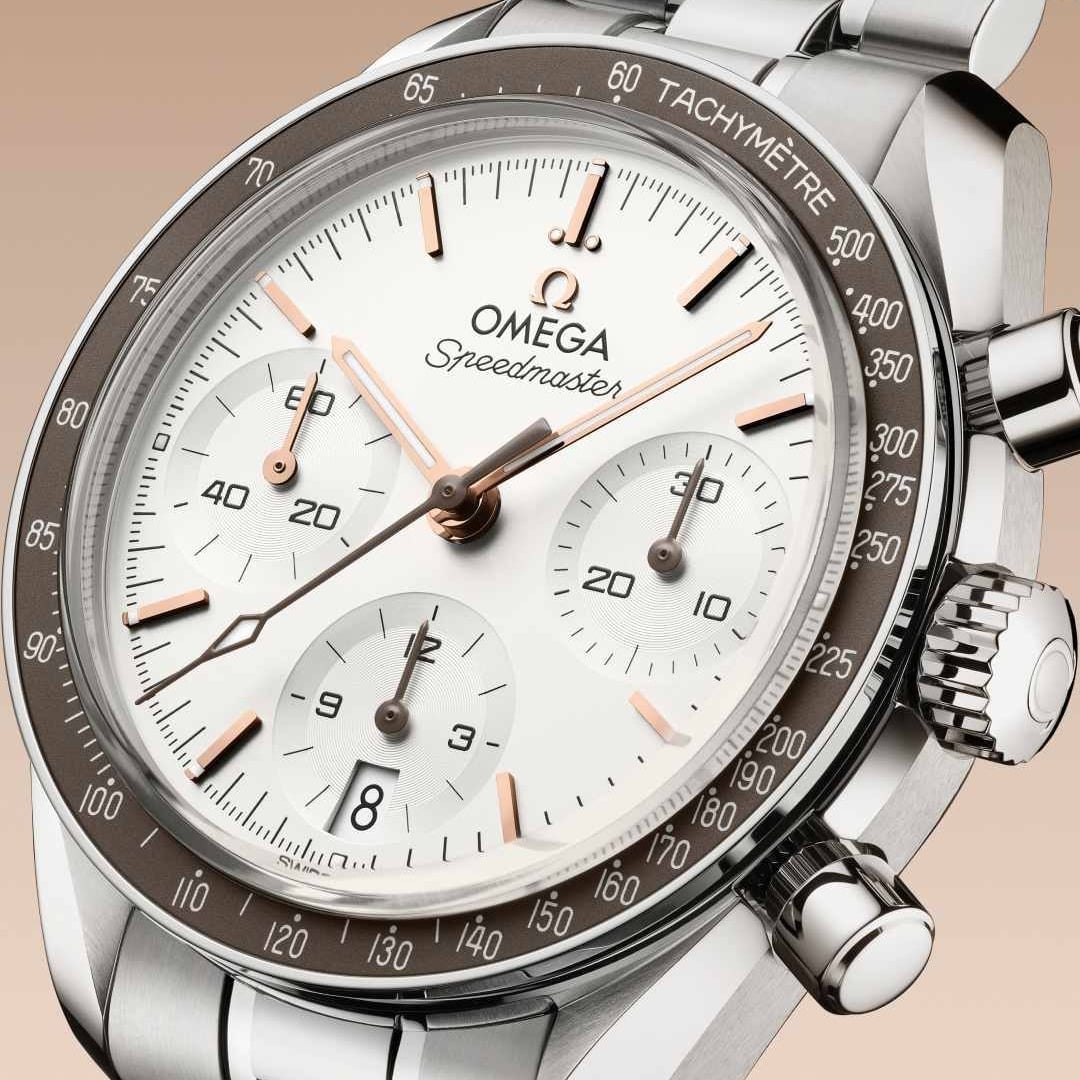
- Speedmaster, 1957. Qualified by NASA in March 1965; worn on the Moon on 20 July 1969.
- Seamaster, 1948, drawn from designs made for the British Royal Navy. James Bond wears one from GoldenEye in 1995.
- Co-Axial escapement in 1999, then Master Chronometer certification with METAS from 2015.
- Part of the Swatch Group since 1998. Headquarters and museum in Biel/Bienne.
The watch that gave the company its name
Most Swiss houses are named after a founder. Omega is named after a movement.
Louis Brandt opened his workshop in La Chaux-de-Fonds in 1848, assembling watches from parts supplied by local craftsmen. His sons Louis-Paul and Cesar joined in 1877, and the firm became Louis Brandt & Fils. The turning point came in 1894 with a 19-ligne calibre of a new kind: its parts were interchangeable, so a watchmaker anywhere could service it without hand-fitting each component. It was called the Omega, and it sold so well that by 1903 the company had rebuilt its own identity around it, trading as Louis Brandt et Frere-Omega Watch & Co. In 1984 the name was simplified to Omega SA.
That origin explains a great deal about the brand’s character. Omega’s reputation rests on serial precision at scale rather than on rarity, and every later chapter — the Olympics, NASA, METAS — is a continuation of the same argument.
Precision as a public claim
Plenty of manufacturers say their watches are accurate. Omega’s distinguishing move was to keep submitting that claim to people who could disprove it in public.
The first was sport. Omega has served as official Olympic timekeeper since 1932, a role that puts its instruments in front of judges, athletes and cameras where a failure cannot be hidden. The commitment continues into the coming cycle, which we covered when the brand was confirmed for Los Angeles 2028.
The second was space. The Speedmaster, launched in 1957 as a motorsport chronograph, was subjected by NASA to a qualification programme against competitors and passed in March 1965. On 20 July 1969, Buzz Aldrin wore one on the lunar surface — the detail that turned a chronograph into the Moonwatch.
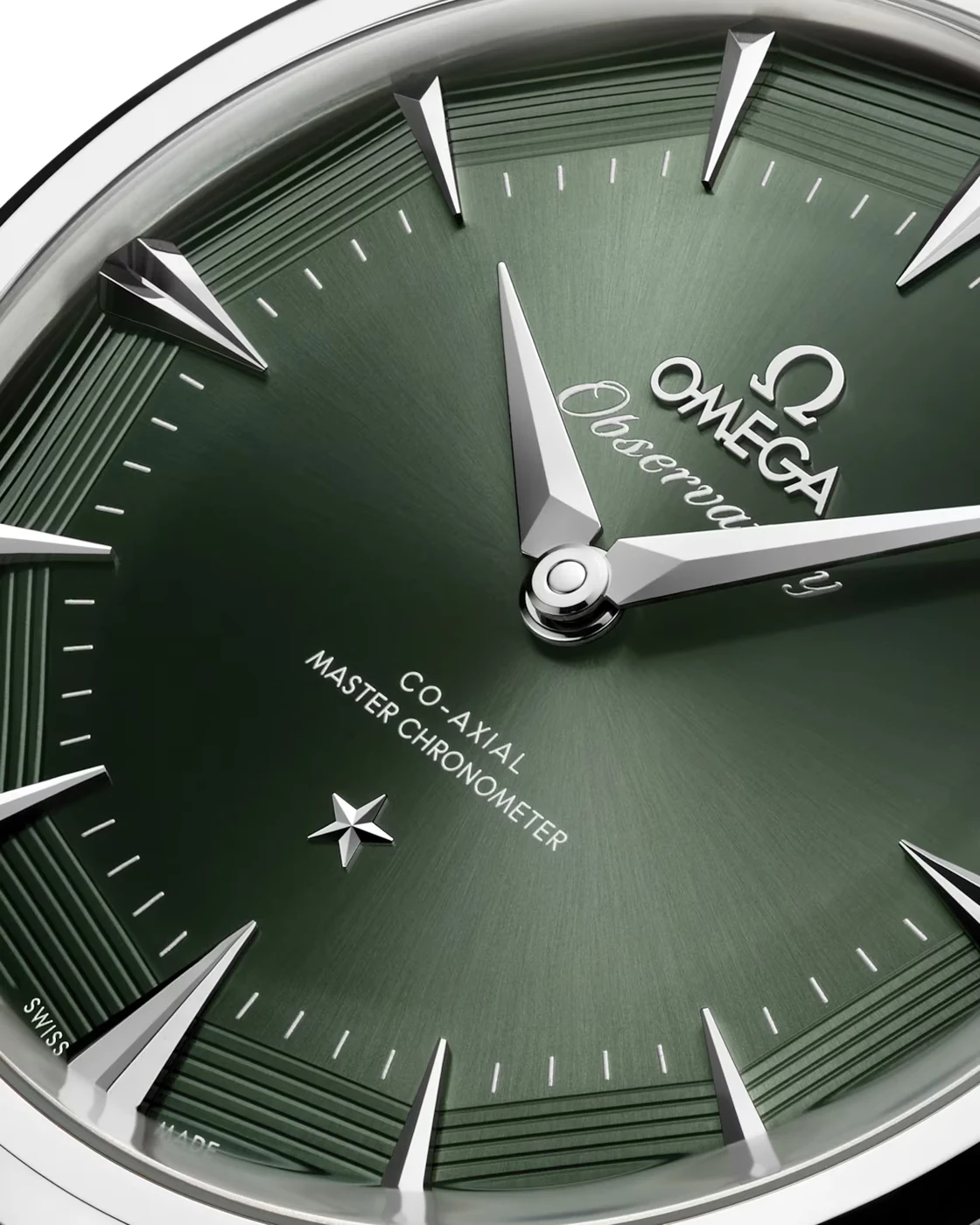
The third was mechanical. In 1999 Omega became the first manufacturer to mass-produce the Co-Axial escapement, an alternative to the Swiss lever designed by the English watchmaker George Daniels to reduce sliding friction, and therefore the drift that comes with it. Then in 2015 the brand went further and adopted Master Chronometer certification, tested by METAS, the Swiss Federal Institute of Metrology — an independent body, testing the cased watch rather than the bare movement, including resistance to magnetic fields of 15,000 gauss. It debuted on the Globemaster.
The pattern is consistent: whenever precision could be verified by an outside party, Omega volunteered.
Seamaster, and the two collections that carry the brand
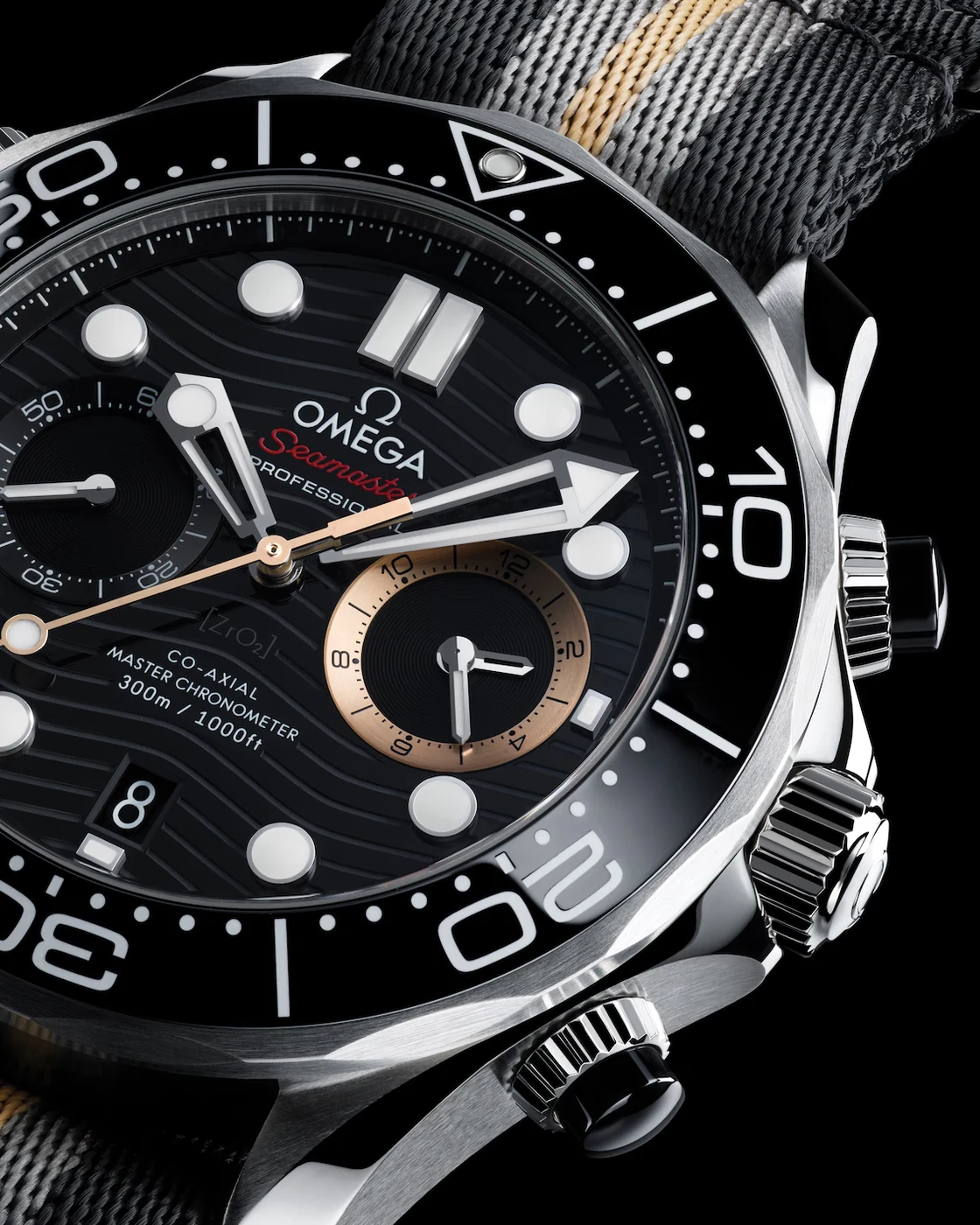
The Seamaster arrived in 1948, developed from watches Omega had made for the British Royal Navy at the end of the Second World War — which is why water resistance was engineered rather than advertised. The Diver 300M followed, and from 1995 and GoldenEye it became James Bond’s watch, a relationship that has now outlasted several actors. We covered the most recent chapter with the Diver 300M Chronograph 007 First Light.
Between the Speedmaster and the Seamaster, Omega holds something rare: two collections that are simultaneously historically serious and immediately recognisable to people who do not follow watches. The Constellation and De Ville lines sit alongside them, the first as the brand’s chronometry statement, the second as its dress register.
Omega in Saudi Arabia and the Gulf
Omega occupies a specific and valuable position in the Gulf market. It is the Swiss icon that a serious buyer reaches before the trinity — recognisable enough to be understood as a statement, technically credible enough to satisfy someone who reads the specification sheet, and priced in a band that makes it the most common answer to the question of a first significant watch. It is also, for the same reasons, a frequent gift at graduations, weddings and Eid.
The demand data supports this rather than assuming it. In our own measurement of Saudi search interest across the brands we cover, Omega ranks third — behind Rolex and Cartier, and ahead of every other manufacturer in our catalogue. The gap between how often the brand is searched in the Kingdom and how much has been written about it is one of the clearest we have found.
On price, the arithmetic is the same for every luxury import into Saudi Arabia: a 5% GCC customs duty applied on top of 15% VAT produces an effective 20.75% layer, which is why a Gulf figure sits closer to a European one than buyers expect. We set out the full mechanics in our guide to the best watch brands in Saudi Arabia, and the full Omega archive is collected under OMEGA on WATCHESPEDIA.
What Gulf buyers actually ask before buying
Two patterns come up repeatedly in the search data for this brand in the region, and they are worth answering plainly rather than leaving to a boutique conversation.
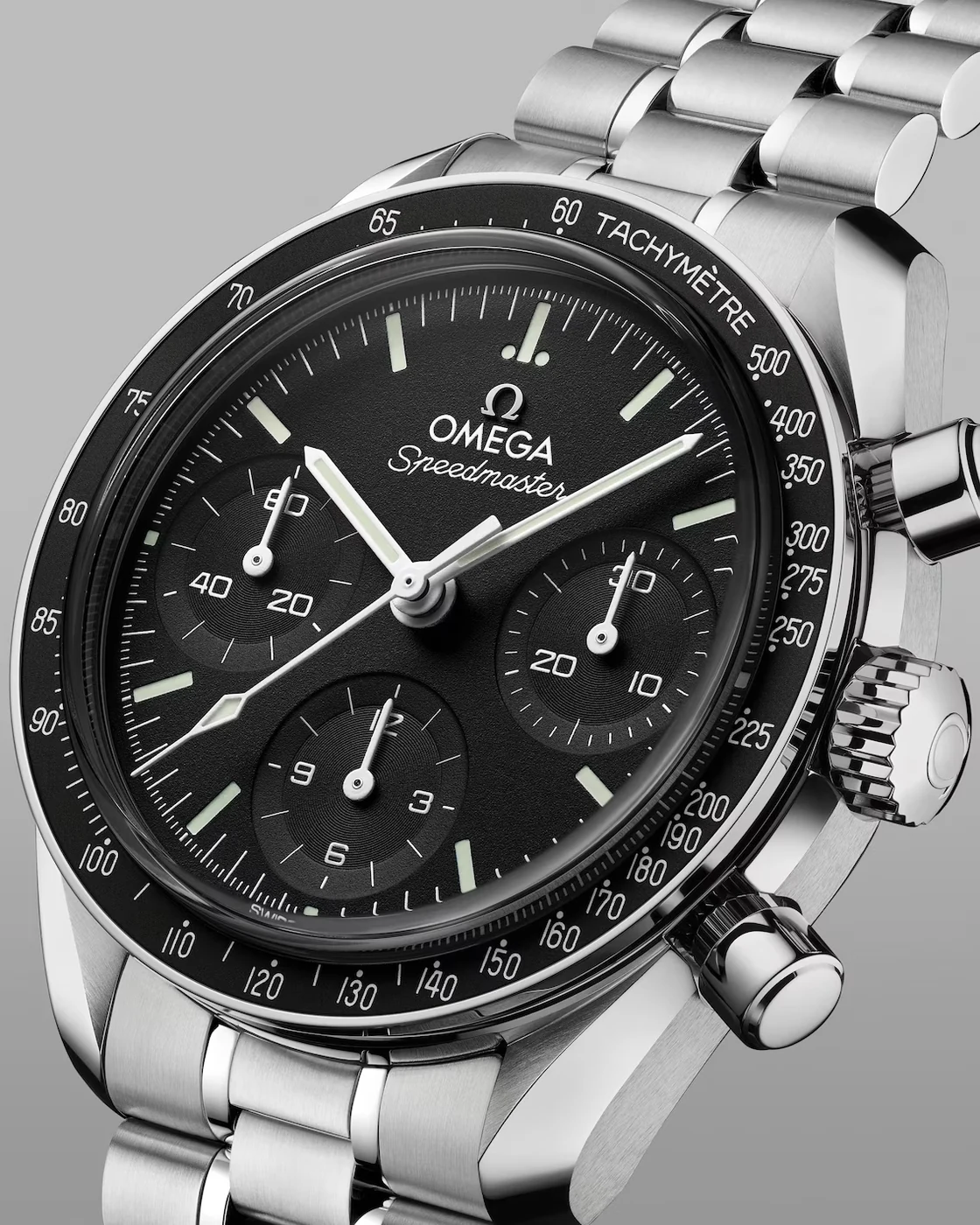
The first is the comparison. Buyers weighing an Omega are almost always weighing it against a Rolex, and the honest answer is that the two brands are solving different problems. Rolex has built its position on scarcity and resale strength; Omega has built its on verified precision and on collections whose history is documented rather than implied. If the priority is the value the watch holds on resale, that is a Rolex argument. If the priority is what the watch is and what it has done, the Speedmaster and the Seamaster are unusually strong answers for the money.
The second is the women’s question. It surfaces for Omega exactly as it does for other Swiss houses in the Gulf, and it is under-served across the category: search volume exists, but the destinations that answer it are thin. The Seamaster Aqua Terra and the Constellation both run in smaller cases, and the Constellation in particular has been positioned as a women’s line for decades rather than as a shrunken men’s model — a distinction that matters to buyers who ask the question.
On the practical side, the rule for Saudi Arabia is the same as anywhere: buy from an authorised retailer if the international warranty and the servicing record matter to you, and expect the paperwork, the serial number and the guarantee card to be part of what you are paying for. A grey-market price that looks unusually good is usually pricing exactly those things out.
Frequently Asked Questions
When was Omega founded?
In 1848, when Louis Brandt opened a watchmaking workshop in La Chaux-de-Fonds, Switzerland. The business passed to his sons Louis-Paul and Cesar in 1877.
Where does the name Omega come from?
From a movement, not a person. The 19-ligne calibre launched in 1894 was named Omega and proved so successful that the company reorganised around it, becoming Louis Brandt et Frere-Omega Watch & Co. in 1903 and Omega SA in 1984.
Is Omega owned by the Swatch Group?
Yes. Omega has been part of the Swatch Group since 1998. Its headquarters and its museum are in Biel/Bienne, Switzerland.
Did an Omega really go to the Moon?
Yes. The Speedmaster was qualified by NASA in March 1965 after testing against competing chronographs, and Buzz Aldrin wore one on the lunar surface on 20 July 1969. That is the origin of the Moonwatch name.
What is the difference between the Speedmaster and the Seamaster?
The Speedmaster, introduced in 1957, is the chronograph — a motorsport watch that became the space watch. The Seamaster, introduced in 1948 from Royal Navy designs, is the water-resistant line, and the Diver 300M within it is the model associated with James Bond since GoldenEye in 1995.
What is the Co-Axial escapement?
An escapement conceived by the English watchmaker George Daniels as an alternative to the Swiss lever, designed to reduce sliding friction between components. Omega became the first manufacturer to mass-produce it, in 1999.
What does Master Chronometer mean?
It is a certification Omega adopted in 2015, tested by METAS, the Swiss Federal Institute of Metrology. It differs from a standard chronometer rating in two ways: the fully cased watch is tested rather than the bare movement, and the tests include resistance to magnetic fields of 15,000 gauss. It was introduced on the Globemaster.
Why is Omega so popular in Saudi Arabia?
Because it answers a specific question well. It is immediately recognisable, it has genuine technical substance behind the recognition, and it sits below the trinity in price — which makes it the usual answer for a first serious Swiss watch and a common choice for gifting. In our measurement of Saudi search demand it ranks third across all the brands we cover.