

Key Highlights
- Bremont’s Supernova Watch is integrated into the chassis of the FLIP Astrolab rover, bound for the lunar south pole.
- The watch is secured via a custom-engineered tile plate and must pass the same NASA Spacecraft Protoflght Qualification testing as the rover itself.
- The FLIP rover weighs 480 kg and features hyper-deformable wheels, a deployable solar array, and four HD cameras.
- Launch takes place from NASA’s Kennedy Space Center; travel time from launch to lunar surface is approximately 8–10 days.
- The Moon’s temperature swings from 260°F (127°C) in full sun to -280°F (-173°C) in darkness, one of the most extreme environments in the solar system.
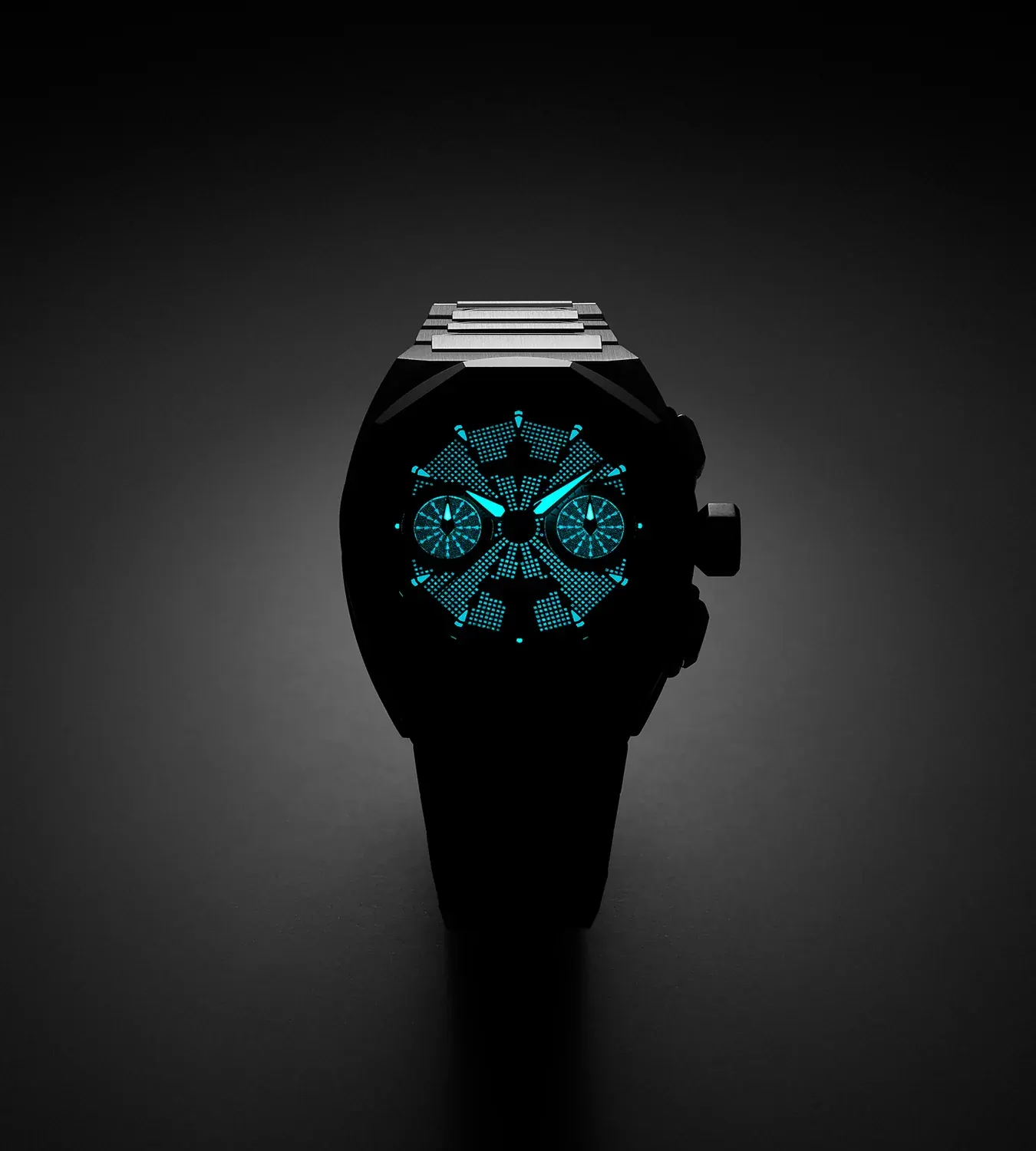 Bremont Supernova Watch integrated into the FLIP Astrolab rover chassis” />
A Partnership Born at the Edge of Earth
Astrolab is a space-mobility company founded by a team of NASA veterans, former SpaceX engineers, and JPL specialists. Its mission is to advance human exploration by designing, building, and operating a fleet of multi-purpose rovers capable of addressing all planetary surface operational needs. The collaboration with Bremont places the British watchmaker at the heart of that ambition as a genuine engineering participant, not merely as a marketing exercise.
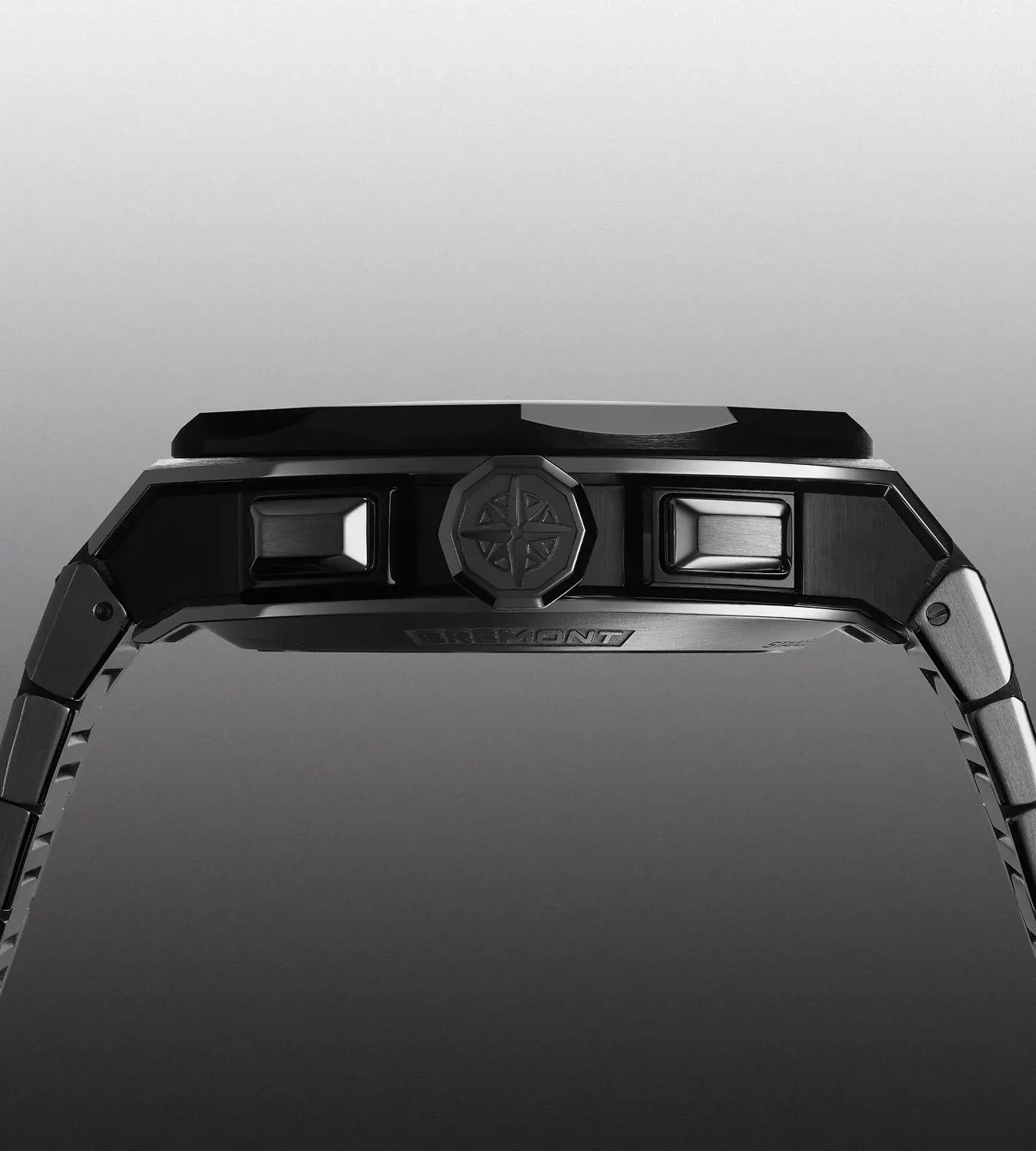
Bremont’s Supernova Watch has been physically integrated into the chassis of the FLIP (FLEX Lunar Innovation Platform) Astrolab rover via a custom-engineered tile plate designed to house the watch throughout every phase of the mission. The timepiece will endure the same launch loads, radiation exposure, and thermal extremes as the rover itself; conditions no commercial watch has faced in this context before.
The FLIP Rover: What It Is and Why It Matters
The FLIP Astrolab Moon Rover weighs 480 kg and is purpose-built to carry commercial and government payloads across the rugged terrain of the lunar south pole. Its hyper-deformable wheels are engineered to absorb the unpredictable surface topology of the Moon, while a deployable solar array panel and four HD cameras complete its operational suite. The FLIP is a testbed for the larger FLEX rover planned to follow.
The mission’s scientific goals include gathering critical data on lunar dust mitigation and surface operations, which will inform the design of future lunar logistics platforms. Subsystems such as avionics, autonomous navigation, and power management are all under evaluation. The Griffin lander, a medium-class vehicle equipped with advanced hazard avoidance systems, will carry the FLIP from Kennedy Space Center to the lunar surface, a journey of approximately 8 to 10 days.

The Testing Regime: NASA Protoflght Qualification
Both the FLIP rover and the Bremont Supernova Chronograph must pass NASA’s Spacecraft Protoflght Qualification program before the mission can proceed. This regime pushes hardware beyond worst-case flight conditions, validating structural integrity, thermal performance, and electrical functionality. The philosophy is explicit: “Test Like You Fly,” meaning every evaluation occurs in configurations that replicate actual flight as closely as possible.
Test levels are deliberately more severe than the mission’s already demanding expectations. Detailed procedures, plans, and results are documented to spaceflight standards throughout. The Bremont Altitude Chronograph lineage, built around instrument-grade precision, makes the Supernova a credible candidate for this level of scrutiny. Only hardware that passes every test is authorised to fly.
The Lunar Environment: Understanding the Stakes
The Moon sits an average of 238,855 miles (384,400 km) from Earth, and its surface environment is one of the most hostile in the solar system. In full sun, surface temperatures reach approximately 260°F (127°C); in darkness, they plunge to around -280°F (-173°C). A single lunar night lasts roughly 14 Earth days, approximately 354 hours, followed by an equivalent period of sunlight. One complete day-night cycle on the Moon takes roughly 29 Earth days.
These extremes place extraordinary demands on any hardware sent to the lunar surface. A mechanical timepiece such as the Bremont Supernova Watch must survive this environment, integrated into a working rover rather than simply transported in a sealed container. This sets the Moon Mission I apart from any prior watch-and-space narrative and represents, by any engineering standard, a genuine stress test.

Why It Matters for Middle East Collectors
For the Middle East’s growing community of serious watch collectors, the Bremont Moon Mission I represents something beyond a limited edition release. It is a documented proof of engineering; a timepiece that must satisfy the most rigorous certification process in existence before it can claim any association with the Moon. In a regional market that increasingly rewards provenance and verified performance over surface aesthetics alone, that distinction carries weight.
Bremont has long positioned itself as a watchmaker that builds instruments first and luxury objects second. The Moon Mission I crystallises that identity at a planetary scale. Whether the broader Moon Mission I collection translates into collector editions for the Middle East market remains to be confirmed, but the underlying engineering story—a British watch passing NASA’s most demanding qualification program—speaks directly to the tastes of Gulf enthusiasts who value substance behind the dial.
Stay ahead of the latest releases. Subscribe to our newsletter for editor-curated coverage of luxury timepieces across the Middle East.
Frequently Asked Questions
What is the Bremont Moon Mission I?
The Bremont Moon Mission I refers to the mission in which Bremont’s Supernova Watch has been integrated into the chassis of the FLIP Astrolab rover, which will travel to the lunar surface. The watch and rover are both subject to NASA’s Spacecraft Protoflght Qualification testing program to ensure they can survive launch, flight, and the Moon’s extreme conditions.
How is the Bremont Supernova Watch mounted on the FLIP rover?
The Bremont Supernova Watch is secured to the chassis of the FLIP Astrolab rover via a custom-engineered tile plate specifically designed to house the watch safely throughout the mission.
What testing does the Bremont Supernova Chronograph undergo before the lunar mission?
The Bremont Supernova Chronograph and the FLIP rover are both subject to NASA’s Spacecraft Protoflght Qualification program, which pushes prototype units beyond expected flight conditions, covering structural, thermal, and electrical performance, following a “Test Like You Fly” philosophy.
Where does the FLIP Astrolab rover launch from?
The mission launches from NASA’s Kennedy Space Center in Florida. The FLIP rover will travel to the lunar surface aboard the Griffin lander, a medium-class lunar lander equipped with autonomous navigation and hazard avoidance systems.
What is Bremont’s background as a watchmaker?
Bremont is a British luxury watch brand known for building precision timepieces engineered to perform in extreme conditions. The brand has a strong heritage in aviation and adventure chronographs, making it a natural partner for aerospace-grade missions.
Explore more from BREMONT: Supernova 41mm Tourbillon · Bremont Reinterprets the Altitude Chronograph — A Pulsograph Tribute.