The Mechanics of Precision in Mechanical Watches
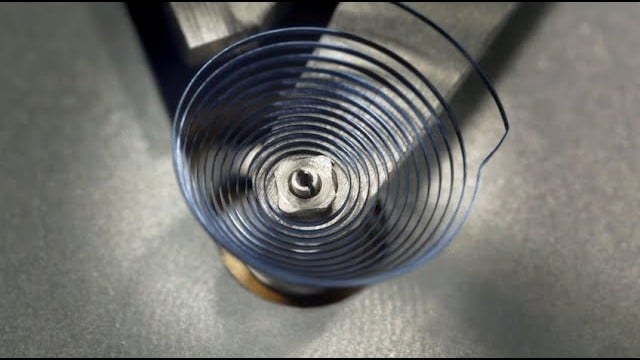
Mechanical watches derive their accuracy from the balance wheel, a critical oscillating mass that regulates energy flow from the mainspring through the gear train. The balance must complete exactly 28,800 vibrations per hour to keep time reliably, though some calibres operate at different frequencies such as 36,000 or 21,600 vibrations per hour depending on design requirements. This oscillation rate is what determines whether a watch gains or loses time.
The Role of the Balance Wheel
The balance wheel works alongside the escapement mechanism to control the sequential release of energy. As the mainspring unwinds, the escapement permits the gear train to advance one step with each oscillation of the balance. Any variation in the balance’s frequency—caused by wear, magnetism, or manufacturing tolerances—directly translates to measurable rate error. A balance oscillating at 28,800 vph will advance the seconds hand by one tick per swing. A deviation of just 0.1% from this rate produces a daily error of approximately 86 seconds.
Precision Standards at NOMOS GLASHÜTTE
NOMOS GLASHÜTTE produces mechanical watches that meet strict frequency tolerances. Each NOMOS calibre is regulated in-house and tested to ensure the balance wheel maintains its rated frequency across temperature variations and positional changes. The brand’s commitment to German watchmaking standards means the balance assembly undergoes dimensional verification and rate testing before casing. This level of control over the balance wheel is what distinguishes production at NOMOS GLASHÜTTE from mass-produced alternatives.
Conclusion
The balance wheel’s precise oscillation is fundamental to mechanical timekeeping. Collectors evaluating mechanical watches should understand that rate stability depends directly on the balance’s design and manufacturing quality. NOMOS GLASHÜTTE’s approach to balance wheel regulation and assembly offers a concrete example of how systematic engineering produces reliable accuracy. For a detailed look at current offerings, explore NOMOS GLASHÜTTE collections and technical specifications.
Frequently Asked Questions
What is the typical vibration frequency of a mechanical watch balance wheel?
A mechanical watch balance wheel typically oscillates at 28,800 vibrations per hour, though some calibres operate at 36,000 vph or 21,600 vph depending on the movement design.
How does the balance wheel affect the accuracy of a mechanical watch?
The balance wheel regulates the release of energy from the mainspring. Any deviation in its oscillation frequency produces measurable rate error. A 0.1% variance in balance frequency results in approximately 86 seconds of daily drift, making it the primary determinant of accuracy.
What engineering standards does NOMOS GLASHÜTTE apply to their mechanical watches?
NOMOS GLASHÜTTE regulates and tests each balance wheel in-house before assembly, verifying that it maintains its rated frequency across temperature variation and positional change. The brand subjects its balance assemblies to dimensional verification and rate testing to ensure consistency with German watchmaking standards.