Introduction to Rose Engine Turning
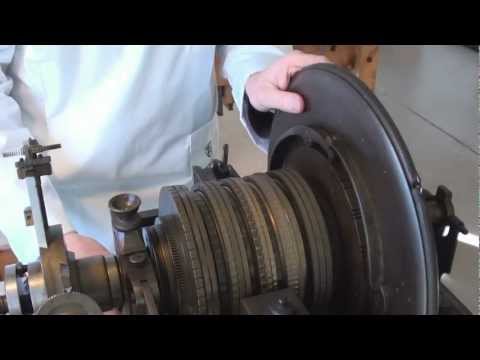
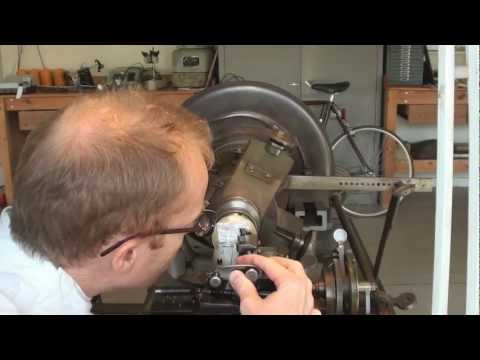
Rose engine turning stands as a defining technique in Roger W Smith’s approach to dial finishing. Smith documents the process in his workshop, revealing how the rose engine—a lathe attachment developed in the 18th century—cuts repeating geometric patterns directly into metal watch dials. The method combines mechanical precision with manual control, producing patterns that catch light differently depending on viewing angle.
The Significance of Handcrafting Dials
A Roger Smith dial finished by rose engine turning displays geometric relief patterns that serve no functional purpose beyond aesthetics. The rose engine, documented since the 1700s, remains central to Smith’s practice because it allows for patterns impossible to achieve through modern industrial methods. Each dial receives individually cut patterns, meaning no two dials emerge identical from the process.
Understanding the Rose Engine
The rose engine operates by rotating a metal blank against a fixed cutting tool. The operator controls both the tool’s depth and the rotation speed, producing concentric circles, radiating lines, or more complex Guilloché patterns. Smith’s proficiency with the machine reflects years of practice; the technique demands constant adjustment to pressure and speed to maintain consistent line depth across the dial surface. A single miscalculation ruins the work, requiring a restart from a blank piece.
Roger W Smith LTD Watch Collection
Smith’s watchmaking combines rose engine turning with other hand-finishing techniques across his collection. Each timepiece represents a single commissioned work rather than a series production. For detailed information on his current offerings, explore ROGER W SMITH LTD to explore ROGER W SMITH LTD collections.
Conclusion
Rose engine turning remains a core element of Smith’s dial finishing because it produces visual effects that differentiate his watches within the market for high-end mechanical timepieces. The technique requires mastery of a 300-year-old machine and produces patterns that justify the extended finishing time these dials demand.